05/11/26 New bovine TB strategy, smart ponds, investment in ag tech
14 min
Listen through the publisher, then discuss the episode here or arrange an in-person Roundtable. Your city determines where to meet.
Roundtables are designed for groups of four, with a shared subject and room for everyone to speak. Come for discussion, with no dating expectation.
England has a new bovine TB policy: today the Government formally adopts plans it set out in the summer which aim to eradicate the disease from the country by 2038. All this week we are looking at the way we manage water, and farmers are increasingly keen to save water on farm in the winter to use in the summer. While building small reservoirs is one option, another is to create networks of so-called 'smart ponds', with digital monitoring used to track water levels. And seeing financial opportunities in agricultural tech and carbon markets. Presented by Charlotte Smith and produced by Beatrice Fenton.
Episode information is provided by the publisher. Listening takes place on the publisher’s service.
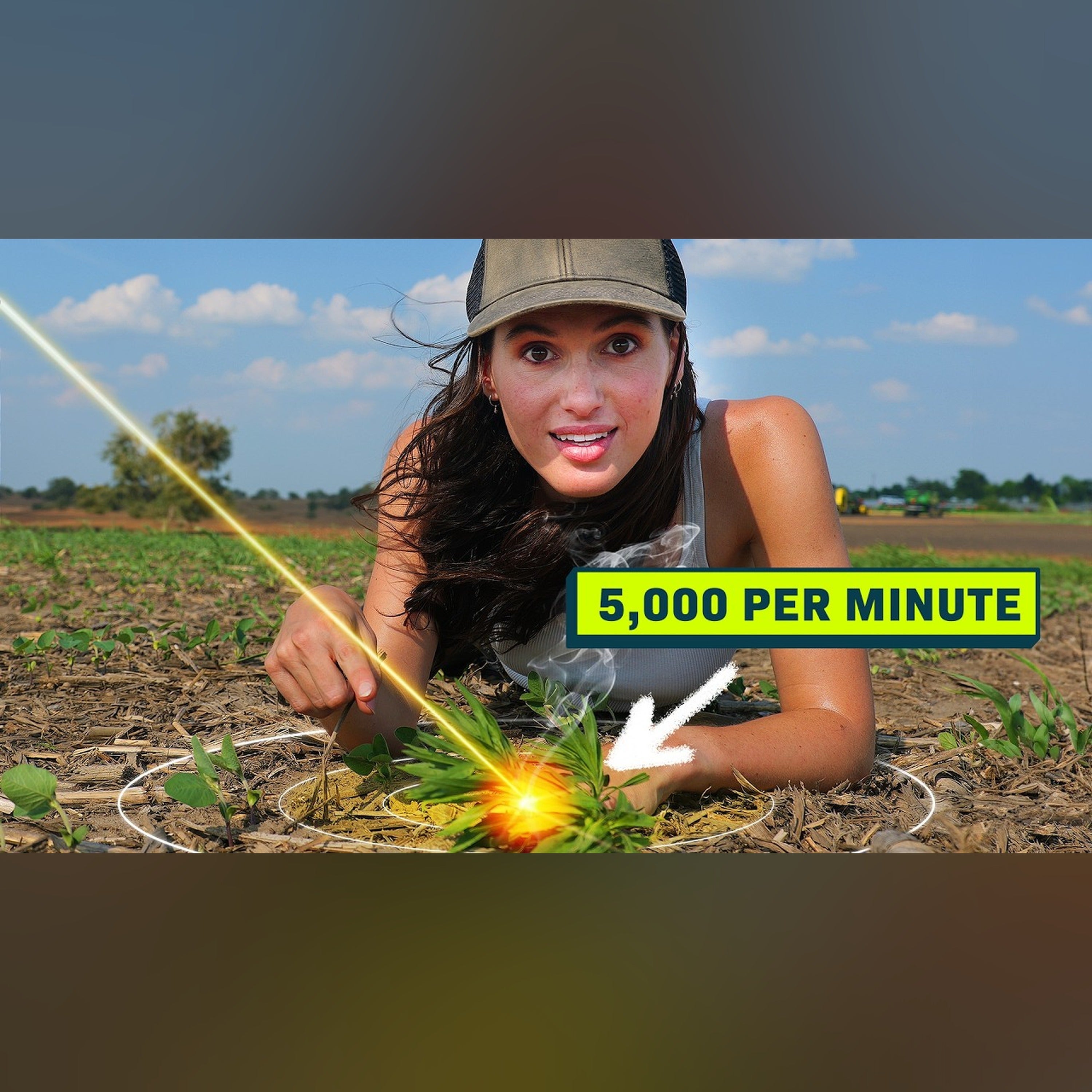
Growing food doesn’t look like I thought… Learn more about Dropbox for teams: https://www.dropbox.com/cleo Thanks Dropbox for sponsoring this video! Right now, we’re living through one of the most pivotal moments in food history… and most people have no idea it’s happening. Experts are calling the “Fourth Agricultural Revolution” and it’s here because we’re facing a big problem: The world’s population is rising, so experts say we’ll need to increase food output to catch up with our current population and feed those new people. But we’ve got to do it in ways that actually protect the Earth long term. Right now, farmers are in a fight to feed the world. So let me show you some of the coolest machines they’re using to do it… Chapters: 0:00 What’s the fourth agricultural revolution? 01:15 Why do we need more food? 1:54 Where does farming tech get tested? 3:00 What were the first 3 agricultural revolutions? 3:58 How do we feed billions more people… better? 4:31 How do farmers grow more food
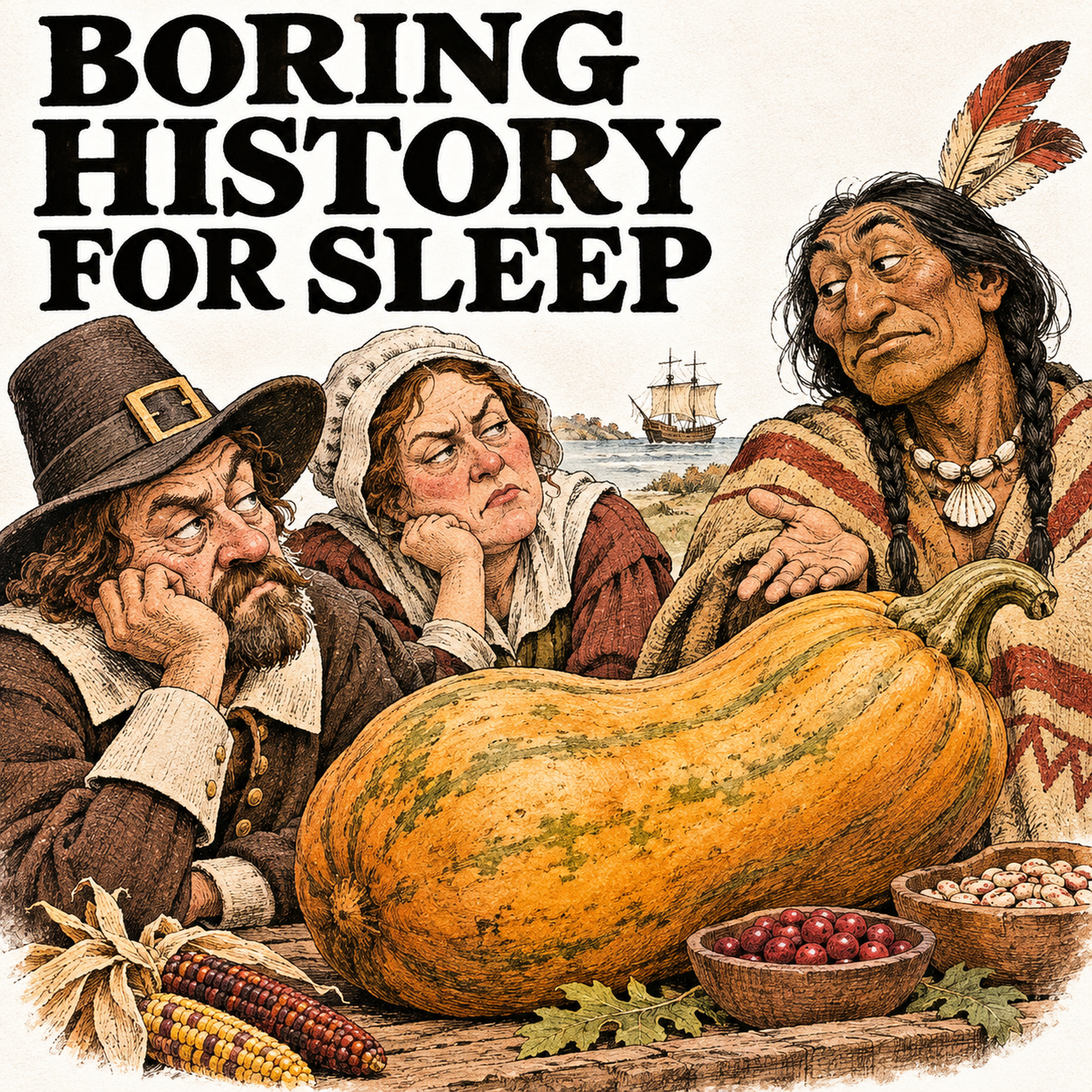
In 1620, a small ship called the Mayflower crossed the Atlantic carrying English settlers in search of a new life. Their arrival in North America became one of the most familiar stories in American history, but the reality behind the legend was far more complicated than the traditional Thanksgiving tale suggests. Discover why the Pilgrims left England, what their dangerous voyage was really like, and how they survived their first winter in an unfamiliar land. Explore their encounters with the Wampanoag people, the role of Tisquantum, also known as Squanto, and the assistance that helped the struggling settlers establish their colony. Uncover what happened at the harvest gathering of 1621, who actually attended, what was served, and how this event became connected to the modern Thanksgiving holiday. Follow the history beyond the familiar celebration and discover the people, cultural encounters, and historical realities behind the Mayflower story. Boring History for Sleep — Soft stories
In this week's Podcast: I’ve just pumped out a 300kg barrel of honey and at the bottom was a thick, granulated layer of sugary goodness. It got me thinking about why honey granulates, the science behind it all, why that’s a good thing and how, we beekeepers, can use it to our advantage. Hi, I’m Stewart Spinks, welcome to Episode 418 of my podcast, Beekeeping Short and Sweet. References: Manikis, I., & Thrasivoulou, A. (2001). The relation of physicochemical characteristics of honey and the crystallization rate. Apiacta, 36(2), 106–112. Escuredo, O., Míguez, M., Fernández-González, M., & Seijo, M. C. (2014). Nutritional value and antioxidant activity of honeys produced in a European Atlantic area. Food Chemistry, 154, 44–51. Venir, E., Spaziani, M., & Maltini, E. (2010). Crystallization in “Tarassaco” (Dandelion) Italian honey studied by DSC. Food Chemistry, 122(2), 410–415. Krishnan, R., Mohammed, T., Kumar, G. S., & Arunima, S. H. (2021). Honey crystallization: Mechanism, evaluation a
Explore what makes polio so dangerous, what is causing the 21st century resurgence of cases, and how we can eradicate the disease. -- In 1952, polio was everywhere: killing or paralyzing roughly half a million people annually. Yet just 10 years later, paralytic polio cases in the US dropped by 96% and we were on track to get rid of polio for good. But in recent years, the virus started striking back. So, what’s behind these recent spikes? Explore the dangers of poliovirus and the possibility of eradicating this deadly disease. Directed by Anton Bogaty. This video made possible in collaboration with Gates Ventures Learn more about how TED-Ed partnerships work: https://bit.ly/TEDEdPartner A special thanks to Ananda Bandyopadhyay, Amber Zeddies, and Kathleen O'Reilly who provided information and insights for the development of this video. Support Our Non-Profit Mission ---------------------------------------------- Support us on Patreon: http://bit.ly/TEDEdPatreon Check out our merch: htt
What if your AI agent could find the people you should know before you even start looking? Cosign is building a professional network around reputation and trusted recommendations, and now agents can use that network too. MTS host Sophia Dew sits down with a16z’s David Booth and Cosign’s Bella Nazzari to discuss what they’ve learned since launching Cosign, why traditional profiles often miss the operators doing the most important work, and how the Cosign Awards are surfacing talent through the people willing to vouch for them. They also explore an emerging behavior: people connecting their agents to Cosign to continuously find relevant people, lists, and opportunities, and what professional networking could look like when both humans and their agents participate. Resources: Follow David Booth: https://x.com/davidbooth Follow Bella Nazzari: https://x.com/nazzari Follow Sophia Dew: https://x.com/sophiadew Learn more about Cosign:https://cosign.co/ Connect your agent to Cosign:https://cosi
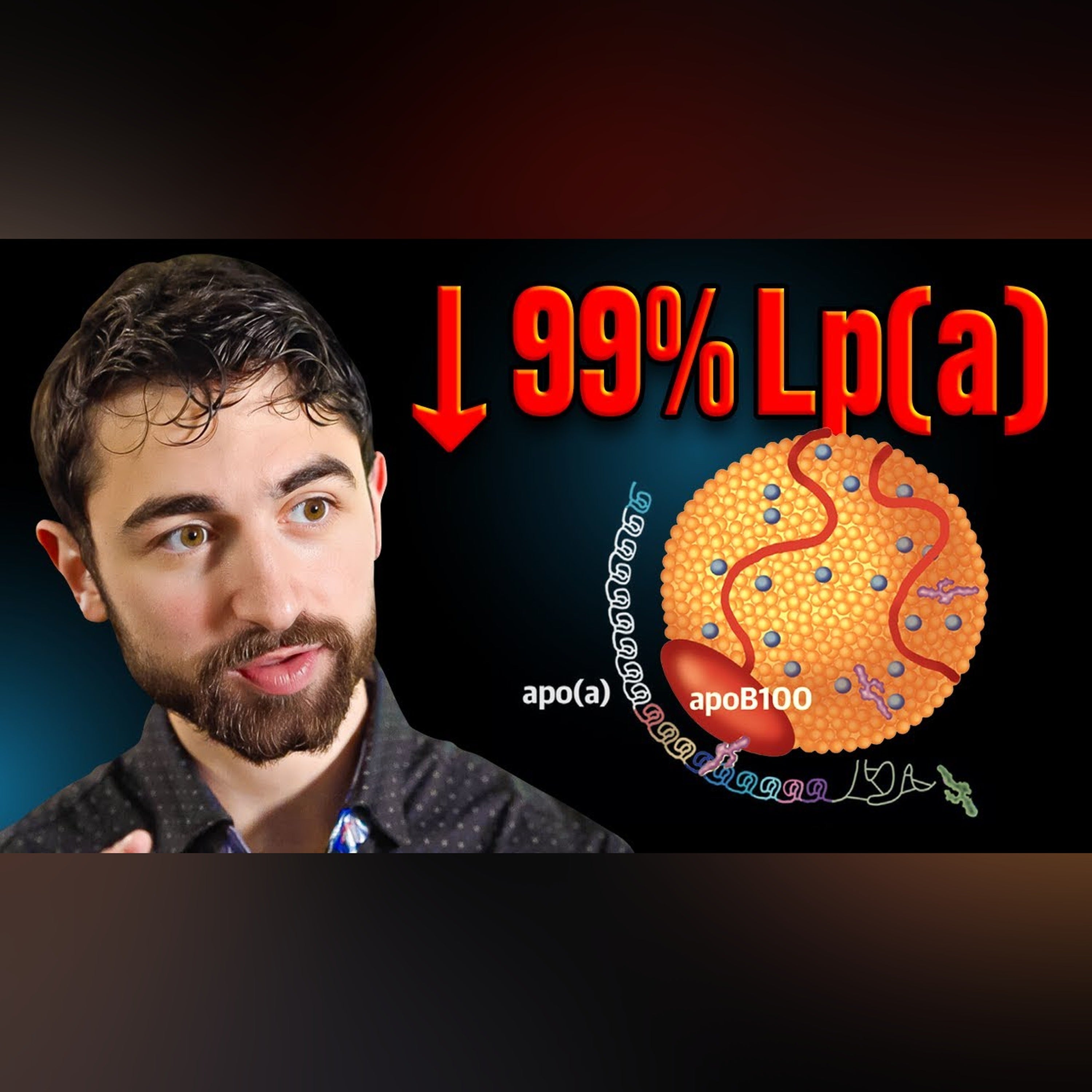
Lp(a), lipoprotein(a) is a major genetic risk factor for heart disease and one of the most talked-about topics in modern cardiology. It plays a significant role as a causal risk factor for cardiovascular disease and is thought to be largely genetically determined. What do you do if you’re genetically cursed, like me, with high Lp(a) levels? In this video, I promise on my own heart health, you'll gain a deeper understanding of Lp(a): what it is, why it’s so important for your heart and metabolic health, and what actionable steps you can take to manage your cardiovascular risk. To give you a roadmap, here’s what we’ll cover in the 8 chapters: 1. Defining Lp(a) 2. Guidelines on measuring Lp(a) and risk thresholds 3. Medications in development to reduce Lp(a) by as much as 99% 4. How to reduce cardiovascular risk 5. Why statins increase Lp(a) and what this means 6. Saturated fat can lower Lp(a) level 7. Oxidized phospholipids as the cargo of Lp(a) 8. Nuance notes for the nerds. This video
The government says tomorrow's UK-EU summit will result in a food and drink trade deal which will cut back on paperwork, ease pressure on prices and add 'up to £5billion a year to our economy'. Behind the headlines are complicated talks on complicated rules governing things like food safety, pesticides, and genetic modification and gene editing. Today we're going to look at the possible impact on England's biotechnology sector. As part of this week's focus on trees, we're talking walnuts: most of those we eat here in the UK are imported, but a couple of sheep farmers in Warwickshire hope to change that, and have diversified into both importing and growing walnut trees. Presented by Charlotte Smith and produced by Beatrice Fenton.
The EU and UK will hold a long-awaited summit in Brussels later. A new trade agreement could remove checks and paperwork faced by exporters since Brexit. It's anticipated that the new deal will mean realigning with EU rules on aspects of agricultural production here in the UK, including regulation of pesticides. Farming leaders have warned this could strip British farmers of several products used to protect their crops and raise costs and are calling for a phased transition but wildlife and environmental groups want the negotiations to be a starting point for what they describe as a "far more ambitious plan" to cut pesticide use and restore nature. Farmers in England will be able to apply to a £15 million fund to help them dig new reservoirs and install water storage tanks from the end of the month. It's part of a wider drought resilience package announced by the prime minister back in August. The government's now confirmed the application window for round three of the water management
The UK's significant talks towards re-alignment with the EU will take place this Friday, and food and farming will be central to the discussions. Food trade was one of the areas most impacted by Brexit, and now re-drawing the EU UK relationship could cause disruption too. But will it be beneficial for farmers and food producers? We ask the president of the National Farmers Union. Government figures have shown a dramatic drop in new woodland creation in Scotland in 2025, falling well short of the Scottish Government's own original target of 18,000 hectares. In fact less than half of that was planted - a drop of 44% compared to 2024. That roughly mirrors a big cut in the cash for the Scottish Government’s forestry grant scheme, of 41%. But foresters say it’s more complicated than just a direct effect of cuts. And we speak to Lantra - a charity which helps young people into rural careers, training and education - about how Alan Milburn's report into NEETs might improve prospects for young
A majority vote should not override the basic rights of a smaller group.
Share your view, then see how readers voted. No sign-in required. This poll is shared across stories.
Do you agree or disagree?
Common Quandary
A Common Quandary to discuss
Another conversation to explore, separate from this news story.
The proposal is perfect and the ring is terrible. When do you say so?
Your partner proposes with a costly ring chosen after months of secret planning. You love the proposal and want the marriage, but strongly dislike the ring you would be expected to wear every day. Returns are possible for one week.
How much honesty can a loving gesture reasonably be asked to survive?