Tonight, my special guest is Dr. Matthew McKay who's here to discuss insight into what humanity should expect in the afterlife after communicating with his late son Jordan over the years. Get his book The Luminous Landscape of The Afterlife on Amazon. A channeled guide to the life-death transition experience and how to prepare for the wonders of the afterlife • Reveals the afterlife as a fluid realm of imagination and invention, a luminous landscape created entirely of consciousness • Explains how to navigate the early stages of the afterlife, how we learn and grow in the spirit world, and how to release anxiety about the end of life • Includes exercises and meditations to prepare you for navigating and communicating in spirit There is no better source of information on death and the afterlife than someone who has died and lives in spirit. Channeling his late son, Jordan, psychologist Matthew McKay offers a postdeath guide for the living, revealing in vivid detail what to expect when w
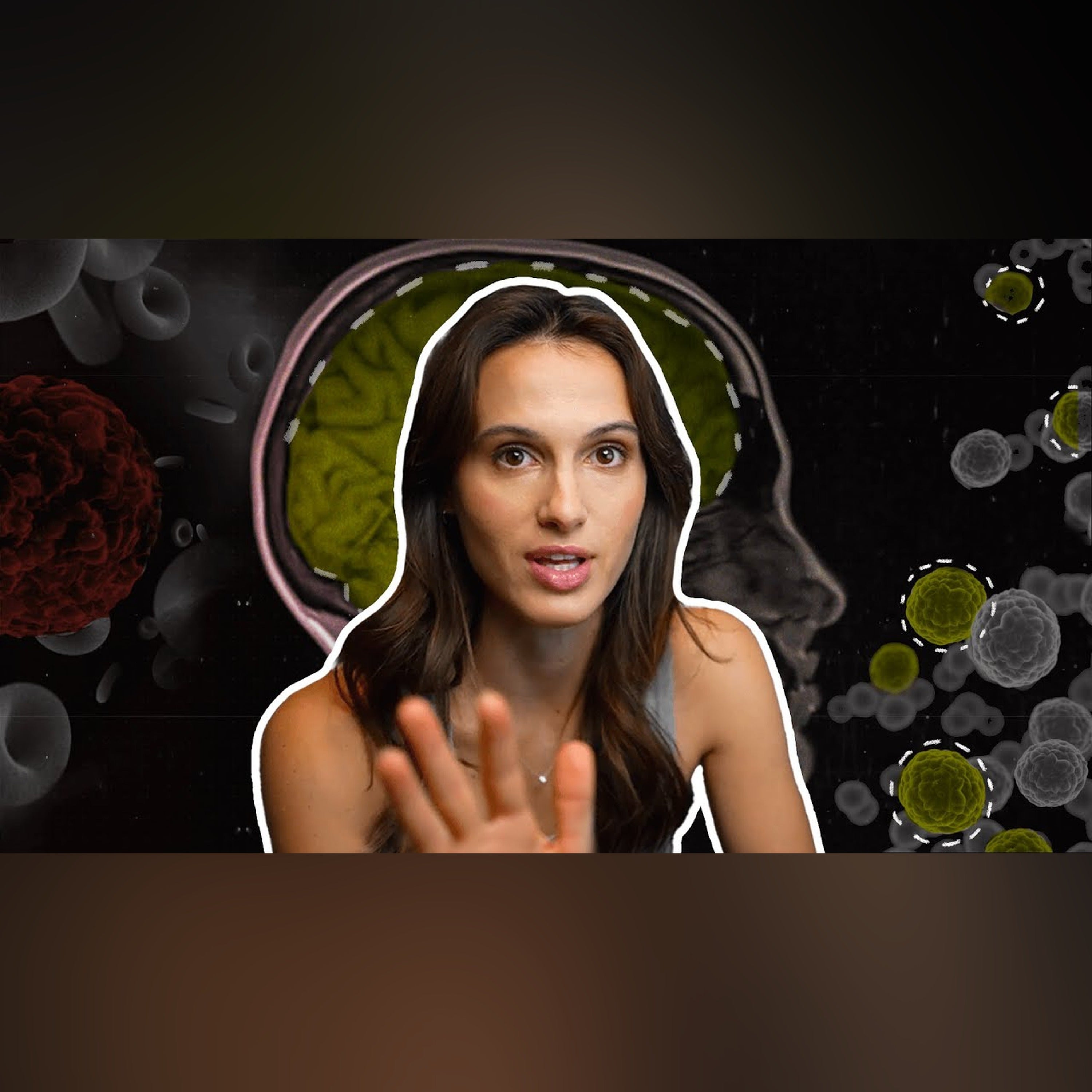
"Curing cancer," explained. We’re not looking for a “cure for cancer” anymore. Cancer is hundreds of diseases, so we’re really in a multi front fight against all of them. Cancer is a problem for us today in a way it wasn’t for previous generations. But, luckily, we also have more and more ways to fight back. I started this episode with endless questions: What is cancer? What causes it? How do we treat cancer? What are the symptoms? Why are some cancers easier to treat than others? Why is cancer so hard to cure? Why do so many people die of cancer? What I found is an incredible, complex, inspiring effort to treat and stop an insidious killer. In this video, we dive deep into how we treat cancer today. But I also found that we may not be helping the greatest number of people we can. In this episode of Huge If True, I want to make the case that while we have made enormous strides in the fight against cancer we have also largely ignored one of the single best ways to save the most lives. I
Since the internet’s earliest days, people have died and mourned online. In quiet corners of past iterations of the web, the dead linger. But attempts at preserving the data of the dead are often ill-fated, for websites and devices decay and die, just as people do. Death disrupts technologists’ plans for platforms. It reveals how digital production is always collaborative, undermining the entrepreneurial platform economy and highlighting the flaws of techno-solutionism. Big Tech has authority not only over people’s lives but over their experiences of death as well. Ordinary users and workers, though, advocate for changes to tech companies’ policies around death. Drawing on internet histories along with interviews with founders of digital afterlife startups, caretakers of illness blogs, and transhumanist tinkerers, in Death Glitch: How Techno-Solutionism Fails Us in This Life and Beyond (https://bookshop.org/a/12343/9780300248272)(Yale University Press, 2023), Dr. Tamara Kneese takes re
Why is reading nonverbal behavior more practical in games like poker than in real-world, non-game situations? In this episode, originally recorded for the "No Way Out" podcast, I, Zach Elwood, talk about what my poker tells work has taught me about human behavior and decision-making. We discuss what makes some behavioral patterns surprisingly reliable, the importance of situational context, and what’s behind our intuitive reads of people. We also explore why the allure of reading people has spawned an industry of questionable and irresponsible “behavior experts,” how influential figures like Malcolm Gladwell and popular podcasters have helped spread faulty ideas about behavior, and the potential uses and limitations of AI for deception detection. We talk about the legacy of Paul Ekman, who is still perceived by many as an expert on human behavior, but who is the source of many bad ideas in this area. We also discuss what poker can teach us about navigating uncertainty, appreciating the
Your smartphone can do just about anything, but there's one thing it really doesn't like: cold weather. Low temperatures can drain your battery, cause your phone to shut down unexpectedly, and leave you without it when you need it most. So why is your phone so vulnerable to the cold, and what can you do to protect it? https://blog.gaiagps.com/how-to-keep-your-phone-alive-in-cold-weather/ The human brain is an extraordinary thing. It allows us to reason, solve problems, invent, and accomplish things no other creature can. But human intelligence also has some surprising flaws. So what makes us so smart in the first place? How did our intelligence evolve? And could artificial intelligence ever truly think the way we do — or is there something about the human brain that machines may never replicate? Max Bennett, cofounder and CEO of AI startup Alby and author of A Brief History of Intelligence (https://amzn.to/3N8mJbr) (https://amzn.to/3N8mJbr), joins me to explore the remarkable story of
What do immigration, AI safety and a free press teach us about how the economy works? Justin Wolfers marks six months of Diving In with three stories about the half of an economic argument you might not see at first glance. Immigrants aren't just workers competing for jobs—they're customers helping create them. Justin examines why White House advisers lowered their monthly jobs benchmark from about 200,000 to 50,000 as immigration slowed, and what that reveals about the claim that newcomers take your job. For artificial intelligence, the question isn't only how much richer it could make you. It's whether paying more for safety is worth the cost—and how potential medical breakthroughs change that trade-off. Justin explains why powerful technology needs independent scrutiny, not just assurances from the people building it. That same logic applies to government. Research shows how independent reporting changes officials' incentives, exposes corruption and helps voters hold politicians acc
The history of science is always fascinating, and the history of medicine surely has some of the best stories. In this episode we talk to writer Lindsey Fitzharris about two of them. First, the story of Scottish surgeon Joseph Bell, who was both a pioneer of forensic pathology and the inspiration for Sherlock Holmes (whose author, Arthur Conan Doyle, took classes with Bell as a medical student). Second, the story of Harold Gillies, the World War II doctor who pioneered reconstructive surgery. Bell is the subject of Fitzharris's new book Sleuth-Hound (https://drlindseyfitzharris.com/sleuth-hound/), while Gillies is the subject of her previous book The Facemaker (https://drlindseyfitzharris.com/facemaker/). Blog post with transcript: https://preposterousuniverse.com/podcast/2026/11/16/374-lindsey-fitzharris-on-forensic-pathology-reconstructive-surgery-and-sherlock-holmes/ Stop piecing your software together. Go to https://odoo.com/mindscape to learn more. #ad Upgrade your everyday with Q
Welcome to the November 2026 Ask Me Anything episode of Mindscape! These monthly excursions are funded by Patreon supporters (https://www.patreon.com/seanmcarroll) (who are also the ones asking the questions). We take questions asked by Patreons, whittle them down to a more manageable number -- based primarily on whether I have anything interesting to say about them, not whether the questions themselves are good -- and sometimes group them together if they are about a similar topic. Enjoy! Blog post with AMA questions and transcript: https://preposterousuniverse.com/podcast/2026/11/09/ama-november-2026/ Got to https://scribe.how/mindscape and mention Mindscape for you first month of Scribe Capture free on select plans. #ad Use code MINDSCAPE at https://monarch.com/ to get your first year of Monarch Core half off at just $50. #ad
Economics often starts with an assumption that people are rational maximizers of their own self-interest; but it doesn't stop there. Economists do understand that sometimes people are irrational, altruistic, or just random. So how can we understand how people actually do behave in economic circumstances? Colin Camerer is a pioneer of "neuroeconomics" -- not only understanding how people make economic choices, but relating it to processes in the brain. Blog post with transcript: https://preposterousuniverse.com/podcast/2026/11/02/373-colin-camerer-on-the-neuroscience-of-economic-thinking/ Look your best and support men's health at https://amazon.com/movember. #ad Colin Camerer received a Ph.D. in behavioral decision theory from the University of Chicago. He is currently the Robert Kirby Professor of Behavioral Economics, T&C Chen Center for Social and Decision Neuroscience Leadership Chair, and Director, T&C Chen Center for Social and Decision Neuroscience at Caltech. He has been awarde
Research announcements should give uncertainty as much attention as promising findings.
Share your view, then see how readers voted. No sign-in required. This poll is shared across stories.
Do you agree or disagree?
Common Quandary
A Common Quandary to discuss
Another conversation to explore, separate from this news story.
The luxury hotel charges too much and will never miss one robe. Do you pack it?
After an expensive hotel stay, you notice a plush robe without a price tag or warning. The room cost more than expected, several promised amenities were unavailable, and you convince yourself the robe is probably included.
When does feeling overcharged become permission to compensate yourself?