Listen through the publisher, then discuss the episode here or arrange an in-person Roundtable. Your city determines where to meet.
Roundtables are designed for groups of four, with a shared subject and room for everyone to speak. Come for discussion, with no dating expectation.
Merriam-Webster's Word of the Day for November 7, 2026 is: abandon • \uh-BAN-dun\ • noun Abandon refers to a feeling or attitude of wild or complete freedom. // The two friends spent the work week looking forward to hitting the clubs together on Friday night and dancing with total abandon. // After years of contemplating, he finally decided to make a career pivot and pursue his passion with reckless abandon. See the entry > (https://www.merriam-webster.com/dictionary/abandon) Examples: “That experience didn’t just provide her the freedom to fail; it pushed her to take risks with abandon and follow her instincts. Even if that movie wasn’t well-received, it was an ambitious project that she had an obvious passion for.” — Coleman Spilde, Salon, 5 July 2026 Did you know? Given the familiarity of the verb abandon, you may associate the noun with the act of leaving and never returning. But despite being a relative newcomer to English, the noun abandon, with its more pleasant connotations of freedom, is likely here to stay. It only entered the English language in the early 1800s, as a borrowing from French that goes back to an Old French word meaning “surrender.” (English had borrowed the verb abandon centuries before from the French speakers living in medieval England.) Louisa May Alcott recognized the word’s utility; she used it of Jo in Little Women, writing that “when the writing fit came on, she gave herself up to it with entire abandon, and led a blissful life, unconscious of want, care, or bad weather ...”
Episode information is provided by the publisher. Listening takes place on the publisher’s service.
There's no how-to for this human experience and certainly none for being a woman. But there are patterns, seasons, and chapters, each with its own gift and its own invitation. In this heartfelt reflection, Sage Robbins shares what the decades have taught her: the innocence of her younger years, the humbling health awakening of her 40s, and the gradual coming home to herself that she calls the most authentic chapter of her life. Uploaded 07-10-26 Watch more videos like this How Sage and Tony Robbins Finally Became Parents After 20 Years of Trying: https://youtu.be/oUx3Uj9rUTc 5 Simple Ways to Feel More Peaceful Every Day: https://youtu.be/NaYILgJK15g You're Not Broken, You're Just Living the Wrong Identity: https://youtu.be/pqMOp4ROz1E How to Free Yourself from Difficult Emotions: https://youtu.be/hwsHxLR259M Join my weekly newsletter 'The Mirror' to receive these exclusive videos each week: https://www.sagerobbins.com (https://www.sagerobbins.com/) Follow Sage Robbins: Instagram: https
You went back. Maybe not to the same person, but to the idea of them. You rehearsed the conversation again in your mind. You thought of better words, sharper examples, a clearer way to say the thing you'd already said. You kept trying to win an argument that was already over, with a person who had already walked away. Uploaded 13-10-26 That hunger to be understood is one of the most natural things in the world. And it is also one of the quietest thieves of a person's peace that I know of. You explain yourself to one person, feel relief for a day, and then someone else shakes their head, and you're back building the case for your own life all over again. Here is the truth: it is not another person's job to understand you. It is your job to understand yourself. And once you've done that interior work, the opinions of people who don't understand you go from feeling like a verdict to feeling like weather. This seminar unpacks the single mechanic behind why you keep over-explaining your lif
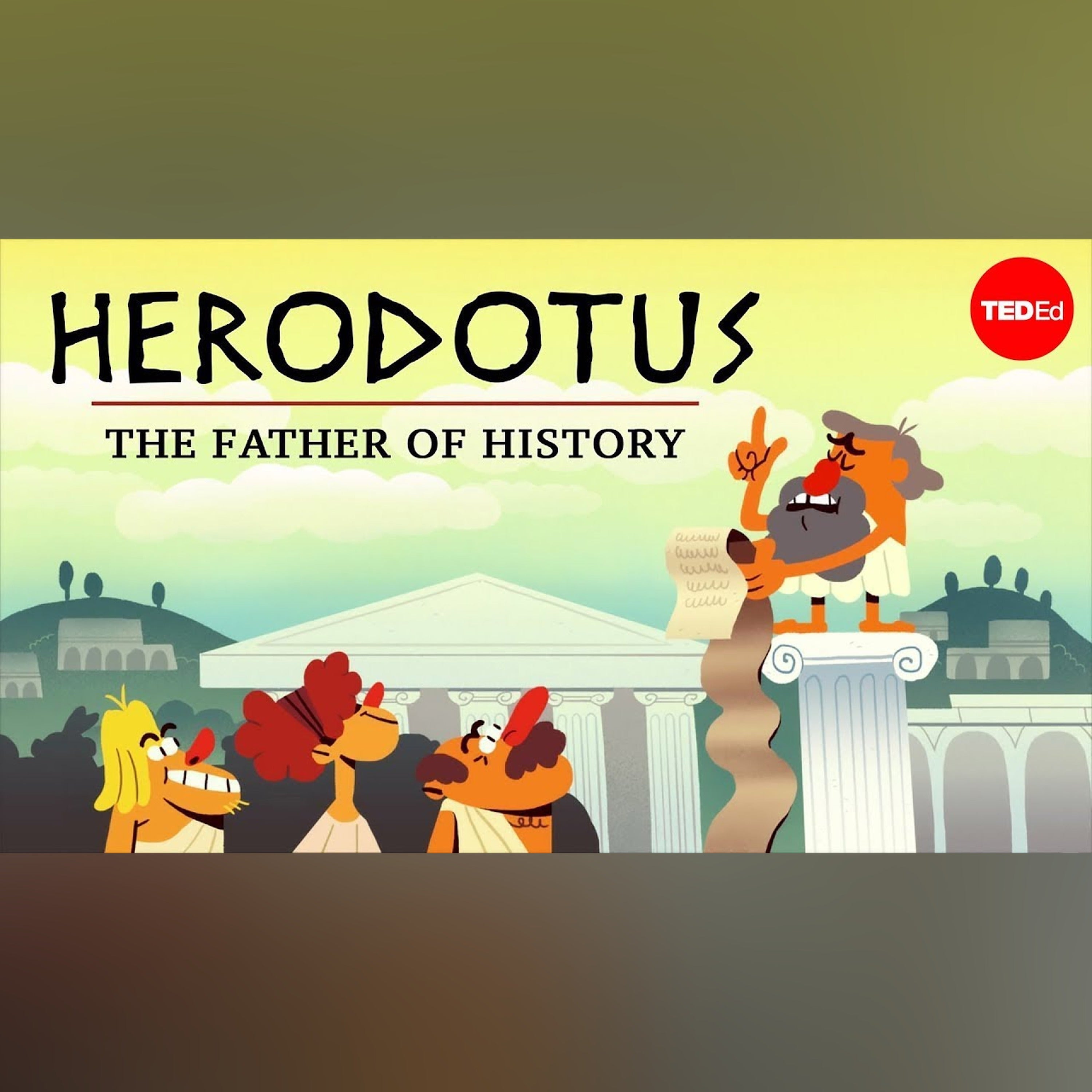
Uploaded 11-12-17 View full lesson: https://ed.ted.com/lessons/why-is-herodotus-called-the-father-of-history-mark-robinson 2,500 years ago, the writing of history as we know it didn’t exist. The past was recorded as a list of events, with little explanation for their causes beyond accepting things as the will of the gods. Herodotus wanted a deeper understanding, so he took a new approach: looking at events from both sides to understand the reasons for them. Mark Robinson explains how “history” came into being. Lesson by Mark Robinson, directed by Remus and Kiki Thank you so much to our patrons for your support! Without you this video would not be possible! Daniel Day, Nick Johnson, Bruno Pinho, Javier Aldavaz, Rodrigo Carballo, Marc Veale, Boytsov Ilya, Bozhidar Karaargirov, Darren Toh, ilya bondarik, maxi kobi einy, Runarm , Misaki Sato, Peter Koebel, Levi Cook, Alex Kongkeo, Craig Sheldon, Andrew Bosco, Catherine Sverko, Nik Maier, Robert Sukosd, Mark Morris, Tamás Drávai, Adi V, Pet
Adam Grant is one of the most sought after organisational psychologists in the world. He has provided expert advice to many of the world’s greatest business leaders, including Bill Gates and Sheryl Sandberg, equipping them with the mental tools to find motivation and meaning, rethink assumptions, and achieve greatness in their business and personal lives. In January 2024 Grant came to the Intelligence Squared stage for a rare, exclusive London event where he shared his revolutionary framework for how we can all exceed the expectations and aspirations we have set for ourselves. Drawing on his new book Hidden Potential he explained that despite living in a world that tends to admire people who start out with innate talent, there is clear scientific evidence that we can all bridge the biology gap and improve ourselves dramatically. In conversation with economist and FT columnist Tim Harford, Grant wove together groundbreaking evidence, surprising insights, and vivid story telling to take
THE SEARCH FOR THE ULTIMATE RED LIGHT THERAPY IS OVER! After decades of exploring wellness technologies, Michael Jaco sits down with Rob Rene, founder of Exodus Strong, to explore the Red Light+ Total Body Reset system, the science behind red and near-infrared light, and why this technology has become such an important part of their wellness conversation. Rob's remarkable personal journey—including surviving five near-death experiences—inspired his mission to develop practical wellness tools that people can incorporate into their everyday lives. Discover the full-body Red Light+ Mat, designed for convenient 20-minute sessions, and the portable Red Light+ Wand, created for targeted use on areas such as the knees, shoulders, hands, and lower back. Michael and Rob discuss the technology, personal experiences, and how red light therapy may support a daily wellness routine. BLACK FRIDAY–CYBER MONDAY LISTENER EXCLUSIVE! This is your opportunity to explore Exodus Strong's special holiday offe
What if the change you've been asking for is already knocking? In this best-of compilation from The Positive Mindset Podcast, Henry Lawrence pulls together his best moments on letting go and being restored to who God made you to be, from six episodes: the stirring you feel when it's time to change; an opening prayer for anyone who feels alone right now; why your higher self is the true you, the one designed by God, not a more productive version of you; the cast on a broken arm that protected you and now limits you; the old painted-over furniture that gets restored, not rebuilt; why so much of our tiredness comes from holding too tight; how God moves what you couldn't; why everything is borrowed; and choosing to keep believing when it feels like a war broke out around you. It includes a prayer near the start and closes with the rising tide, a blessing and a thank-you. In this episode: • "That stirring is the truth knocking on a door that you've been leaning on with your whole weight." •
Merriam-Webster's Word of the Day for November 21, 2026 is: meet-cute • \MEET-kyoot\ • noun Meet-cute refers to a cute, charming, or amusing first encounter between romantic partners. A meet-cute can be such an encounter as shown in a movie or television show, or one that happens in real life. // Their meet-cute felt as if it came straight out of a romantic comedy. See the entry > (https://www.merriam-webster.com/dictionary/meet-cute) Examples: “Two women, Dylan and Melanie, cross paths on an artificial beach in a near-apocalyptic meet-cute: one has emerged from the underwater pod in which she was raised, the other works at a luxury resort as a bartender… and may also be a robot.” — Natalie Zutter, Literary Hub, 2 Jan. 2026 Did you know? Isn’t it cute how two words can be introduced to each other and become an inseparable pair soon after? Well, that’s exactly what happened when meet and cute got together in the early 1950s. The duo was spotted in The New York Times Book Review in 1952
Merriam-Webster's Word of the Day for November 20, 2026 is: ruthless • \ROOTH-lus\ • adjective Ruthless means "having no pity." It describes people, behaviors, circumstances, etc. regarded as cruel or merciless. // Wolves and other large carnivores are often portrayed (and feared) as ruthless predators even as they play vital roles in their ecosystems. See the entry > (https://www.merriam-webster.com/dictionary/ruthless) Examples: "One of Shakespeare's most powerful and enduring tragedies, 'Macbeth' remains an urgent and gripping story. Ambition and prophecy collide as a fateful prediction drives Macbeth into a ruthless pursuit of power, destroying everything in his path." — The Daily Gazette (Schenectady, New York), 25 Sept. 2026 Did you know? Ruthless can be defined as "without ruth" or "having no ruth." So what, then, is ruth? The noun ruth (https://www.merriam-webster.com/dictionary/ruth), which is now considerably less common than ruthless, means "compassion for the misery of anot
Merriam-Webster's Word of the Day for November 19, 2026 is: upbraid • \up-BRAYD\ • verb To upbraid someone is to speak to them in an angry or critical way in response to something they have done wrong—in other words, to scold them. // The teacher upbraided the class after discovering the chalkboard erasers had been clapped all over the walls. See the entry > (https://www.merriam-webster.com/dictionary/upbraid) Examples: “An industrious ant spends all summer gathering food for the cold months, while a lazy grasshopper dances and sings. Once winter hits, the grasshopper is cold and hungry, and goes begging for food from the ant, who refuses to share any of its bounty, upbraiding the grasshopper for failing to plan.” — David A. Graham, The Atlantic, 17 Apr. 2026 Did you know? First things first: do not confuse upbraid with topknot lest you be upbraided for it. Topknot is a noun referring to a hairstyle, while upbraid is a verb (and an ancient one at that) meaning “to criticize or scold se
Public funding for a small group can be justified when the wider community also benefits.
Share your view, then see how readers voted. No sign-in required. This poll is shared across stories.
Do you agree or disagree?
Common Quandary
A Common Quandary to discuss
Another conversation to explore, separate from this news story.
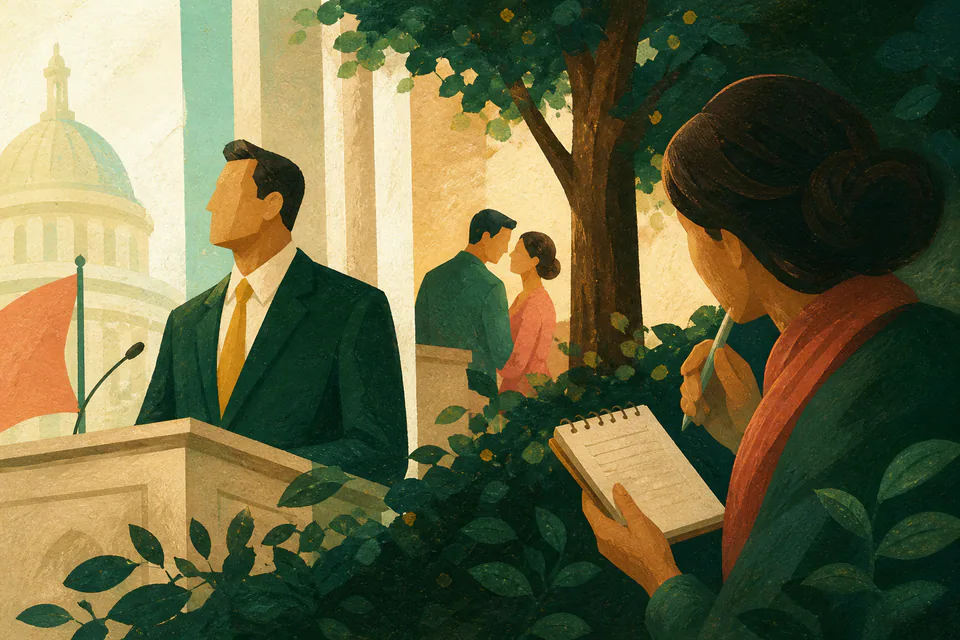
The mayor is excellent at the job—and secretly cheating on a spouse. Is that news?
A local official is effective, honest in office, and privately having an affair. A journalist can verify it but finds no misuse of public resources or direct connection to official duties.
Does private dishonesty reveal something citizens are entitled to judge?