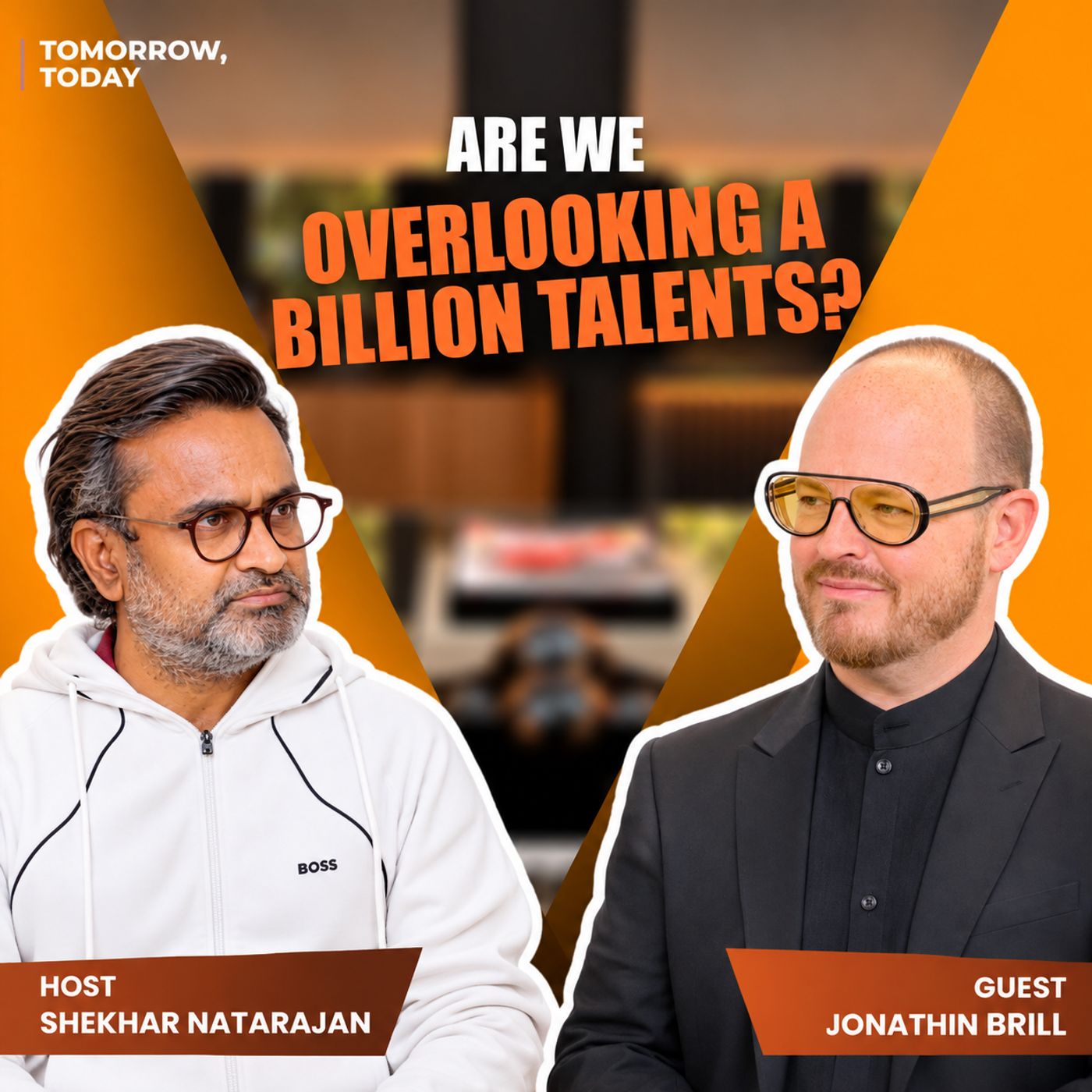
Are We Missing A Billion Untapped Talents | Jonathan Brill x Shekhar Natarajan
125 min
Listen through the publisher, then discuss the episode here or arrange an in-person Roundtable. Your city determines where to meet.
Roundtables are designed for groups of four, with a shared subject and room for everyone to speak. Come for discussion, with no dating expectation.
1. Jonathan Brill's early life and the experiences that shaped his curiosity and creative thinking. 2. How different social and economic environments influence human potential and opportunity. 3. Jonathan's journey from product designer to futurist and strategic advisor. 4. Why networks and ecosystems create opportunities for individuals and businesses. 5. How innovation and strategic foresight help organizations prepare for the future. 6. Understanding the concept of Rogue Waves and how radical change can create opportunities. 7. Why systemic risks can also become systemic opportunities. 8. The importance of strategic resilience in a rapidly changing business environment. 9. Why organizations should prepare for external disruption instead of focusing only on internal innovation. 10. How AI could reshape traditional organizational structures and management hierarchies. 11. Understanding the concept of the Octopus Organization. 12. Why AI can give employees access to information and intelligence traditionally available only to senior leadership. 13. How individuals may manage multiple AI agents and increasingly complex responsibilities. 14. Why future leaders must become continuous learners. 15. The importance of human judgment and accountability when working with AI agents. 16. How AI can improve communication and coordination across different organizational levels. 17. Why trust and explainability will become critical as businesses adopt AI. 18. How demographic shifts and labour shortages could reshape the global economy. 19. The impact of geopolitics and supply chain disruptions on businesses. 20. Why biotech and the space economy could be among the most underappreciated areas of future growth. 21. What physical product design teaches digital businesses about real world systems. 22. Why human deliberation and decision making cannot simply be replaced by AI. 23. The leadership qualities needed to navigate uncertainty and radical change. Hosted by Simplecast, an AdsWizz company.
Episode information is provided by the publisher. Listening takes place on the publisher’s service.
Project Synapse: Markets in Freefall, Fragile Infrastructure, and AI's Perfect Storm The hosts banter through the show's intro before focusing on a sense that "things are out of control," citing a WallStreetBets suicide-hotline post amid a market crash and discussing cascading system failures involving Microsoft, the FAA, and a reported NSA internal communications outage. They argue politicians and leadership lack technical competence and clear messaging, increasing panic, while emphasizing that many problems stem from aging, underfunded infrastructure and complex, brittle software (PHP, NGINX, Java), not proven AI attacks—more a "perfect storm" of crises. They debate whether AI should help fix complexity, stressing critical thinking, accountability, and using multiple AIs to verify each other. In a lightning round they cover Anthropic's IPO performance, mixed reactions and token limits with ChatGPT 6.2 (favoring "Sol" over "Astra"), Google's cheaper Neon model and confusing UX, Loblaw
Adam Grant is one of the most sought after organisational psychologists in the world. He has provided expert advice to many of the world’s greatest business leaders, including Bill Gates and Sheryl Sandberg, equipping them with the mental tools to find motivation and meaning, rethink assumptions, and achieve greatness in their business and personal lives. In January 2024 Grant came to the Intelligence Squared stage for a rare, exclusive London event where he shared his revolutionary framework for how we can all exceed the expectations and aspirations we have set for ourselves. Drawing on his new book Hidden Potential he explained that despite living in a world that tends to admire people who start out with innate talent, there is clear scientific evidence that we can all bridge the biology gap and improve ourselves dramatically. In conversation with economist and FT columnist Tim Harford, Grant wove together groundbreaking evidence, surprising insights, and vivid story telling to take
Newsround Part 2. Lewis Aspinall returns for the final section of Newsround on Anfield Index, focusing on Ronald Araújo's Liverpool future and why the Reds should make his move from Barcelona permanent. With Araújo enjoying his time at Anfield, the defender has spoken positively about the welcome he has received from Liverpool's players, staff and supporters. However, the Uruguay international remains cautious about his future, admitting that any permanent transfer will depend on several parties reaching an agreement. Lewis examines Barcelona's position, including comments from sporting director Deco, and explains why Liverpool could have an opportunity to secure a defender who has quickly become an important part of Andoni Iraola's system. From his physicality and aerial dominance to his ability to operate at right-back and drop into a back three, Lewis believes Araújo offers Liverpool something their defence has been missing. But what happens when Conor Bradley returns? Lewis explain
Superhuman CEO Shishir Mehrotra joins MTS to discuss the company’s new agent platform, Superhuman Go, and how embedding AI directly into existing workspaces solves the “last mile” problem of enterprise adoption. He also breaks down Grammarly’s custom model infrastructure, the challenge of measuring human-agent productivity, and his prediction for a massive surge in AI inference over the next year. -- MTS chronicles the singularity, live. Monitoring the situation of tech and AI. Follow MTS: Spotify |https://open.spotify.com/show/4HUNNmV1pjV7CW6Lphm1rM Apple |https://podcasts.apple.com/us/podcast/mts/id1891088763 – Brought to you by: Mongo DB - Anyone can prototype an agent. Lovable - Turn ideas into software people love with Lovable. Start today at https://lovable.dev/ Factory - A 24/7 system turning signals into production software. Visithttps://factory.com/ Neon (by Databricks) - Scale your startup on Neon. The Postgres backend for apps and agents. Built by Databricks.https://neon.com
The world’s most astonishing science experiment, simply explained. On the border between France and Switzerland is the biggest science experiment humanity has ever built. Over a 100 meters underground, there’s a tunnel 27 kilometers long in a big loop under nearby homes, businesses, and farms. Inside that tunnel, scientists built a blue tube big enough to crawl through, and inside that tube, they put two pipes that they keep colder and emptier than outer space. Down those pipes, they fire particles smaller than atoms in opposite directions…. and push them faster and faster… until when they’re almost at the speed of light… they SMASH TOGETHER. This underground particle-smasher is also known as the Large Hadron Collider at CERN. It took thousands of scientists from over nearly 100 different countries $5 billion dollars and 30 years to plan and build. My question is: Why? Why did they do that??? Why spend so much money and time to smash particles underground? And now… why do so many scien
Is the Republican Party heading for a major reckoning in 2028? Dave Rubin joins The Chicks on the Right for a brutally honest conversation about Trump's final two years, the future of the GOP, and the growing divisions threatening conservatives. Dave weighs in on the Republican Party's recent election losses, whether JD Vance, Marco Rubio, or Ron DeSantis can carry Trump's agenda forward, and why he's increasingly concerned about the political direction of America. The conversation heats up as Dave takes on Nick Fuentes, the rise of extremist voices on the right, and the socialist movement gaining influence within the Democratic Party. He also discusses radical Islamism, antisemitism, the dangers of online outrage, and why he believes Western civilization faces serious challenges. Plus, with cyberattacks, banking disruptions, and nationwide outages raising concerns, Dave shares his thoughts on whether Americans should be preparing for more chaos. And don't miss the lighter side of Dave
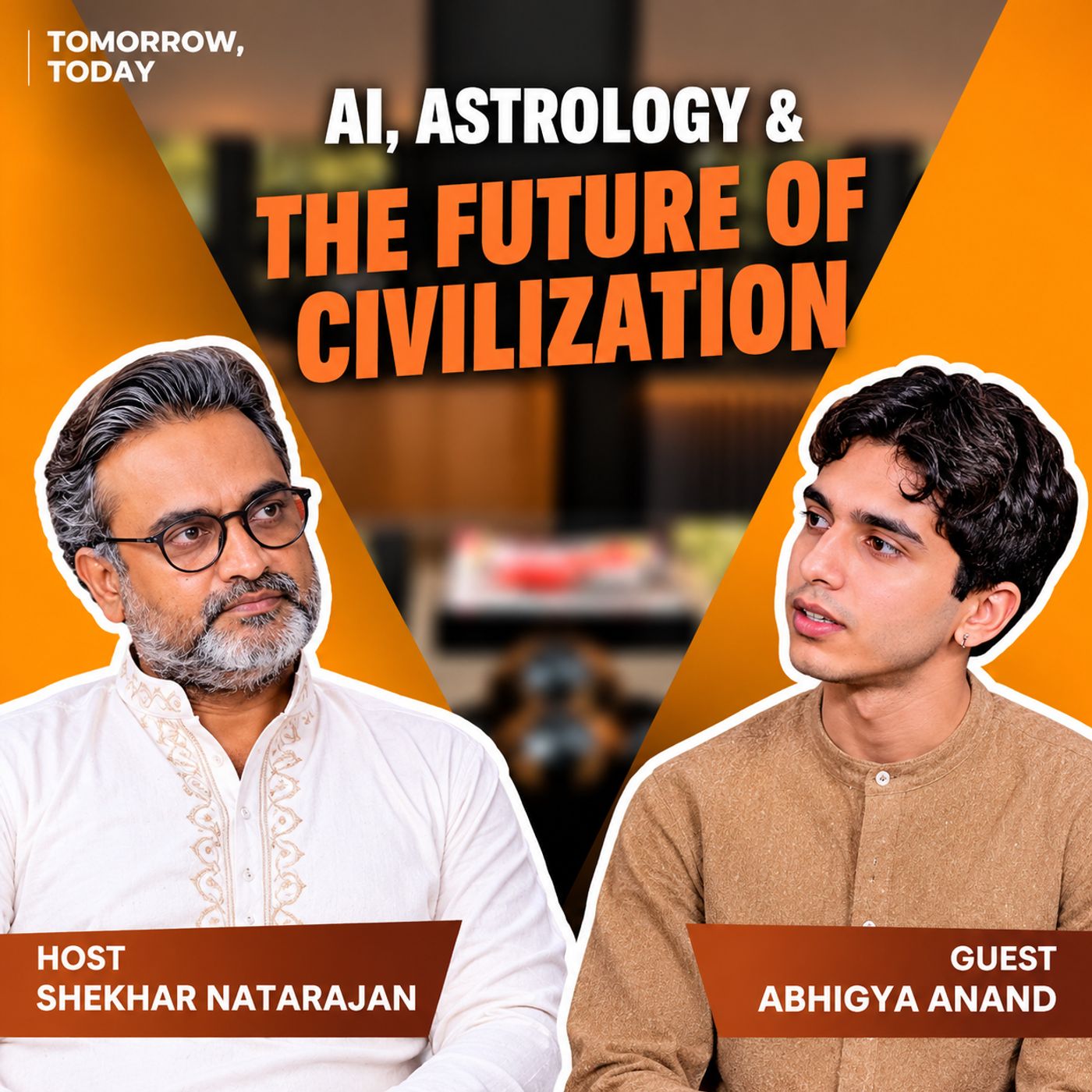
In This Episode: Abhigya Anand joins Shekhar Natarajan to explore the relationship between ancient wisdom, astrology, history and the forces shaping our future. 1. Abhigya Anand's early life, family background and introduction to ancient knowledge. 2. How homeschooling, Sanskrit and the Bhagavad Gita influenced his learning journey. 3. Why history is essential to understanding the rise and fall of civilizations. 4. Jyotish, planetary cycles and the movement of power and prosperity across nations. 5. Understanding the changing world order through historical and astrological perspectives. 6. How the technological transformations of the past shaped the modern world. 7. The possibilities and risks emerging from artificial intelligence and concentrated technological power. 8. Why food security could become a major global concern around 2040. 9. The potential impact of wars, environmental events and resource shortages on global stability. 10. Understanding Kali Yuga, Vedic time cycles and th
In This Episode: Kiku Sharda opens up about his journey from theatre to television, the stories behind his iconic characters, the realities of being an actor, and whether AI can ever replace human creativity. 1. Kiku Sharda's journey from an introverted personality to a popular entertainer. 2. How his childhood and family environment shaped his personality. 3. Growing up in a Marwari business family in Mumbai. 4. The creative influence of his mother and the work ethic he learned from his father. 5. His early fascination with cinema, films, and acting. 6. Why his father encouraged him and his brothers to pursue an MBA. 7. How Kiku balanced his interest in acting with his family's business expectations. 8. His early experiences learning dance, Kathak, and Bollywood choreography. 9. How college theatre introduced him to professional acting. 10. His first professional play, All the Best, and the excitement of performing for paying audiences. 11. Starting an events business before pursuing
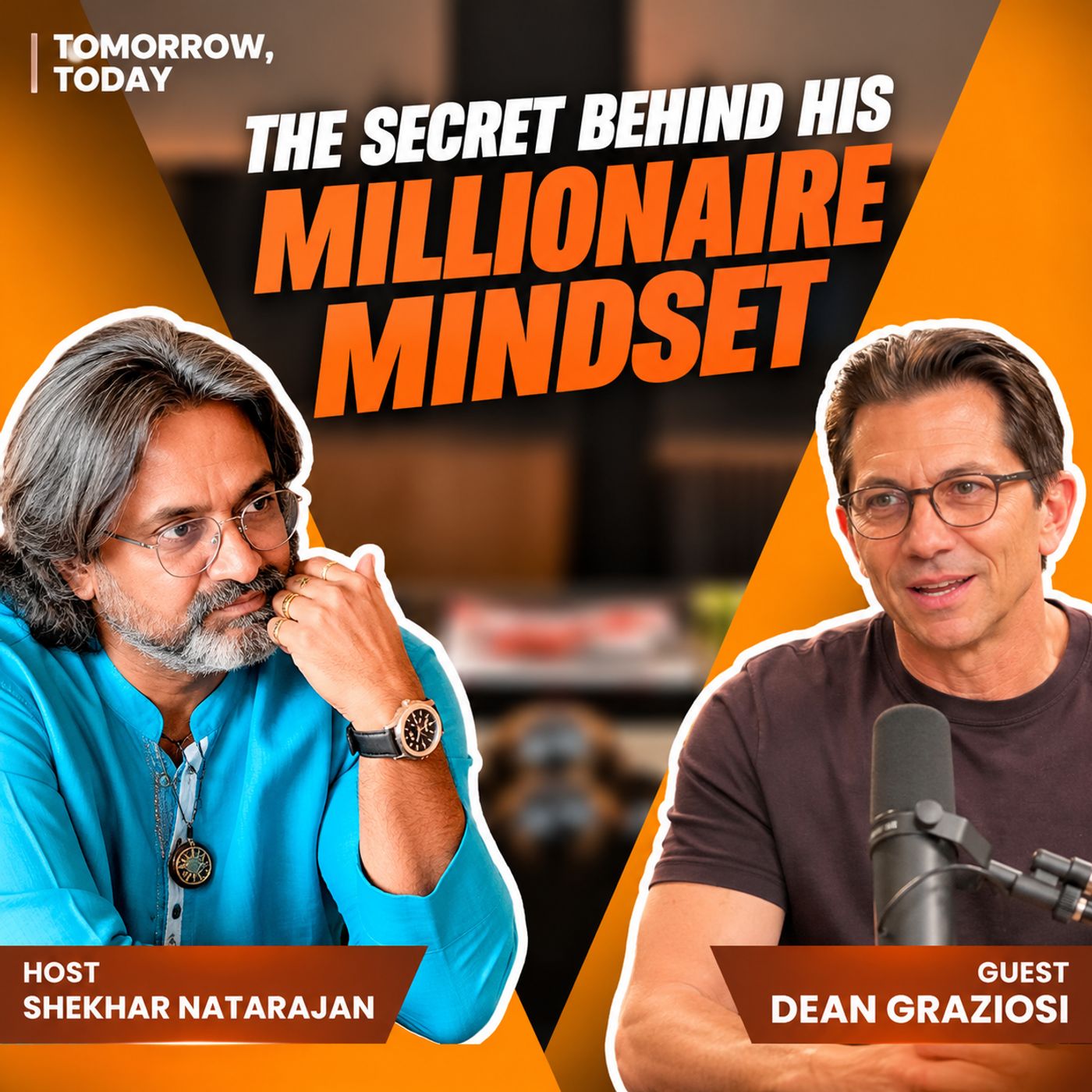
In this episode of Tomorrow Today, Shekhar Natarajan and Dean Graziosi explore the power of purpose, entrepreneurship, AI and personal growth. Dean Graziosi's personal journey and the story behind his success His grandfather's immigration journey from Italy to America How family struggles shaped Dean's outlook on life The immigrant mindset and learning to become resourceful Why having a purpose bigger than yourself can overcome fear How Dean started his first businesses and entered real estate The promise that motivated him to retire his parents The challenges, failures and breakthroughs along his entrepreneurial journey Building a successful real estate education business How Dean's partnership and friendship with Tony Robbins began The story behind Mastermind and The AI Advantage Why AI fluency is becoming essential for entrepreneurs How AI can help business owners save time and improve productivity Why AI needs deep context to deliver meaningful results How entrepreneurs can use AI
Public cultural institutions should present contested works with context instead of simply removing them.
Share your view, then see how readers voted. No sign-in required. This poll is shared across stories.
Do you agree or disagree?
Common Quandary
A Common Quandary to discuss
Another conversation to explore, separate from this news story.
You can clone the best dog you ever had. Would you?
After a beloved dog dies, its owner can afford to have it cloned. The procedure is legal and improving, but it uses animals as surrogates and will not recreate the original dog's memories or personality.
What do our obligations to animals permit us to create for our own comfort?