[BONUS] Colorful blood in nature and how a tick bite causes a meat allergy: Tiny Show and Tell Us #59
16 min
Listen through the publisher, then discuss the episode here or arrange an in-person Roundtable. Your city determines where to meet.
Roundtables are designed for groups of four, with a shared subject and room for everyone to speak. Come for discussion, with no dating expectation.
Why do humans have red blood, while other animals have green, purple, or even yellow blood? In this episode of Tiny Show and Tell Us, we explore the surprisingly colorful world of animal blood, from Antarctic ice fish with nearly transparent blood to green-blooded skinks and purple-blooded peanut worms. Then we enter tick territory and investigate how a tick bite leaves some people unable to eat red meat and other animal products. The answer involves a condition known as alpha-gal syndrome, where a tick bite can trigger an immune response to the alpha-gal sugar found in many mammals.
Episode information is provided by the publisher. Listening takes place on the publisher’s service.
For extra nuances, references and early access to data like these, see the newsletter: https://open.substack.com/pub/staycuriousmetabolism/p/aging-is-an-explosion-can-we-stop?r=40ekz2&utm_campaign=post&utm_medium=web&showWelcomeOnShare=true (https://open.substack.com/pub/staycuriousmetabolism/p/aging-is-an-explosion-can-we-stop?r=40ekz2&showWelcomeOnShare=true) Hundred Health Link: https://go.hundred.com/nick-norwitz Discount Code: StayCurious50 (Disclaimer below) Berberine and Heart Health Letter: https://staycuriousmetabolism.substack.com/p/how-berberine-lowers-cholesterol?r=40ekz2 Description Aging is usually framed as slow, passive decay — but emerging research suggests something far more active is happening beneath the surface. In this video, we explore groundbreaking evidence showing that breakdown of the extracellular matrix (the structural scaffold of your tissues) releases bioactive fragments that actively trigger inflammation and biological aging. You’ll learn how specific ma
One evening, a mother was putting her three-year-old son to bed, just as she'd done countless times before. She read him a story, rubbed his back, and waited for him to fall asleep. But for no apparent reason, she suddenly became overwhelmed by sadness. The feeling was so intense that she began to cry. Later that night, she woke to the unmistakable sounds of someone playing with her son's favorite building blocks. When she went to investigate, she found him sound asleep and his toys put away. But something in the room wasn't quite as she'd left it. Over the following nights, that same unexplained sadness returned. It wasn't until she thought about the time of year, and a heartbreaking loss she'd experienced a decade earlier, that she began to wonder whether these strange occurrences might be connected. Could someone she'd lost have found a way to visit? #RealGhostStoriesOnline #TrueGhostStories #SpiritVisitations #AfterDeathCommunication #SignsFromBeyond #ChildSpirit #ParanormalEncount
Your body doesn't work like you think... Take your personal data back with Incogni. How and when people are having kids is changing, but our bodies aren't. As we get older, it can get harder to have kids when we want to. So smart people figured out it’s possible to remove eggs, freeze them, and unfreeze them to use later. They can even fertilize those eggs to make embryos and freeze those. Basically, humans invented cryosleep! … Just for tiny cells. It’s totally sci-fi - and you need to know about it. This is a level of control over our bodies no species has ever had before. It’s already changing people’s lives - and how our species can reproduce. But there are real concerns about whether it’s worth it. Because let me tell you, the process is not easy. I’ve been taking medication for two weeks. And at the same time, I’ve been doing research, talking to doctors, and learning as much as I can about the cutting edge of fertility tech. In this video, I'm going to take you behind the scenes
In this calm and sleepy facts episode, we spend eight peaceful hours exploring some of the quietest wonders of the natural world. We begin beneath a gathering thunderstorm, following warm air as it rises into towering clouds and learning how a single flash of lightning can briefly heat the air to several times the temperature of the surface of the Sun. From there we settle into the hidden world of hibernation, where animals slow their breathing and their heartbeats to just a few beats a minute and wait out the long winter in stillness. Next, we wander among the trees, discovering how they lift water hundreds of feet into the air without a single moving part and quietly record each passing year in rings of wood. Finally, we cross the deserts, where the heat of the day gives way to cold, clear nights and some dunes hum softly as the sand slides down their slopes. Each story unfolds slowly and gently, with no sudden sounds, so the whole night can pass in calm and quiet wonder. Let these c
In today's brief: Lake Erie, 1957: a newly released Air Force report says two boys saw a humming, bell-shaped craft near the Enrico Fermi Atomic Plant. Skinwalker Ranch: owner Brandon Fugal calls the new files landmark and recalls a daylight saucer over the mesa. Warship footage: a 20-second 2020 infrared clip shows a light crossing a US Navy ship in the Middle East, with no Pentagon assessment. Martha's Vineyard, 1957: a spiked, nickel-coloured object that the Air Force put down to a radar-reflector balloon. Loch Ness: reported sightings jump to 15 this year, up from six in 2025. The Book of Miracles: a 16th-century manuscript of comets, blood rain and multiple suns heads to auction at Christie's. Quick hits: a 1952 file blames the saucer wave on temperature inversions; more Pentagon UFO files are on the way. Every story and source: https://believepod.com/ufo-paranormal-news-22-november-2026/ New episodes every morning. Keep your eyes on the sky. Sources: FOX 2 Detroit: https://www.fo
GLYPHOSATE, MYCOTOXINS, AND THE HIDDEN COST TO LIVESTOCK HEALTH Rancher and broadcaster Trent Loos sits down with Howard Vlieger and Carl DiPiazza to explore how glyphosate, GMO grain, and mycotoxins may be harming livestock health, reproduction, and meat quality. After facing reproductive problems…
In this episode of Tiny Show and Tell Us, a listener asks if the film company Kodak really knew about the Trinity atomic bomb test before the public, leading us down a fascinating story about radioactive fallout, x-ray film, and secret agreements. Then we tackle a mind-boggling question: if there are birds that look blue, then why don't any bird feathers contain blue pigment? Related episodes you may enjoy: When movies caught fire: The history and science of nitrocellulose film (https://www.acs.org/pressroom/tiny-matters/nitrocellulose-film.html) [BONUS] Decoding dinosaur colors and the failure of postpartum care (https://www.acs.org/pressroom/tiny-matters/dinosaur-colors-and-postpartum-care.html)
In the late 1950s, a tuberculosis drug was repurposed as the world’s first antidepressant. Then the selective serotonin reuptake inhibitor (SSRI) Prozac ushered in a new era of antidepressants. Today SSRIs are some of the most widely prescribed drugs in the country, but gaps still exist in our biological understanding of mental health, the overall efficacy of antidepressants, and predicting serious side effects. In response, some scientists and physicians are turning to different classes of drugs altogether to treat depression. Listen to Chain Reaction by ACS wherever you get podcasts and at acs.org/chainreaction. (http://acs.org/chainreaction)
This week we’re sharing a special episode from the brand-new fifth season of Going Wild with Dr. Rae Wynn-Grant, the multi-award-winning podcast from our our friends at PBS’ Nature (https://www.pbs.org/wnet/nature/). In this new season, host and acclaimed wildlife ecologist, Dr. Rae Wynn-Grant, heads out into the field to bring you closer to the people, the animals, the sounds and the stories that make these wild spaces so magical and so worth protecting. Like in today’s episode, featuring soil ecologist and social media sensation, Jordon King, who gives Dr. Rae Wynn-Grant a proper initiation into the Florida Everglades, where even the dirt has a story to tell. But with drought transforming the wetlands in one of the region's driest seasons, they're discovering that what's missing can be just as fascinating as what's beneath their feet. For more episodes like this, be sure to follow Going Wild with Dr. Rae Wynn-Grant (https://play.megaphone.fm/q6eirfjdsckwxrpmdryvwq) on Apple Podcasts,
Essential public services should be protected even when they operate at a financial loss.
Share your view, then see how readers voted. No sign-in required. This poll is shared across stories.
Do you agree or disagree?
Common Quandary
A Common Quandary to discuss
Another conversation to explore, separate from this news story.
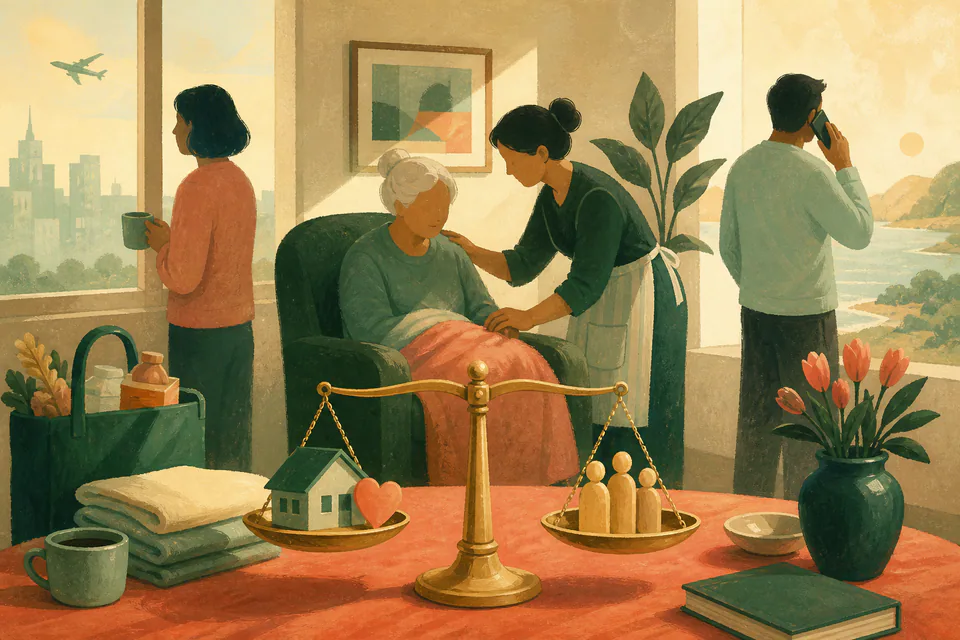
One sibling did years of caregiving. Should they get more of the inheritance?
One sibling lives near an aging parent and handles appointments, errands, and emergencies. The others live far away, call regularly, and assume the nearby sibling will receive the same inheritance despite years of unpaid work.
When does family care become labor that should be repaid?