Listen through the publisher, then discuss the episode here or arrange an in-person Roundtable. Your city determines where to meet.
Roundtables are designed for groups of four, with a shared subject and room for everyone to speak. Come for discussion, with no dating expectation.
Carbon dioxide emissions are one of the main contributors to climate change. Capturing excess carbon dioxide from the atmosphere and burying it underground is one method for reducing the impact to a small degree. But could you do anything else with it? That’s what CrowdScience listener Tom in the US would like to know - can you actually make things out of captured carbon dioxide that we could use in our daily lives? Could you even make bicycles and car parts from it? Always wanting to put his hot air to good use, presenter Alex Lathbridge investigates. He talks to scientist Susana Garcia Lopez, an expert on storing and using carbon dioxide at Heriot-Watt University in the UK, and discovers that only a fraction of it is currently being captured from the atmosphere – and an even tinier amount is being turned into products. So what can we make from it, and will it help us fight climate change? Alex travels to Antwerp in Belgium to meet Benoit Illy and his team at Fairbrics who have found a way to use carbon dioxide to make polyester. It’s the most widely produced synthetic textile in the world and is made from fossil fuels. With the fashion industry producing double the emissions of air travel, could this be a way of tackling two climate issues at once? He also talks to Oliver Gould from the company Made of Air in Berlin, Germany, who have developed a method of making products from plant waste, including the facades of buildings. But can you really make car parts and bicycles from carbon dioxide? And more importantly, is it going to help us save the planet? Presenter: Alex Lathbridge Producer: Jo Glanville Editor: Ben Motley (Photo: Atmospheric carbon dioxide - stock illustration Credit: VICTOR DE SCHWANBERG via Getty Images)
Episode information is provided by the publisher. Listening takes place on the publisher’s service.
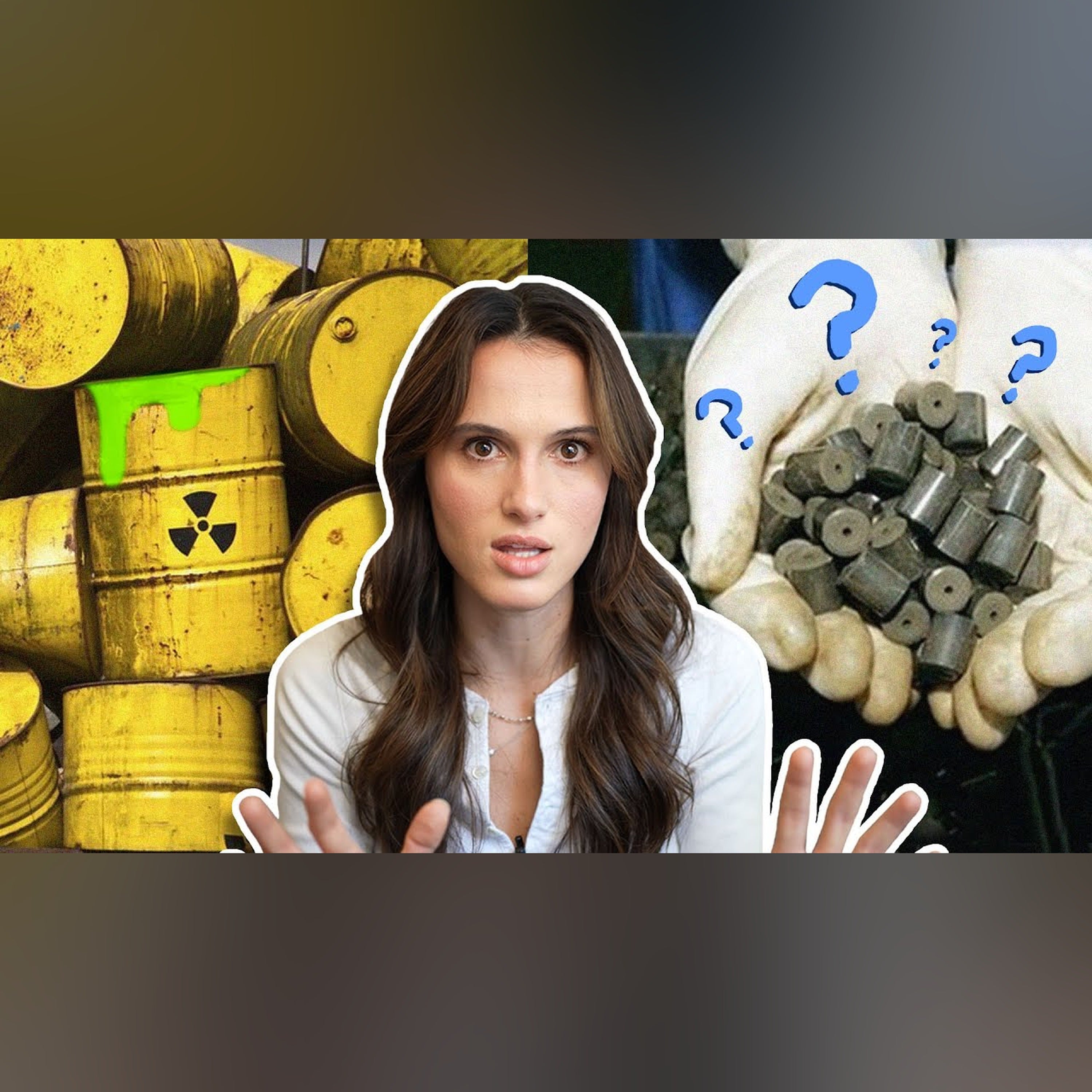
What if we could actually USE nuclear waste? Watch Johnny’s explainer on nuclear power here - and subscribe to his channel! https://youtu.be/QzTgZ6kOEM8 Nuclear waste is scary. Maybe you’ve seen it as glowing green goop in The Simpsons, or as a radioactive threat on the news. Either way, you likely know it has been a major block to the use and improvement of nuclear power. Over the last few decades, experts, politicians and the public have had heated debates over what to do with this radioactive material created by nuclear power plants. But what if there were a way to not just store nuclear waste, but actually USE it? This video is about the effort to make electricity out of nuclear waste. Really. It turns out, we developed the tools to do this decades ago. This story is about a technology we left behind and the people who want to bring it back. For this video, I had the privilege of visiting one of the largest and oldest research centers in the US, the Argonne National Laboratory. I’m
What would you do if the orbs inside an ancient temple seemed to be watching you? In this episode of Let’s Get Freaky, we welcome back Mark Olly, author, archaeologist and television presenter. Mark wrote and presented ITV Granada’s Lost Treasures and has appeared on Ancient Aliens. With the spirit of a real-life Indiana Jones, he takes us from an ancient tomb in Egypt to abandoned villages in Bulgaria and preserved Viking ships in Oslo. Inside the Egyptian temple, Mark and his fellow explorers encountered glowing orbs that seemed to be watching them. The team captured the encounter on camera, and Mark takes us through what happened and explains what made the lights seem intelligent. In Bulgaria, Mark recalls a time when entire derelict villages could be bought for as little as £3,000, complete with houses, churches and surrounding land. He also shares what drew him to these places and explores possible historical links between Eastern Europe and Britain. In Oslo, Mark describes what i
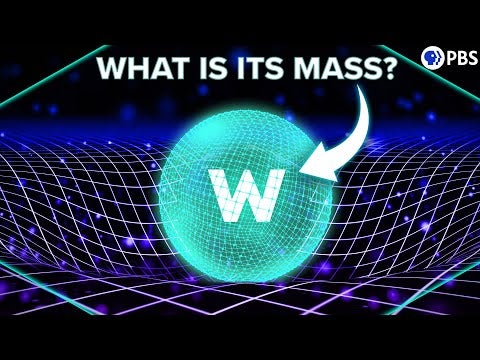
Take the Space Time Fan Survey Here: https://forms.gle/wS4bj9o3rvyhfKzUA Uploaded 27-04-22 PBS Member Stations rely on viewers like you. To support your local station, go to:http://to.pbs.org/DonateSPACE Sign Up on Patreon to get access to the Space Time Discord! Fermilab physicists really care about the mass of the W boson. They spent nearly a decade recording collisions in the Tevatron collider and another decade analysing the data. This culminated in the April 7 announcement that this obscure particle’s mass seems to be heavier than expected. So why do we care? Because understanding why this particle even has mass was one of the most important breakthroughs in our understanding of the subatomic world. And because measuring its precise mass either doubles down on our current understanding or reveals a path to an even deeper knowledge. The FermiLab discrepancy is a tantalizing hint of the latter. Need Catch Up On Your Fundamental Forces? Check out the Space Time Merch Store Sign up fo
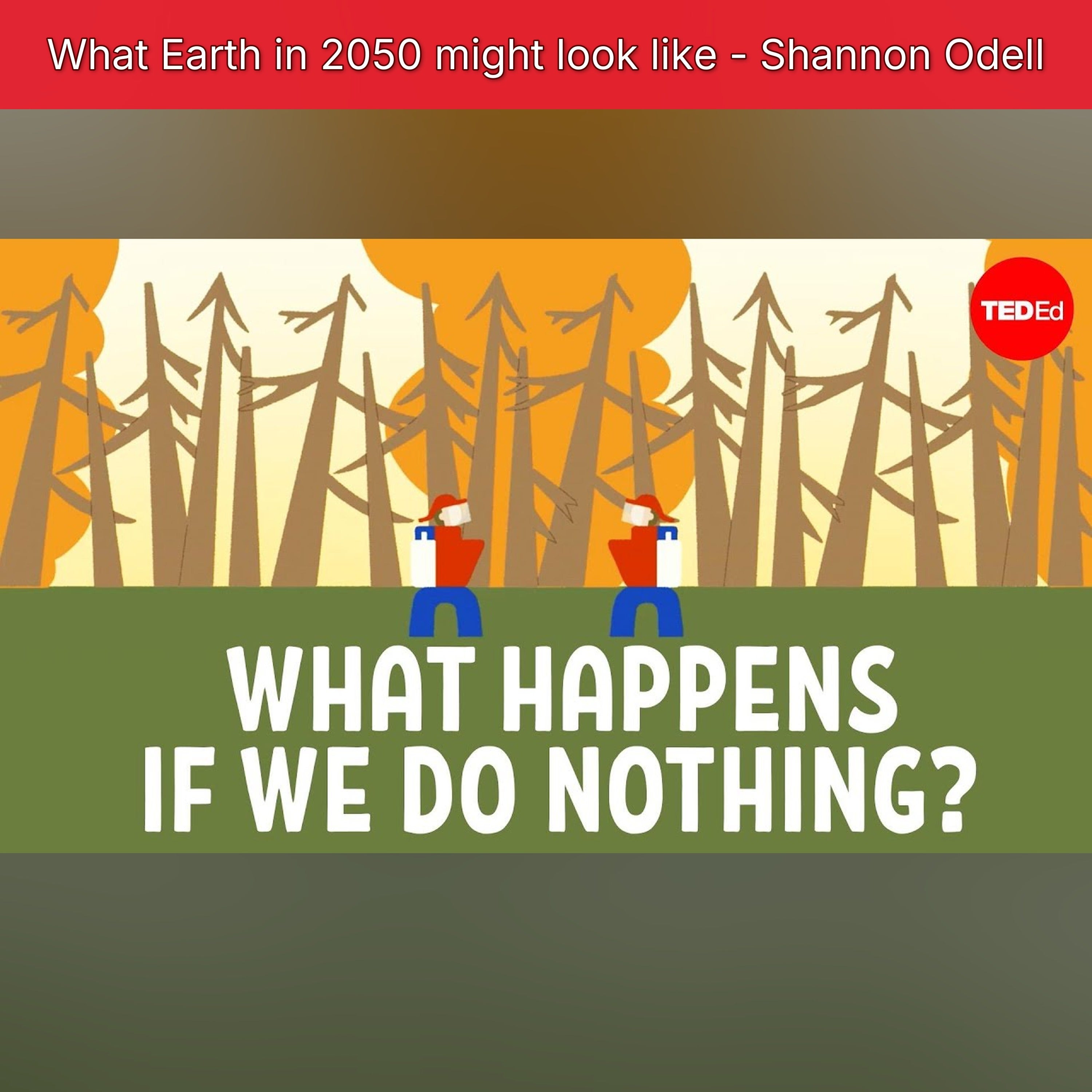
What could our future world look like if we continue to do nothing about climate change? Take a look at the possibilities. -- While we’re already feeling the devastating effects of human-caused climate change, governments continue to fall short on making and executing emissions pledges that would help thwart further warming. So, what will our world look like in the next 30 to 80 years, if we continue on the current path? Shannon Odell offers a glimpse at Earth's possible future. Lesson by Shannon Odell, directed by Sofia Pashaei. This video made possible in collaboration with Speed & Scale Learn more about how TED-Ed partnerships work: https://bit.ly/TEDEdPartner A special thanks to Mark Maslin who provided information and insights for the development of this video. Support Our Non-Profit Mission ---------------------------------------------- Support us on Patreon: http://bit.ly/TEDEdPatreon Check out our merch: http://bit.ly/TEDEDShop ---------------------------------------------- Con
What if your child already loves learning... and you’re just looking for it in the wrong place? This week, I’m exploring one of the questions I get asked more than almost any other: “My child used to be so curious. What happened?” In today’s episode, I challenge one of the biggest myths in modern parenting: that a love of learning looks like a child happily reading, sitting at a desk, completing homework without complaint, and engaging enthusiastically with educational activities. I explain what the research actually tells us and walk you through the psychology of curiosity, the science of intrinsic motivation, why children become obsessed with Minecraft, dinosaurs, trains, or random facts, and why those interests may be far more important than they appear. I also unpack why children seem to have a built‑in radar for anything that feels educational, why homework battles happen so often, and what the evidence really says about homework in the primary years. If you've ever worried that y
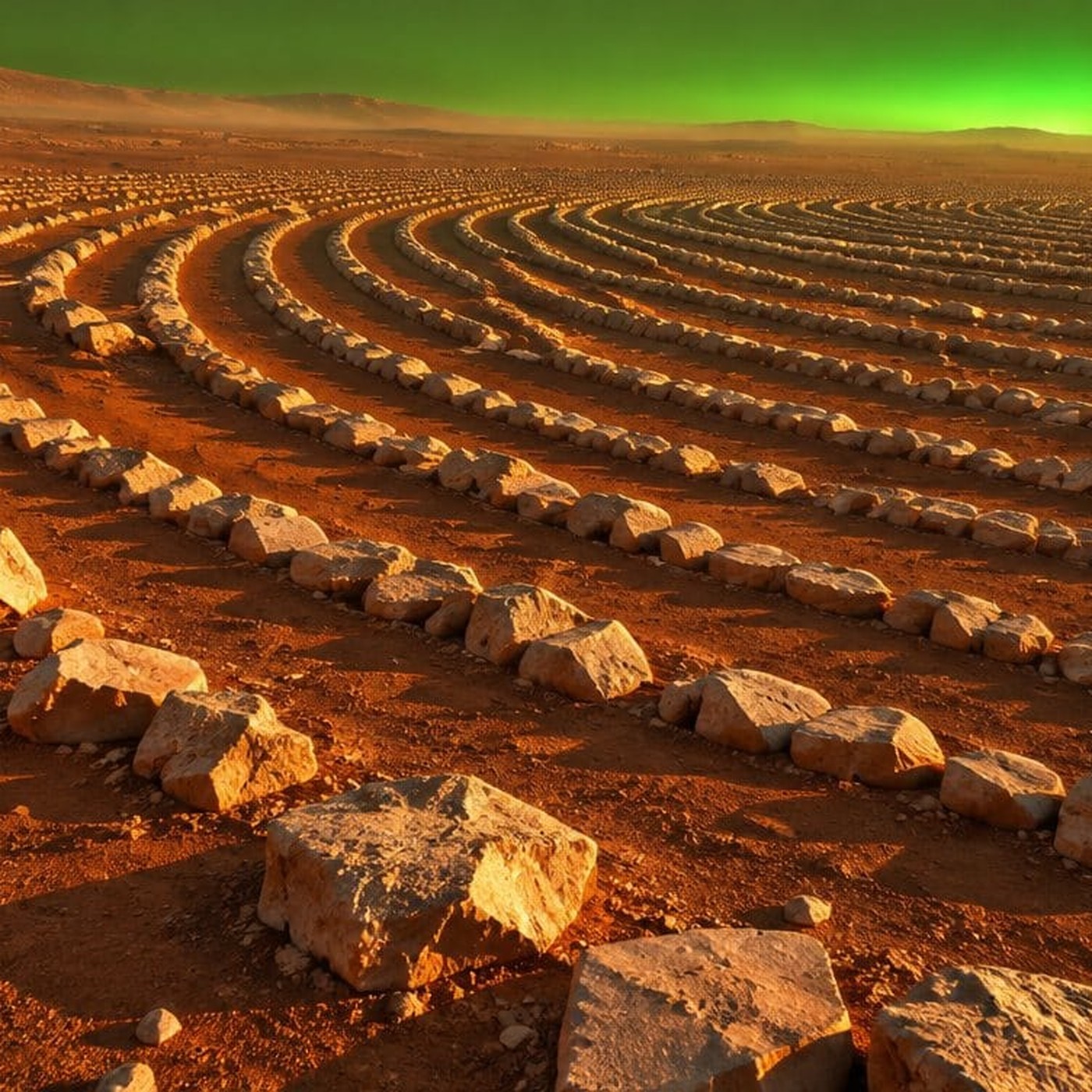
In today's brief: A fingerprint on Mars: NASA's HiRISE camera finds bright boulders lined up in long curving rows on Daedalia Planum, a pattern seen nowhere else on the planet. The light that wasn't Venus: a reader's predawn photo shows Venus and six stars, plus a seventh light no catalog can name. Curses to kill a god: 40 pierced, charred fragments of the 3,400-year-old Apophis ritual turn up in temple rubbish dumps at Thebes. Drawing near-death: 50 people sketched their near-death experiences, and the scenes fell into three shapes. An impossible eruption: the deepest explosive volcanic flow ever found, 6,000 metres down in the Challenger Deep. The Shroud's DNA: a new study finds people, animals, coral and crops on the Shroud of Turin. Quick hits: a Utah motorist's alien sighting, a one-horned "unicorn" deer in Estonia, the cats of Beni Hassan, and the Pentagon's next UFO file release. Every story and source: https://believepod.com/ufo-paranormal-news-26-november-2026/ New episodes ev
The news has been full of references to ‘El Niño’, a global weather phenomenon that, this year, is forecast to be the biggest yet. CrowdScience listener Kennedy is a farmer in Kenya and this has got him worried. He wants to know exactly what El Niño is, why it causes such differing weather patterns all over the world and, most importantly, how it might affect his crops. Always keen to help listeners answer global science questions with local impacts, CrowdScience is on the case. Presenter Anand Jagatia travels to meet oceanographer Ligin Joseph, from the University of Southampton in the UK. Equipped with a tank full of water, a sprinkling of turmeric, some purple dye and a hairdryer, Ligin recreates the Pacific Ocean in his living room. How does changing the hairdryer setting create a mini-El Niño in the tank, and why does that affect the weather everywhere else? Peruvian biologist Rosa Vasquez Espinosa, from Amazon Research International, has already witnessed the effects of El Niño f
In November 2016 the BBC World Service launched a brand new show in which listeners would send in their science questions, and a team of fearless presenters would find answers. Ten years on, CrowdScience is still going strong. We’ve answered over five hundred questions from our listeners, spoken with thousands of scientists and covered subjects from the mundane to the profound. Our audience’s insatiable curiosity has taken us to the bottom of the ocean, to the top of volcanoes and to the edge of a hurricane. We’ve been on adventures in audio that have been surprising, fascinating and breathtaking, all to find answers to questions sent in by CrowdScience listeners. In true CrowdScience fashion, we wanted to celebrate our tenth anniversary with our listeners. We asked the audience for their CrowdScience stories, and to pick some of their favourite moments from the last decade. As a result we’re revisiting some incredible episodes, including butterflies that migrate thousands of kilometre
Large technology projects should demonstrate local benefits before receiving public incentives.
Share your view, then see how readers voted. No sign-in required. This poll is shared across stories.
Do you agree or disagree?
Common Quandary
A Common Quandary to discuss
Another conversation to explore, separate from this news story.
Everyone clicks through mandatory training without reading it. May you do the same?
Your employer requires an hour-long annual course whose answers have not changed in years. Coworkers run it in the background and share the quiz answers. Completing it carefully would make you late for actual work with a deadline.
When does pointless compliance excuse pretending to comply?