Creating a digital museum of museums with Amit Sood
9 min
Listen through the publisher, then discuss the episode here or arrange an in-person Roundtable. Your city determines where to meet.
Roundtables are designed for groups of four, with a shared subject and room for everyone to speak. Come for discussion, with no dating expectation.
View full lesson: http://ed.ted.com/lessons/building-a-museum-of-museums-on-the-web-amit-sood Imagine being able to see artwork in the greatest museums around the world without leaving your chair. Driven by his passion for art, Amit Sood tells the story of how he developed Art Project to let people do just that. Talk by Amit Sood.
Episode information is provided by the publisher. Listening takes place on the publisher’s service.
What if the very things that trigger you are the doorway to your greatest growth? Sage Robbins shares a powerful reminder that while we can’t control the world around us, we can take full responsibility for our inner world and how we respond. Uploaded 01-02-26 Watch more videos like this Creating Moments of Stillness in the Chaos: https://youtu.be/eR6e50AmeRY 7 Keys to Restoring True Connection: https://youtu.be/vraPXGpVtvc 10-Minute Meditation on Nurturing Compassion: https://youtu.be/gBE0vX6JwkM A Kinder Way to Meet the Darkness | Sage Robbins on Jillian on Love: https://youtu.be/PlvtL11Q3Bg Join my weekly newsletter 'The Mirror' to receive these exclusive videos each week: https://www.sagerobbins.com/ Follow Sage Robbins: Instagram: https://www.instagram.com/sagerobbins Facebook: https://www.facebook.com/SageRobbins Tiktok: https://www.tiktok.com/@sage.robbins LinkedIn: https://www.linkedin.com/in/sagerobbins Website: https://www.sagerobbins.com (https://www.sagerobbins.com/) Sage R
#JimRohnMotivation #JimRohn #JimRohnSpeech In this Jim Rohn Motivation video, discover the power of one decision to change everything. This isn’t about inspiration—it’s about ownership, discipline, and the mindset required to reclaim your life and create lasting transformation. Key Topics From This Motivational Video: The day you decide is the day everything changes Why philosophy shapes results more than circumstances The link between pain, frustration, and personal growth Discipline, momentum, and the test of time How your environment and associations impact your future This powerful Jim Rohn motivational video outlines the complete journey of personal transformation—starting with a single decision. You'll learn how to shift from wishing to acting, from blaming to owning, from reacting to creating. With deep insights on discipline, responsibility, and mindset, this video is a blueprint for becoming the kind of person who doesn't just start—but endures, thrives, and leads with purpose
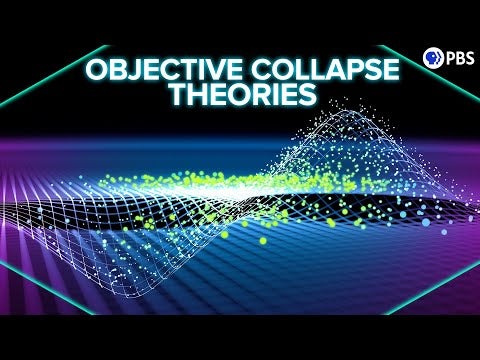
Thank you to Wren for supporting PBS. To learn more, go to https://wren.co/start/spacetime Uploaded 16-02-22 Take the Space Time Fan Survey Here: https://forms.gle/wS4bj9o3rvyhfKzUA PBS Member Stations rely on viewers like you. To support your local station, go to:http://to.pbs.org/DonateSPACE Sign Up on Patreon to get access to the Space Time Discord! Objective Collapse Theories offer a explanation of quantum mechanics that is at once brand new and based in classical mechanics. In the world of quantum mechanics, it’s no big deal for particles to be in multiple different states at the same time, or to teleport between locations, or to influence each other faster than light. But somehow, none of this strangeness makes its way to the familiar scale of human beings - even though our world is made entirely of quantum-weird building blocks. The explanations of this transition range from the mystical influence of the conscious mind to the grandiose proposition of multiple realities. But Obje
What is being built and how do I join it? In this Afternoon Vibe from The Positive Mindset Podcast, Henry Lawrence talks about the bigger picture behind the season you're in. The life we live is an experience, and what we're experiencing is the creation of something more. Henry pictures a construction site where one worker pours concrete in his own corner while another goes to the one who drew the plan and asks where she's needed. He shares why a hard season isn't a punishment but soil, how one question can change the way you walk into every single day, and what starts to happen when your only goal is to get closer to the Creator: you learn to read the river, sense the wind and see that even volcanoes build. Surrender isn't needing to see it all. It's staying close to the One who does. In this episode: • "Show me what you're building. Where do you need me?" • "It's not a punishment, not failure, it's just soil." • "An interruption becomes an invitation. A delay becomes the design." • "
Yannik Schrade says privacy is the prerequisite for sovereign artificial intelligence, and that your AI provider is now your competitor. In this conversation with Andy and Rob, he argues that whoever controls the models and the compute will fight the real battle for self-sovereignty, and that those rules have to be enforced with cryptography rather than promises. He describes Arcium as an encrypted supercomputer, not a chain: inference stays encrypted, no single processor can read a prompt, and privacy no longer has to mean a worse product. He also looks ahead to a world where breakout applications only reach the mainstream if they are private by default. Yannik Schrade is co-founder and CEO of Arcium. Live from the financial capital of the world. Timestamps: 00:00 Intro 01:45 Protectors Can Become The Threat 05:13 Your AI Provider Is Your Competitor 07:20 No Single Machine Reads Your Prompt 09:39 The Internet Is Being Rebuilt Encrypted 11:56 An Encrypted Supercomputer Not A Blockchain
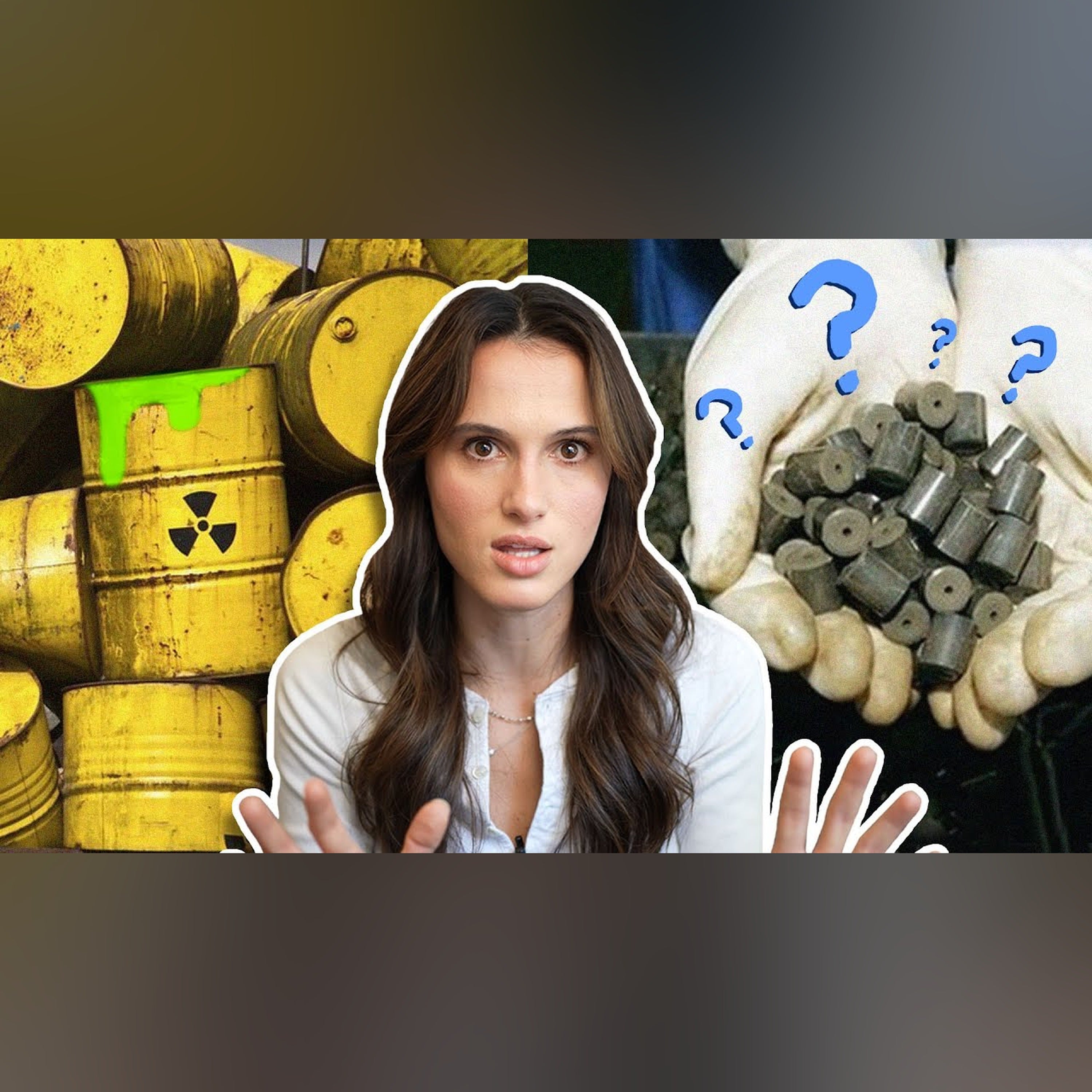
What if we could actually USE nuclear waste? Watch Johnny’s explainer on nuclear power here - and subscribe to his channel! https://youtu.be/QzTgZ6kOEM8 Nuclear waste is scary. Maybe you’ve seen it as glowing green goop in The Simpsons, or as a radioactive threat on the news. Either way, you likely know it has been a major block to the use and improvement of nuclear power. Over the last few decades, experts, politicians and the public have had heated debates over what to do with this radioactive material created by nuclear power plants. But what if there were a way to not just store nuclear waste, but actually USE it? This video is about the effort to make electricity out of nuclear waste. Really. It turns out, we developed the tools to do this decades ago. This story is about a technology we left behind and the people who want to bring it back. For this video, I had the privilege of visiting one of the largest and oldest research centers in the US, the Argonne National Laboratory. I’m
Dig into the slippery slope fallacy, which assumes that one step will lead to a series of events that lead to an extreme— often bad— scenario. Uploaded 19-08-21 -- It’s 1954. Vietnamese nationalists are on the verge of securing an independent Vietnam under communist leader Ho Chi Minh. U.S. President Eisenhower claims that by virtue of the "falling domino principle," communist control of Vietnam would lead to the global spread of authoritarian communist regimes. Can you spot the problem with this argument? Elizabeth Cox explores the slippery slope fallacy. Lesson by Elizabeth Cox, directed by TOGETHER. Support Our Non-Profit Mission ---------------------------------------------- Support us on Patreon: http://bit.ly/TEDEdPatreon Check out our merch: http://bit.ly/TEDEDShop ---------------------------------------------- Connect With Us ---------------------------------------------- Sign up for our newsletter: http://bit.ly/TEDEdNewsletter Find us on Twitter: http://bit.ly/TEDEdTwitter Pe
View full lesson: http://ed.ted.com/lessons/how-do-we-measure-distances-in-space-yuan-sen-ting Uploaded 09-10-14 When we look at the sky, we have a flat, two-dimensional view. So how do astronomers figure the distances of stars and galaxies from Earth? Yuan-Sen Ting shows us how trigonometric parallaxes, standard candles and more help us determine the distance of objects several billion light years away from Earth. Lesson by Yuan-Sen Ting, animation by TED-Ed.
As machines take on more jobs, many find themselves out of work or with raises indefinitely postponed. Is this the end of growth? No, says Erik Brynjolfsson -- it's simply the growing pains of a radically reorganized economy. A riveting case for why big innovations are ahead of us ... if we think of computers as our teammates. Be sure to watch the opposing viewpoint from Robert Gordon. Uploaded 30-08-13 Talk by Erik Brynjolfsson.
Moving a contested monument to a museum can be better than leaving it unchanged or destroying it.
Share your view, then see how readers voted. No sign-in required. This poll is shared across stories.
Do you agree or disagree?
Common Quandary
A Common Quandary to discuss
Another conversation to explore, separate from this news story.
Your teenager locks you out of their phone. When is it okay to look?
Your usually outgoing sixteen-year-old has withdrawn and stopped seeing friends. They insist they are fine and refuse to talk. You know their phone passcode and could read their messages without being discovered.
How serious must a fear be before protection outranks privacy?