Dr. Mike on how to be alert, not anxious, about your health
36 min
Listen through the publisher, then discuss the episode here or arrange an in-person Roundtable. Your city determines where to meet.
Roundtables are designed for groups of four, with a shared subject and room for everyone to speak. Come for discussion, with no dating expectation.
Dr. Mikhail Varshavski, better known online as Dr. Mike, is a board-certified family medicine physician and YouTuber who uses social media to educate the public on healthcare. In this special episode recorded at the Aspen Ideas: Health conference, Dr. Mike and Shoshana discuss the current shortage of primary care physicians and how to think critically about health influencers, tech wearables, and AI. Then Shoshana shares a counterexample from genome researcher Michael Snyder. Michael wears 8 tech devices—smart watches, rings, and glucose monitors—and makes the case for his vision of healthcare where tech can help you be more proactive about your healthcare. Talk featured Why I’m obsessed with health wearables (and you should be too) | Michael Snyder (https://www.ted.com/talks/michael_snyder_why_i_m_obsessed_with_health_wearables_and_you_should_be_too) Hosted on Acast.
Episode information is provided by the publisher. Listening takes place on the publisher’s service.
Today, Mel is doing something she's never done before on The Mel Robbins Podcast. She's bringing members of her team into the studio for live coaching with world-renowned communications expert Vinh Giang. Vinh is known for teaching millions of people online how to stop sounding insecure, speak more clearly, and get people to listen when you talk. And when you hear him coaching today, it will be like he’s coaching you. One person freezes when they're put on the spot. Another can't stop interrupting people. Someone else has great ideas but stays quiet because they're afraid of being judged. Does any of that sound familiar? And Vinh isn't just giving advice. He's coaching real people through practical exercises, right there in the studio, so you can hear the difference and start making those same changes in your own life. As Mel says, put yourself in their shoes. As Vinh works with each person, you'll recognize things you struggle with, too. You'll learn: -What to do when your mind goes b
Today, I’m honored to connect with Dr. Troy Badger. He is a board-certified cardiologist and interventionalist and the founder of Cardiostrong, a concierge preventive cardiology clinic in Provo, Utah, focused on reducing cardiovascular risk, optimizing metabolic health, and improving strength and cardiorespiratory fitness for executives and athletes. In today’s conversation, we discuss Dr. Badger’s gender- and age-specific approach to heart health, including treatment differences for men and women, and diagnoses such as INOCA, SCAD, vasospastic disease, and Takotsubo. We examine emotions and their influence on heart health, coronary ischemia and cardiomyopathies, labs and diagnostics, how Dr. Badger assesses risk in his patients, and the differences between a CAC and a CCTA. Dr. Badger also shares the labs he finds essential for all patients and discusses the role of VO2 Max, cardiovascular training, and lifestyle—specifically nutrition, the use of GLP-1 drugs, and a multidisciplinary
For the days you got through and nobody saw what it took. A quiet place this evening where it counts. About 12 minutes with Steven Webb's calm voice and music underneath. Perfect for the evening. We let the body soften, from the jaw and the eyes down to the belly, because it's been on alert all day. Then we look at what today really cost. Getting up when your body said no. Being kind to someone while you were falling apart inside. Saying "yeah, fine" because where would you even start? There's an old Zen idea I keep coming back to: a thing doesn't need to be seen to be real. The rain falls on an empty field, nobody watches, and it still soaks in. We put the day down for a minute, not away, just down, and finish with three gentle wishes. May the hard days I got through be counted. I've been paralysed a long time, and I know what it can take just to get through the day. You're not doing this on your own. Treat me to a coffee, keep the podcast free, and get my Weekly Calm every Sunday. It
A kiss can be wonderful. It can create an instant connection, spark romance, or make you feel closer to someone. But a kiss can also have the opposite effect — and sometimes ruin everything. So what makes kissing so powerful, and why can one kiss make such a difference? There's some fascinating science behind it. https://www.scientificamerican.com/article/why-we-kiss/ We spend an enormous amount of time worrying about what's going to change. What's next? What's coming? How do we prepare? But what if we're paying attention to the wrong things? Some of the most important forces shaping our lives never change, and understanding them may be far more valuable than trying to predict the future — something humans are notoriously bad at. Morgan Housel, partner at The Collaborative Fund and author of Same as Ever: A Guide to What Never Changes (https://amzn.to/3SwWn6u) (https://amzn.to/3SwWn6u)), joins me to explain why the things that stay the same may be the most important things to understan
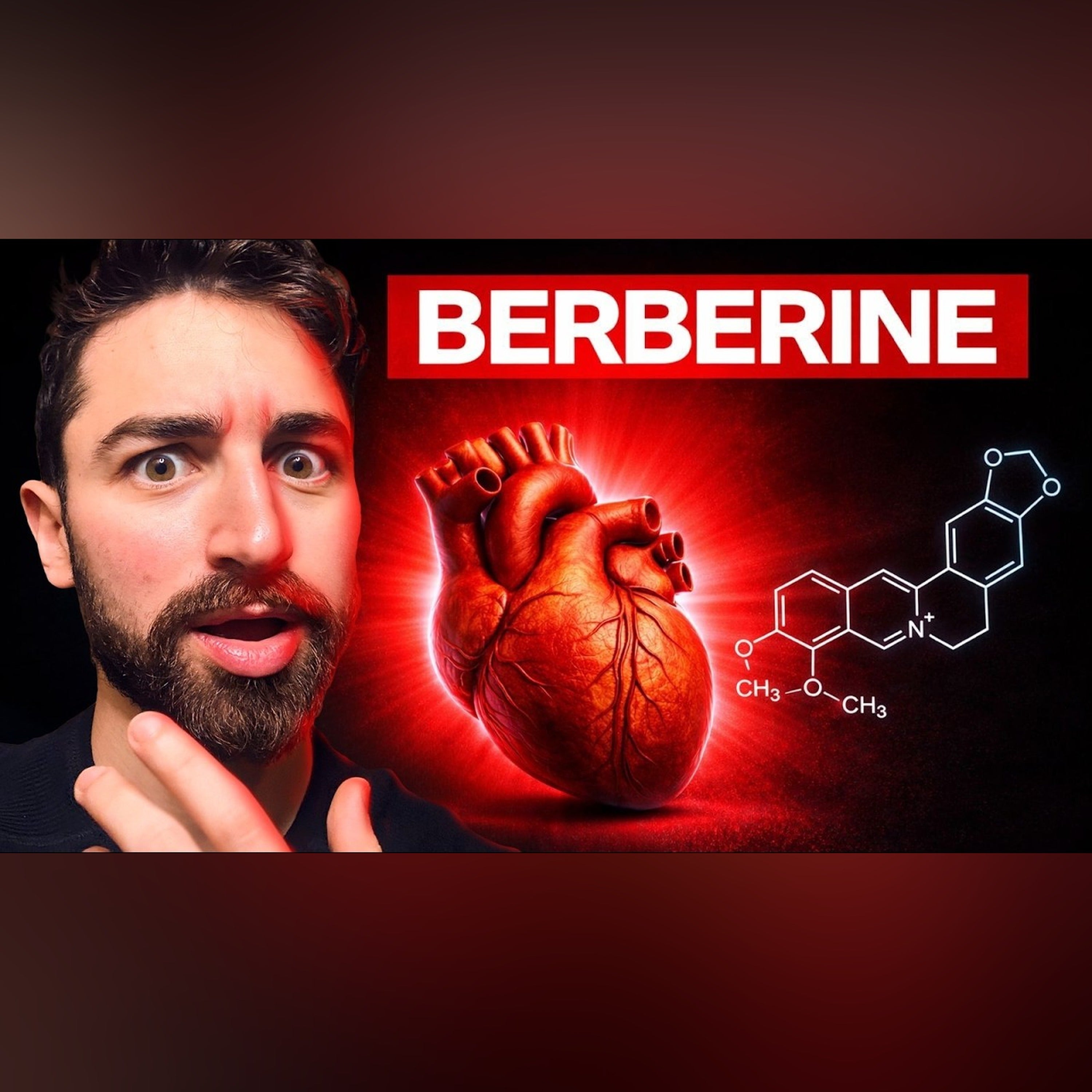
For extra nuances, all the references and early access to data like these, see the best-selling science letter: https://staycuriousmetabolism.substack.com/p/how-berberine-lowers-cholesterol?r=40ekz2 In this video, we unpack the stunning mechanism behind berberine, the yellow plant alkaloid that increases LDL receptors not by starving the liver of cholesterol, but by stabilizing the blueprint that cells use to builds them. It’s a twist in human biochemistry that reshaped how I think about cholesterol manipulation — and it might reshape how you do too. Then I’ll take you inside my own high-stakes N=1 experiment Hundred Health Link: https://www.hundred.com/STAYCURIOUS Discount Code: STAYCURIOUS50 knocks $50 off membership As a scientific advisor at Hundred Health, I candidly hold a small equity stake in the company. I’ve chosen to partner with Hundred Health because I genuinely believe it has the potential to be a disruptive force for good in personalized healthcare. It’s a tool unlike an
If your partner is withdrawing, getting grumpier, feeling depressed or refusing to talk about what’s really going on, relationship expert Professor Denise Turner is here to help. She explains what’s going on with midlife men right now & how to help without sacrificing your own health and happiness. Denise tells Lorraine & Trish how to talk to a man who won’t - or can’t - express his emotions, the external & social factors that may be contributing to his behaviour & the red flags that indicate it’s time to get professional help. Plus the two questions to ask yourself when working out what to do if you feel your relationship is in trouble. Also in this episode: an update on Margo the elderly podcat & Lorraine discovers why she’s been tripping over so often (& it’s not to do with her big Crocs!) If you or a partner are struggling, please speak to your GP or contact Samaritans on 116 123 (free, 24/7). New episodes of Postcards from Midlife are released weekly. Join our Facebook Group to sh
The stress you may feel being otherized or stereotyped can take a significant toll on your health and well-being. In this thoughtful conversation, social psychologist Valerie Purdie-Greenaway reveals the true source of this anxiety (hint: it isn't the individual) and shares strategies on building resilient systems of support for ourselves and others -- so that we can build a more inclusive, empathic and just world. (This conversation, hosted by TED curator Cloe Shasha Brooks, is part of TED's "How to Deal with Difficult Feelings" series.) Hosted on Acast.
In crowds, at meetings, get-togethers with friends, everyday interactions: social anxiety can show up as an unwelcome guest at any time. But why? Psychologist Fallon Goodman digs into the source of social anxiety, setting the record straight about this common condition with practical solutions to help you feel the most authentically "you" while out and about. After the talk, mental health specialist Dr. Jessi Gold joins Shoshana in a sweeping conversation on social media’s impact on social anxiety and how we can best support ourselves and others. Hosted on Acast.
Countless poets and writers have tried to put words to the experience of a panic attack— a sensation so overwhelming, many people mistake it for a heart attack, stroke, or other life-threatening crisis. Studies suggest that almost a third of us will experience at least one panic attack in our lives. So what exactly is a panic attack, and can we prevent them? Cindy J. Aaronson investigates. [Directed by Aim Creative Studios, narrated by Bethany Cutmore-Scott, music by André Aires]. Hosted on Acast.
Communities should test major changes on a small scale before making them permanent.
Share your view, then see how readers voted. No sign-in required. This poll is shared across stories.
Do you agree or disagree?
Common Quandary
A Common Quandary to discuss
Another conversation to explore, separate from this news story.
A patient records every doctor visit for their followers. Can the doctor refuse to be filmed?
A patient with a large social-media following livestreams their health journey and wants to record every appointment. They say the videos help others and keep doctors accountable. Their physician finds the camera distracting and worries that casual remarks will be edited out of context.
Whose comfort should control a conversation about one person's body and another person's work?