Establishing the American presidency - Kenneth C. Davis
6 min
Listen through the publisher, then discuss the episode here or arrange an in-person Roundtable. Your city determines where to meet.
Roundtables are designed for groups of four, with a shared subject and room for everyone to speak. Come for discussion, with no dating expectation.
View full lesson: http://ed.ted.com/lessons/inventing-the-american-presidency-kenneth-c-davis When the founders of the United States gathered to create the foundations of the country, they decided on three branches of government, with a president central to the executive branch. Kenneth C. Davis explains why this decision was not necessarily inevitable and what variables were up for debate. Lesson by Kenneth C. Davis, animation by G. Melissa Graziano-Humphrey.
Episode information is provided by the publisher. Listening takes place on the publisher’s service.
What happens when the CEO of one of the world's most influential AI companies becomes the target of a foreign intelligence operation? And what does that mean for the future of artificial intelligence, corporate leadership, and global technology security? In this episode of TechDaily.ai, host David and guest Sophia examine a dramatic Nvidia leadership story described in the episode: the November 23, 2026, reinstatement of CEO Jensen Huang following an alleged foreign intelligence targeting incident. The discussion explores the reported unanimous board decision, the involvement of senior United States government officials, and the sweeping corporate governance changes described as part of Nvidia's response to growing national security concerns. As AI infrastructure becomes increasingly important to global economic and technological competition, the conversation raises a critical question: Are the executives leading the AI revolution becoming high-value targets in an international intelli
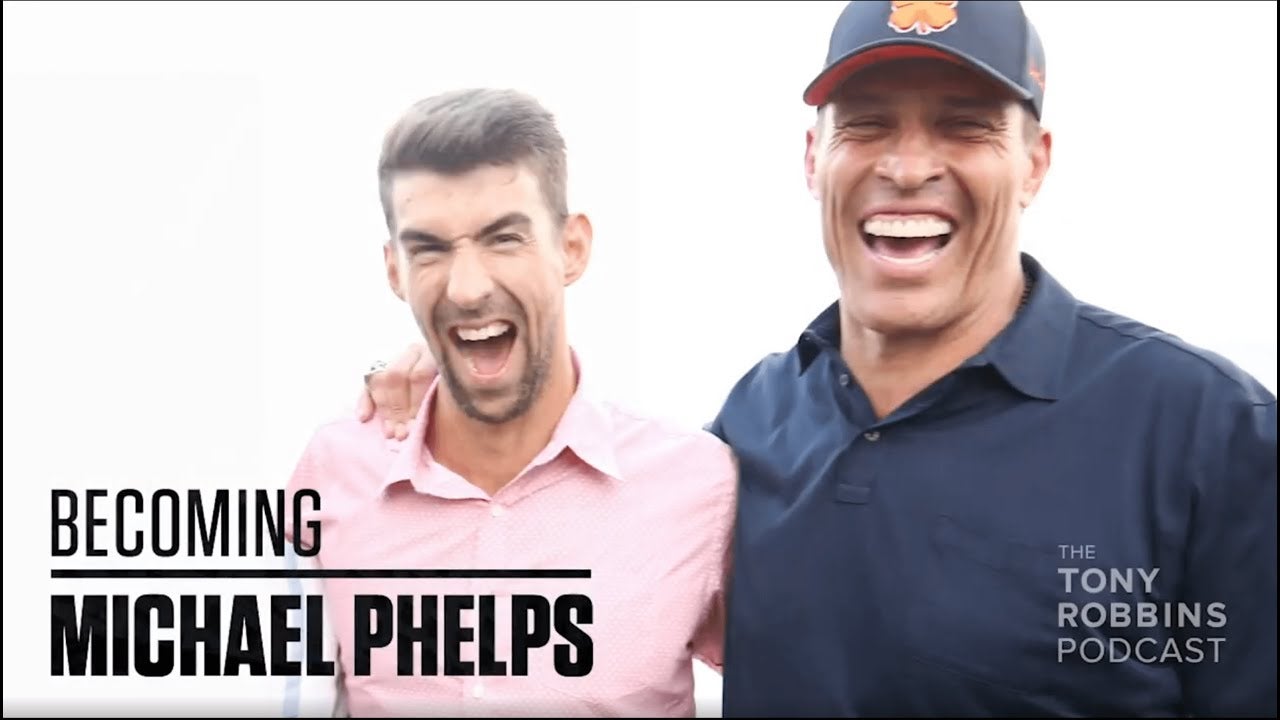
American swimmer Michael Phelps knows about paving the road to greatness. As the most decorated Olympian of all time, Phelps holds 28 medals. Additionally, he holds all-time records for Olympic gold medals, Olympic gold medals in individual events and Olympic medals in individual events. Uploaded 28-06-20 But getting to the top, and staying there, wasn’t easy. In this episode, Phelps sits down with Tony Robbins to discuss becoming one of the most successful athletes of all time. They talk about his training schedule, the highs of being an Olympic athlete and the let down that happens after the Olympics are over. Phelps also discusses the depressive states he would fall into because he wasn’t sure who he was outside of swimming. Raised mostly by his mother after his parents’ divorce, he had a lot of unresolved anger toward his father. These feelings of hurt and rejection played a big role in his decision to ask for help for his mental health struggles in 2012. During in-patient treatmen
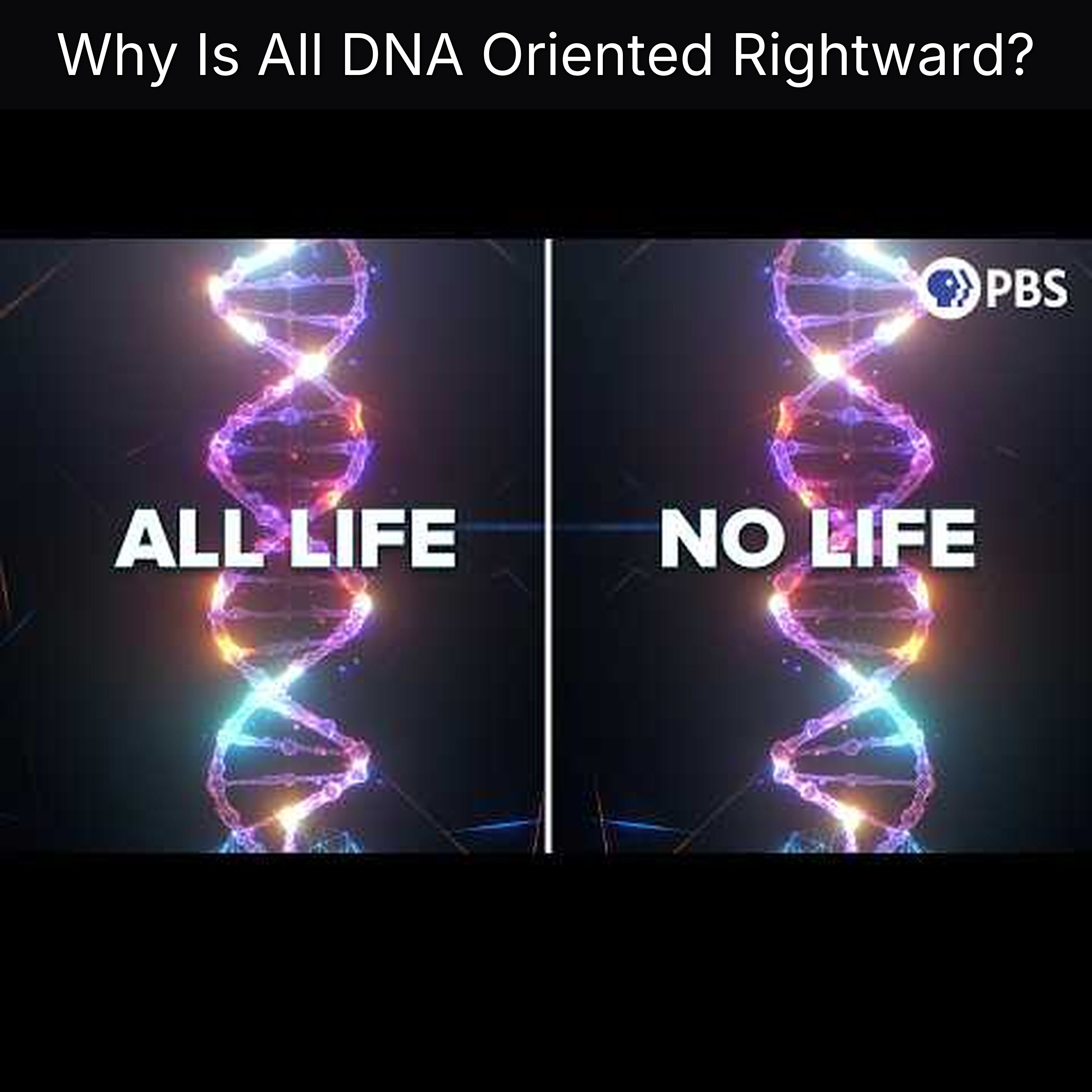
PBS Member Stations rely on viewers like you. To support your local station, go to:http://to.pbs.org/DonateSPACE The molecular basis of all life is mysteriously asymmetric, only using molecules on one side of what should be the equivalent mirrored pairs. The universe has a similar mirror asymmetry, and it may be that our very DNA inherited its twist from the underlying handedness of reality. Sign Up on Patreon to get access to the Space Time Discord! Check out the Space Time Merch Store Sign up for the mailing list to get episode notifications and hear special announcements! Search the Entire Space Time Library Here: https://search.pbsspacetime.com/ Hosted by Matt O'Dowd Written by Matt Caplan & Matt O'Dowd Post Production by Leonardo Scholzer, Yago Ballarini & Stephanie Faria Directed by Andrew Kornhaber Associate Producer: Bahar Gholipour Executive Producer: Andrew Kornhaber Executive in Charge for PBS: Maribel Lopez Director of Programming for PBS: Gabrielle Ewing Assistant Director
In today's brief: Drones over Sigonella: the US Navy says three drones were detected over its base in Sicily; Italian sources say one small quadcopter, probably a prank. The vampire camel: researchers at the American Museum of Natural History name a 10 to 13 million year old camel with fangs. Carbon from the core: a Columbia-led study says heavy carbon in Kilauea's rocks may be leaking from Earth's core, and may first have come from space. Cautious inquiry: Tom Rogan argues in UnHerd that the Bigfoot and UFO files deserve a proper look. Cryptid stamps: Mothman, Sasquatch, the Jackalope, the Squonk and Champ get a USPS stamp set in 2027. SIGNAL: an AI assistant for ghost hunters that checks for ordinary explanations first. Quick hits: the Juarez "pterodactyl" looks like a heron; drones over Canadian bases; a fourth Galileo Project observatory. Every story and source: https://believepod.com/ufo-paranormal-news-25-november-2026/ New episodes every morning. Keep your eyes on the sky. Sourc
A fake job interview helped open the door to a reported $6.3 billion theft from Binance. The FBI attributed the heist to North Korea, which has used cryptocurrency theft to raise revenue and evade sanctions. This week, former federal prosecutor Maya Song joins Frank Cilluffo to explain why tracing stolen cryptocurrency is easier than getting it back, what prosecutors need to turn an attribution into a criminal case, and how companies and law enforcement can work together to limit the damage after a breach. Main Topics The fake recruiting scheme the led to $6.3B loss The theft and fraudulent IT work funding North Korea Tracing, freezing, and recovering stolen cryptocurrency Public attribution and the evidence needed for an indictment When companies should contact law enforcement How indictments and asset seizures can disrupt future operations Key Quotes "Law enforcement generally, when it comes to the cybercrime threat, they have at the federal level taken an attitude of deter, disrupt,
Six decisions in the Federal Courts edition for Tuesday 24 November 2026, all from the Federal Court of Australia. A quiet day with one decision that matters: the prudential regulator's civil penalty case against Bendigo and Adelaide Bank over a cyber attack on customer accounts, after penetration test findings of weak passwords were logged but never escalated or fixed. How the reasonable steps duty of due skill, care and diligence is measured, why an unallocated part of the business breaches the accountability regime, how to run a regulator's penalty case on agreed facts, three safeguards for compliance teams, and the registry. Commercial Desk (opening story) and Practice and Procedure Desk. Australian Prudential Regulation Authority v Bendigo and Adelaide Bank Limited [2026] FCA 1790 (O'Bryan J, 24 November 2026) - Signal: Doctrine; Practice and Procedure. Section 37C(a) of the Banking Act 1959 (Cth) (the Banking Executive Accountability Regime, Part IIAA, repealed from 15 March 2024
Your mobile phone, computer and game console have a bloody past — tied to tantalum mining, which funds the war in the Democratic Republic of the Congo. Drawing on his personal story, activist and refugee Bandi Mbubi gives a stirring call to action. (Filmed at TEDxExeter.) Uploaded 29-08-13 Talk by Bandi Mbubi.
Explore the depths of Lake Cadagno, a meromictic lake that is considered a model for Earth before the Great Oxidation Event. -- In the millions of years since oxygen began saturating Earth’s oceans and atmosphere, most organisms have evolved to rely on this gas. However, there are some places where oxygen-averse microorganisms like those from Earth’s earliest days have re-emerged. And one such place is hidden high in the Swiss Alp’s Piora Valley. Nicola Storelli and Daniele Zanzi dive into the depths of Lake Cadagno. Lesson by Nicola Storelli and Daniele Zanzi, directed by Ivana Volda, Thomas Johnson Volda. A special thanks to Francesco Di Nezio, Bruno Giussani, Raffaele Peduzzi, Sandro Peduzzi, Samuele Roman, and Mauro Tonolla who provided information and insights for the development of this video. Support Our Non-Profit Mission ---------------------------------------------- Support us on Patreon: http://bit.ly/TEDEdPatreon Check out our merch: http://bit.ly/TEDEDShop ----------------
View full lesson: http://ed.ted.com/lessons/particles-and-waves-the-central-mystery-of-quantum-mechanics-chad-orzel Uploaded 15-09-14 One of the most amazing facts in physics is that everything in the universe, from light to electrons to atoms, behaves like both a particle and a wave at the same time. But how did physicists arrive at this mind-boggling conclusion? Chad Orzel recounts the string of scientists who built on each other’s discoveries to arrive at this ‘central mystery’ of quantum mechanics. Lesson by Chad Orzel, animation by Joana Bartolomeu.
Employers should help workers retrain when their jobs disappear.
Share your view, then see how readers voted. No sign-in required. This poll is shared across stories.
Do you agree or disagree?
Common Quandary
A Common Quandary to discuss
Another conversation to explore, separate from this news story.
You lecture everyone about climate change—then get invited on a dream flight. Do you go?
A close friend living overseas invites you to an important celebration. Flying is affordable but carbon-intensive. Your individual decision will not determine whether the flight operates, yet it conflicts with commitments you publicly encourage others to make.
When is a small personal contribution to a large harm morally significant?