Listen through the publisher, then discuss the episode here or arrange an in-person Roundtable. Your city determines where to meet.
Roundtables are designed for groups of four, with a shared subject and room for everyone to speak. Come for discussion, with no dating expectation.
It was known as the Great Smog. In 1952, London was blanketed for five days in a thick toxic layer of soot and sulphur dioxide, leading to thousands of premature deaths. The outcome was the Clean Air Act of 1956. In this programme, Helen Czerski and Tom Heap ask what's changed in the seventy years which have passed since then. How clean is the air we now breathe? Panel: Dr Gary Fuller, Honorary Senior Lecturer, Imperial College in London Dr Kathy Davies, Environment Historian, Northumbria University Beth Gardiner, Journalist and author Producer: Emma Campbell Assistant Producers: Toby Field and Georgia Graham
Episode information is provided by the publisher. Listening takes place on the publisher’s service.
You can learn more about CuriosityStream at https://curiositystream.com/spacetime Uploaded 01-05-19 PBS Member Stations rely on viewers like you. To support your local station, go to: http://to.pbs.org/DonateSPACE How do you take a picture of a black hole and what can we learn from it? Our first ever actual bona fide photo of a black hole, made by the Event Horizon Telescope and revealed to the world in a press conference on April 10th. Since then it’s got plenty of coverage, because … I mean look at it. It’s a freaking black hole. It’s black, it’s holey, it’s everything we hoped it would be. Now that the giddiness has subsided and I personally have stopped spending hours on end staring at a black spot, we can take a breath and actually look at the real science here and discuss exactly how a picture like this could be taken and what we can learn from it. Check out the new Space Time Merch Store! Support Space Time on Patreon Need a Black Hole Refresher #Blackhole #astrophysics #spaceti
If you enjoyed this video and want access to all the references, deeper nuance, and additional context behind everything we discussed, consider joining StayCurious Metabolism, an overall top best-selling science newsletter: https://staycuriousmetabolism.com (https://staycuriousmetabolism.com/) The companion article for this video is here: https://staycuriousmetabolism.substack.com/p/the-heart-supplements-i-recommend?r=40ekz2 Find out why Stay Curious Metabolism became one of the fastest-growing science publications on Substack and reached the top two globally in just one year. Referenced Videos Heart Rate Variability: https://youtu.be/bdxYexIpYjo Berberine: https://youtu.be/KMVsg9EnbcE Vitamin C: https://youtu.be/0p0cld4RmDo Chapters 0:00 – 2,000 Hours of Heart Health in 20 Minutes 1:50 – Our Mystery Box of Heart Health Tools 2:15 – The Scoop, Nattokinase 5:12 – The Ice Pack, TUDCA 9:24 – The Charger, Heart Rate Variability 13:24 – The Straw, Berberine 16:00 – The Ducted Tape, Vitamin
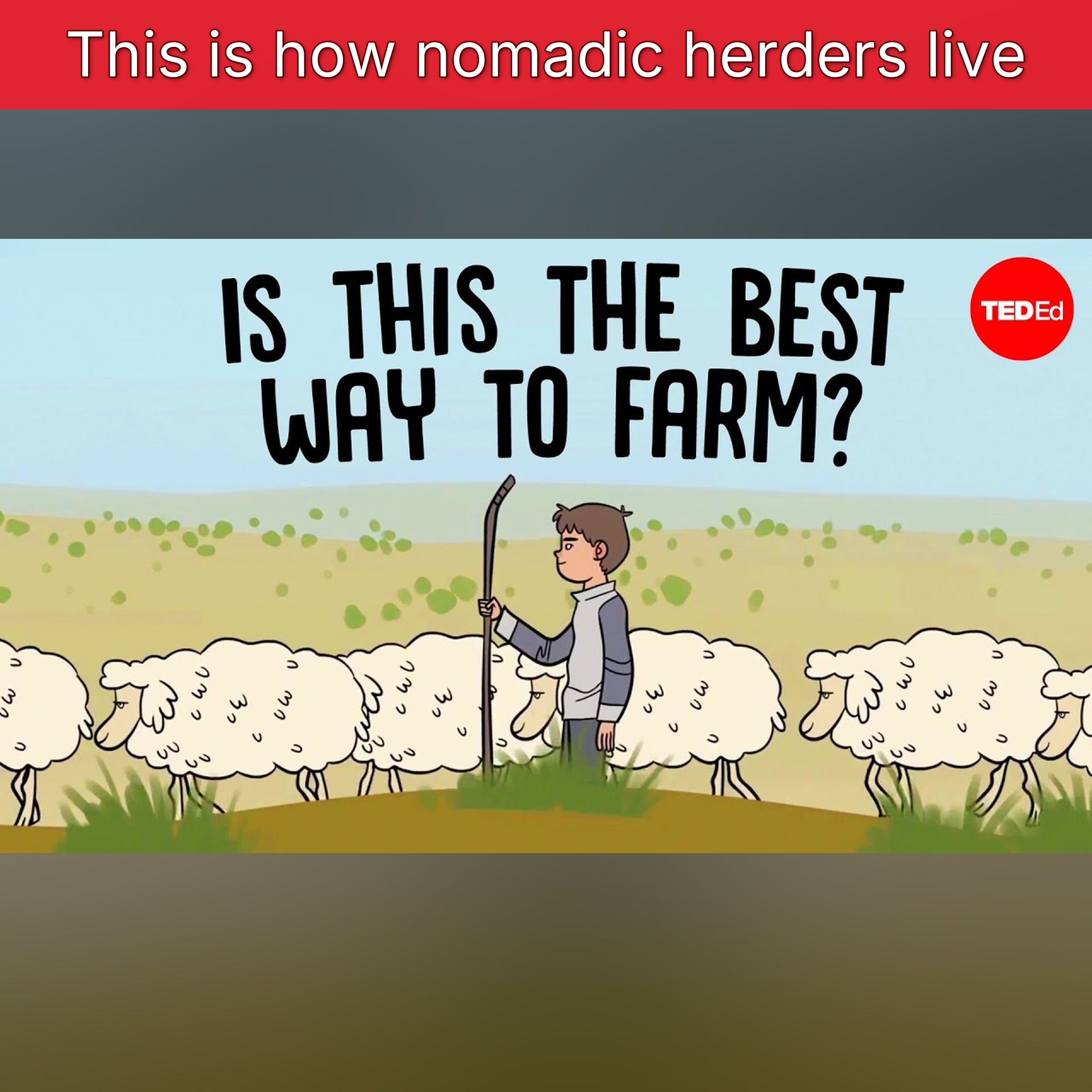
Dig into the challenges of modern pastoralism, a form of agriculture where farmers guide livestock to seasonal grazing areas. -- For millennia, livestock farmers strategically guided animals to seasonal grazing areas. This mobile way of life, known as pastoralism, provided them with wealth, social status, and political independence into the 20th century. But in the last century, political and economic policies have worked against these communities. Take a closer look at the challenges of modern pastoralism. Directed by Anton Bogaty. This video made possible in collaboration with Gates Ventures Learn more about how TED-Ed partnerships work: https://bit.ly/TEDEdPartner A special thanks to Graham Gerrity, Donald Nkrumah, and Obai Khalifa who provided information and insights for the development of this video. Support Our Non-Profit Mission ---------------------------------------------- Support us on Patreon: http://bit.ly/TEDEdPatreon Check out our merch: http://bit.ly/TEDEDShop ---------
In Brought to You By: How Corporations Warped the Truth, Conned the Public, and Broke Democracy (https://bookshop.org/a/12343/9781639736331), Amy Westervelt exposes the plot hidden within the familiar story of science denial. Over the last century, Big Industry has built a vast apparatus of think tanks, lobbyists, sponsored university labs, and obliging news networks to con the public and fool decision-makers, poisoning the informational ecosystem and warping the nature of truth along the way. With her signature wit and incisiveness, Westervelt introduces the masterminds of corporate misinformation: Herb Schmertz, the public relations pioneer who made Mobil “the thinking man's oil company;” Richard Edelman, the PR guy who helped the dairy industry vilify oat milk; David Petraeus, the disgraced spy chief using counter-insurgency tactics to discredit climate science; and many more. She shows how these company men have worked to usher in an era of unprecedented corporate control. Only by
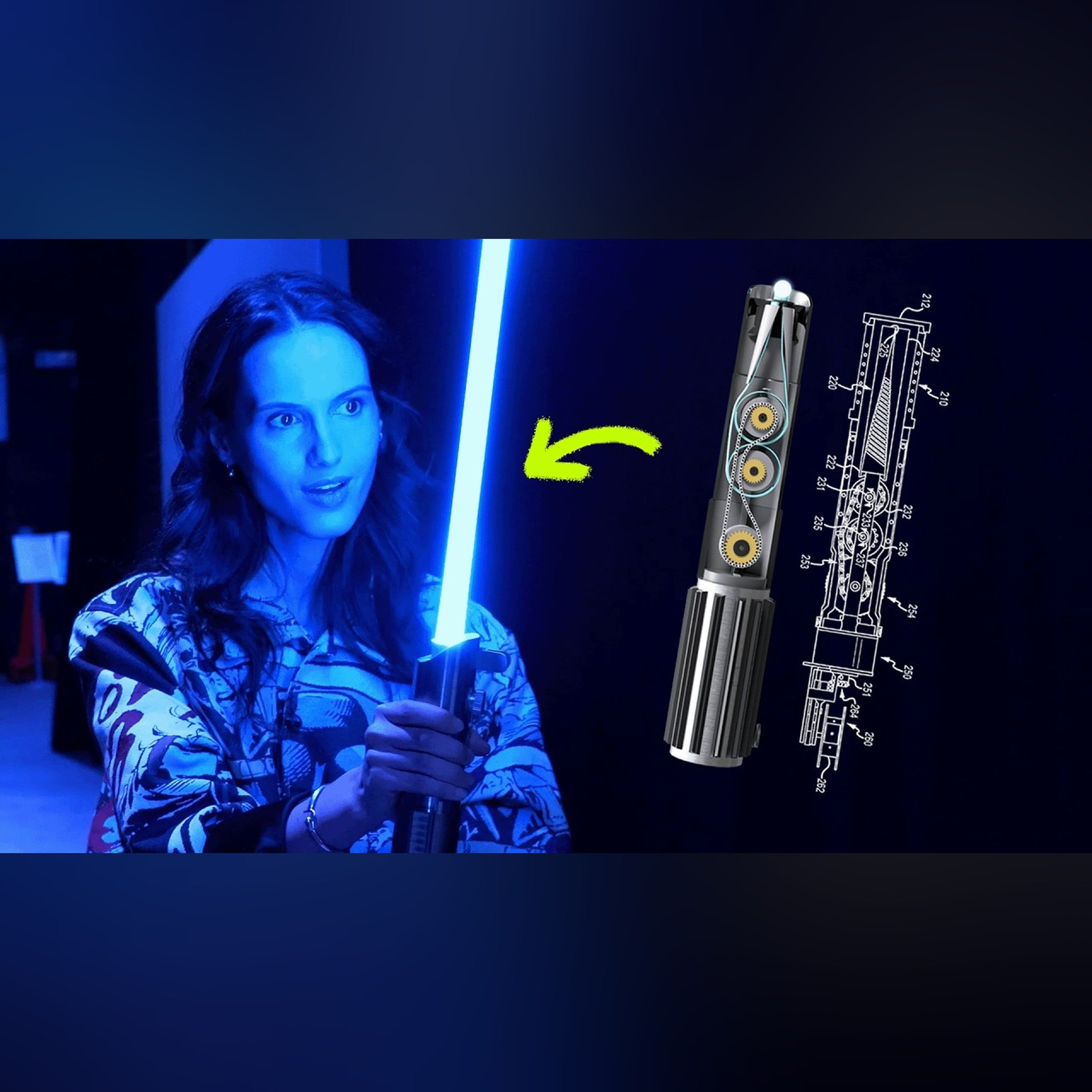
I tested Disney’s coolest new tech… Go to https://surfshark.com/cleo for 4 extra months of Surfshark Today I’ve been invited behind the scenes at Walt Disney Imagineering, the place where Disney brings their craziest ideas to life - from STUNT ROBOTS to a real life version of The Force, to adorable little droids! On this show Huge If True, we explore how tech can improve people’s lives - by living longer, going farther, doing more. But the reason I’ve loved Disney since I was a kid is they use tech to improve lives another way… by making people happy. And that means they end up pushing forward tech in some crazy, unexpected ways. So let me take you inside the magic, to show you the cutting edge tech they’re building… how it works… and what happens when we put it to the test! Chapters: 0:00 What is Disney building next? 1:11 What does Walt Disney Imagineering do? 1:52 What are Disney’s new droids really like? 2:47 How do Disney’s new droids work? 5:08 What’s the world’s most realistic l
In this calm and sleepy facts episode, we journey far beyond our own solar system to explore the thousands of worlds orbiting distant stars, places we have only recently learned to find and are only just beginning to understand. We start with the basics of what an exoplanet is and how astronomers detect them, from the gentle dimming of a star as a planet passes in front of it to the tiny gravitational wobble a hidden world imprints on its sun. We visit the extraordinary harvest of the Kepler space telescope, which revealed that planets are not rare exceptions but the rule, scattered across nearly every star in the Milky Way. Along the way we encounter strange and extreme worlds, gas giants so close to their stars that they complete an orbit in mere days, tidally locked planets with one face locked in permanent daylight and the other in endless night, and rogue planets drifting alone through interstellar space with no star to call home. We explore the habitable zone, the narrow region a
The shadowy world of wildlife crime is estimated to be one of the four biggest illegal trades in the world. It runs the gamut from the international smuggling of ivory and exotic pets to hare coursing and badger baiting. The impacts of wildlife crime vary - in some cases it means a threat to endangered species, in others it takes the form of cruelty to individual animals. Could the unregulated world of social media make it easier than ever for wildlife criminals to evade the authorities? Or will advances in tech - including exciting forensic breakthroughs - be enough to stop them in their tracks? With panellists: - Fiona Howie, wildlife veterinary pathologist at Scotland's Rural College - Neil D’Cruze, UK Director of international animal welfare organisation Four Paws - Christian Plowman, Program Manager - Wildlife Cybercrime at the International Fund for Animal Welfare Presented by Tom Heap & Helen Czerski Producer - Beth Sagar-Fenton Assistant Producer - Georgia Graham Editor - Alasd
Cross-party cooperation is worthwhile even when it disappoints committed party supporters.
Share your view, then see how readers voted. No sign-in required. This poll is shared across stories.
Do you agree or disagree?
Common Quandary
A Common Quandary to discuss
Another conversation to explore, separate from this news story.
Your dinner guest arrives with their dog. Do you let both of them in?
A friend appears at your carefully planned dinner with a large dog they never mentioned. They say the dog becomes anxious when left alone and will sit quietly. Another guest is uneasy around animals, and your lease forbids pets.
Whose needs should an unexpected accommodation displace?