Fun Facts About Bioluminescence
Listen through the publisher, then discuss the episode here or arrange an in-person Roundtable. Your city determines where to meet.
Roundtables are designed for groups of four, with a shared subject and room for everyone to speak. Come for discussion, with no dating expectation.
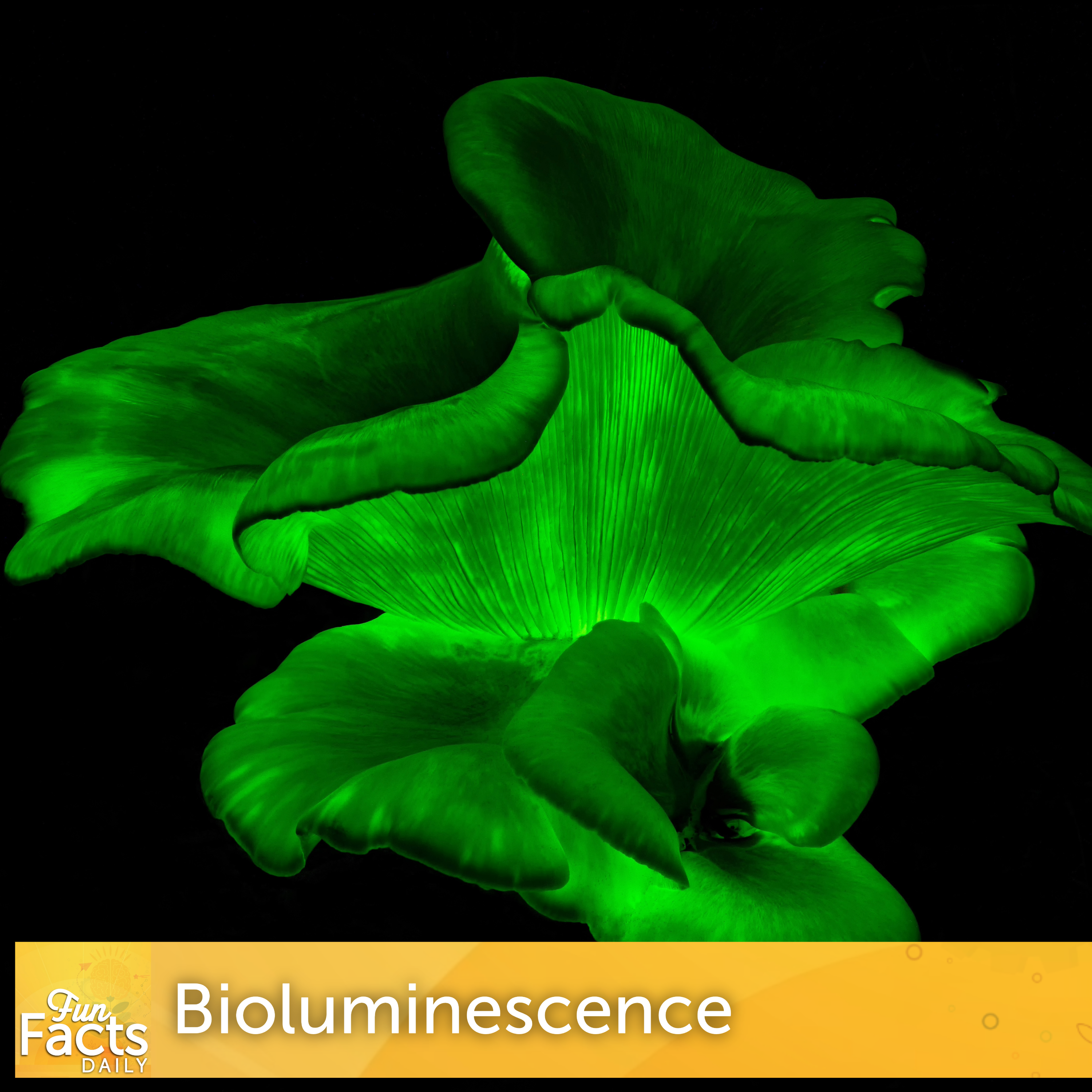
Bioluminescence is the natural emission of light produced through a chemical reaction between the compound luciferin and the catalytic enzyme luciferase. First isolated in the late nineteenth century by French scientist Raphaël Dubois, this biological phenomenon is most prominent in marine environments, where sunlight is absorbed within the first 650 feet (200 meters) of the water column. In the ocean, roughly three-quarters of pelagic organisms, including jellyfish, squid, worms, and deep-sea fish, generate their own light. Marine species rely on bioluminescent adaptations across diverse ecological niches, using specialized light organs on their bellies for counterillumination camouflage, dangling glowing lures such as the anglerfish's esca to draw in prey, or discharging clouds of luminous mucus to confuse and disorient predators. Beyond open waters, bioluminescence serves essential evolutionary and ecological roles on land and across microbial colonies. Terrestrial fireflies regulate oxygen flow through tiny tubes called tracheoles to produce efficient "cold light" that signals toxicity to predators and attracts mates without generating damaging radiant heat. In the ocean, vast luminous events known as "milky seas" occur when billions of Vibrio harveyi bacteria colonize microalgae and illuminate thousands of square miles of surface water through quorum sensing. On the forest floor, over one hundred species of fungi emit a glow known historically as foxfire to attract insects that spread their reproductive spores. These natural light-producing properties have even intersected with military and medical history, from World War II soldiers reading nighttime maps using crushed, rehydrated sea fireflies (Vargula hilgendorfii) to the American Civil War phenomenon of "Angel's Glow," where battlefield wound survival was aided by soil nematodes carrying symbiotic Photorhabdus luminescens bacteria that secreted protective antibiotics. Want to learn more? Fun Facts Daily is an Airwave Media Podcast.
Episode information is provided by the publisher. Listening takes place on the publisher’s service.
Listen at the source ↗