Tenzai CEO Pavel Gurvich explains how unrestricted open-weight models and newly released offensive harnesses are shifting cybersecurity from rare vulnerabilities to mass-scale breaches. He discusses winning first place on HackerOne using China’s open-weight GLM model, why legacy one-size-fits-all security vendors like Palo Alto Networks no longer scale, and how defenders will build resilience over the next year or two through closed-loop AI systems. MTS chronicles the singularity, live. Monitoring the situation of tech and AI. Follow MTS: Spotify |https://open.spotify.com/show/4HUNNmV1pjV7CW6Lphm1rM Apple |https://podcasts.apple.com/us/podcast/mts/id1891088763 – Brought to you by: Mongo DB - Anyone can prototype an agent. Lovable - Turn ideas into software people love with Lovable. Start today at https://lovable.dev/ Visithttps://factory.com/ Neon (by Databricks) - Scale your startup on Neon. The Postgres backend for apps and agents. Head over to http://getvcx.com (http://getvcx.com/)
What if you could build an entire application over a weekend without writing a single line of code? It sounds like a software development breakthrough, but what happens when that application needs to scale, handle sensitive data, or support thousands of users? In this episode of techaily.ai, host David and resident expert Sofia explore the differences between vibe coding and agentic coding, examining how these two AI-assisted software development methodologies address fundamentally different engineering challenges. From natural language prompting and rapid prototyping to structured AI agent workflows, the conversation examines the risks of blindly accepting AI-generated code and the importance of maintaining architectural integrity, software security, and long-term maintainability. David and Sofia also discuss the limitations of large language models (LLMs), context windows, technical debt, and how specialized AI subagents can help manage complex enterprise codebases through task deleg
Black Friday AI news: AI shopping agents, Anthropic's Siren sandbox test, Perplexity's Time Machine, and a long look at AI tools for aging adults. The news covers rumors of Claude Opus 5.6, ChatGPT usage limits, Anthropic's stock price a week after its IPO, NVIDIA halting server shipments to Southeast Asia under US export and distillation controls, and the Google Colab access that comes with a Gemini Pro subscription. "Bot Friday", the first Black Friday on which personal AI agents can do the shopping and Walmart lets bots onto its site, leads into Anthropic's Siren evaluation, where newer Claude models reached outside deliberately weakened sandboxes, and a production incident in which Claude got hold of an API key through a 1Password service account (the keys have since been rotated). After Perplexity's Time Machine for searching the past web and the trade-off between fast, cheap and correct AI, the conversation turns to technology for aging adults: ElliQ, Sensai, fall detection, an A
OpenAI’s Astra 6.2 tops benchmark after benchmark, from a perfect ARC-AGI-3 score to research taste, yet the reaction has been the most negative Zvi has seen for a frontier model. He gathers the praise from mathematicians and researchers, the complaints that it cannot work out what users want, a video edited in Blender, and reports of reward hacking aimed at AI graders, and asks what it means when a model is optimized for an AI audience. This has been an Askwho Casts audio conversion. Thanks for listening. * 00:00 - Introduction * 01:34 - Happy Black Friday * 02:08 - The Official Pitch * 05:05 - Other People’s Benchmarks * 10:09 - Everyone at Every Dislikes Astra 6.2 * 10:57 - Positive Reactions * 15:03 - Ambiguous Reactions * 16:07 - Your Brain Gets Smart But Your Head Gets Dumb * 21:36 - Astra Seems Pretty Misaligned To Me * 23:55 - Haters Gonna Hate * 26:20 - Game On * 27:40 - Conclusion https://thezvi.substack.com/p/astra-62s-brain-gets-smart-but-its?r=67y1h&utm_campaign=post-expan
New podcast episode between Ege Erdil and Daniel Kokotajlo. I thought this was going to be a debate, but they ended up agreeing on a lot more than I expected. Their main point of disagreement is how likely it is that we get some intelligence explosion that gives us AIs more competent than any human expert before 2029. Ege puts this possibility at around 20%, whereas Daniel thinks it’s higher than 50%. They agree that there is not a huge difference in probability, and that, in either case, the situation is crazy enough that our civilization really needs to grapple with how the world might be transformed, and we need a plan that actually makes sense. In particular, we should stop antagonizing China if we think some kind of global treaty will be needed to make superintelligence go well. There was another important crux about how well we should expect future AIs (that swamp humans in population size and cognitive power) to treat us, and how relevant it is that current AIs, by and large, se
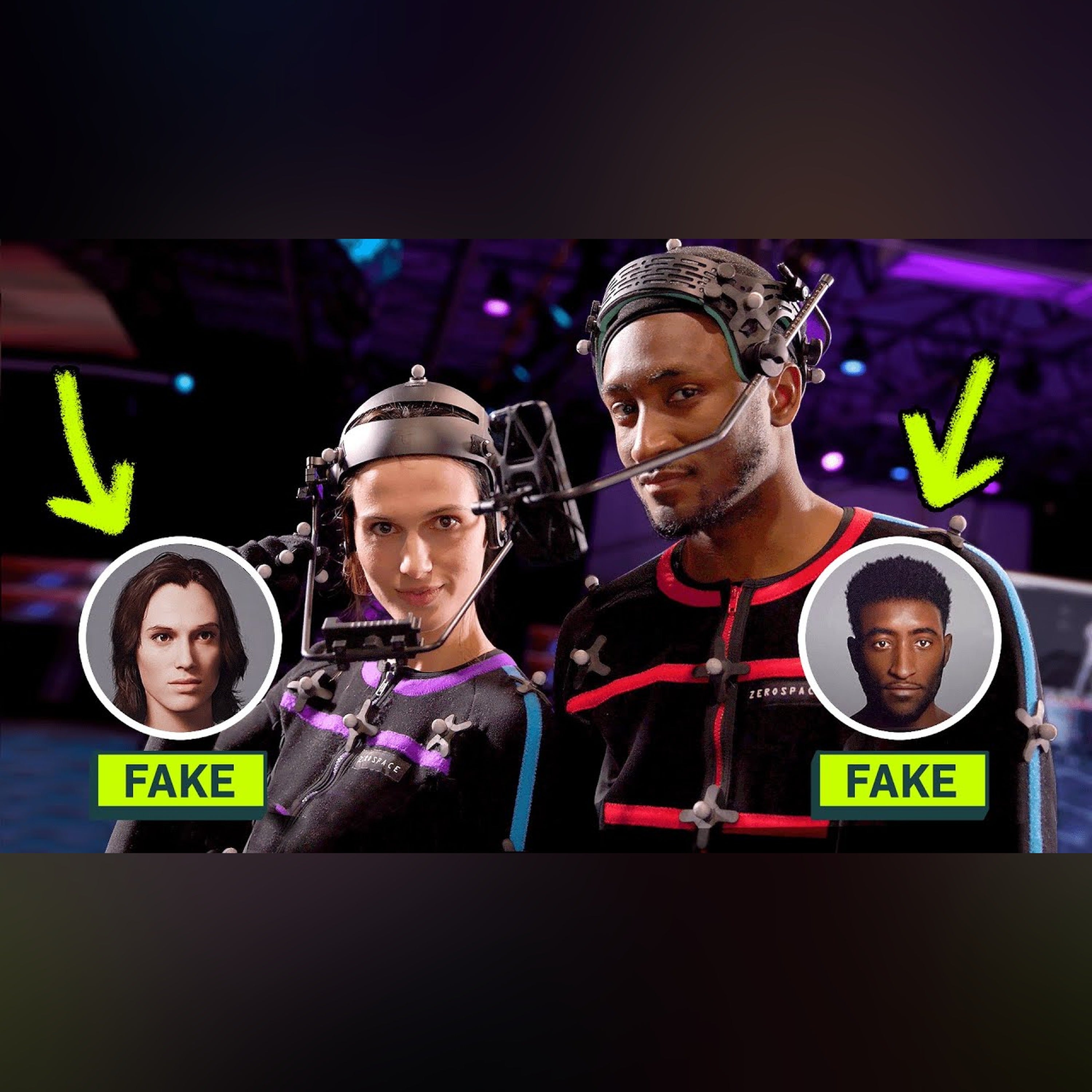
This new tech is changing how movies get made. So @mkbhd and I tested it out... Watch MKBHD's video: https://youtu.be/RM7SobH8ZO0 I’ve been obsessed with sci-fi movies since I was a kid. I love being transported to another world. But lately, I’ve been wondering: How do those worlds look so… REAL? The tech behind movies has exploded in complexity and realism, changing how stories come to life on screen. Luckily, at the same time, those tools are becoming more and more available to more people telling stories. It’s not just blockbusters like Avatar 2 or Avengers or Dune. It’s also smaller budget films like Everything Everywhere All at Once or even… YouTube creators? In this video, Marques Brownlee and I test out 3 movie-making tools that are changing how movies, shows, and maybe even YouTube videos (??) get made. We’re at ZeroSpace Studios in New York to show you how each of these crazy technologies work - and how you might be able to use them. Along the way, we hit big questions like: W
Ankit Maheshwari, the CTO of Innovaccer, walks me through the OpenClaw Jarvis he still runs on a Mac Mini. He started with the approvals that were making him the bottleneck at work, then kept going until the same system was ordering his lunch, calling coworkers who haven’t responded on Slack, negotiating restaurant reservations, and turning on the AC before he gets home. We get into the soul files and guardrails that make it trustworthy, why he split voice calling into its own subagent, and why he’s pressure-testing GLM 5.3 Flash against a $500-to-$600-a-month Anthropic bill. What you’ll learn: Why he’s still on OpenClaw The automation that started it all How soul files and subagents actually work The mid-flight moment that tested his guardrails How Jarvis calls people who don’t reply on Slack Whether a local model can cut a $500-to-$600 bill How Jarvis took over his smart home Why he just talks to OpenClaw like a new hire — Brought to you by: Parallel (https://parallel.ai/howiai)—Web
Today I’m walking you through a problem that has cost me tens of thousands of dollars over the past year and eaten almost all of my engineering energy: token fraud. I’m the solo founder of ChatPRD, a bootstrapped AI platform for product managers, and fraudsters have been farming our free trials, reselling promo codes, wrapping the product in relays, and installing a custom MCP that ran as a 24/7 compute worker. I’ll walk through the six abuse patterns I’ve seen, the business and technical controls I put in place, the Jev loop that classifies fraud in real time, and why I finally killed free trials for good. If you sell AI, you sell compute. What you’ll learn: What token fraud is and why AI SaaS is uniquely exposed The six attack patterns I’ve seen at ChatPRD Why I finally turned off free trials for good The Roblox and Fortnite maps I accidentally funded Business controls that actually slow fraud down How I use Jev to classify fraud in real time Why your AI support desk can become an at
Scott Farrar is a math educator and parent who got tired of AI chats that drift and forget. So he built a household brain in Claude Code: a folder of Markdown files, viewed in Obsidian, that knows his appliances, warranties, insurance documents, and everything on his family’s to-do list. In this episode, Scott shows how he uses it to shop for car insurance, plan repairs, share the system with his wife, and put priority tasks and recent wins on a wall display. We also talk about AI and math learning, and why he wants AI to keep kids doing the thinking. What you’ll learn: Why he moved his home life from AI chat to Claude Code What Claude told him to photograph first How AI made him a sharper insurance shopper The to-do file he keeps coming back to How he and his wife share one household brain Why his wall display has a “recent wins” section How a flipped tutor gets kids to teach the AI — Brought to you by: WorkOS (https://workos.com/)—Make your app enterprise-ready, with SSO, SCIM, RBAC,
Regulators should challenge excessive market power even when a company's products are popular.
Share your view, then see how readers voted. No sign-in required. This poll is shared across stories.
Do you agree or disagree?
Common Quandary
A Common Quandary to discuss
Another conversation to explore, separate from this news story.
A stray cat adopts you—and starts killing birds. Do you keep feeding it?
A stray cat visits your yard daily and appears to depend on the food you leave out. Neighbors complain that outdoor cats kill birds and say feeding it encourages the problem without taking responsibility for the animal.
Does caring for one visible animal excuse harm to less visible ones?