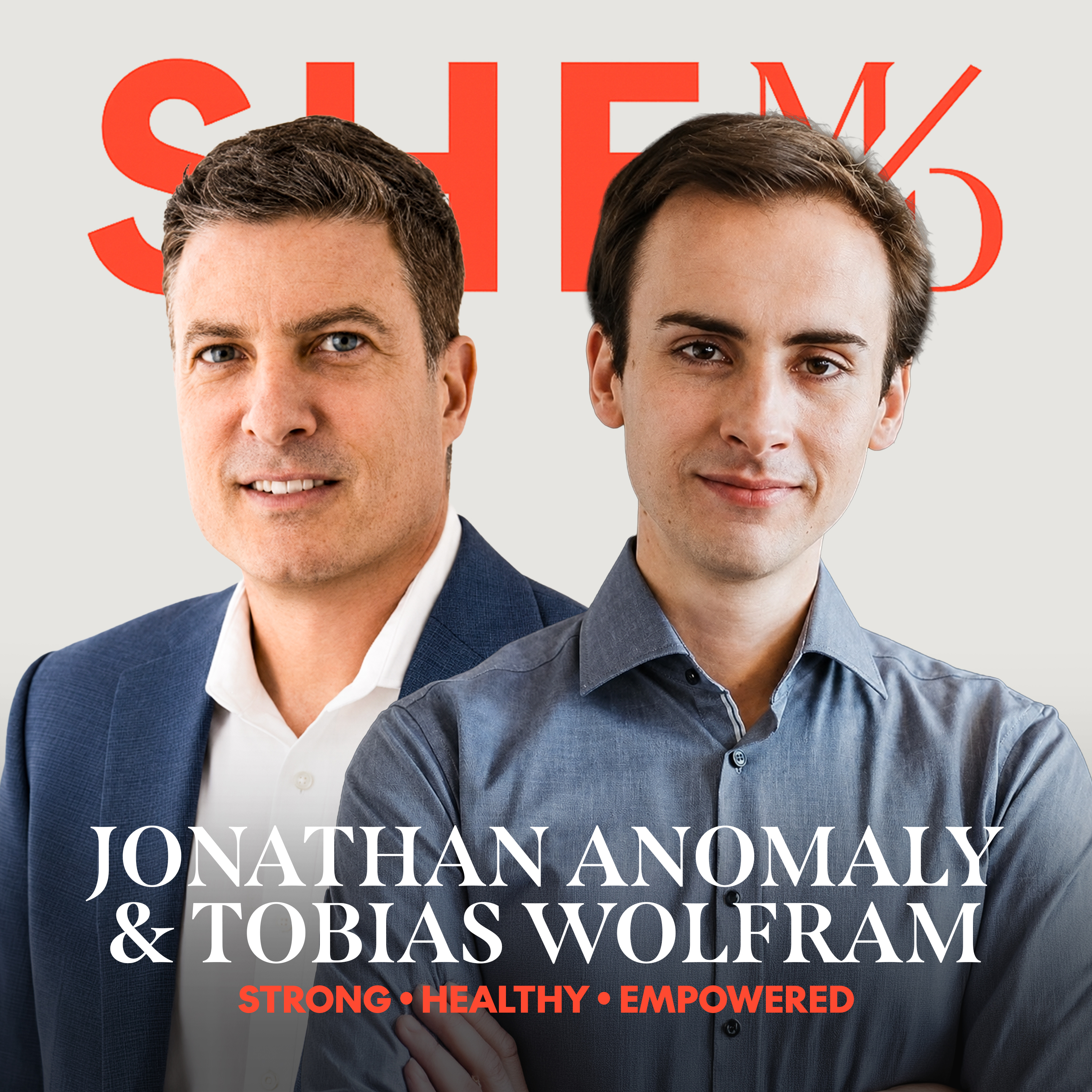
Genetic Embryo Screening: Disease Risk, Designer Babies & the Future of IVF with the Founders of Herasight
Listen through the publisher, then discuss the episode here or arrange an in-person Roundtable. Your city determines where to meet.
Roundtables are designed for groups of four, with a shared subject and room for everyone to speak. Come for discussion, with no dating expectation.
Could genetic testing help parents choose an embryo with a lower estimated risk of developing certain diseases later in life? The founders of Herasight join Dr. Thaïs Aliabadi and Mary Alice Haney for a deep dive into polygenic embryo screening and the rapidly evolving science of using genetic information during IVF. They explain how traditional embryo testing can look for chromosome abnormalities and certain single-gene disorders, while polygenic screening examines many genetic variants together to estimate relative risk for more complex conditions. Dr. A also shares her own experience discovering that she had a high polygenic risk for breast cancer despite not carrying a known major breast cancer mutation, leading to a larger question: if two embryos were otherwise healthy but one had a lower estimated lifetime risk of breast cancer, would you choose it? The conversation expands into some of the most controversial questions in reproductive genetics, including screening for neurological and psychiatric risk, intelligence, height and other traits. How accurate are these predictions? How much does family history matter? Do these scores perform equally well across different ancestries? And when does preventing disease begin to look like designing a child? The founders of Herasight explain why polygenic risk scores represent probabilities rather than guarantees and discuss the limitations of the genetic data currently available, particularly across populations that have historically been underrepresented in large biobanks. They also respond to concerns about whether polygenic embryo screening is ready for routine clinical use and discuss where they believe this technology could go next. This episode explores both the promise and the uncertainty of a future in which parents may have access to far more genetic information about an embryo before pregnancy even begins. Sponsors The episode includes the following sponsors: Talkiatry - Visit talkiatry.com/cmd to complete the assessment and get matched with an in-network psychiatrist. Free shipping is available on orders over $25. Peloton - Learn more about the Peloton Tread Flex at onepeloton.com. Hers - Visit forhers.com/shemd to learn more about Peptides Plus and the available treatments. This product is not intended to diagnose, treat, cure, or prevent any disease.) Arca Wealth - SheMD listeners can book a complimentary financial planning call at arcawealth.com/cmd. Tin Can - Visit tincan.com/cmd for $10 off your first order. Natural Cycles - Visit naturalcycles.com/cmd and use code SheMD for a free NC Band plus an extra month free with an annual subscription. The offer is available to new users through December 31. What You’ll Learn What polygenic embryo screening is and how it differs from traditional genetic testing. How IVF embryos can be evaluated for chromosomal abnormalities and genetic conditions. The difference between PGT-A, PGT-M and PGT-SR. How single-gene mutations differ from polygenic risk. What polygenic risk scores are and how they are calculated. Why common diseases and traits can be influenced by hundreds or thousands of genetic variants. How polygenic screening could potentially help identify differences in disease risk between embryos. Why a polygenic risk score does not guarantee that someone will develop a particular disease. How family history can change the significance of a polygenic risk score. Dr. A's personal experience with breast cancer and her own polygenic risk score. Why someone can have a high genetic risk for breast cancer without having a major single-gene mutation. Which conditions are currently evaluated through polygenic embryo screening. Why intelligence is influenced by both genetics and environment. The difference between short-read and long-read genome sequencing. Why combining short-read and long-read sequencing can provide a more complete picture of the genome. How rare genetic variants can contribute to neurodevelopmental conditions. How male age and female age can contribute to different types of genetic and reproductive risks. How embryo genetic information can be reconstructed using parental sequencing and embryo data. Why autism remains particularly challenging to predict genetically. How genetic testing may identify rare variants that traditional carrier screening could miss. The potential future applications of genetic testing before implantation. Whether genetic testing could eventually be performed using information from eggs or during pregnancy. The ethical concerns surrounding embryo screening and so-called "designer babies." How access and affordability could affect who benefits from genetic screening. Why genetic diversity remains an important consideration as embryo selection develops. What pleiotropy means and why selecting for one trait could potentially influence other traits. The concerns raised by the American Society for Reproductive Medicine about polygenic embryo testing. Why scientific skepticism and rigorous validation are important as this technology develops. Why transparency about predictive performance is essential. How artificial intelligence could influence the future of genetic prediction. Why continued research may improve the ability to understand rare genetic variants. Why environmental factors, lifestyle and parenting continue to matter even when genetic risk is known. Why understanding family history remains an important part of reproductive planning. Why carrier screening remains important for couples preparing for pregnancy. Why genetic risk information should be viewed as a probability rather than a prediction of an individual's future. What the future of polygenic embryo screening could look like over the next decade. Key Takeaways Polygenic screening is different from traditional genetic testing. Traditional embryo testing can identify chromosomal abnormalities, structural rearrangements and specific single-gene disorders, while polygenic screening evaluates many genetic variants that collectively influence disease risk and traits. A polygenic risk score is not a guarantee. A higher score indicates increased risk, but it does not mean that an embryo or future child will necessarily develop the condition. Family history still matters. The conversation emphasizes that genetic risk information becomes particularly meaningful when considered alongside a family's medical history. Dr. A's breast cancer experience illustrates the complexity of genetic risk. She had no family history or major genetic mutation but later learned that her polygenic risk for breast cancer was substantially elevated. Every embryo can have a different risk profile. One embryo could have a lower predicted risk for one condition while having a higher predicted risk for another, creating difficult decisions for families. The technology is probabilistic. Polygenic scores estimate relative risk rather than determining an individual's future health with certainty. Intelligence is especially complex to predict. Although intelligence has a substantial genetic component, it is influenced by environment and is considerably more difficult to measure and predict genetically than some physical traits and diseases. Environment continues to matter. Genetics is only one part of the equation, and lifestyle, environment, nutrition and other factors can influence whether someone ultimately develops a disease. Ancestry affects predictive performance. The guests acknowledge that many genetic predictors have historically relied heavily on European datasets and that more diverse biobank data is needed to improve performance across populations. Rare genetic variants are an important area of research. The discussion highlights newer approaches that look beyond common variants to identify rare mutations that can have larger effects on neurodevelopment and disease risk. Autism remains difficult to predict. The guests explain that standard polygenic prediction for autism is not yet as strong as prediction for some other conditions, while newer approaches are attempting to identify rare variants in genes important to neurological development. Whole genome sequencing is evolving. Combining short-read and long-read sequencing may provide a more complete view of genetic variation, including structural variants that can be difficult to identify using short reads alone. Ethical questions are inseparable from the science. The episode examines concerns about inequality, access, genetic diversity, trait selection and the possibility of creating social pressure around which traits are considered desirable. Scientific skepticism is important. The guests argue that genetic testing companies should be able to explain how their predictors work, how well they perform and where their limitations lie. Transparency is essential. The discussion emphasizes publishing validation studies, explaining uncertainty and being open about what genetic testing can and cannot currently predict. Carrier screening remains important. Dr. A emphasizes the value of carrier screening for couples preparing for pregnancy and explains how identifying shared recessive mutations can inform reproductive decisions. Parents remain the decision-makers. The guests emphasize that the technology provides genetic information; it does not make the decision about which embryo a family chooses to transfer. The technology is still developing. Polygenic embryo screening is an emerging field, and the episode highlights the need for continued research and long-term follow-up. The future may bring more personalized genetic information. Advances in sequencing, artificial intelligence and genetic prediction could eventually provide families and physicians with more detailed information about genetic risk. Genetic information is only one part of a person's story. As Dr. A emphasizes at the end of the episode, a genetic risk score does not determine someone's future, and environment, lifestyle and other factors continue to matter.
Episode information is provided by the publisher. Listening takes place on the publisher’s service.
Listen at the source ↗