Hardwired for Adaptation: From Space Exploration to Military Innovation with GPCAPT Katherine Bennell-Pegg and LTCOL Gabrielle Taylor
45 min
Listen through the publisher, then discuss the episode here or arrange an in-person Roundtable. Your city determines where to meet.
Roundtables are designed for groups of four, with a shared subject and room for everyone to speak. Come for discussion, with no dating expectation.
What can the Australian Army learn from an astronaut preparing for the challenges of space? Recorded at the 2026 Chief of Army Symposium, host Captain John Hardgrave is joined by 2026 Australian of the Year and Australian astronaut Katherine Bennell-Pegg, alongside Lieutenant Colonel Gabe Taylor, Deputy Director of the Chief of Army's Initiatives Group, to explore the parallels between military operations and space exploration. From operating in extreme environments to making decisions under pressure, the discussion examines how high-performing teams prepare for uncertainty, embrace innovation and adapt when plans inevitably change. Drawing on lessons from astronaut training, emerging technologies and the future of lunar exploration, the conversation challenges the Army to consider whether adaptation is fundamentally about technology, people or organisational culture.
Episode information is provided by the publisher. Listening takes place on the publisher’s service.
APRIL 26, 1905 WASHINGTON POST Episode Overview: The conversations explore multiple global and domestic intersections, focusing heavily on international conflicts such as the recent Ukrainian drone strikes against Russian vessels off the coast of Libya. They also examine the lingering historical legacies of European colonialism and independence movements across Asia during World War II, alongside the geopolitical implications of Russia's expanding influence in North Africa. Domestically, the conversation analyzes the aftermath of a recent wave election that severely impacted the Republican Party, drawing strategic parallels to past midterm upsets. Finally, the discussions tackle the volatile technology sector, highlighting the dramatic reinstatement of Nvidia CEO Jensen Huang, the mounting political and environmental opposition to sprawling data centers, and the intricate intersection of government intervention and the artificial intelligence market.I changed "Jensen Wong" to Jensen Hu
Learn More About 80,000 Hours at: https://www.80000hours.org/spacetime PBS Member Stations rely on viewers like you. To support your local station, go to:http://to.pbs.org/DonateSPACE Sign Up on Patreon to get access to the Space Time Discord! From hoverboards to flying cars to cloud cities, anti-gravity is a staple of science fiction and our dream of a less Earth-bound future. But in the real universe gravity appears to be a purely attractive force. Feels like its main MO is keeping us stuck to the surface of this lonely rock. But maybe if we science hard enough we can remove the fiction from science fiction. For the sake of our flying cars we should at least try. And for many years, physicists have wondered whether a certain well-known exotic material may experience gravitational repulsion from the Earth. That material is antimatter, and physicists at CERN have just completed a very long and very difficult experiment to answer a seemingly simple question: does antimatter fall down, o
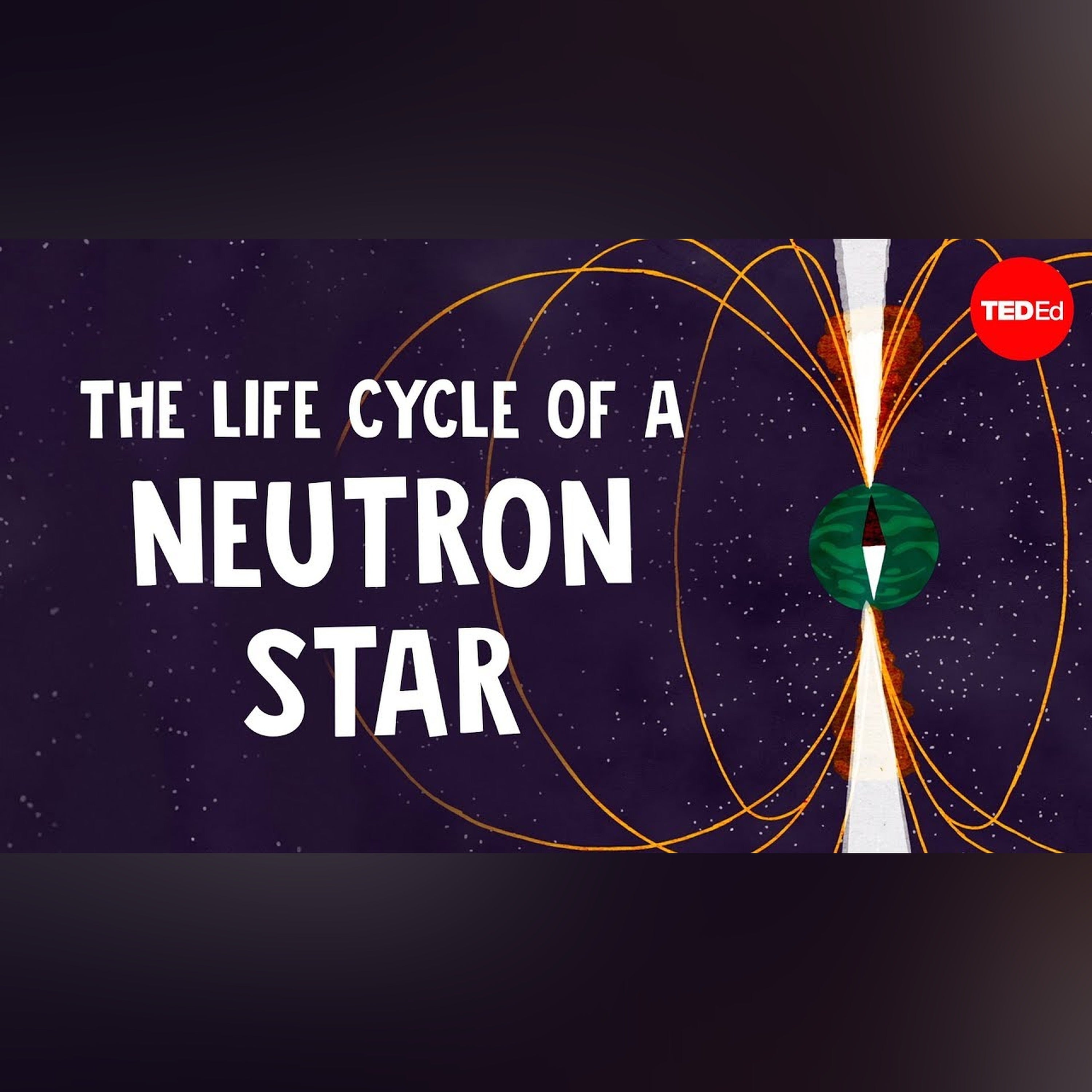
Uploaded 20-11-18 View full lesson: https://ed.ted.com/lessons/the-life-cycle-of-a-neutron-star-david-lunney About once every century, a massive star somewhere in our galaxy runs out of fuel. No longer able to produce sufficient energy to maintain its structure, it collapses under its own gravitational pressure and explodes in a supernova. The death of that star is the birth of a neutron star: one of the densest known objects in the universe. David Lunney explores what, exactly, a neutron star is. Lesson by David Lunney, directed by JodyPrody. Thank you so much to our patrons for your support! Without you this video would not be possible! Sandra Tersluisen, Ellen Spertus, Fabian Amels, sammie goh, Mattia Veltri, Quentin Le Menez, Yuh Saito, Heather Slater, Dr Luca Carpinelli, Christophe Dessalles, Arturo De Leon, Eduardo Briceño, Ricardo Paredes, David Douglass, Grant Albert, Jen , Megan Whiteleather, Mayank Kaul, Ryohky Araya, Tan YH, Ph.D., Brittiny Elman, Kostadin Mandulov, Yanuar A
This is a preview. To hear the entire episode and help Blood Work to survive and thrive, become a supporter on Patreon (http://patreon.com/BloodWorkShow/). Gareth makes his triumphant return to talk about wizards (again), Space Hitler, and the Male Fantasies of terminally-online nazis. Image: An illustration of Malfoid (Credit: Zion) Our theme song is ‘Dream Weapon’ by Genghis Tron If you enjoyed this episode: THIS WEEK IN VIOLENCE: On the Ground with the 210th Bashan Division, Enya ‘Who Can Say’ Brigade ALSO AVAILABLE IN AUDIO For your enjoyment this week, some excerpts from a lengthy report by Haaretz on Israel’s operations in southern Syria, where the IDF is apparently carrying out the military equivalent of stomping around in your neighbour’s flowerbed waiting for them to complain so you can stand your ground in their backyard. Let the insults to your intelligence roll off your back like water, and let the genuinely illuminating passages create light, as well as heat.
I'm launching something new... Over the past two years on Huge If True, we’ve explored all kinds of new ideas and technologies that could change the world we live in. Like quantum computers, particle colliders, humanoid robots, new supersonic planes, and much more. We make this show because we believe that by envisioning better futures, we make them more likely to come true. Along the way, I’ve gotten to talk to some of the most important people building these new tools - the people whose visions of the future you and I might really end up living in! And every time I have one of these conversations, I always have the same feeling: “Man, I wish I could have shared that whole conversation with… you!” So, that’s what we’re going to do! Longer form, more in-depth, optimistic conversations with the people whose ideas are shaping the future. (In addition to the more crafted explainers we make already!) Introducing… Huge Conversations. If you want to know what the people building the future a
In today's brief: Drones over Sigonella: the US Navy says three drones were detected over its base in Sicily; Italian sources say one small quadcopter, probably a prank. The vampire camel: researchers at the American Museum of Natural History name a 10 to 13 million year old camel with fangs. Carbon from the core: a Columbia-led study says heavy carbon in Kilauea's rocks may be leaking from Earth's core, and may first have come from space. Cautious inquiry: Tom Rogan argues in UnHerd that the Bigfoot and UFO files deserve a proper look. Cryptid stamps: Mothman, Sasquatch, the Jackalope, the Squonk and Champ get a USPS stamp set in 2027. SIGNAL: an AI assistant for ghost hunters that checks for ordinary explanations first. Quick hits: the Juarez "pterodactyl" looks like a heron; drones over Canadian bases; a fourth Galileo Project observatory. Every story and source: https://believepod.com/ufo-paranormal-news-25-november-2026/ New episodes every morning. Keep your eyes on the sky. Sourc
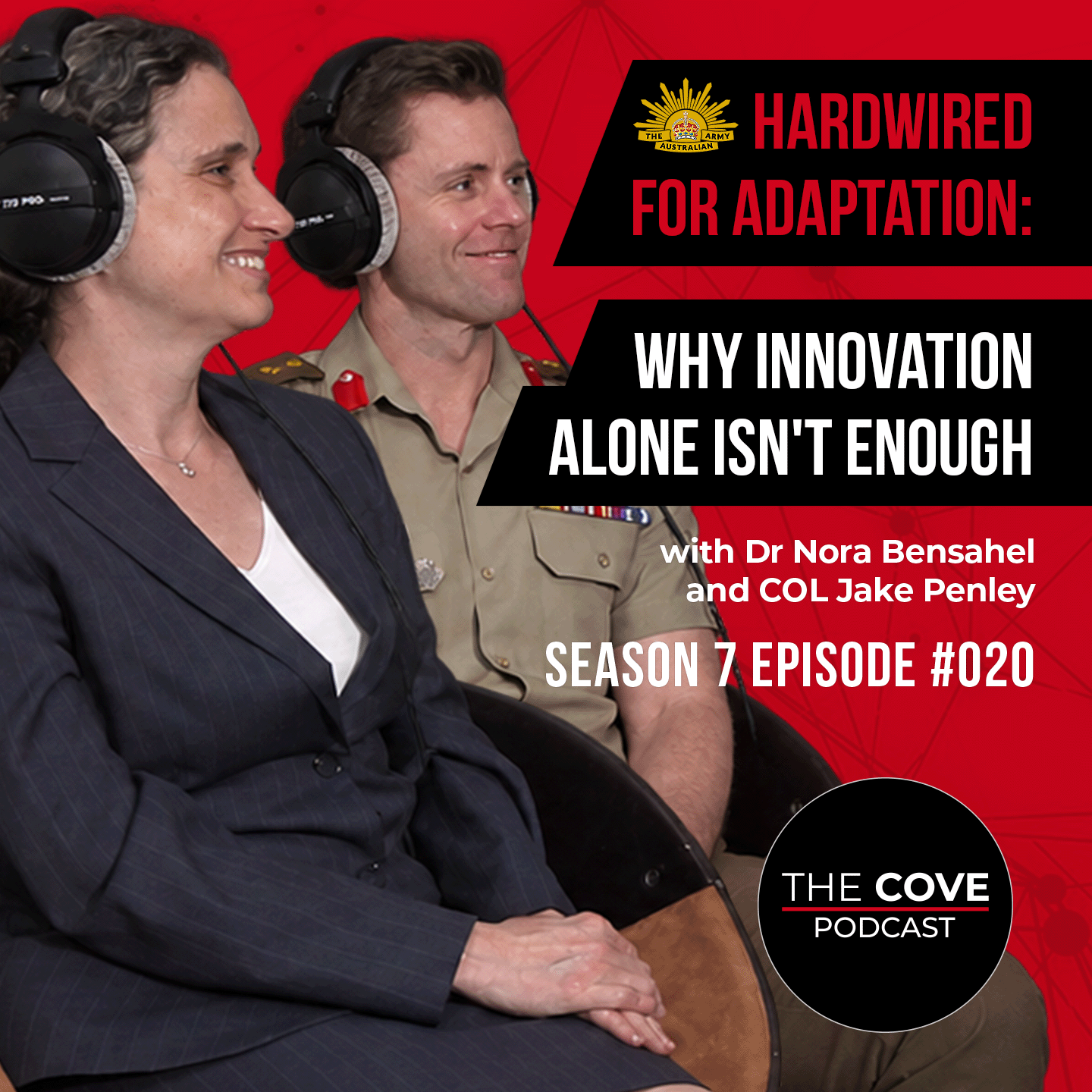
Recorded at the 2026 Chief of Army Symposium, this episode of The Cove Podcast explores what it takes to build an Army that can adapt faster than its adversaries. Professor Nora Bensahel from Johns Hopkins University joins Colonel Jake Penley, to discuss the challenges of military adaptation, drawing on lessons from contemporary conflicts and Army's own experimentation activities. The conversation examines why innovation on the battlefield does not always translate into organisational change, how bureaucracy and risk aversion can slow progress, and why commanders must be prepared to challenge established doctrine and ways of operating. From the rapid adaptation cycles seen in Ukraine to the unique demands of warfare in the Indo-Pacific, the discussion considers how Army can better connect battlefield lessons, experimentation, training and capability development. At its core, the episode asks a critical question: How does Army prepare for a war it cannot predict, and ensure it can adapt
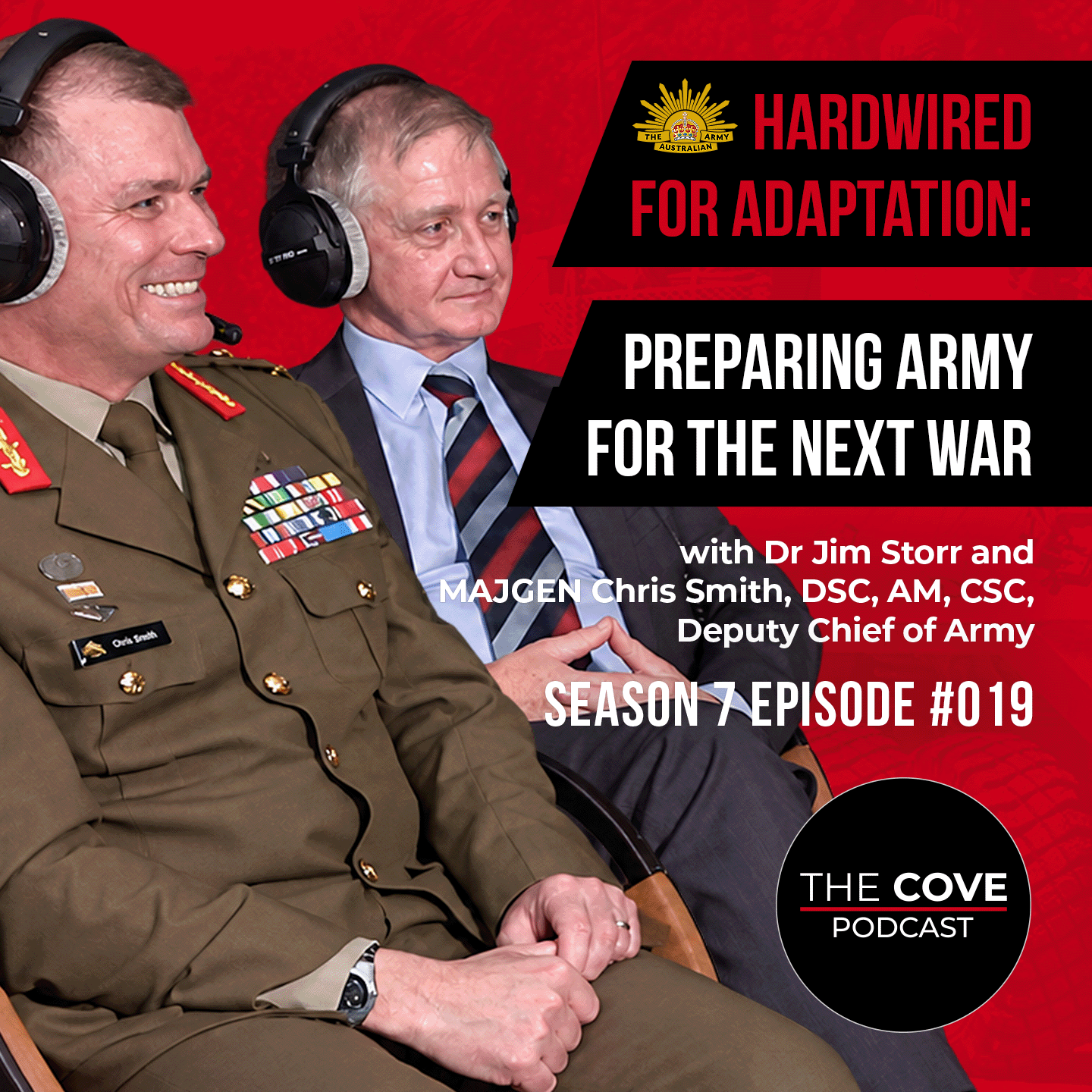
How does an Army prepare for a war it cannot predict? Deputy Chief of Army and military thinker Dr Jim Storr explore what genuine adaptation requires—from command culture and professional military education to experimentation, organisational flexibility and the willingness to challenge established ways of fighting. The conversation examines how the long campaigns in Iraq and Afghanistan shaped a generation of Western armies, the risks of becoming optimised for a single operating environment, and why understanding the enduring nature of war remains essential even as its character changes. They also consider how Army develops adaptable commanders, encourages intellectual curiosity and creates a culture where lessons are tested rather than simply institutionalised.
Cross-party cooperation is worthwhile even when it disappoints committed party supporters.
Share your view, then see how readers voted. No sign-in required. This poll is shared across stories.
Do you agree or disagree?
Common Quandary
A Common Quandary to discuss
Another conversation to explore, separate from this news story.
A bot will reject your honest résumé. Is it okay to add a year of experience?
A role requires three years of experience. You have two, possess all the practical skills, and know automated screening will reject an honest application before a person sees it.
Can an unfair gatekeeping system justify misrepresentation?