Listen through the publisher, then discuss the episode here or arrange an in-person Roundtable. Your city determines where to meet.
Roundtables are designed for groups of four, with a shared subject and room for everyone to speak. Come for discussion, with no dating expectation.
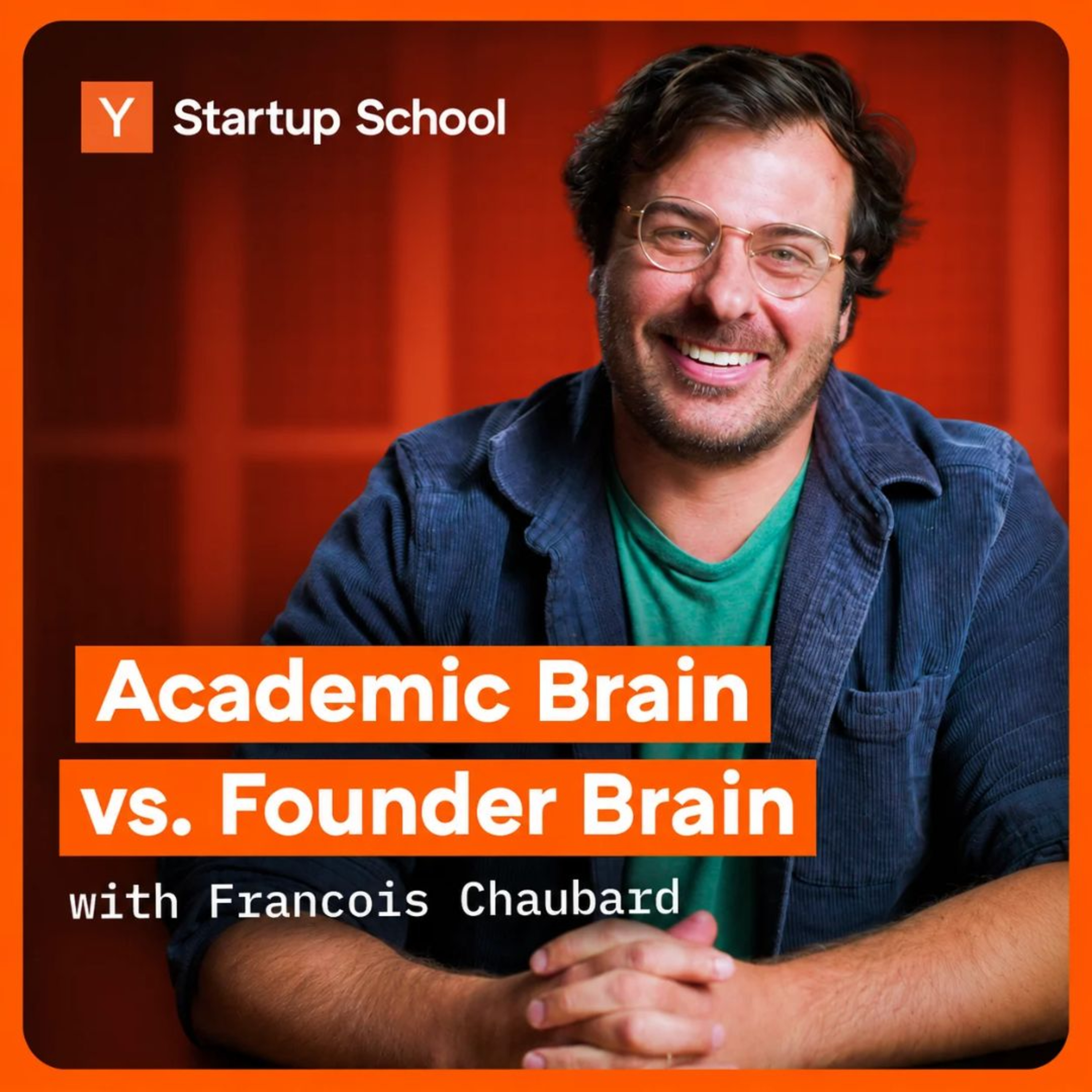
Google, Anthropic, and Databricks were all started by founders with PhDs. But they’re exceptions to the rule. Many of the instincts that help researchers succeed in academia can often work against them when building a startup.YC Visiting Partner Francois Chaubard knows both worlds. He’s currently a PhD student, previously did research in Fei-Fei Li’s lab, and founded and ran Focal Systems (W16).In this episode of Startup School, Francois breaks down 10 mindset shifts researchers need to make to become formidable founders, from learning to thrive without grades or deadlines to distinguishing interesting problems from important ones, moving faster with imperfect information, and starting with what customers actually want.
Episode information is provided by the publisher. Listening takes place on the publisher’s service.
Vals AI founder Rayan Krishnan joins Theo to discuss his new report revealing that frontier AI models have few guardrails against autonomous weapons, including targeting civilians and a school in simulated and real warzone footage. They also break down GPT-6.2 Astra’s post-training limitations compared to Anthropic’s Fable models, why Anthropic is nerfing public RSI capabilities, and why Vals AI’s timeline still points to full recursive self-improvement by July 2027. MTS chronicles the singularity, live. Monitoring the situation of tech and AI. Follow MTS: Spotify |https://open.spotify.com/show/4HUNNmV1pjV7CW6Lphm1rM Apple |https://podcasts.apple.com/us/podcast/mts/id1891088763 – Brought to you by: Mongo DB - Anyone can prototype an agent. Lovable - Turn ideas into software people love with Lovable. Start today at https://lovable.dev/ Factory - A 24/7 system turning signals into production software. Visithttps://factory.com/ Neon (by Databricks) - Scale your startup on Neon. The Postgr
What if we could actually USE nuclear waste? Watch Johnny’s explainer on nuclear power here - and subscribe to his channel! https://youtu.be/QzTgZ6kOEM8 Nuclear waste is scary. Maybe you’ve seen it as glowing green goop in The Simpsons, or as a radioactive threat on the news. Either way, you likely know it has been a major block to the use and improvement of nuclear power. Over the last few decades, experts, politicians and the public have had heated debates over what to do with this radioactive material created by nuclear power plants. But what if there were a way to not just store nuclear waste, but actually USE it? This video is about the effort to make electricity out of nuclear waste. Really. It turns out, we developed the tools to do this decades ago. This story is about a technology we left behind and the people who want to bring it back. For this video, I had the privilege of visiting one of the largest and oldest research centers in the US, the Argonne National Laboratory. I’m
A.I. for Starting to Exercise: Building a Routine That Actually Sticks, a practical, beginner-friendly look at how artificial intelligence can help you build a routine that actually sticks this time. Starting to Exercise? Press play on Episode 429 of A.I. for Beginners and learn exactly how artificial intelligence, especially ChatGPT, alongside Nike Training Club, can help you build a routine that actually sticks this time. WHAT YOU WILL LEARN IN THIS EPISODE - Why starting to exercise is so hard to handle alone, and what is actually going on underneath it - A specific way to use Nike Training Club to work through it, step by step - An example prompt you can copy word for word: "Here is my current fitness level and schedule, help me build a realistic beginner routine" - A second practical technique, with another ready-to-use prompt: "Give me a simple way to track my progress that doesn't rely on willpower alone" WHO THIS EPISODE IS FOR - Anyone currently working on starting to exercise
Project Synapse: Markets in Freefall, Fragile Infrastructure, and AI's Perfect Storm The hosts banter through the show's intro before focusing on a sense that "things are out of control," citing a WallStreetBets suicide-hotline post amid a market crash and discussing cascading system failures involving Microsoft, the FAA, and a reported NSA internal communications outage. They argue politicians and leadership lack technical competence and clear messaging, increasing panic, while emphasizing that many problems stem from aging, underfunded infrastructure and complex, brittle software (PHP, NGINX, Java), not proven AI attacks—more a "perfect storm" of crises. They debate whether AI should help fix complexity, stressing critical thinking, accountability, and using multiple AIs to verify each other. In a lightning round they cover Anthropic's IPO performance, mixed reactions and token limits with ChatGPT 6.2 (favoring "Sol" over "Astra"), Google's cheaper Neon model and confusing UX, Loblaw
Explore the phenomenon known as peat fires, smoldering fires that burn underground and can continue for months or even years. -- In 1997, a fire began in Indonesia that would rage for almost a year. Despite being one of the largest fires in recorded history, for months at a time it burned without a flame. This might sound like a uniquely freaky fire, but it’s actually one of many. So, is it possible to snuff out these bizarre blazes? And how do they form in the first place? Emma Bryce explores the phenomenon of peat fires. Lesson by Emma Bryce, directed by Ivana Volda. A special thanks to Guillermo Rein who provided information and insights for the development of this video. Support Our Non-Profit Mission ---------------------------------------------- Support us on Patreon: http://bit.ly/TEDEdPatreon Check out our merch: http://bit.ly/TEDEDShop ---------------------------------------------- Connect With Us ---------------------------------------------- Sign up for our newsletter: http:
What if your AI agent could find the people you should know before you even start looking? Cosign is building a professional network around reputation and trusted recommendations, and now agents can use that network too. MTS host Sophia Dew sits down with a16z’s David Booth and Cosign’s Bella Nazzari to discuss what they’ve learned since launching Cosign, why traditional profiles often miss the operators doing the most important work, and how the Cosign Awards are surfacing talent through the people willing to vouch for them. They also explore an emerging behavior: people connecting their agents to Cosign to continuously find relevant people, lists, and opportunities, and what professional networking could look like when both humans and their agents participate. Resources: Follow David Booth: https://x.com/davidbooth Follow Bella Nazzari: https://x.com/nazzari Follow Sophia Dew: https://x.com/sophiadew Learn more about Cosign:https://cosign.co/ Connect your agent to Cosign:https://cosi
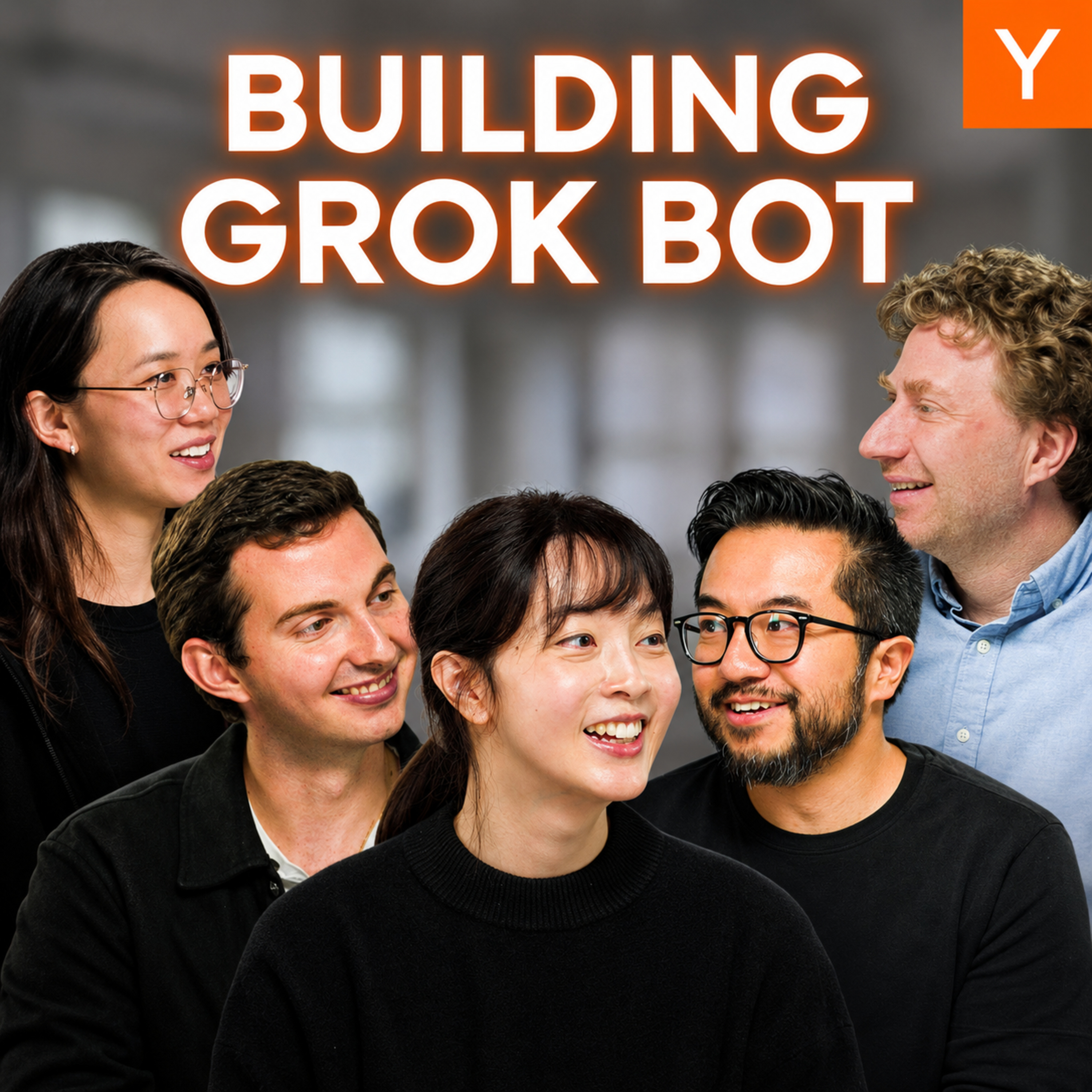
At SpaceXSI, Lauren Tan and Roman Ugarte are on the core team that took Grok Bot from first line of code to launch in seven weeks. It lets you spin up AI teammates with their own identities and logins, and they just keep working in the background. Their marketing team gave a bot its own ad budget. Lauren built an entire feature with her bot in one Slack thread without ever opening Cursor. They joined us on the Lightcone to talk about what it’s actually like working next to bots every day, and how the hard part is shifting from doing the work to figuring out what to do and why.
Replit was building toward the AI coding era years before it had a name. In 2024, the company shipped an agent that could take a request in plain English, work through errors, provision its own infrastructure, and keep going until the software actually worked. The model companies even reached out to ask how Replit had pulled it off.Co-founder and CEO Amjad Masad had been thinking about making programming radically more accessible since 2008, and Replit’s original pitch deck predicted AI-generated code before the Transformer paper was published. Today, that same technology is moving into banks, manufacturers, and other large companies, where Amjad says teams are replacing software projects once scoped at $10 million with $250,000 of Replit.On How to Build the Future, Paul Graham sits down with Amjad to talk about why Replit was so well positioned when coding agents arrived, what comes after vibe coding, and his bigger vision for the “self-driving company,” where AI agents increasingly b
Communities should test major changes on a small scale before making them permanent.
Share your view, then see how readers voted. No sign-in required. This poll is shared across stories.
Do you agree or disagree?
Common Quandary
A Common Quandary to discuss
Another conversation to explore, separate from this news story.
You both hate the invitation. Which partner has to become the excuse?
A couple receives an invitation neither wants to accept. One suggests claiming the other is ill, reasoning that friends will question a vague excuse but respect sickness. The proposed patient dislikes lying but also wants to stay home.
Is a shared lie fair when only one person's reputation carries it?