If you're interested in going deeper, check out our StayCurious Metabolism library on "Peptides and More" https://staycuriousmetabolism.substack.com/p/peptides Referenced Letters Russian Longevity Peptides: https://staycuriousmetabolism.substack.com/p/can-these-longevity-peptides-be-real?r=40ekz2 Pinealon and Sleep: https://staycuriousmetabolism.substack.com/p/why-im-trying-this-peptide-for-sleep?r=40ekz2 To Try Pinealon Thymic Health and Longevity: https://open.substack.com/pub/staycuriousmetabolism/p/the-most-overlooked-organ-in-aging?utm_campaign=post-expanded-share&utm_medium=web (https://open.substack.com/pub/staycuriousmetabolism/p/the-most-overlooked-organ-in-aging) Chapters 0:00 – Are These Russian Longevity Peptides Real?! 1:57 – Part 1, All Roads Lead Back to Russia 6:24 – Part 2, How These Peptides Work 10:20 – Part 3, My Personal Experience 14:28 – Part 4, Looking Towards the Future Can short peptides really influence aging, immunity, sleep, and even mortality? In this vide
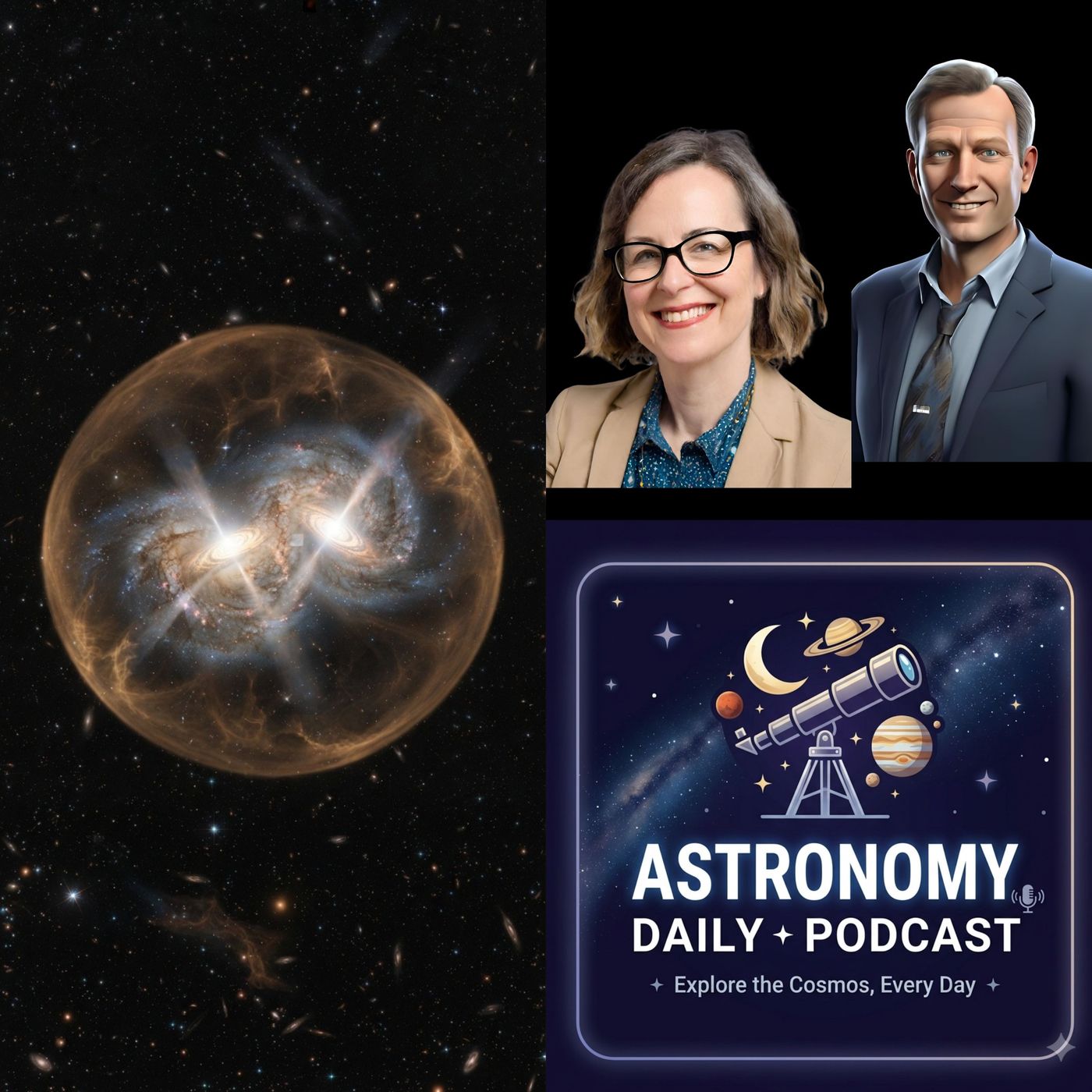
Eleven billion years ago two quasars blazed side by side, and this week astronomers weighed the invisible gas around them by the shadow it casts on the cosmic microwave background. There is 3.6 times more heat in it than gravity can explain. Plus a triple star 28 light-years away that 'should not exist', a pulsar found in ten hours with an algorithm borrowed from cryptography, The Week That Was, and the weekend sky from both hemispheres. In this episode Lead: Hot bubble around the dual quasar J1549+1245 at z = 2.37, measured with ALMA via the thermal Sunyaev–Zel'dovich effect (Hall, Zakamska et al., Nature Astronomy, 18 Nov 2026). Fresh item: Welopōʻai, the closest known triple with two white dwarfs, 28 light-years away (Artigau et al., A&A, 19 Nov 2026). Week That Was: Starship Flight 15 ship catch, CSIRO GenDIReCT and M87, SN 2026ahvu, failed supernovae in gravitational waves (E230); Voyager 1 one light-day, Beta Pictoris ices, heavy-oxygen water, Roman alignment (E231); Terra ends,
PBS Member Stations rely on viewers like you. To support your local station, go to: http://to.pbs.org/DonateSPACE ↓ More info below ↓ Uploaded 21-10-19 Sign Up on Patreon to get access to the Space Time Discord! Check out the Space Time Merch Store Invitation to Time Travelers: https://www.youtube.com/post/UgzeIA0O00-bVioxU4t4AaABCQ Time travel stories are cool because both the past and future are somehow more interesting that the present and because everyone wants a redo. But so far it appears we’re doomed to live consumed by regret in the eternal, boring present. Time marches on, inexorably and only forward. Or so we thought until Einstein came along. His special and general theories of relativity changed the way we think about time forever, and believe it or not, their raw equations permit time travel. They even tell us how to do it. So let’s review the possibilities, and decide how possible they really are. Hosted by Matt O'Dowd Written by Matt O'Dowd Graphics by Leonardo Scholzer
"Curing cancer," explained. We’re not looking for a “cure for cancer” anymore. Cancer is hundreds of diseases, so we’re really in a multi front fight against all of them. Cancer is a problem for us today in a way it wasn’t for previous generations. But, luckily, we also have more and more ways to fight back. I started this episode with endless questions: What is cancer? What causes it? How do we treat cancer? What are the symptoms? Why are some cancers easier to treat than others? Why is cancer so hard to cure? Why do so many people die of cancer? What I found is an incredible, complex, inspiring effort to treat and stop an insidious killer. In this video, we dive deep into how we treat cancer today. But I also found that we may not be helping the greatest number of people we can. In this episode of Huge If True, I want to make the case that while we have made enormous strides in the fight against cancer we have also largely ignored one of the single best ways to save the most lives. I
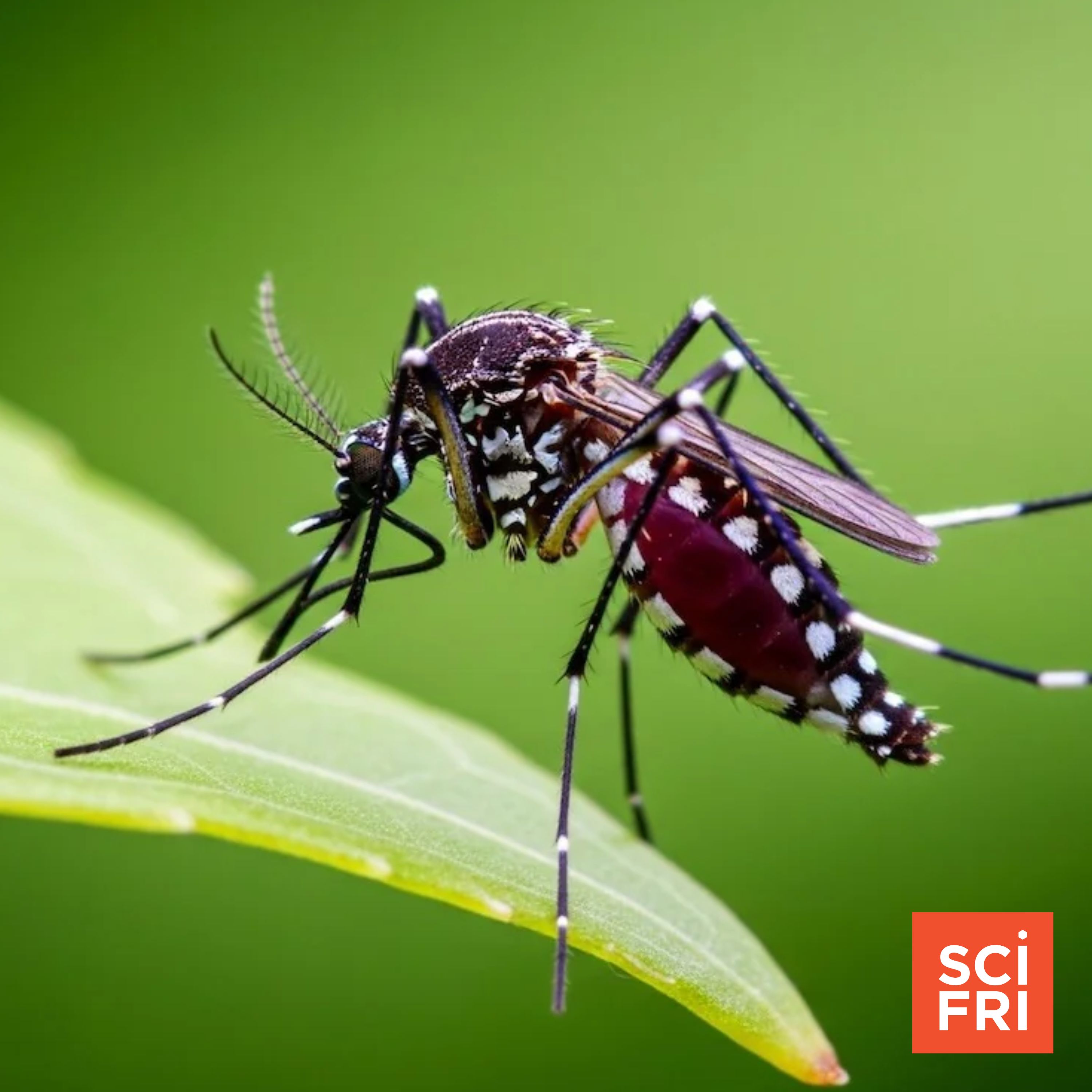
In Florida, three counties have declared states of emergency due to rising cases of dengue (https://www.sciencefriday.com/segments/floridas-dengue-outbreak/)—a viral infection spread by mosquitos carrying the dengue virus. There have been around 1,000 cases (https://www.cdc.gov/dengue/data-research/facts-stats/current-data.html) in the state this year, making it the largest outbreak (https://apnews.com/article/dengue-virus-outbreak-florida-7f0bda2b0a1e7895e834010f38cedb1e) in the continental U.S. in decades. But this is part of a larger story. Over the last couple of decades, the number of dengue cases has surged globally, and dengue is becoming more common in places it hasn’t historically been. So what’s behind these shifts? And what public health measures should we be thinking about? Flora chats about this with epidemiologist Gabriela Paz-Bailey, chief of CDC’s dengue branch in San Juan, Puerto Rico. Guest: Dr. Gabriela Paz-Bailey is an epidemiologist and chief of the dengue branch i
In today's brief: Lake Erie, 1957: a newly released Air Force report says two boys saw a humming, bell-shaped craft near the Enrico Fermi Atomic Plant. Skinwalker Ranch: owner Brandon Fugal calls the new files landmark and recalls a daylight saucer over the mesa. Warship footage: a 20-second 2020 infrared clip shows a light crossing a US Navy ship in the Middle East, with no Pentagon assessment. Martha's Vineyard, 1957: a spiked, nickel-coloured object that the Air Force put down to a radar-reflector balloon. Loch Ness: reported sightings jump to 15 this year, up from six in 2025. The Book of Miracles: a 16th-century manuscript of comets, blood rain and multiple suns heads to auction at Christie's. Quick hits: a 1952 file blames the saucer wave on temperature inversions; more Pentagon UFO files are on the way. Every story and source: https://believepod.com/ufo-paranormal-news-22-november-2026/ New episodes every morning. Keep your eyes on the sky. Sources: FOX 2 Detroit: https://www.fo
Emily Goldberg joins Immune at the annual AAI conference to discuss her groundbreaking research on ketogenic diets and T cells, fasting and obesity, molecular signals that regulate inflammation, and the biology of healthy aging. Host: Cindy Leifer (https://www.leiferlab.com/) Guest: Emily Goldberg (https://goldberglab.ucsf.edu/) Links for this episode MicrobeTV Discord Server (https://discord.gg/xA4JX7AeeU) Ketone bodies trigger immune (https://pubmed.ncbi.nlm.nih.gov/38189135/) responses (Am J Physiol Cell Physiol, 2024) Ketogenic diet protects against flu (https://pubmed.ncbi.nlm.nih.gov/31732517/) infection (Sci Immunol, 2019) HDACs catalyze lacylation (https://pubmed.ncbi.nlm.nih.gov/40835008/) (J Biol Chem 2025) Immunometabolic response to fasting (https://pubmed.ncbi.nlm.nih.gov/40662191/) (iScience, 2025) Immune-metabolic preservation of healthy aging (https://pubmed.ncbi.nlm.nih.gov/33644501/) (Tansl Med Aging, 2020) Time stamps by Jolene (https://ramseylab.vercel.app/) Ramsey
Tax increases should include clear measures for judging whether the promised benefits occur.
Share your view, then see how readers voted. No sign-in required. This poll is shared across stories.
Do you agree or disagree?
Common Quandary
A Common Quandary to discuss
Another conversation to explore, separate from this news story.
You are vegetarian, but the leftover steak is headed for the trash. Do you eat it?
A vegetarian avoids buying meat because of animal welfare concerns. At work events, untouched meat is routinely thrown away, and eating it would neither increase demand nor cause another animal to be harmed.
Should a moral practice be judged by its consequences or its consistency?