Introducing What It's Like To Be... with Dan Heath
3 min
Listen through the publisher, then discuss the episode here or arrange an in-person Roundtable. Your city determines where to meet.
Roundtables are designed for groups of four, with a shared subject and room for everyone to speak. Come for discussion, with no dating expectation.
If you’ve ever met someone with an interesting job and wished you could ask them a hundred questions about what they really do all day, this is a show to check out. What It’s Like to Be... is a podcast hosted by bestselling author Dan Heath that explores the world of work one profession at a time. We hope you enjoy it as much as we do.
Episode information is provided by the publisher. Listening takes place on the publisher’s service.
PBS Member Stations rely on viewers like you. To support your local station, go to: http://to.pbs.org/DonateSPACE ↓ More info below ↓ Uploaded 21-04-21 Sign Up on Patreon to get access to the Space Time Discord! That Einstein guy was a real bummer for our hopes of a star-hopping, science-fiction-y future. His whole “nothing travels faster than light” rule seems to ensure that exploration of even the local part of our galaxy will be an excruciating slow. But Einstein also gave us a glimmer of hope. He showed us that space and time can be warped - and so the warp drive was conceived. Just recently, a couple of papers contend that these are not pure science fiction. Check Out Our Previous Warp Drive Episode Warp Drive Papers Introducing Physical Warp Drive Breaking the Warp Barrier Check out the Space Time Merch Store Hosted by Matt O'Dowd Written by Matt Caplan and Matt O'Dowd Graphics by Leonardo Scholzer, Yago Ballarini, Pedro Osinski, Adriano Leal and Stephanie Faria GFX Visualization
A kiss can be wonderful. It can create an instant connection, spark romance, or make you feel closer to someone. But a kiss can also have the opposite effect — and sometimes ruin everything. So what makes kissing so powerful, and why can one kiss make such a difference? There's some fascinating science behind it. https://www.scientificamerican.com/article/why-we-kiss/ We spend an enormous amount of time worrying about what's going to change. What's next? What's coming? How do we prepare? But what if we're paying attention to the wrong things? Some of the most important forces shaping our lives never change, and understanding them may be far more valuable than trying to predict the future — something humans are notoriously bad at. Morgan Housel, partner at The Collaborative Fund and author of Same as Ever: A Guide to What Never Changes (https://amzn.to/3SwWn6u) (https://amzn.to/3SwWn6u)), joins me to explain why the things that stay the same may be the most important things to understan
This new tech is changing how movies get made. So @mkbhd and I tested it out... Watch MKBHD's video: https://youtu.be/RM7SobH8ZO0 I’ve been obsessed with sci-fi movies since I was a kid. I love being transported to another world. But lately, I’ve been wondering: How do those worlds look so… REAL? The tech behind movies has exploded in complexity and realism, changing how stories come to life on screen. Luckily, at the same time, those tools are becoming more and more available to more people telling stories. It’s not just blockbusters like Avatar 2 or Avengers or Dune. It’s also smaller budget films like Everything Everywhere All at Once or even… YouTube creators? In this video, Marques Brownlee and I test out 3 movie-making tools that are changing how movies, shows, and maybe even YouTube videos (??) get made. We’re at ZeroSpace Studios in New York to show you how each of these crazy technologies work - and how you might be able to use them. Along the way, we hit big questions like: W
Explore how pulling an all-nighter can impact your cognitive function, and find out what happens to your brain when you don't sleep. -- You’re just one history final away from a relaxing spring break. But you still have so much to study! You decide to follow in the footsteps of many students before you, and pull an all-nighter. So, what happens to your brain when you stay up all night? And does cramming like this actually help you prepare for a test? Anna Rothschild explores how a sleepless night impacts your cognitive function. Lesson by Anna Rothschild, directed by Biljana Labović. Animation by Noam Sussman & Ali Kellner, Homework Studio. This video made possible in collaboration with the Bezos Family Foundation Learn more about how TED-Ed partnerships work: https://bit.ly/TEDEdPartner A special thanks to Dr. Mathias Basner, Andrew Fuligni, Adriana Galván, and UCLA Center for the Developing Adolescent who provided information and insights for the development of this video. Support Ou
Master the skills that change lives — enroll in your free human behavior course today: https://nci.university/learn Uploaded 10-04-26 The Cheat Code for Controlling Conflict Every argument, meltdown, or power struggle follows a pattern. Most people miss it—and that’s why they lose control in the moment. This video breaks down the exact psychological system behind conflict escalation, including why people suddenly become defensive, aggressive, manipulative, or unpredictable. Once you see it, you’ll recognize the moment before things spiral—and you’ll know how to respond without escalating, backing down, or losing your frame. This isn’t about winning arguments. It’s about understanding what actually triggers human behavior under pressure. Inside this breakdown: • Why people suddenly “flip” in conversations • The hidden triggers behind anger, defensiveness, and power plays • How ego threat drives conflict escalation • Why logic fails when emotions take over • How to read the exact moment
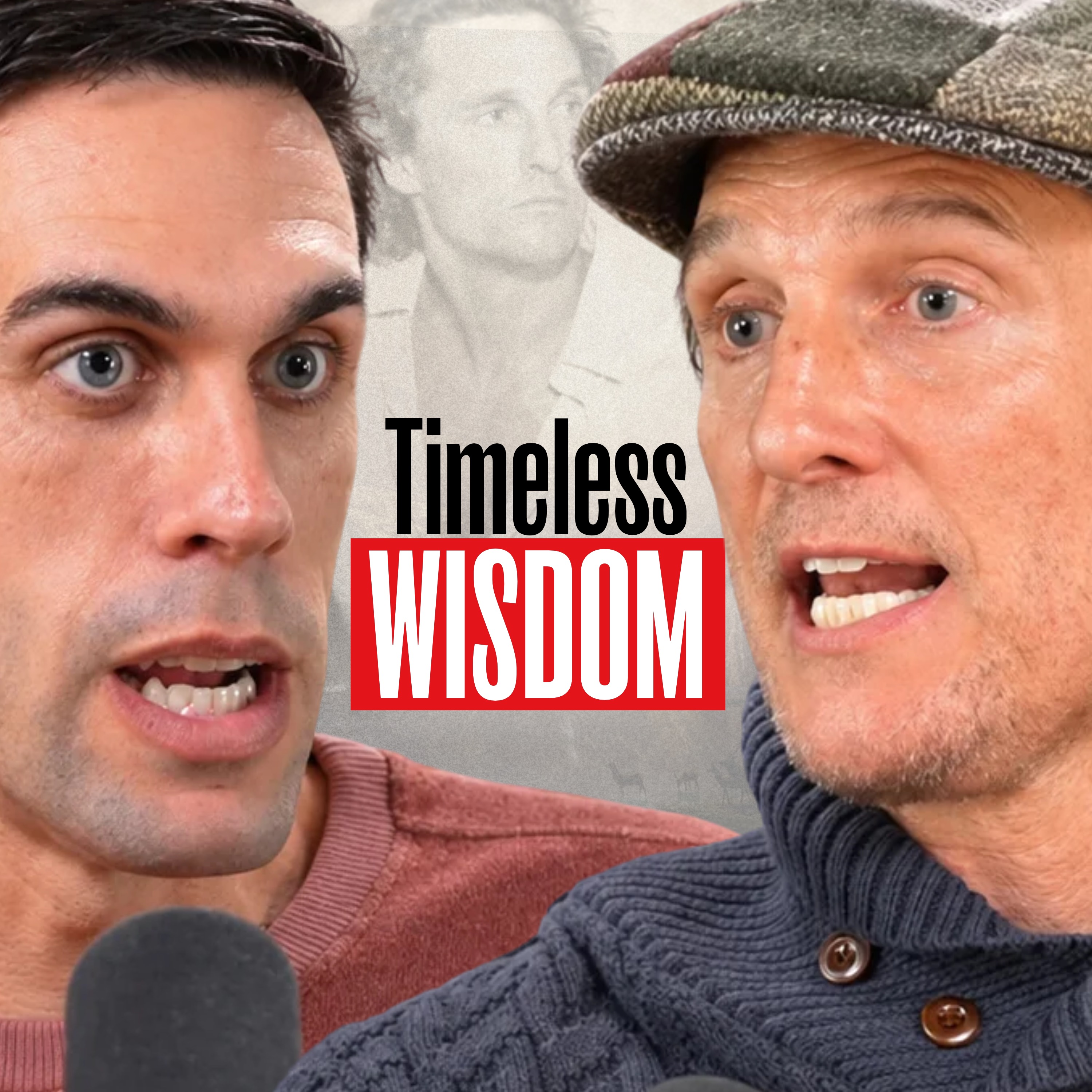
Today, Ryan sits down with Academy Award-winning actor and bestselling author Matthew McConaughey to talk about the power of poetry and how it can help us make sense of life. They talk about the difference between being good and being nice, the courage to stand by your principles, knowing when to say no, how poetry can help us navigate life’s challenges, and more. Grab the NEW Poems & Prayers: Deluxe Edition by Matthew McConaughy (https://www.thepaintedporch.com/products/poems-prayers-deluxe-edition-unsigned?_pos=2&_sid=f59711761&_ss=r): https://www.thepaintedporch.com/products/poems-prayers-deluxe-edition-unsigned?_pos=2&_sid=f59711761&_ss=r Greenlights by Matthew McConaughy (https://www.thepaintedporch.com/products/bio2?_pos=1&_sid=0b6db1b34&_ss=r): https://www.thepaintedporch.com/products/bio2?_pos=1&_sid=0b6db1b34&_ss=r Greenlights: Your Journal, Your Journey by Matthew McConaughy (https://www.thepaintedporch.com/products/greenlights-your-journal-your-journey?_pos=2&_sid=0b6db1b34&
To hear an ad-free version of this episode, join our Patreon (https://www.patreon.com/cw/outsideinradio)! While fishing the rainy shores of Juneau, Alaska, host Nate Hegyi starts questioning the origins of the salmon filling his freezer. A behind-the-scenes tour of a salmon hatchery reveals a surprising truth: many "wild-caught" Pacific salmon actually begin their lives inside cold, dark warehouses. Through a decades-old practice known as ocean ranching, workers mix eggs and milt in five-gallon buckets, shelter the hatchlings from predators, and release them into the sea—giving these "silver-spoon" fish a massive survival boost before they're caught by commercial fleets or lured back up concrete fish ladders. Even though ocean-ranched salmon spend most of their lives in the open ocean, they occupy a murky middle ground between truly wild fish and industrial aquaculture. Featuring Ryley Oliver and Ian Urbina Produced by Nate Hegyi. For full credits and transcript, visit outsideinradio.o
To hear an ad-free version of this episode, join our Patreon (http://patreon.com/cw/outsideinradio)! When it comes to the environment, are natural fabrics better than synthetics? The answer might surprise you. In this episode we compare the carbon footprints of polyester versus cotton, ask the experts whether our waterproof clothes are killing us, and talk about the number one thing you can do to make more sustainable clothing choices. This episode was first published in June 2023. Featuring Lucy Allosso, Jessian Choy, Joel Svedlund, and Akiera Charles. Produced by Felix Poon. For full credits and transcript, visit outsideinradio.org (https://outsideinradio.org/shows/living-in-a-material-world-the-search-for-sustainable-clothing) CONNECT WITH US Outside/In is made possible with listener support. No question is too serious or too silly. ADDITIONAL MATERIALS Our colleagues at NHPR’s Document team made a whole series about PFAS called Safe to Drink (https://play.megaphone.fm/montsjagqx6cc
A Christmas tree farmer with dementia named Jay Hickey vanishes from his small town in rural New Hampshire. Jay's wife Patty never reports him missing. A tipster claims "a lot of strangeness is starting to emerge" – and they're right. From our colleagues on the Document team at New Hampshire Public Radio, the season three premiere of Bear Brook, A Private Matter, tells a story about family estrangement, the growing dementia crisis, and the legal gaps that leave vulnerable people behind. To listen to more of the new season, follow Bear Brook here:https://podcasts.apple.com/us/podcast/redhanded/id1250599915https://play.megaphone.fm/3gfaxmufro-bjytd5eobrg Visit the Bear Brook website (https://www.bearbrookpodcast.com/season-three) to find photos from Jason's reporting and transcripts of each episode. CONNECT WITH US Outside/In is made possible with listener support. Click here (http://patreon.com/cw/outsideinradio) to join our Patreon and get ad-free episodes of the podcast. No question i
Expanding universities should help pay for the pressures they create on surrounding neighborhoods.
Share your view, then see how readers voted. No sign-in required. This poll is shared across stories.
Do you agree or disagree?
Common Quandary
A Common Quandary to discuss
Another conversation to explore, separate from this news story.
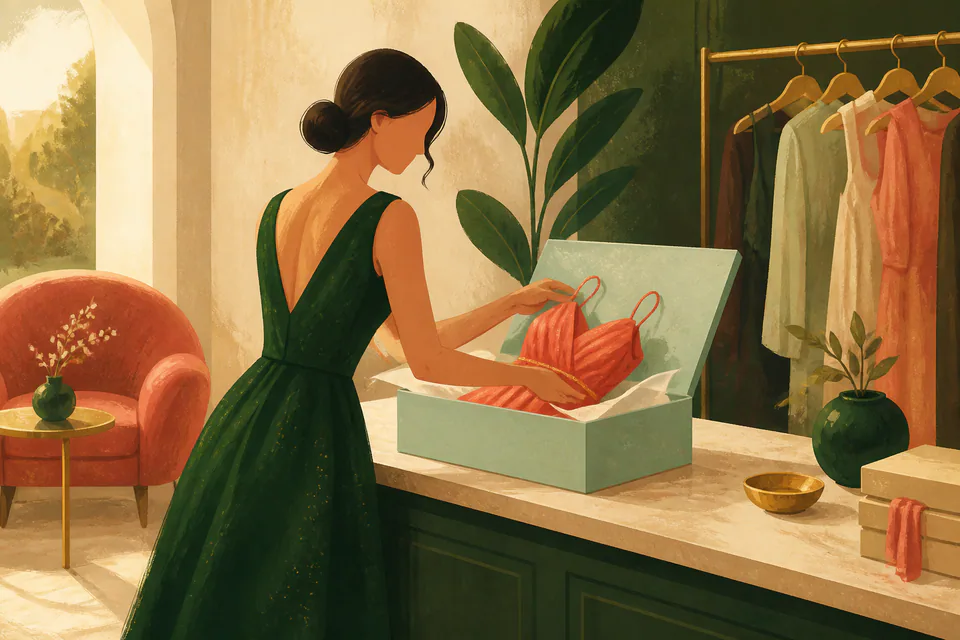
You wear an expensive outfit once and return it spotless. Clever or dishonest?
You buy an expensive outfit for a single event, keep it spotless, and return it the next day. The store's generous policy allows returns without asking whether an item was worn.
Does exploiting a policy differ from breaking a rule?