Is the wild-caught salmon on your plate actually wild?
32 min
Listen through the publisher, then discuss the episode here or arrange an in-person Roundtable. Your city determines where to meet.
Roundtables are designed for groups of four, with a shared subject and room for everyone to speak. Come for discussion, with no dating expectation.
To hear an ad-free version of this episode, join our Patreon (https://www.patreon.com/cw/outsideinradio)! While fishing the rainy shores of Juneau, Alaska, host Nate Hegyi starts questioning the origins of the salmon filling his freezer. A behind-the-scenes tour of a salmon hatchery reveals a surprising truth: many "wild-caught" Pacific salmon actually begin their lives inside cold, dark warehouses. Through a decades-old practice known as ocean ranching, workers mix eggs and milt in five-gallon buckets, shelter the hatchlings from predators, and release them into the sea—giving these "silver-spoon" fish a massive survival boost before they're caught by commercial fleets or lured back up concrete fish ladders. Even though ocean-ranched salmon spend most of their lives in the open ocean, they occupy a murky middle ground between truly wild fish and industrial aquaculture. Featuring Ryley Oliver and Ian Urbina Produced by Nate Hegyi. For full credits and transcript, visit outsideinradio.org (http://outsideinradio.org/) CONNECT WITH US Outside/In is made possible with listener support. Click here (http://patreon.com/cw/outsideinradio) to join our Patreon and get ad-free episodes of the podcast. No question is too serious or too silly. ADDITIONAL MATERIALS A review of peer-reviewed literature found (https://onlinelibrary.wiley.com/doi/10.1111/fme.12643) that hatchery-born salmon and trout had adverse impacts on their wildborne counterparts. Check out Ian Urbina’s wide-ranging investigation into fishmeal here (https://foodforfeed.theoutlawocean.com/).
Episode information is provided by the publisher. Listening takes place on the publisher’s service.
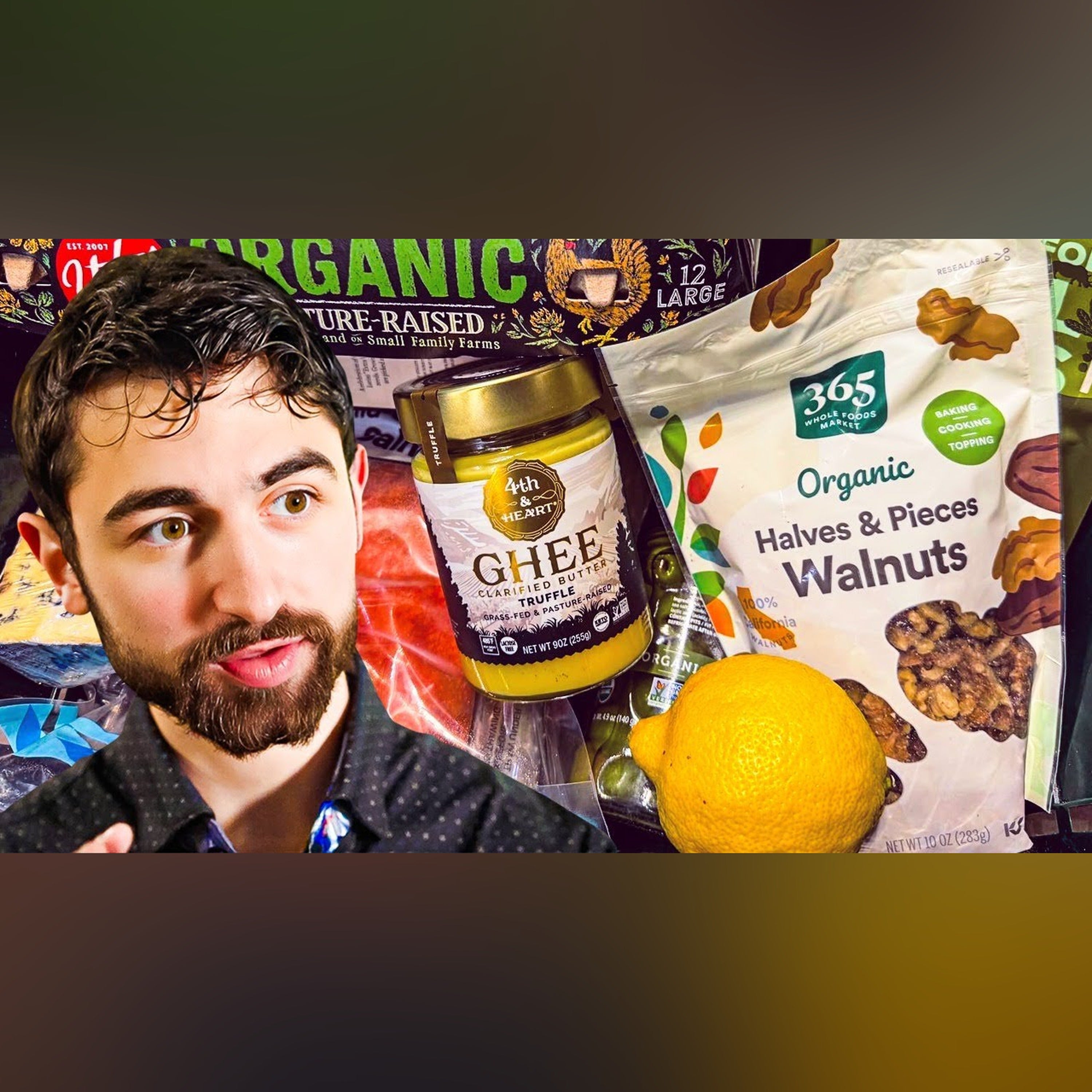
For all references and a written breakdown, references and brands recommendations, see the Newsletter: https://staycuriousmetabolism.substack.com/p/ketosis-casein-and-chocolate-what?r=40ekz2 CHAPTER *Call our service line at 815-STAY-CUR (815-782-9287) *Learn more about the data, here: https://staycuriousmetabolism.substack.com/p/life-or-death-in-the-fine-print-the?r=40ekz2 I’ve been asked countless times to make a What I Eat in a Day video — and I’ve finally cracked, like an egg. In this video, I break down what I eat and the science behind every choice. This isn’t a “follow my diet” video — it’s a framework for how to think about food. Whether you’re low-carb, keto, or simply curious about how to optimize your nutrition, this breakdown will give you practical insights into how to make science-backed food choices. For my full shopping list and preferred brands (no affiliations), check out the linked newsletter (above). Referenced Content: How to Cook Eggs: https://youtu.be/Dhmq6F5M8kc
Dig into the animal kingdom’s capacity for generosity, and find out how cooperation between animals may contribute to their survival. -- Charles Darwin introduced the notion of “survival of the fittest,” where the fittest animals are those who can survive long enough to produce healthy offspring. The fittest animal can also be the most stealthy, resourceful, or even the most cooperative. So what exactly does cooperation look like in the wild? Ashley Ward digs into the animal kingdom's capacity for generosity. Lesson by Ashley Ward, directed by Sharon Colman. Support Our Non-Profit Mission ---------------------------------------------- Support us on Patreon: http://bit.ly/TEDEdPatreon Check out our merch: http://bit.ly/TEDEDShop ---------------------------------------------- Connect With Us ---------------------------------------------- Sign up for our newsletter: http://bit.ly/TEDEdNewsletter Find us on Twitter: http://bit.ly/TEDEdTwitter Peep us on Instagram: http://bit.ly/TEDEdInstag
Your body doesn't work like you think... Take your personal data back with Incogni. How and when people are having kids is changing, but our bodies aren't. As we get older, it can get harder to have kids when we want to. So smart people figured out it’s possible to remove eggs, freeze them, and unfreeze them to use later. They can even fertilize those eggs to make embryos and freeze those. Basically, humans invented cryosleep! … Just for tiny cells. It’s totally sci-fi - and you need to know about it. This is a level of control over our bodies no species has ever had before. It’s already changing people’s lives - and how our species can reproduce. But there are real concerns about whether it’s worth it. Because let me tell you, the process is not easy. I’ve been taking medication for two weeks. And at the same time, I’ve been doing research, talking to doctors, and learning as much as I can about the cutting edge of fertility tech. In this video, I'm going to take you behind the scenes
For some reason, it did not stop him.Now I just want to ask you something real quick to put you in the mind of a bear. If you found some of your favorite food just left out and you somehow, like me most of the time, just couldn’t resist the temptation. Bears live and eat by what is detected by their noses, so logically, after eating its fill, a proper expectation would be that the bear would go sleep off a large meal upwind of where its food was cached. The wind carries both scent and sound to the bear as it rests and acts as an alarm to it to defend its cache. The hide was still up in the birch, untouched. He dropped his packboard at the base of the tree and glanced up to see where he would need to climb. Movement in the brush, some three hundred feet away, caught his eye. Two bears, roughly thirty feet apart, moved through the brush. From their color and build, he identified them as grizzlies, also called coastal brown bears.Up to that day, every bear he had met in the wild had chose
Thanks to Displate for sponsoring the video. Use code SPACETIME at checkout for exclusive discounts on your order at https://displate.com/@spacetime Valid on Textra. Not valid on Limited Edition & Lumino. The multiverse pops out of quite a few theories in physics, and has been proposed as a solution to certain vexing problems. But it’s also been argued that the very idea of a multiverse is just bad science. That it’s unfalsifiable and a dead-end to inquiry and as bad a violation of Occam’s razor as you could imagine. But the multiverse might also exist. Can something that exists be bad science? PBS Member Stations rely on viewers like you. To support your local station, go to:http://to.pbs.org/DonateSPACE Sign Up on Patreon to get access to the Space Time Discord! Check out the Space Time Merch Store Search the Entire Space Time Library Here: https://search.pbsspacetime.com/ Hosted by Matt O'Dowd Written by Matt O'Dowd Post Production by Leonardo Scholzer Directed by Andrew Kornhaber A
THE SEARCH FOR THE ULTIMATE RED LIGHT THERAPY IS OVER! After decades of exploring wellness technologies, Michael Jaco sits down with Rob Rene, founder of Exodus Strong, to explore the Red Light+ Total Body Reset system, the science behind red and near-infrared light, and why this technology has become such an important part of their wellness conversation. Rob's remarkable personal journey—including surviving five near-death experiences—inspired his mission to develop practical wellness tools that people can incorporate into their everyday lives. Discover the full-body Red Light+ Mat, designed for convenient 20-minute sessions, and the portable Red Light+ Wand, created for targeted use on areas such as the knees, shoulders, hands, and lower back. Michael and Rob discuss the technology, personal experiences, and how red light therapy may support a daily wellness routine. BLACK FRIDAY–CYBER MONDAY LISTENER EXCLUSIVE! This is your opportunity to explore Exodus Strong's special holiday offe
If you’ve ever met someone with an interesting job and wished you could ask them a hundred questions about what they really do all day, this is a show to check out. What It’s Like to Be... is a podcast hosted by bestselling author Dan Heath that explores the world of work one profession at a time. We hope you enjoy it as much as we do.
To hear an ad-free version of this episode, join our Patreon (http://patreon.com/cw/outsideinradio)! When it comes to the environment, are natural fabrics better than synthetics? The answer might surprise you. In this episode we compare the carbon footprints of polyester versus cotton, ask the experts whether our waterproof clothes are killing us, and talk about the number one thing you can do to make more sustainable clothing choices. This episode was first published in June 2023. Featuring Lucy Allosso, Jessian Choy, Joel Svedlund, and Akiera Charles. Produced by Felix Poon. For full credits and transcript, visit outsideinradio.org (https://outsideinradio.org/shows/living-in-a-material-world-the-search-for-sustainable-clothing) CONNECT WITH US Outside/In is made possible with listener support. No question is too serious or too silly. ADDITIONAL MATERIALS Our colleagues at NHPR’s Document team made a whole series about PFAS called Safe to Drink (https://play.megaphone.fm/montsjagqx6cc
A Christmas tree farmer with dementia named Jay Hickey vanishes from his small town in rural New Hampshire. Jay's wife Patty never reports him missing. A tipster claims "a lot of strangeness is starting to emerge" – and they're right. From our colleagues on the Document team at New Hampshire Public Radio, the season three premiere of Bear Brook, A Private Matter, tells a story about family estrangement, the growing dementia crisis, and the legal gaps that leave vulnerable people behind. To listen to more of the new season, follow Bear Brook here:https://podcasts.apple.com/us/podcast/redhanded/id1250599915https://play.megaphone.fm/3gfaxmufro-bjytd5eobrg Visit the Bear Brook website (https://www.bearbrookpodcast.com/season-three) to find photos from Jason's reporting and transcripts of each episode. CONNECT WITH US Outside/In is made possible with listener support. Click here (http://patreon.com/cw/outsideinradio) to join our Patreon and get ad-free episodes of the podcast. No question i
Interest-rate decisions should explicitly consider both borrowers and savers.
Share your view, then see how readers voted. No sign-in required. This poll is shared across stories.
Do you agree or disagree?
Common Quandary
A Common Quandary to discuss
Another conversation to explore, separate from this news story.
The restaurant gives free birthday cake. Is moving your birthday by a week close enough?
A restaurant offers a spectacular free dessert on birthdays. Your birthday was last week, but nobody took you out then. When the server asks whether anyone is celebrating, your friends point at you and wait for your answer.
How much flexibility can a harmless celebration tolerate before it becomes a lie?