Let's harness video to revolutionize education - Salman Khan
27 min
Listen through the publisher, then discuss the episode here or arrange an in-person Roundtable. Your city determines where to meet.
Roundtables are designed for groups of four, with a shared subject and room for everyone to speak. Come for discussion, with no dating expectation.
View full lesson: http://ed.ted.com/lessons/let-s-use-video-to-reinvent-education-salman-khan Salman Khan talks about how and why he created the remarkable Khan Academy, a carefully structured series of educational videos offering complete curricula in math and, now, other subjects. He shows the power of interactive exercises and calls for teachers to consider flipping the traditional classroom script -- give students video lectures to watch at home and do "homework" in the classroom with the teacher available to help. Talk by Salman Khan.
Episode information is provided by the publisher. Listening takes place on the publisher’s service.
#JimRohnMotivation #JimRohn #JimRohnSpeech In this Jim Rohn Motivation video, discover the power of one decision to change everything. This isn’t about inspiration—it’s about ownership, discipline, and the mindset required to reclaim your life and create lasting transformation. Key Topics From This Motivational Video: The day you decide is the day everything changes Why philosophy shapes results more than circumstances The link between pain, frustration, and personal growth Discipline, momentum, and the test of time How your environment and associations impact your future This powerful Jim Rohn motivational video outlines the complete journey of personal transformation—starting with a single decision. You'll learn how to shift from wishing to acting, from blaming to owning, from reacting to creating. With deep insights on discipline, responsibility, and mindset, this video is a blueprint for becoming the kind of person who doesn't just start—but endures, thrives, and leads with purpose
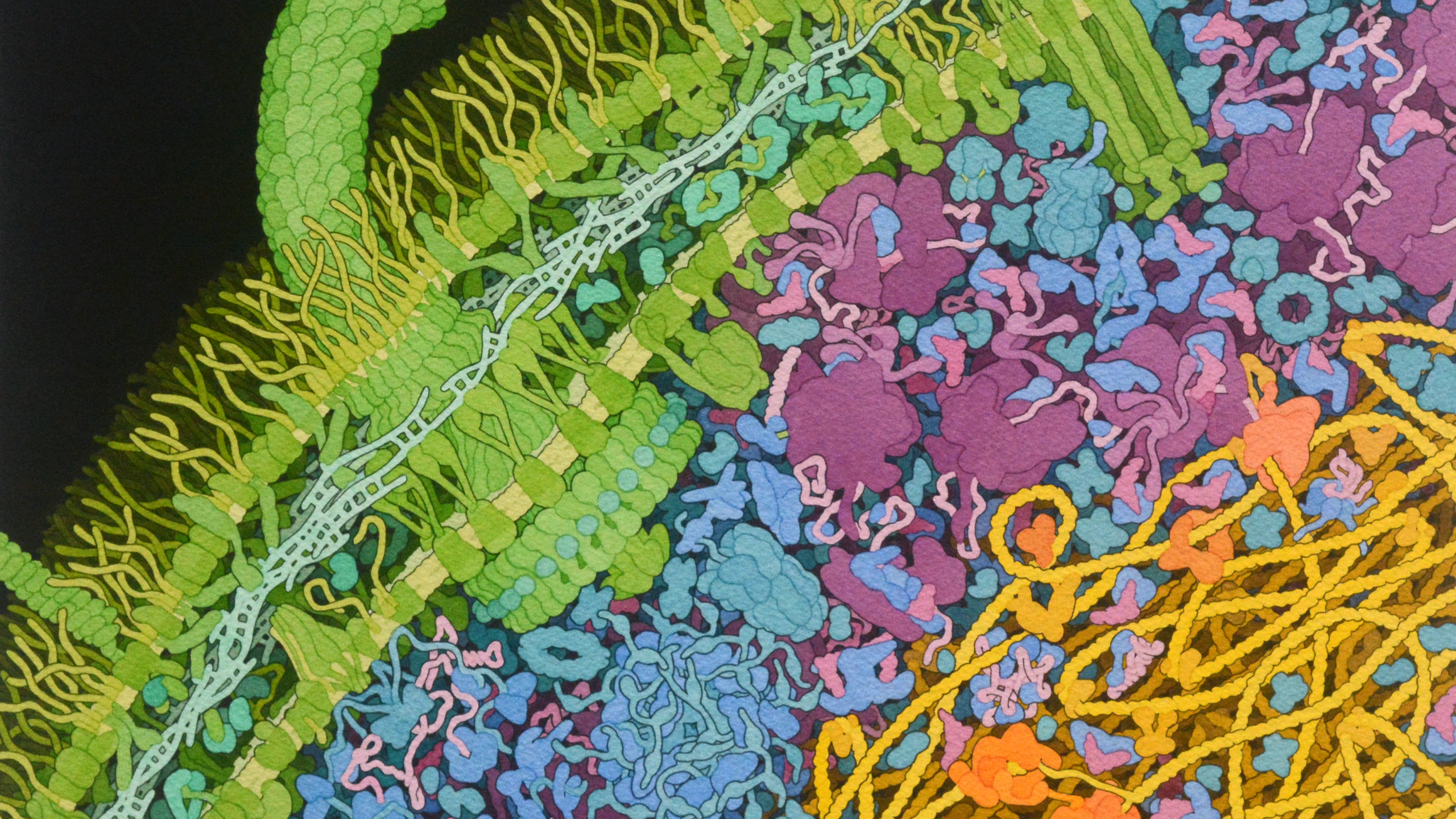
Humans have accomplished some amazing feats of engineering! There’s the Great Wall, the Great Pyramids, the Empire State Building. These are all wonders, to be sure. But it’s easy to forget the wonders that are much smaller than all that: wonders inside us, wonders that are keeping us alive! On today's ID The Future, Andrew McDiarmid is excited to read to you from The Robots Inside You, a new book designed for young people from biochemist Dr. Michael Behe. If you’ve watched the video series Secrets of the Cell, you know Dr. Behe has the ability to make complex scientific concepts easier to understand. In The Robots Inside You, Behe unpacks three amazing systems: the blood-clotting system that coordinates our body’s emergency response to bleeding, the molecular machines that maintain and repair our cells, and the superhero bugs at the heart of life that harness sophisticated machinery and extraordinary capabilities. Source (https://idthefuture.com/2295/)
Viewers like you help make PBS (Thank you ) . Support your local PBS Member Station here: https://to.pbs.org/DonateSPACE Uploaded 28-06-17 Quantum Electrodynamics is the first true Quantum Field Theory. Part 2 in our series on Quantum Field Theory. Signup for your free trial to The Great Courses Plus here: http://ow.ly/D0Ne30beNrn You can further support us on Patreon at https://www.patreon.com/pbsspacetime Get your own Space Time tshirt at http://bit.ly/1QlzoBi Tweet at us! @pbsspacetime Facebook: facebook.com/pbsspacetime Email us! pbsspacetime [at] gmail [dot] com Comment on Reddit: http://www.reddit.com/r/pbsspacetime Help translate our videos! https://www.youtube.com/timedtext_cs_panel?tab=2&c=UC7_gcs09iThXybpVgjHZ_7g (https://www.youtube.com/timedtext_cs_panel?c=UC7_gcs09iThXybpVgjHZ_7g&tab=2) Thumbnail image created by epp.golp http://epp.ist.utl.pt/ Previous Episode: Anti-Matter and Quantum Field Theory Quantum mechanics is perhaps the most unintuitive theory ever devised. And
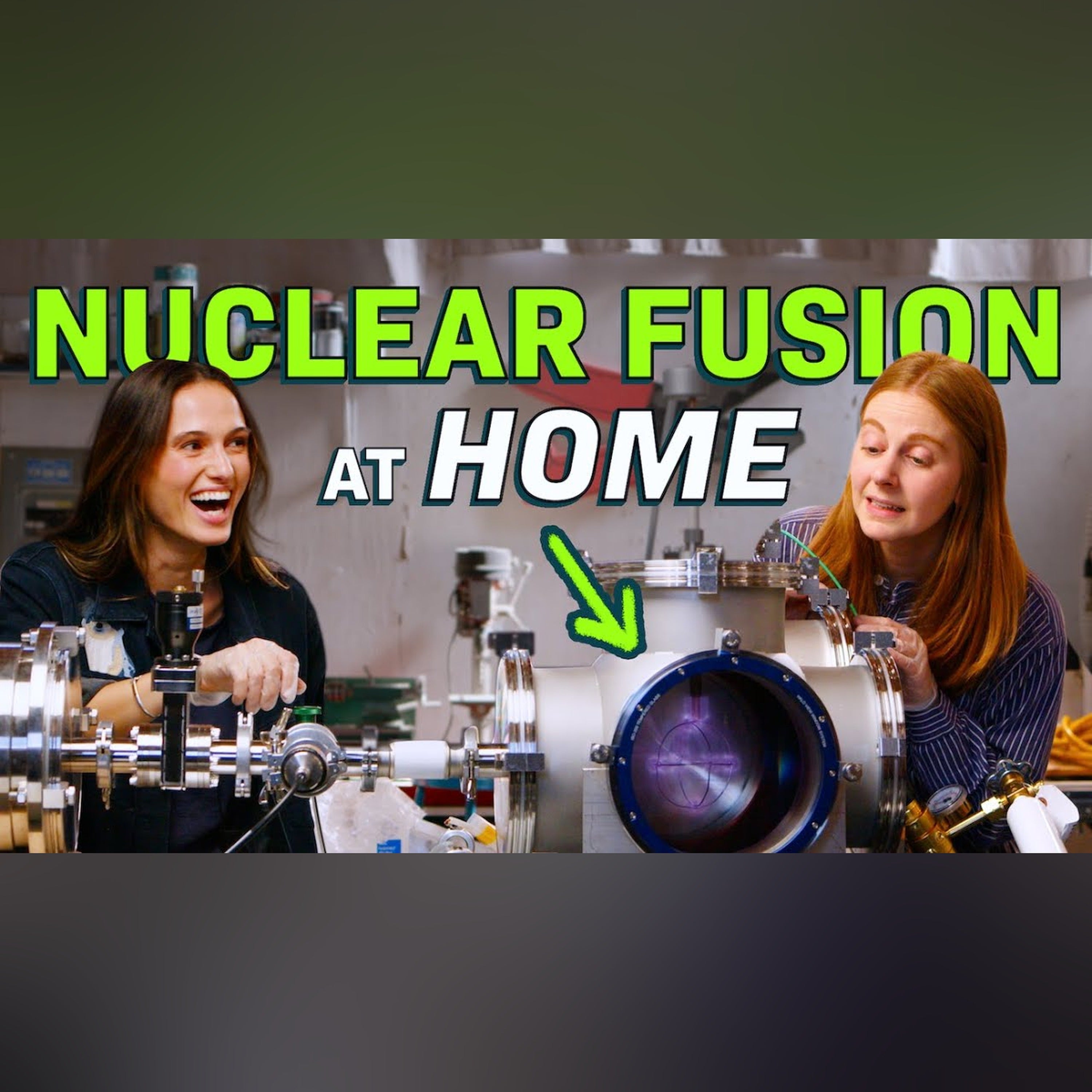
We attempted nuclear fusion. In Simone’s workshop. Disclaimer: This build was supervised by experts at Helion. Do not try this at home. I still can’t believe this video really happened. Back in May, I interviewed Helion CEO David Kirtley. I was trying to understand nuclear fusion: Is nuclear fusion possible now? How does fusion actually work? And most importantly, is nuclear fusion the future? Then, at the end of the interview, I asked David about headlines I’d seen about people building nuclear fusion devices in their backyards - what were they doing? “Oh,” David replied, “you can build one.” What followed is the biggest adventure yet on Huge If True. Together with the team at Helion and my friend fellow YouTuber Simone Giertz, we BUILT A NUCLEAR FUSION DEVICE to show how nuclear fusion works, what the big remaining challenges are, and how it might help us all in the future. Then, the last step was to try to turn it on… WATCH "FUSION, EXPLAINED: PART 1" HERE: https://youtu.be/piPbnKdv
Everyone faces extreme stress at some point—loss, failure, heartbreak. In this video, Tony shares how his lowest moments led to his greatest breakthroughs. When life falls apart, you have two choices: stay stuck or step into the journey that changes everything. Uploaded 25-05-25 Watch more videos like this Tony Robbins' Untold Story of His Childhood with Randall Kaplan: https://youtu.be/F6r0zvfJDF8 The Moment Tony Robbins Realized He Could Help People: https://youtu.be/xM4GP_Yp6FI Do THIS When You Feel Lost In Life: https://youtu.be/ngTzB0WeYOc Follow Tony Robbins: Facebook: https://www.facebook.com/TonyRobbins Instagram: https://instagram.com/tonyrobbins/ TikTok: https://www.tiktok.com/@tonyrobbins Twitter: https://twitter.com/tonyrobbins LinkedIn: https://www.linkedin.com/in/officialtonyrobbins Website: https://www.tonyrobbins.com/ Tony Robbins is a #1 New York Times best-selling author, entrepreneur, philanthropist, and the nation's #1 Life and Business Strategist. For more than fou
What if your child already loves learning... and you’re just looking for it in the wrong place? This week, I’m exploring one of the questions I get asked more than almost any other: “My child used to be so curious. What happened?” In today’s episode, I challenge one of the biggest myths in modern parenting: that a love of learning looks like a child happily reading, sitting at a desk, completing homework without complaint, and engaging enthusiastically with educational activities. I explain what the research actually tells us and walk you through the psychology of curiosity, the science of intrinsic motivation, why children become obsessed with Minecraft, dinosaurs, trains, or random facts, and why those interests may be far more important than they appear. I also unpack why children seem to have a built‑in radar for anything that feels educational, why homework battles happen so often, and what the evidence really says about homework in the primary years. If you've ever worried that y
Dig into the slippery slope fallacy, which assumes that one step will lead to a series of events that lead to an extreme— often bad— scenario. Uploaded 19-08-21 -- It’s 1954. Vietnamese nationalists are on the verge of securing an independent Vietnam under communist leader Ho Chi Minh. U.S. President Eisenhower claims that by virtue of the "falling domino principle," communist control of Vietnam would lead to the global spread of authoritarian communist regimes. Can you spot the problem with this argument? Elizabeth Cox explores the slippery slope fallacy. Lesson by Elizabeth Cox, directed by TOGETHER. Support Our Non-Profit Mission ---------------------------------------------- Support us on Patreon: http://bit.ly/TEDEdPatreon Check out our merch: http://bit.ly/TEDEDShop ---------------------------------------------- Connect With Us ---------------------------------------------- Sign up for our newsletter: http://bit.ly/TEDEdNewsletter Find us on Twitter: http://bit.ly/TEDEdTwitter Pe
View full lesson: http://ed.ted.com/lessons/how-do-we-measure-distances-in-space-yuan-sen-ting Uploaded 09-10-14 When we look at the sky, we have a flat, two-dimensional view. So how do astronomers figure the distances of stars and galaxies from Earth? Yuan-Sen Ting shows us how trigonometric parallaxes, standard candles and more help us determine the distance of objects several billion light years away from Earth. Lesson by Yuan-Sen Ting, animation by TED-Ed.
As machines take on more jobs, many find themselves out of work or with raises indefinitely postponed. Is this the end of growth? No, says Erik Brynjolfsson -- it's simply the growing pains of a radically reorganized economy. A riveting case for why big innovations are ahead of us ... if we think of computers as our teammates. Be sure to watch the opposing viewpoint from Robert Gordon. Uploaded 30-08-13 Talk by Erik Brynjolfsson.
Essential services should offer a workable alternative to smartphone-only access.
Share your view, then see how readers voted. No sign-in required. This poll is shared across stories.
Do you agree or disagree?
Common Quandary
A Common Quandary to discuss
Another conversation to explore, separate from this news story.
Everyone exaggerates on dating apps. Are two imaginary inches harmless?
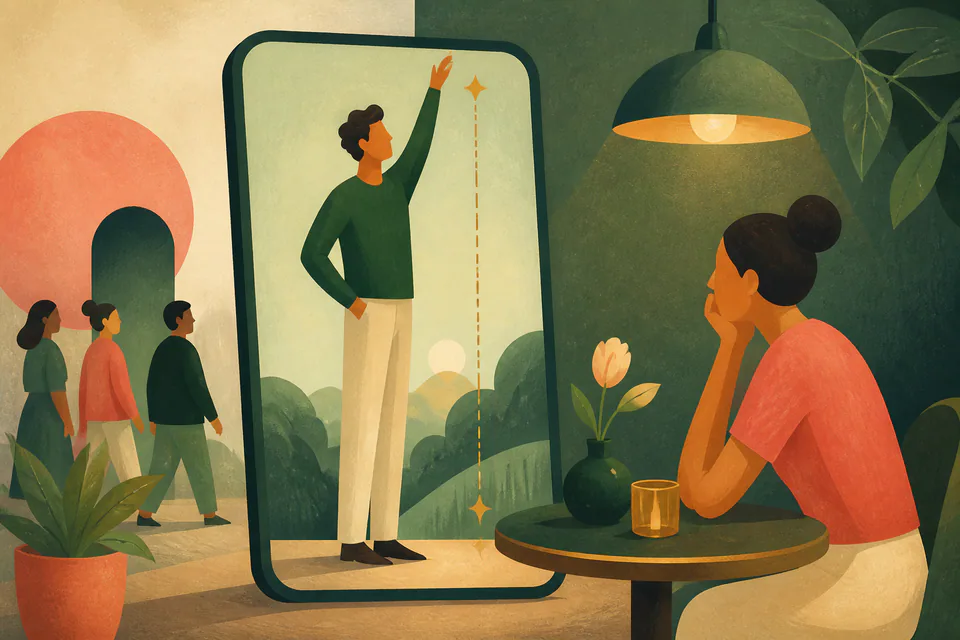
A friend adds two inches to their listed height because they believe filters exclude them before personality has a chance. They plan to be charming enough that a date will not care once they meet in person.
Can deception be a fair response to superficial gatekeeping?