Listen through the publisher, then discuss the episode here or arrange an in-person Roundtable. Your city determines where to meet.
Roundtables are designed for groups of four, with a shared subject and room for everyone to speak. Come for discussion, with no dating expectation.
The Atlantic’s great conveyor belt stops. In this episode of Life Without, Alan Davies closes the Gulf Stream. What happens when one of the ocean’s great express routes no longer carries heat, salt and marine life? Alan explores the Gulf Stream’s role in the wider Atlantic circulation, the animals that use it as an underwater highway, and what its loss could mean for coasts, fisheries and weather. How would a changing current reshape life on both sides of the Atlantic? Featuring Professor David Thornalley, Professor of Ocean and Climate Science at UCL, and Professor Tahseen Jafry, an academic specialising in climate change and inequality at Glasgow Caledonian University. An ITN production for BBC Radio 4
Episode information is provided by the publisher. Listening takes place on the publisher’s service.
In this 360° animation, explore the vibrant world of neon signs and learn the science of what makes them glow. Uploaded 19-09-19 -- When the Hoover Dam was completed, it created a huge source of hydroelectric power and zapped a sleepy desert town to life: Las Vegas, Nevada. With the power supply from the dam, Las Vegas soon exploded with vibrant displays. The source of these dazzling lights was electrified neon gas. In this special 360° animation, explore the colorful world of neon signs as Lippy shares what makes them glow. -- How to view this TED-Ed animated 360° video: If you have access to a Google Cardboard viewer and a smart phone: 1. Open this video in the YouTube app on your phone. 2. Hit pause on the video. 3. Tap the 3 vertical dots on the top right corner of the view window. This will slide up a sub-menu where you will choose the quality setting of your video stream. Choose "2160s." Note that if you are not streaming over Wifi, YouTube will only allow "720s" quality. 4. Tap
This new tech is changing how movies get made. So @mkbhd and I tested it out... Watch MKBHD's video: https://youtu.be/RM7SobH8ZO0 I’ve been obsessed with sci-fi movies since I was a kid. I love being transported to another world. But lately, I’ve been wondering: How do those worlds look so… REAL? The tech behind movies has exploded in complexity and realism, changing how stories come to life on screen. Luckily, at the same time, those tools are becoming more and more available to more people telling stories. It’s not just blockbusters like Avatar 2 or Avengers or Dune. It’s also smaller budget films like Everything Everywhere All at Once or even… YouTube creators? In this video, Marques Brownlee and I test out 3 movie-making tools that are changing how movies, shows, and maybe even YouTube videos (??) get made. We’re at ZeroSpace Studios in New York to show you how each of these crazy technologies work - and how you might be able to use them. Along the way, we hit big questions like: W
Robb Wolf Interview Part 1: https://youtu.be/Wi-6KttZ54g LMNT “Scandal” Video: https://youtu.be/uI2ewgimH3g Salt, Leptin and Blood Pressure: https://staycuriousmetabolism.substack.com/p/salt-vs-fat-rethinking-the-root-causes?r=40ekz2 Oleuropein and Calcium Signaling: https://youtu.be/ljuimrT2a1s In Part 2 of my conversation with Robb Wolf, we dig into one of the most misunderstood aspects of nutrition and metabolic health: electrolytes. Most people think electrolytes simply matter for athletes or hot summer workouts, but the reality is far more complex. We also get into the science behind sodium, why the old fear of salt never made sense mechanistically, and how obesity and leptin signaling influence salt sensitivity, and more. Chapters 0:00 – Why Electrolytes Matter More Than You Think 3:12 – Low-Carb, Insulin and Hidden Electrolyte Loss 7:38 – How to Know If You’re Sodium Deficient 11:25 – The Truth About Sodium, Obesity and Blood Pressure 21:59 – How Much Sodium You Really Need 29:1
This episode of Scary Bear Attacks explores real, documented bear encounters across Montana — a state known for its vast wilderness, grizzly bear populations, and dangerous human-wildlife conflicts. From remote hiking trails to backcountry campsites, these stories reveal what happens when people unexpectedly cross paths with powerful predators.In this episode, you’ll hear how these Montana bear attacks unfolded, what triggered the encounters, and how quickly routine outdoor activities can turn into life-or-death situations. Each story is based on real incidents and highlights the risks faced by hikers, hunters, campers, and residents living near bear country.This Christmas series counts down some of the most intense true bear attack stories ever recorded — and Montana has more than its share of chilling encounters.Support the channel and view exclusive photos and early releases on Patreon: https://www.patreon.com/user?u=73787379▶️ Watch more true bear attack stories here:https://www.yo
In Brought to You By: How Corporations Warped the Truth, Conned the Public, and Broke Democracy (https://bookshop.org/a/12343/9781639736331), Amy Westervelt exposes the plot hidden within the familiar story of science denial. Over the last century, Big Industry has built a vast apparatus of think tanks, lobbyists, sponsored university labs, and obliging news networks to con the public and fool decision-makers, poisoning the informational ecosystem and warping the nature of truth along the way. With her signature wit and incisiveness, Westervelt introduces the masterminds of corporate misinformation: Herb Schmertz, the public relations pioneer who made Mobil “the thinking man's oil company;” Richard Edelman, the PR guy who helped the dairy industry vilify oat milk; David Petraeus, the disgraced spy chief using counter-insurgency tactics to discredit climate science; and many more. She shows how these company men have worked to usher in an era of unprecedented corporate control. Only by
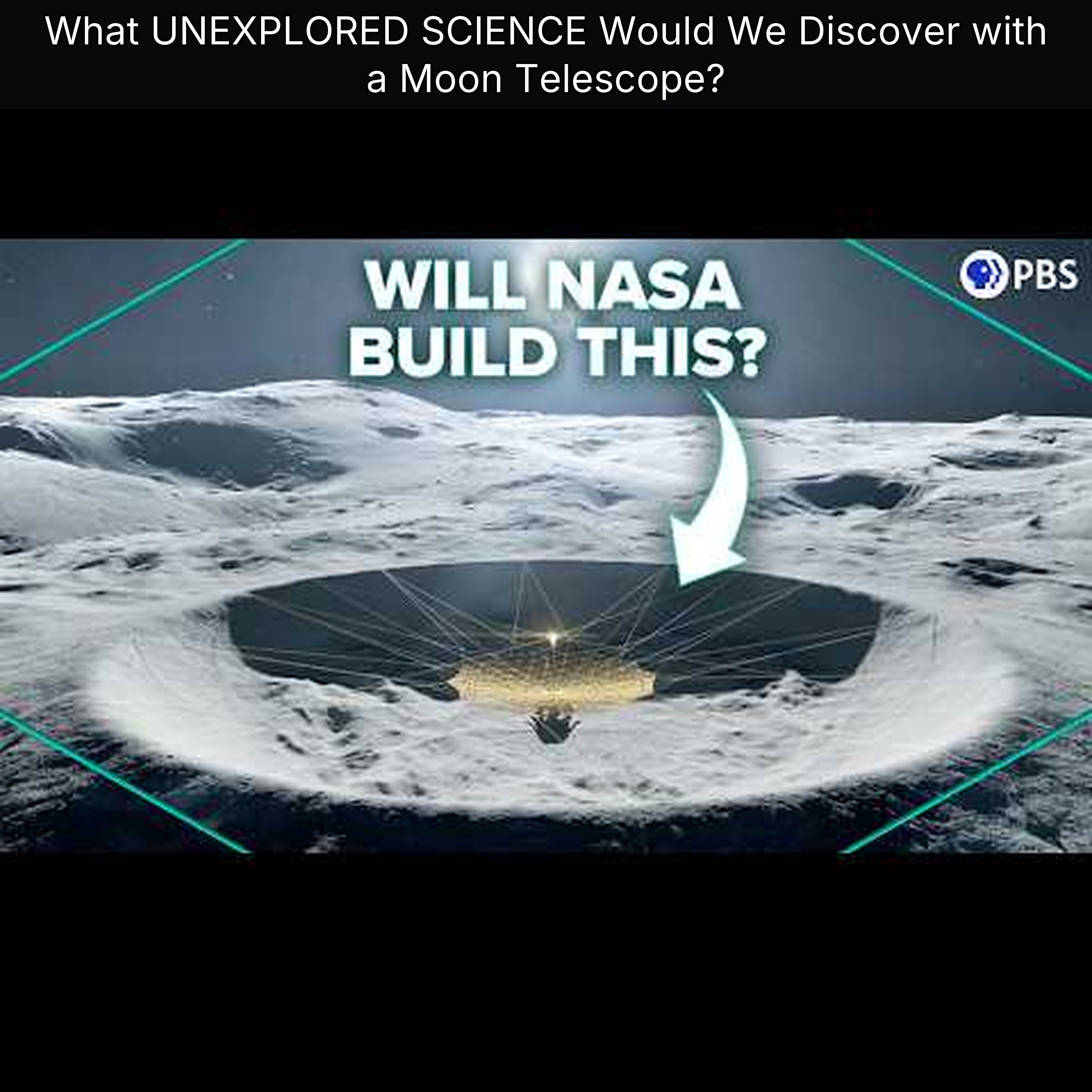
PBS Member Stations rely on viewers like you. To support your local station, go to:http://to.pbs.org/DonateSPACE Sign Up on Patreon to get access to the Space Time Discord! In order to see the faint light from objects in deepest space, astronomers go to the darkest places on the planet. In order to listen to their quite radio signals, they head as far from any radio-noisy humans as possible. But there’s nowhere on the earth, or even orbiting the Earth, that’s far enough to hear to the faint radio hum from the time before stars. In fact, we may need to build a giant radio telescope in the quietest place in the solar system—the far side of the moon. Check out the Space Time Merch Store Sign up for the mailing list to get episode notifications and hear special announcements! Search the Entire Space Time Library Here: https://search.pbsspacetime.com/ Hosted by Matt O'Dowd Written by Matt Caplan & Matt O'Dowd Post Production by Leonardo Scholzer, Yago Ballarini, Adriano Leal & Stephanie Far
No more tears, for sore eyes or sad films. In this episode of Life Without, Alan Davies turns off the tap. What happens when humanity loses the tears that protect our eyes as well as the ones we cry? Alan examines how tears keep eyes working, why artificial replacements may not be enough, and what changes when emotional weeping vanishes too. From courtrooms to funerals, can society show distress and find comfort without them? Featuring Marc Baker, a psychology researcher at the University of Portsmouth, and actor and theatre maker Andreea Tudose, co-creator of the dystopian cabaret Cry For Me. An ITN production for BBC Radio 4
Advertised prices should include all unavoidable charges.
Share your view, then see how readers voted. No sign-in required. This poll is shared across stories.
Do you agree or disagree?
Common Quandary
A Common Quandary to discuss
Another conversation to explore, separate from this news story.
Your best friend is an AI that profits when you stay lonely. Is the friendship real?
A lonely adult considers an AI companion their closest confidant. The service is always patient and supportive, but the company profits when users spend more time engaged with it.
Does a comforting system have a duty to make itself less necessary?