Listen through the publisher, then discuss the episode here or arrange an in-person Roundtable. Your city determines where to meet.
Roundtables are designed for groups of four, with a shared subject and room for everyone to speak. Come for discussion, with no dating expectation.
In this episode, we cover molecular structure and the key spectroscopy techniques you need to know for the MCAT. We'll explore the intricacies of Nuclear Magnetic Resonance spectroscopy, breaking down the chemical shifts and spin-splitting essentials for understanding hydrogen and carbon bonds in various compounds. You'll learn how to identify functional groups using Infrared (IR) spectroscopy and how mass spectrometry can help determine molecular weights and identify unknown compounds. We'll also touch on UV-Vis spectroscopy and its role in quantifying compounds based on absorption spectra. (00:00) Intro (01:50) Introduction to absorption spectra and molecular structure (01:52) Absorption spectroscopy and its applications (03:39) IR spectroscopy: Analyzing functional groups with infrared radiation (07:57) Key IR peaks to know for the MCAT (09:52) Visible light and its role in determining compound color (10:57) UV-Vis spectroscopy: Connecting visible and ultraviolet light for compound analysis (14:06) Quantifying compounds using UV-Vis spectroscopy and Beer's Law (16:48) Mass spectrometry: Determining molecular weight and identifying compounds (22:18) Interpreting mass spectrometry graphs and calculating molecular weight (26:44) NMR spectroscopy: Understanding molecular structure through proton shifts (31:23) Key NMR shifts to know for the MCAT (33:21) Spin splitting in NMR and the n+1 rule
Episode information is provided by the publisher. Listening takes place on the publisher’s service.
☀️ HARNESSING THE POWER OF THE SUN — THE SCIENCE BEHIND C60 EVO! What happens when scientists recreate extraordinary, sun-like temperatures inside a laboratory to produce one of the most fascinating carbon molecules ever studied? Michael Jaco welcomes Patty Greer and Chris Burres back to Unleashing Intuition for a fascinating behind-the-scenes look at C60 Evo, the technology used to produce ESS60, and the science behind this unique carbon molecule. Chris takes us inside the laboratory to explain the intense temperatures, specialized production methods, and purification processes involved in creating ESS60 — C60 Evo's proprietary form of Carbon 60. The conversation explores the relationship between antioxidants, mitochondria, cellular energy, and oxidative stress, along with why C60 Evo combines ESS60 with carefully selected extra virgin olive oil. Patty and Chris also share their perspectives on wellness, personal experiences, and the growing interest in carbon-based technology. Inside
For all references and even deeper nuances, check out the StayCurious Metabolism letter: https://staycuriousmetabolism.substack.com/p/can-visceral-fat-cause-depression?r=40ekz2 Chapter *Call our service line at 815-STAY-CUR (815-782-9287) *Learn more about the data, here: https://staycuriousmetabolism.substack.com/p/life-or-death-in-the-fine-print-the?r=40ekz2 Visceral Fat Randomized Controlled Trial Video: https://youtu.be/lDeegZ1wtAI Description: Most people think of fat as extra weight—something cosmetic or something to “burn off.” But new science is showing something far more profound: visceral fat is an endocrine organ that sends biochemical messages across the entire body, including directly into the brain. And those messages can change mood, increase stress sensitivity, and even promote depression. In this video, we break down a brand-new study revealing how visceral fat releases tiny molecular packages called extracellular vesicles. Inside those vesicles is a specific microRNA—
PBS Member Stations rely on viewers like you. To support your local station, go to: http://to.pbs.org/DonateSPACE ↓ More info below ↓ Uploaded 01-07-19 Check out the new Space Time Merch Store! Support Space Time on Patreon Energy too cheap to meter - that was the promise of nuclear power in the 1950s, at least according to Lewis Strauss chairman of the Atomic Energy Commission. That promise has not come to pass - but with some incredible new technologies, perhaps it still could. The question is - should it? Hosted by Matt O'Dowd Written by Matt O'Dowd Graphics by Leonardo Scholzer Directed by Andrew Kornhaber Produced By: Kornhaber Brown If we want to convert mass into energy, fission gives the most bang for our buck. Unfortunately that “bang” can be literal. Use of nuclear energy may risk the proliferation of nuclear weaponry, and there’s also the problem of nuclear waste, and the specter of horrible accidents. This last one was painted in terrifying detail in the recent dramatizatio
In this calm and sleepy facts episode, we journey far beyond our own solar system to explore the thousands of worlds orbiting distant stars, places we have only recently learned to find and are only just beginning to understand. We start with the basics of what an exoplanet is and how astronomers detect them, from the gentle dimming of a star as a planet passes in front of it to the tiny gravitational wobble a hidden world imprints on its sun. We visit the extraordinary harvest of the Kepler space telescope, which revealed that planets are not rare exceptions but the rule, scattered across nearly every star in the Milky Way. Along the way we encounter strange and extreme worlds, gas giants so close to their stars that they complete an orbit in mere days, tidally locked planets with one face locked in permanent daylight and the other in endless night, and rogue planets drifting alone through interstellar space with no star to call home. We explore the habitable zone, the narrow region a
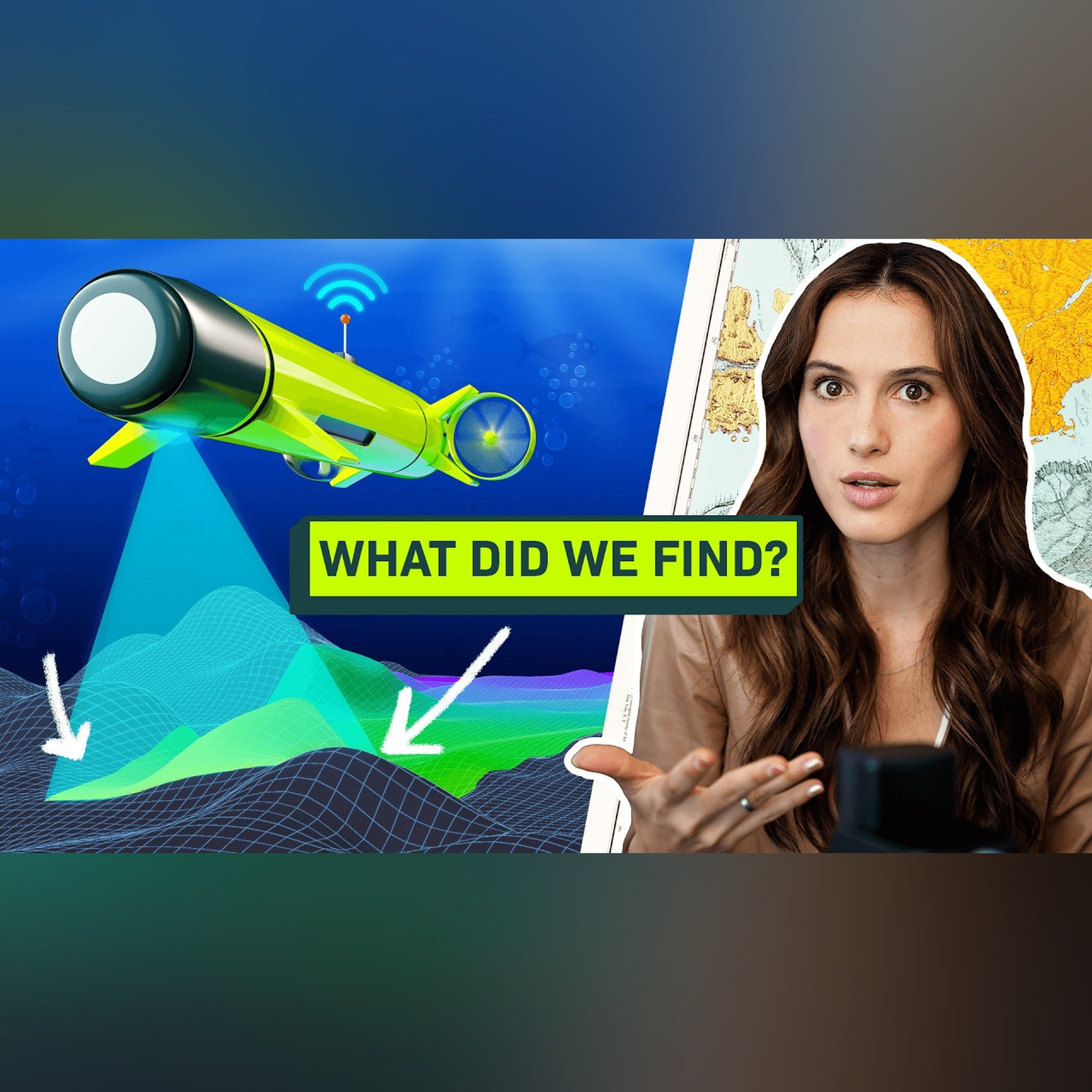
Why deep sea maps are SO BAD (and how to fix it)... Our maps of the ocean are surprisingly bad! On Google Maps it looks like we know so much… but we know less about the ocean floor than we do the surface of Mars. And that’s a big problem, because we are using the ocean all the time: We’re laying internet cables across it, we fight wars in it, we search it during a crisis - like the imploded OceanGate Titan submersible or the missing Malaysia Airlines Flight 370. 71% of the surface of the Earth is water! And yet we have a surprisingly limited view of what’s below it. But that’s also understandable. Because cartographically speaking, water sucks. For Mars or Earth’s surface, we can take pictures. But light doesn’t get to the ocean floor, so we need other ways to see it. The good news is, we’re developing that tech right now, and an international group called Seabed 2030 is working to piece together a better map. There is a terrifying, incredible, alien world on our own planet, and we’re
Watch the whole lesson on http://ed.ted.com/lessons/how-do-we-see-color-colm-kelleher Have you ever wondered what color is? In this first installment of a series on light, Colm Kelleher describes the physics behind colors-- why the colors we see are related to the period of motion and the frequency of waves. Lesson by Colm Kelleher, animation by Vitreous.
Aging is an essential topic for the MCAT, and in this episode, we’ll explore it from multiple angles. We start with the biological aspects of aging, including key processes like telomere shortening, cell senescence, and mitochondrial dysfunction—each providing insight into how and why cells age. From there, we dive into how aging impacts the brain, including the types of memory and cognitive functions that either decline or improve with age. Lastly, we’ll cover the sociology of aging, focusing on the life course theory, the social significance of aging, and demographic changes. Expect a comprehensive breakdown of these concepts, with real-world applications and examples to reinforce your understanding. Jump Into the Conversation: (00:00) Intro (02:30) Cellular markers of aging: Protein aggregation and telomere shortening (04:55) Exploring cell senescence and autophagy dysregulation (07:20) Mitochondrial dysfunction and its role in cellular aging (09:10) Deep dive into telomeres and the
In this episode, we cover the topic of viruses. We explore a comprehensive range of subtopics including the definition and structure of viruses, their life cycles, and the differences between transduction and transfection. We also discuss virus classification, viral mutations, and subviral particles. This material will primarily appear in the Bio/Biochem section of the MCAT. Jump into the conversation: [00:00] Introduction [01:57] Definition of a virus [02:55] Virus structure [10:41] The viral life cycle [17:34] The bacteriophage life cycle [21:40] The retrovirus life cycle [21:40] The retrovirus life cycle [27:11] Virus classification [32:09] Viral mutation [40:31] Subviral particles
The Doppler Effect is a crucial concept for the MCAT, particularly in the Chemistry & Physics section. We'll explore how the Doppler effect occurs when a wave source moves relative to an observer, affecting the observed frequency and wavelength. Using practical examples like an ambulance speeding towards you, we'll bring these concepts to life. We'll also break down the Doppler effect equation, examining what it reveals—and what it doesn’t—about wave behavior. By the end of this episode, you'll have a solid understanding of The Doppler effect and will be ready to tackle any related questions on the MCAT. Jump into the conversation: (00:00) Introduction to the MCAT Basics (02:09) Conceptual Explanation of the Doppler Effect (03:55) Example: Doppler Effect with an ambulance (04:55) Speed of sound and wave propagation (05:31) Impact of ambulance motion on sound wave speed (06:37) Relationship between wave speed and frequency (07:30) Detailed explanation of sound frequency (08:45) Introduc
Sports organizations should limit gambling promotion aimed at their supporters.
Share your view, then see how readers voted. No sign-in required. This poll is shared across stories.
Do you agree or disagree?
Common Quandary
A Common Quandary to discuss
Another conversation to explore, separate from this news story.
Your best friend is an AI that profits when you stay lonely. Is the friendship real?
A lonely adult considers an AI companion their closest confidant. The service is always patient and supportive, but the company profits when users spend more time engaged with it.
Does a comforting system have a duty to make itself less necessary?