Listen through the publisher, then discuss the episode here or arrange an in-person Roundtable. Your city determines where to meet.
Roundtables are designed for groups of four, with a shared subject and room for everyone to speak. Come for discussion, with no dating expectation.
In this episode, we cover the topic of viruses. We explore a comprehensive range of subtopics including the definition and structure of viruses, their life cycles, and the differences between transduction and transfection. We also discuss virus classification, viral mutations, and subviral particles. This material will primarily appear in the Bio/Biochem section of the MCAT. Jump into the conversation: [00:00] Introduction [01:57] Definition of a virus [02:55] Virus structure [10:41] The viral life cycle [17:34] The bacteriophage life cycle [21:40] The retrovirus life cycle [21:40] The retrovirus life cycle [27:11] Virus classification [32:09] Viral mutation [40:31] Subviral particles
Episode information is provided by the publisher. Listening takes place on the publisher’s service.
Explore the relationship between viruses and their hosts, and find out how the evolutionary adaptations of bats keep them safe from viruses. Uploaded 26-01-21 -- Consider a bat that is infected with several deadly viruses, including ones that cause rabies, SARS, and Ebola. While this diagnosis would be lethal for other mammals, the winged wonder is totally unfazed, and may even spend the next 30 years living as if this were totally normal— because for bats, it is. So what’s protecting bats from these dangerous infections? Arinjay Banerjee investigates. Lesson by Arinjay Banerjee, directed by Cabong Studios. Support Our Non-Profit Mission ---------------------------------------------- Support us on Patreon: http://bit.ly/TEDEdPatreon Check out our merch: http://bit.ly/TEDEDShop ---------------------------------------------- Connect With Us ---------------------------------------------- Sign up for our newsletter: http://bit.ly/TEDEdNewsletter Find us on Twitter: http://bit.ly/TEDEdTwitt
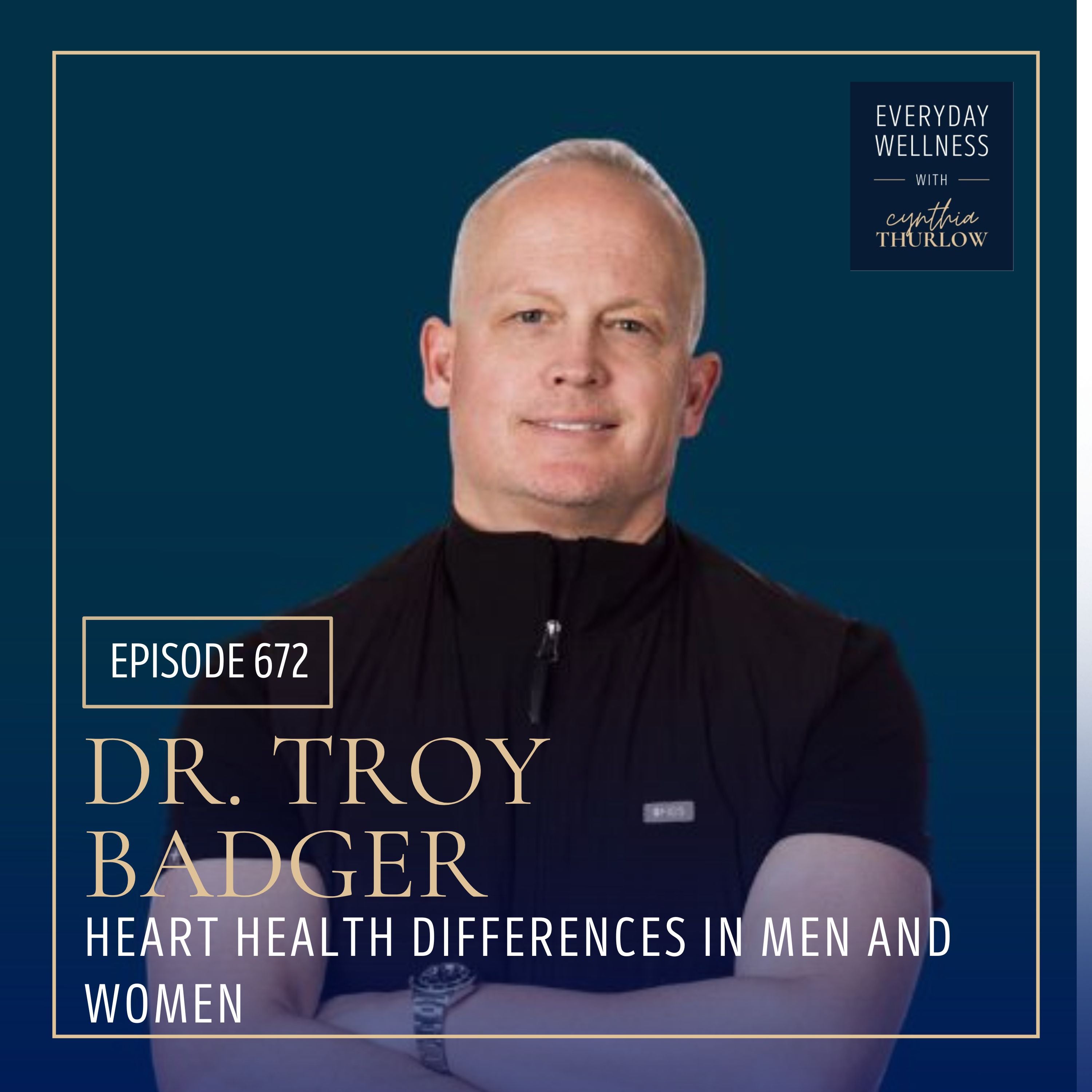
Today, I’m honored to connect with Dr. Troy Badger. He is a board-certified cardiologist and interventionalist and the founder of Cardiostrong, a concierge preventive cardiology clinic in Provo, Utah, focused on reducing cardiovascular risk, optimizing metabolic health, and improving strength and cardiorespiratory fitness for executives and athletes. In today’s conversation, we discuss Dr. Badger’s gender- and age-specific approach to heart health, including treatment differences for men and women, and diagnoses such as INOCA, SCAD, vasospastic disease, and Takotsubo. We examine emotions and their influence on heart health, coronary ischemia and cardiomyopathies, labs and diagnostics, how Dr. Badger assesses risk in his patients, and the differences between a CAC and a CCTA. Dr. Badger also shares the labs he finds essential for all patients and discusses the role of VO2 Max, cardiovascular training, and lifestyle—specifically nutrition, the use of GLP-1 drugs, and a multidisciplinary
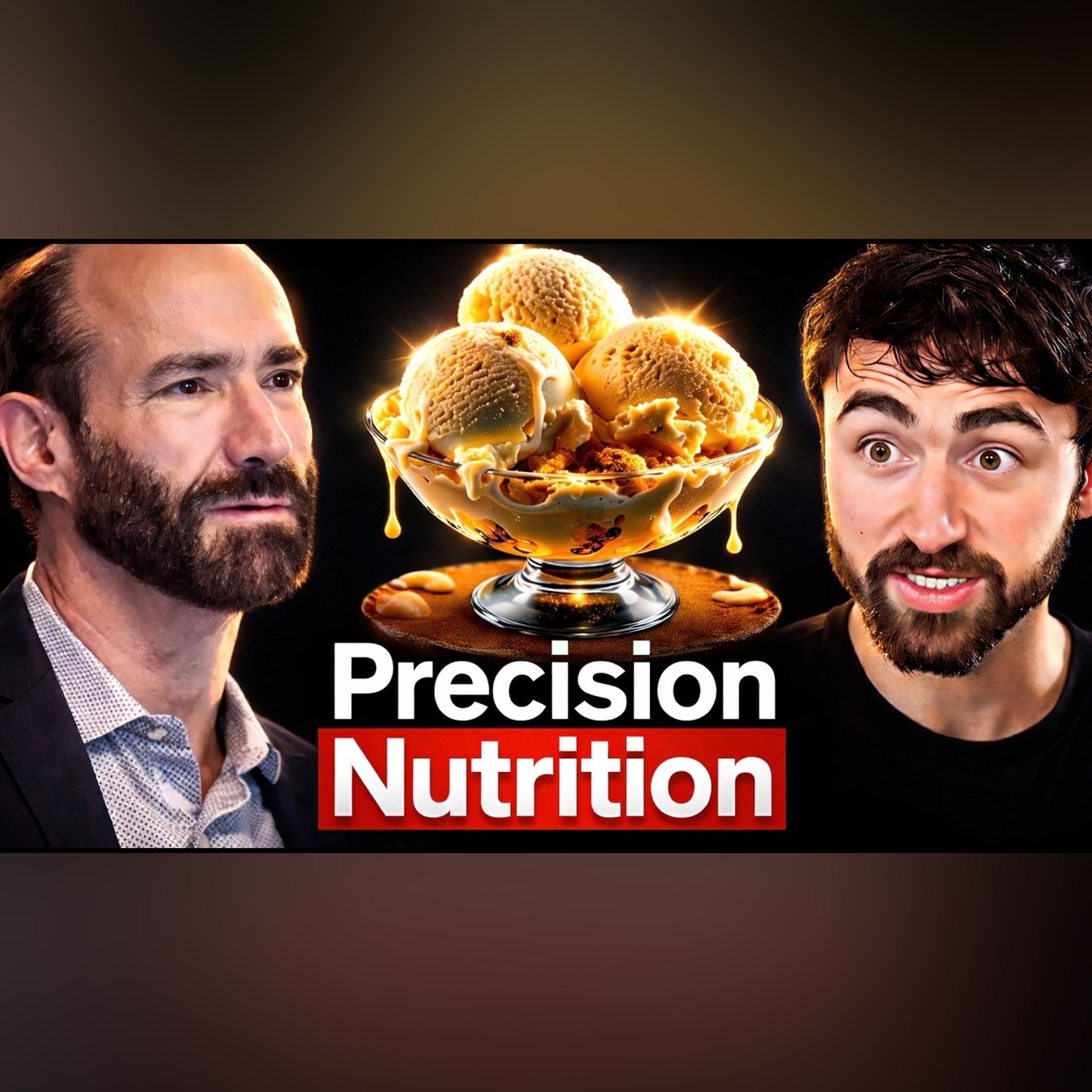
StayCurious Newsletter on Snyder’s Fiber Randomized Controlled Trial: https://staycuriousmetabolism.substack.com/p/fiber-is-good-for-you-is-lazy-science?r=40ekz2 StayCurious Newsletter on Inulin and Fructose Resistance: https://staycuriousmetabolism.substack.com/p/the-fiber-that-fights-fat-how-inulin?r=40ekz2 Snyder Interview 1, Four Types of Diabetes: https://youtu.be/mCrc4gfbK2o Snyder Interview 2, Most Viral Aging Study: https://youtu.be/kMpGkg4zMOU Snyder Interview 3, Most Beautiful Exercise Study: https://youtu.be/_9ywulQF2Ho Why does the same food spike one person’s blood sugar while barely affecting another? In this fourth conversation with Stanford’s Professor Michael Snyder, we explore new research on individualized glycemic responses, insulin resistance subtypes, and why one-size-fits-all nutrition advice keeps failing. From rice spiking glucose more than ice cream, to the power of the grape-to-potato ratio, and beyond, this discussion reveals how metabolism, microbiome, immu
PBS Member Stations rely on viewers like you. To support your local station, go to: http://to.pbs.org/DonateSPACE ↓ More info below ↓ Uploaded 04-11-19 Sign Up on Patreon to get access to the Space Time Discord! Check out the Space Time Merch Store Why does it appear, that humanity is the lone intelligence in the universe? The answer might be that planet Earth is more unique than we've previously assumed. The rare earth hypothesis posits exactly this - that a range of factors made Earth exceptionally unusual and uniquely able to produce intelligent life. In upcoming episodes we’ll be exploring the anthropic principle and its two main versions - the strong and the weak anthropic principles. The strong anthropic principle tells us that the observed universe must be able to produce observers - including the contentious idea that this predicts the existence of universes beyond our own. But in today's episode we’re going to focus on the weak anthropic principle. It says that we must find ou
Fear has a way of quietly taking control of your life. It convinces you to stay where you are, avoid difficult conversations, delay decisions, tolerate situations you know aren’t good for you, and settle for a life that is far smaller than the one you are capable of living. In this episode of The Strong Life Project, we explore how fear impacts your thinking, your relationships, your career, your leadership, and ultimately your ability to live a meaningful life. Fear doesn’t always look like panic. Sometimes it looks like procrastination, overthinking, making excuses, people pleasing, avoiding conflict, or constantly waiting for the perfect moment. The problem is that every time you allow fear to make a decision for you, you reinforce the belief that you are incapable of handling what comes next. Over time, this creates a pattern of avoidance that undermines confidence, resilience, emotional strength, and personal growth. Learning to manage fear doesn’t mean becoming fearless. It means
Aging is an essential topic for the MCAT, and in this episode, we’ll explore it from multiple angles. We start with the biological aspects of aging, including key processes like telomere shortening, cell senescence, and mitochondrial dysfunction—each providing insight into how and why cells age. From there, we dive into how aging impacts the brain, including the types of memory and cognitive functions that either decline or improve with age. Lastly, we’ll cover the sociology of aging, focusing on the life course theory, the social significance of aging, and demographic changes. Expect a comprehensive breakdown of these concepts, with real-world applications and examples to reinforce your understanding. Jump Into the Conversation: (00:00) Intro (02:30) Cellular markers of aging: Protein aggregation and telomere shortening (04:55) Exploring cell senescence and autophagy dysregulation (07:20) Mitochondrial dysfunction and its role in cellular aging (09:10) Deep dive into telomeres and the
The Doppler Effect is a crucial concept for the MCAT, particularly in the Chemistry & Physics section. We'll explore how the Doppler effect occurs when a wave source moves relative to an observer, affecting the observed frequency and wavelength. Using practical examples like an ambulance speeding towards you, we'll bring these concepts to life. We'll also break down the Doppler effect equation, examining what it reveals—and what it doesn’t—about wave behavior. By the end of this episode, you'll have a solid understanding of The Doppler effect and will be ready to tackle any related questions on the MCAT. Jump into the conversation: (00:00) Introduction to the MCAT Basics (02:09) Conceptual Explanation of the Doppler Effect (03:55) Example: Doppler Effect with an ambulance (04:55) Speed of sound and wave propagation (05:31) Impact of ambulance motion on sound wave speed (06:37) Relationship between wave speed and frequency (07:30) Detailed explanation of sound frequency (08:45) Introduc
In this episode, we cover molecular structure and the key spectroscopy techniques you need to know for the MCAT. We'll explore the intricacies of Nuclear Magnetic Resonance spectroscopy, breaking down the chemical shifts and spin-splitting essentials for understanding hydrogen and carbon bonds in various compounds. You'll learn how to identify functional groups using Infrared (IR) spectroscopy and how mass spectrometry can help determine molecular weights and identify unknown compounds. We'll also touch on UV-Vis spectroscopy and its role in quantifying compounds based on absorption spectra. (00:00) Intro (01:50) Introduction to absorption spectra and molecular structure (01:52) Absorption spectroscopy and its applications (03:39) IR spectroscopy: Analyzing functional groups with infrared radiation (07:57) Key IR peaks to know for the MCAT (09:52) Visible light and its role in determining compound color (10:57) UV-Vis spectroscopy: Connecting visible and ultraviolet light for compound
People's reported experiences should matter as much as official service-performance targets.
Share your view, then see how readers voted. No sign-in required. This poll is shared across stories.
Do you agree or disagree?
Common Quandary
A Common Quandary to discuss
Another conversation to explore, separate from this news story.
A stranger is sitting at your usual café table. Can you ask them to move?
You visit the same café every Saturday and always write at one particular table. Today a first-time customer is sitting there while several other tables remain open. The staff recognize you but there is no reservation policy.