More Than Meat Machines: The Case Against Computationalism
93 min
Listen through the publisher, then discuss the episode here or arrange an in-person Roundtable. Your city determines where to meet.
Roundtables are designed for groups of four, with a shared subject and room for everyone to speak. Come for discussion, with no dating expectation.
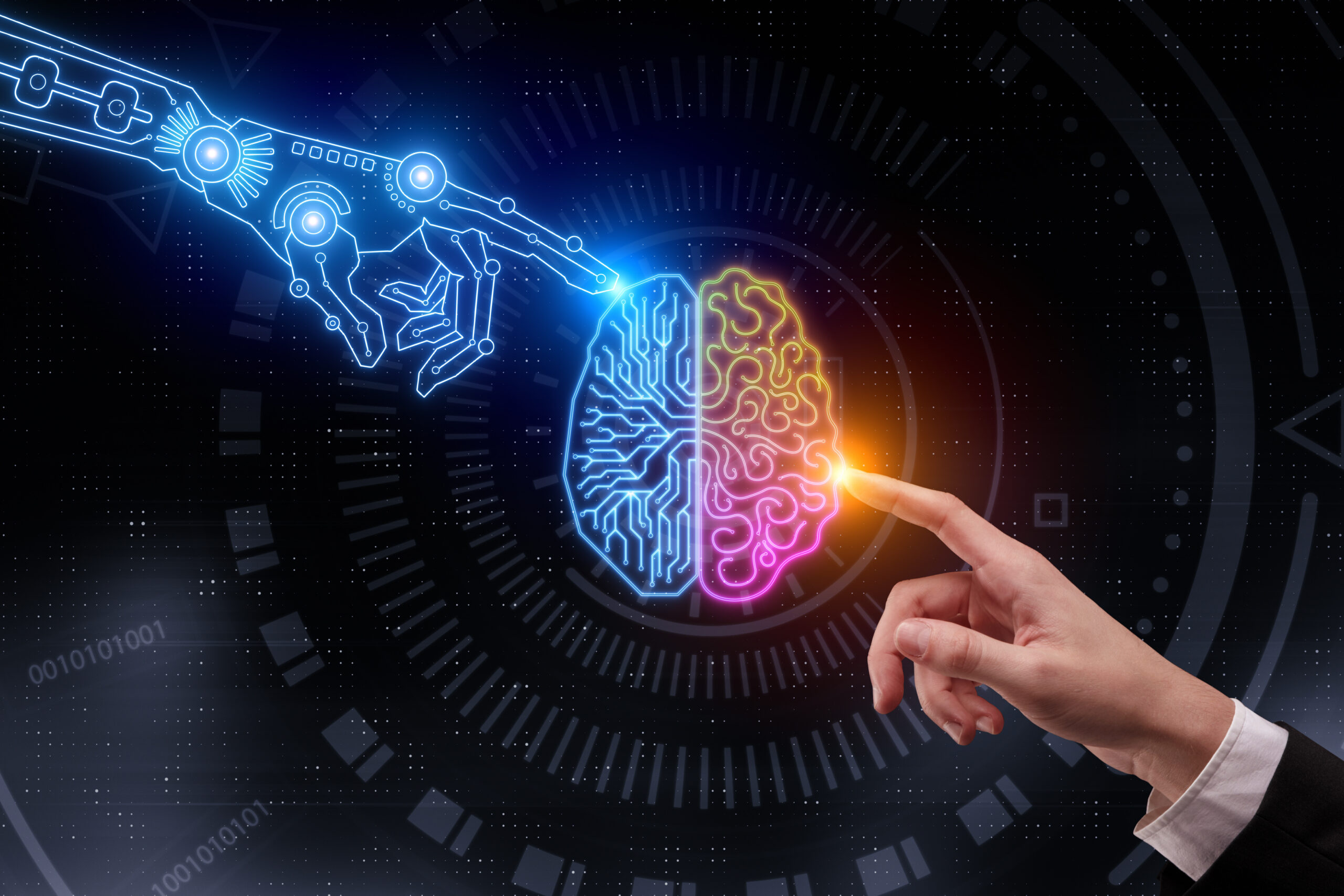
Today’s episode of ID The Future comes from our sister podcast Mind Matters News, a production of Discovery Institute’s Walter Bradley Center for Natural and Artificial Intelligence. Mind Matters regularly explores the nature of intelligence, the origin of information, and the things that make us uniquely human, all concepts that are central to the theory of intelligent design. Enjoy today’s offering of Mind Matters News! On today’s episode of Mind Matters News, guest host Pat Flynn welcomes Dr. Eric Holloway and Professor Robert J. Marks to the podcast to discuss the fundamental differences between human and machine intelligence. Today’s conversation is based on a chapter in the book Minding the Brain authored by Dr. Holloway and Marks. Essentially, they are addressing the following question: Can the marvels of human creativity, like novels, speeches, and ideas, really be explained by random processes and brain chemistry alone? As Holloway and Marks explain, even allowing for the computational capacity of the entire universe (and a hypothetical multiverse!), the probability of randomly generating a short, meaningful phrase is astronomically low. This suggests that human creativity cannot be fully explained by natural, random processes, and may require a non-material or external source of information and guidance. Source (https://idthefuture.com/2296/)
Episode information is provided by the publisher. Listening takes place on the publisher’s service.
PBS Member Stations rely on viewers like you. To support your local station, go to: http://to.pbs.org/DonateSPACE ↓ More info below ↓ Uploaded 10-04-19 We live in a universe with 3 dimensions of space and one of time. Up, down, left, right, forward, back, past, future. 3+1 dimensions. Or so our primitive Pleistocene-evolved brains find it useful to believe. And we cling to this intuition, even as physics shows us that this view of reality may be only a very narrow perception. One of the most startling possibilities is that our 3+1 dimensional universe may better described as resulting from a spacetime one dimension lower – like a hologram projected from a surface infinitely far away. Check out the new Space Time Merch Store! Support Space Time on Patreon Need a Refresher to Fully Understand the Holographic Principle? #holographicuniverse #holographicprinciple #spacetime Hosted by Matt O'Dowd Written by Matt O'Dowd Graphics by Aaron Halevy Directing by Andrew Kornhaber The holographic p
My most dangerous ideaSpreading awareness about the works of some of the leading educators in the AI revolution."Helping humanity shepherd through this transition as we embrace the final invention of mankind: advanced artificial intelligence." David Shapiro aims to provide a pragmatic and optimistic view of the future.Core Ideas:Metamodernism: Narratives and emergence view of realityPostnihilism: The demand for meaning is false, there is only the Great MysteryHeuristic Imperatives: An ethical, moral, and decision framework.- Reduce suffering- Increase prosperity- Increase understandingPost-Labor Economics: Replace humans with machines (better, faster, cheaper, safer)mantra:EXPLORE: Delve into the unknown, driven by curiosity and a quest for discovery. Seek knowledge.ELUCIDATE: Make complex ideas clear, communicating them in an accessible and comprehensible manner.ENUMERATE: Ground insights in concrete data, providing measurable and quantitative evidence.ELABORATE: Add depth and detail
New podcast episode between Ege Erdil and Daniel Kokotajlo. I thought this was going to be a debate, but they ended up agreeing on a lot more than I expected. Their main point of disagreement is how likely it is that we get some intelligence explosion that gives us AIs more competent than any human expert before 2029. Ege puts this possibility at around 20%, whereas Daniel thinks it’s higher than 50%. They agree that there is not a huge difference in probability, and that, in either case, the situation is crazy enough that our civilization really needs to grapple with how the world might be transformed, and we need a plan that actually makes sense. In particular, we should stop antagonizing China if we think some kind of global treaty will be needed to make superintelligence go well. There was another important crux about how well we should expect future AIs (that swamp humans in population size and cognitive power) to treat us, and how relevant it is that current AIs, by and large, se
Prince William and Kate Middleton face disturbing new questions about royal security following the break-in at Anmer Hall, their country home on the Sandringham estate. Two men have appeared in court accused of stealing six pairs of cuff links and a clock from the property. Royal journalist Tom Sykes warns that the incident could leave William and Catherine uneasy about returning to their Norfolk home and calls for a thorough security investigation. Meanwhile, a lengthy investigation by Joshua Hunt for The Cut reveals Prince Harry and Meghan Markle's previously undisclosed efforts to repair their relationship with the British tabloids. The Sussexes' communications director, Liam Maguire, has been holding talks with executives and editors at The Sun and the Daily Mirror, despite the couple's history of legal battles with those publications. Harry and Meghan have also established their own Sussex Media Pool, an alternative to the traditional Royal Rota that includes podcasters, streamers
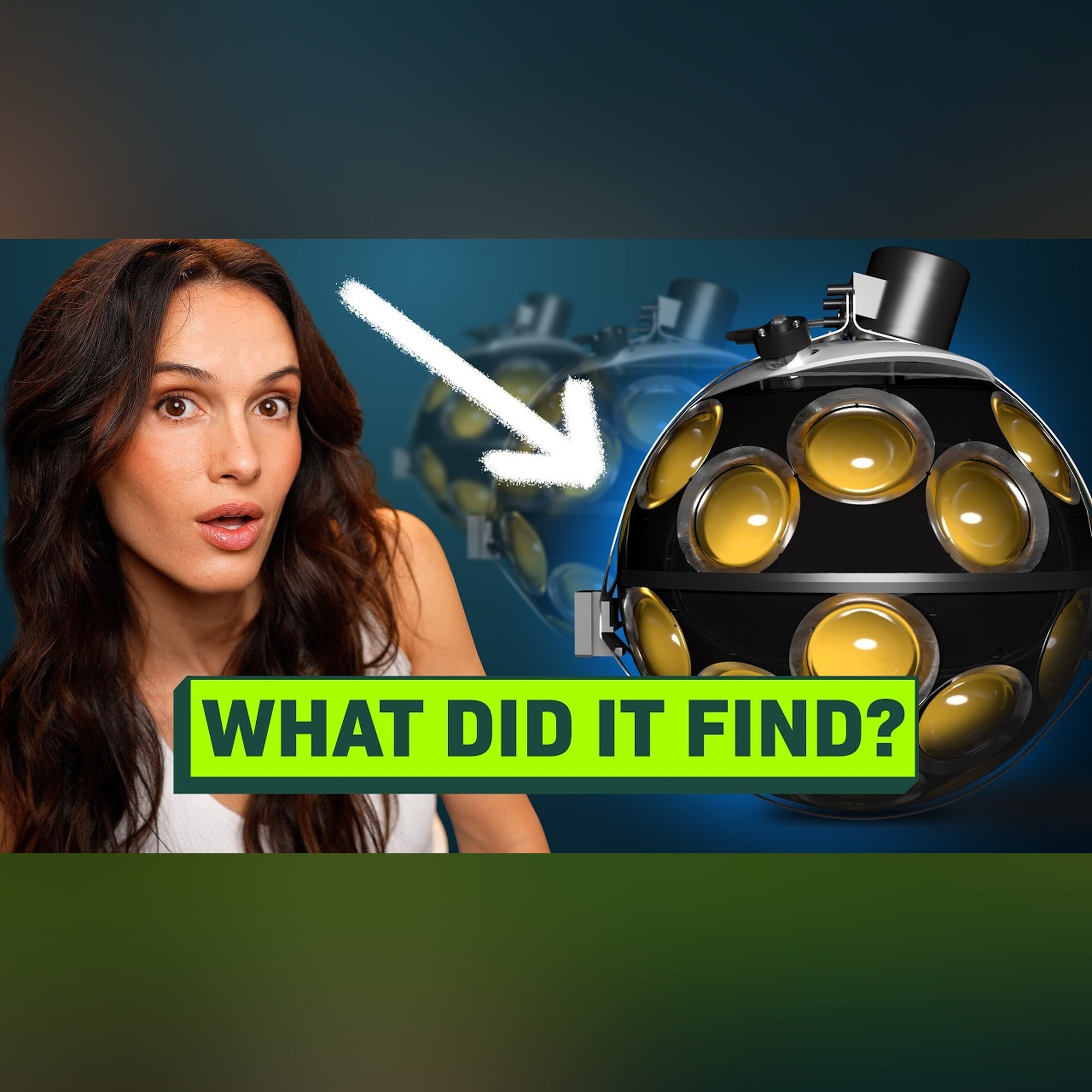
Off the coast of Sicily, there’s a massive underwater machine. It looks like a forest of floating spheres… And on the surface, hidden in an abandoned winery, a computer watches them and waits. And in 2023, they saw something… Something WAY smaller than an electron tore through that forest, setting off a signal nearly 30x more powerful than anything like it we’ve seen before, which means something HUGE must have happened way out in space. This crazy experiment is not alone! Down in Antarctica, buried deep in the ice, are over 5000 more of these mysterious spheres. Together, these two machines – called KM3net and Ice Cube – are part of a massive global effort to give us a brand new way to find and look inside the biggest, most extreme, cosmic events in our universe. But to do it, they need to catch the most elusive particle in all of physics. And in this episode of HUGE* If True, we’re going to show you how… This episode was made possible by AT and T, the official connectivity partner of
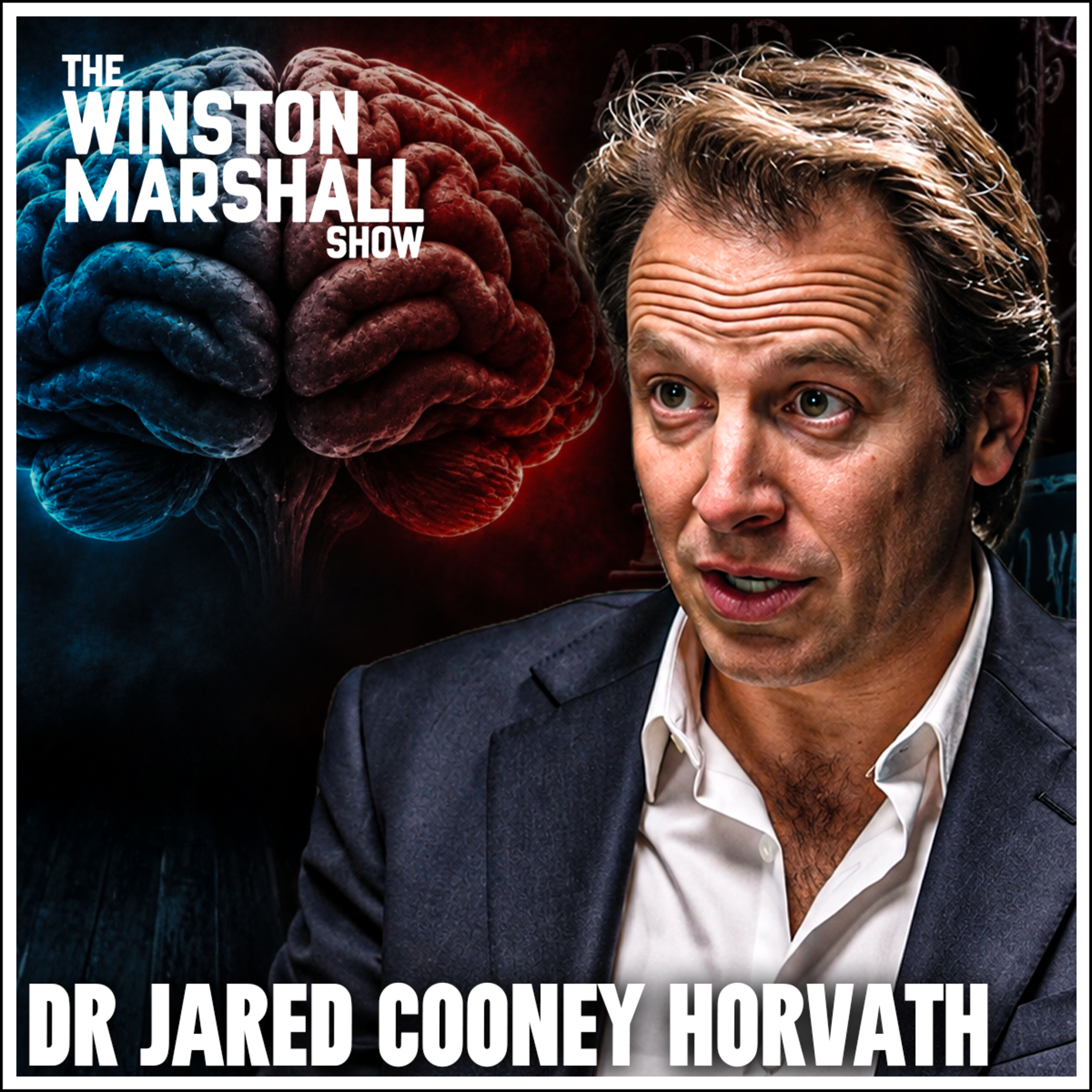
Stop your addiction today! Go to https://joinrelay.app/winston Use code WINSTON to get Relay for $1 In this episode of The Winston Marshall Show, I sit down with neuroscientist and author Dr Jared Cooney Horvath to explore an alarming question: are humans getting dumber? For the first time in generations, young people are experiencing a decline in cognitive abilities despite spending more time in education. Drawing on his new book, The Digital Delusion, Jared explains why he believes technology is driving this decline and how smartphones, social media and computers are fundamentally changing the way our brains function. We explore the science behind intelligence, memory, creativity, dopamine, addiction and childhood brain development, as well as the potential links between screen time and rising ADHD diagnoses. We also discuss the dangers of artificial intelligence in education, Big Tech's role in driving addiction and whether smartphones should be banned for under-18s. Finally, Jared
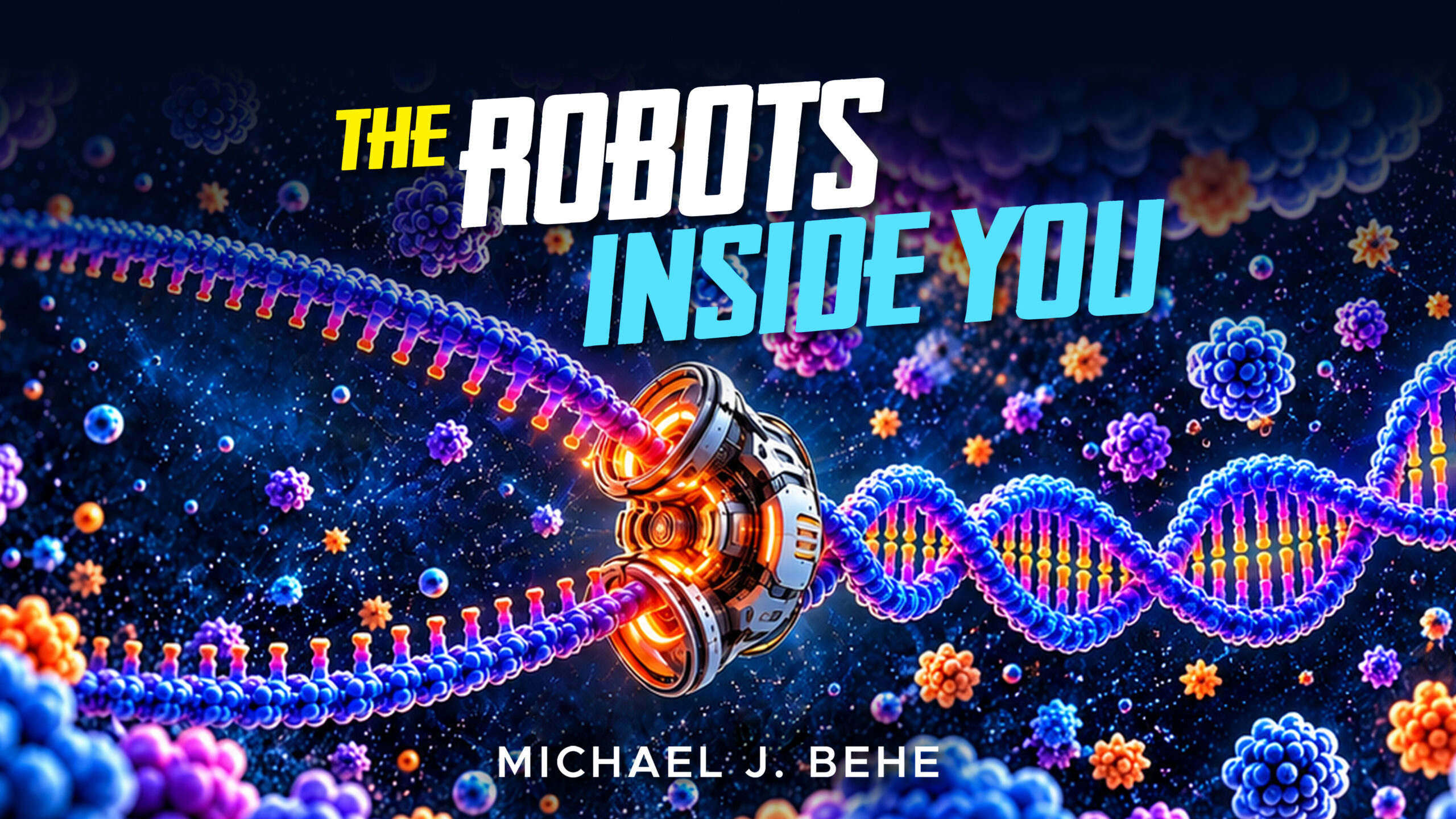
Humans have accomplished some amazing feats of engineering! There’s the Great Wall, the Great Pyramids, the Empire State Building. These are all wonders, to be sure. But it’s easy to forget the wonders that are much smaller than all that: wonders inside us, wonders that are keeping us alive! On today's ID The Future, Andrew McDiarmid is excited to read to you from The Robots Inside You, a new book designed for young people from biochemist Dr. Michael Behe. If you’ve watched the video series Secrets of the Cell, you know Dr. Behe has the ability to make complex scientific concepts easier to understand. In The Robots Inside You, Behe unpacks three amazing systems: the blood-clotting system that coordinates our body’s emergency response to bleeding, the molecular machines that maintain and repair our cells, and the superhero bugs at the heart of life that harness sophisticated machinery and extraordinary capabilities. Source (https://idthefuture.com/2295/)
Did you know that right now, inside your body, tiny robots are hard at work keeping you alive? What are these miniature machines, and what can they teach us about the wonders of life? On this ID The Future, host Andrew McDiarmid speaks with biochemist Dr. Michael Behe about his new children’s book The Robots Inside You, now available from Discovery Institute Press. Source (https://idthefuture.com/2294/)
For too long now, Catholic scholars and many of the faithful have felt compelled to align themselves with a Darwinian account of life's origins. But as modern evolutionary theory faces a rising wave of disconfirming evidence, the evidence for both intelligent design and a first human couple, Adam and Eve, is stronger than ever. So it's a good time for Catholics to reevaluate their relationship with Darwin. On this classic ID The Future from the archive, physicist Dr. Brian Miller welcomes Father Martin Hilbert to the podcast to discuss his book A Catholic Case for Intelligent Design. Source (https://idthefuture.com/2293/)
Teams owe supporters honest explanations during long periods of poor results.
Share your view, then see how readers voted. No sign-in required. This poll is shared across stories.
Do you agree or disagree?
Common Quandary
A Common Quandary to discuss
Another conversation to explore, separate from this news story.
Your carry-on fits only if you sit on it. Do you try the airport sizer?
Your suitcase is slightly larger than the airline allows, although it has fit overhead on previous flights. Checking it costs extra and risks missing a connection. Other passengers have equally questionable bags and staff are checking inconsistently.
Does uneven enforcement weaken a traveler's duty to follow the rule?