Poison vs. venom: What's the difference? - Rose Eveleth
6 min
Listen through the publisher, then discuss the episode here or arrange an in-person Roundtable. Your city determines where to meet.
Roundtables are designed for groups of four, with a shared subject and room for everyone to speak. Come for discussion, with no dating expectation.
View full lesson: http://ed.ted.com/lessons/venom-vs-poison-what-s-the-difference-rose-eveleth Uploaded 20-02-14 Would you rather be bitten by a venomous rattlesnake or touch a poisonous dart frog? While both of these animals are capable of doing some serious damage to the human body, they deliver their dangerous toxins in different ways. Rose Eveleth sheds light on the distinction between poison and venom (and why you shouldn't treat either one like you've seen in the movies). Lesson by Rose Eveleth, animation by TED-Ed.
Episode information is provided by the publisher. Listening takes place on the publisher’s service.
In this Jim Rohn Motivation speech, discover the timeless wisdom on why your calendar is your life. Jim Rohn breaks down how protecting your time with purpose, discipline, and intention is the key to success and fulfillment. Key Topics From This Motivational speech: Why time—not money—is your most valuable asset How the calendar reflects your true priorities The discipline of saying "no" to protect your time The difference between being busy and being effective How to turn your dreams into reality through scheduling Your calendar is not just a planner—it’s the mirror of your life’s direction. In this powerful Jim Rohn motivational speech, you’ll learn how time must be protected, not just managed. If you want to live intentionally, you must treat your calendar like gold. Because every block of time you guard is a block of your future secured. This Jim Rohn Motivational speech Is Perfect For: Anyone struggling to balance priorities in a busy world Entrepreneurs and professionals feeling
PBS Member Stations rely on viewers like you. To support your local station, go to: http://to.pbs.org/DonateSPACE Sign Up on Patreon to get access to the Space Time Discord! One of the most fundamental physics facts is that the speed of light in a vacuum is constant for all observers. But can we really be sure that the speed of light wasn’t different in the past, or perhaps in other parts of the universe? In fact, variable speed of light theories have long been used to try to explain everything from dark energy to gravity itself. Let’s explore how constant this fundamental constant really is. All Previous Episodes Referenced Check out the Space Time Merch Store Sign up for the mailing list to get episode notifications and hear special announcements! Search the Entire Space Time Library Here: https://search.pbsspacetime.com/ Hosted by Matt O'Dowd Written by Fernando Franco Félix & Matt O'Dowd Post Production by Leonardo Scholzer, Yago Ballarini, Adriano Leal & Stephanie Faria Directed b
Abraham Lincoln, Nelson Mandela, Steve Jobs, Oprah Winfrey – some of the greatest leaders of all time. But what makes each of these individuals such a remarkable leader? And how do we define great leadership? Uploaded 15-08-19 We may be apt to hold on to the traditional notion that leadership is defined by rank and order. But your position or title alone does not qualify you as a veritable leader. Think about it, how many CEOs are there in the world that hold a position of great power, but have a nominal impact on their employees? How many managers aren’t even respected by those that they manage? Even brilliant and innovative individuals can stumble when it comes to finding their voice. Because leadership is not defined by a position, nor it is even defined by intellectual prowess or natural talent – leadership is the skill of influence, something that you can use to impact the thoughts, feelings, emotions and actions of others. And it is the most important skill that any one of us can
In this calm and sleepy facts episode, we turn inward to explore the quiet, extraordinary science of human memory, the invisible system that holds together every experience, every face, and every half forgotten song from childhood. We begin with what memory actually is, not a recording stored neatly in a single place but a living reconstruction, rebuilt each time it is recalled and subtly reshaped in the process. We journey into the neuroscience behind it all, from the hippocampus, the small seahorse shaped structure at the center of memory formation, to the synapses that strengthen each time a memory is revisited, to the remarkable role sleep plays in moving the day's experiences from temporary storage into the deeper architecture of the brain. We explore the different kinds of memory, from the episodic memories that let us relive a moment in vivid detail to the procedural memories that let us ride a bicycle without thinking, to the brief sensory traces that hold the echo of a sound f
Wake up, there's more to you than this. In this Afternoon Vibe from The Positive Mindset Podcast, Henry Lawrence speaks to anyone who feels behind, like they're starting over, or like they're at the lowest point they've ever been. It doesn't matter where you are right now. Sometimes things fall apart because we wouldn't have turned to God when life was good. Henry compares this season to an alarm clock: it isn't punishing you for being asleep, it's telling you it's time to get up. He shares why a candle matters most in the dark, why nobody takes a photo of a foundation, and why the beautiful thing is already inside you, like a statue waiting in the stone. Let God remove what He didn't create for you, because the work isn't just to become someone else. The work is to become you. In this episode: • "It doesn't matter where you are right now." • "It's telling you it's time to get up." • "Maybe the dark you're in is exactly the place your light was meant to go." • "The statue was already i
Brain chips don't read your mind. They do something weirder... This is Neuralink’s Next Gen R1 surgical robot. It’s one of several new ways scientists are now trying to combine the human brain with a computer, which sounds like science fiction because… it is! But not anymore. And you need to know about this right now, because human clinical trials are happening and this tech is moving fast. Some people want to use it to make you superhuman. But I think most people aren’t seeing what’s really huge if true here. This story isn’t about how to make us more like machines Instead, this might be one of the most cutting edge ways to keep us human. Visit http://mercury.com (http://mercury.com/) to join over 300 thousand entrepreneurs who love Mercury. Mercury is a financial technology company, not an FDIC-insured bank. Banking services provided through Choice Financial Group and Column N.A., Members FDIC. Chapters: 00:00 What if you put a chip in your brain? 01:02 What does a human brain feel l
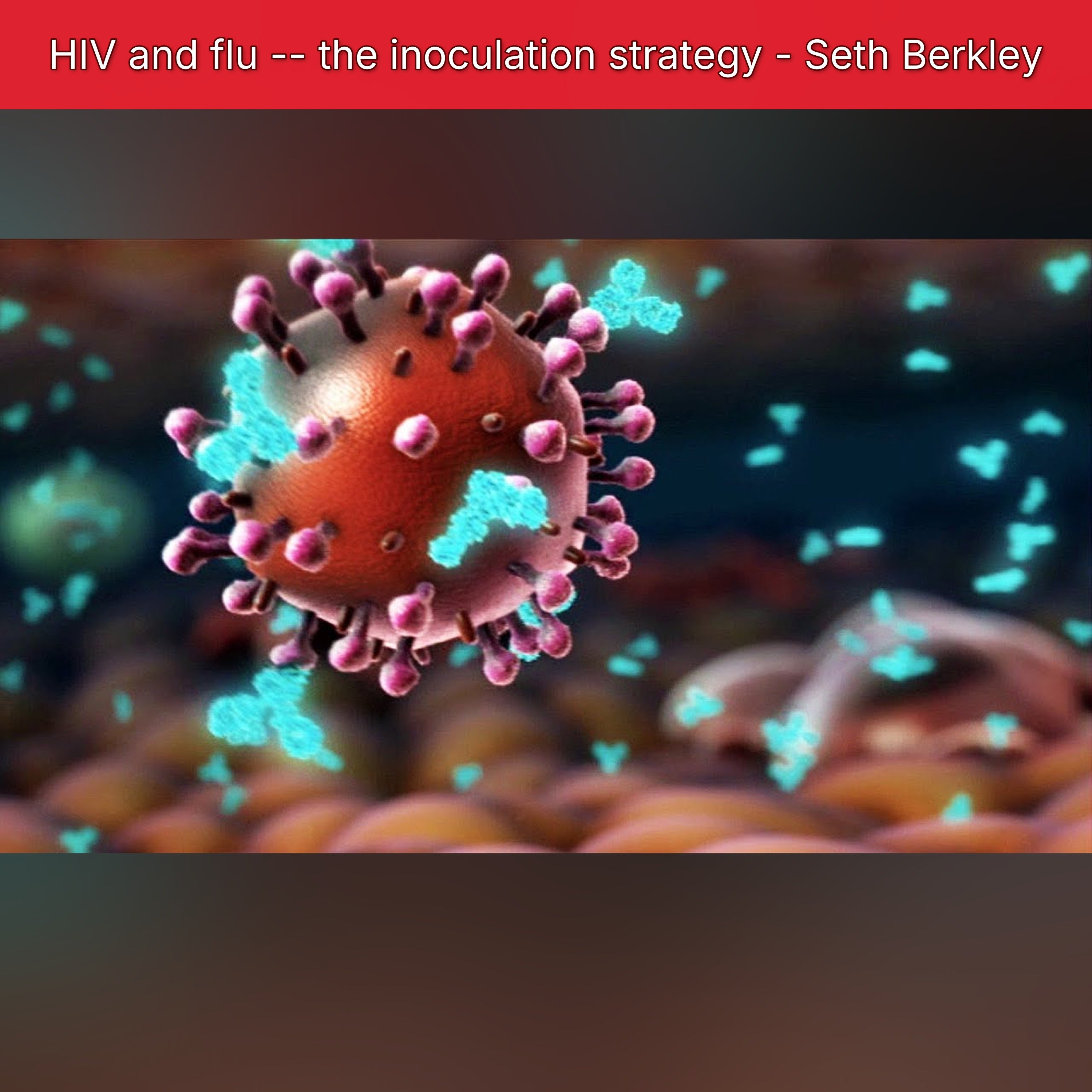
View full lesson: http://ed.ted.com/lessons/hiv-and-flu-the-vaccine-strategy-seth-berkley Seth Berkley explains how smart advances in vaccine design, production and distribution are bringing us closer than ever to eliminating a host of global threats -- from AIDS to malaria to flu pandemics. Talk by Seth Berkley.
The world needs clean water, and more and more, we're pulling it from the oceans, desalinating it, and drinking it. But what to do with the salty brine left behind? In this intriguing short talk, TED Fellow Damian Palin proposes an idea: Mine it for other minerals we need, with the help of some collaborative metal-munching bacteria. Uploaded 05-07-13 Talk by Damian Palin.
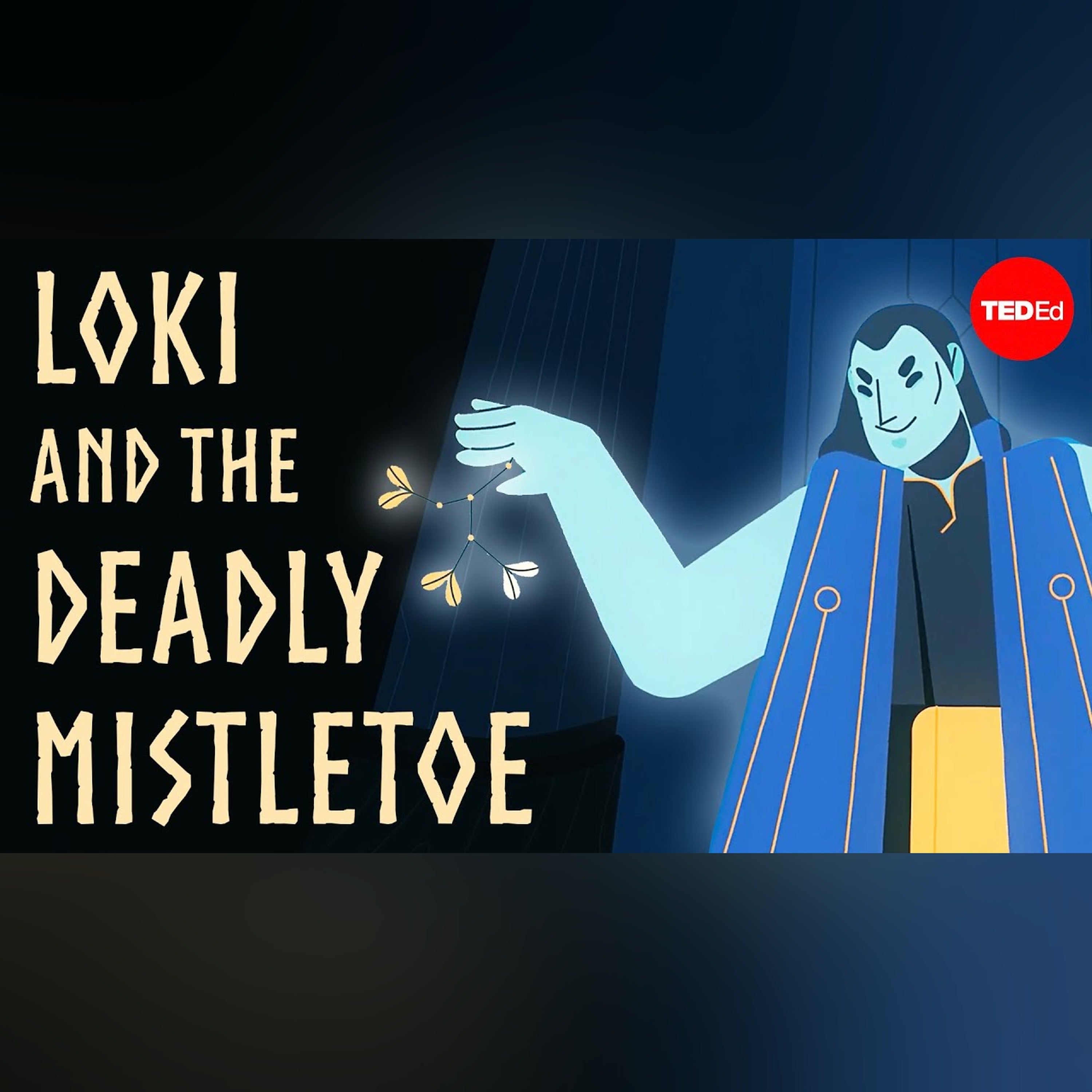
Discover the Norse myth of Baldur, the most beloved being in Asgard, and how the trickster god Loki plotted his death. Uploaded 01-12-20 -- Baldur was the gentlest and most beloved being in all of Asgard. But lately, he had been plagued by gruesome visions foretelling his own imminent death. Determined to protect her son from these grim prophecies, Queen Frigg travelled across the nine realms, begging all living things not to harm Baldur— all living things except one. Iseult Gillespie shares the myth of the death of Baldur. Lesson by Iseult Gillespie, directed by WOW-HOW Studio. Support Our Non-Profit Mission ---------------------------------------------- Support us on Patreon: http://bit.ly/TEDEdPatreon Check out our merch: http://bit.ly/TEDEDShop ---------------------------------------------- Connect With Us ---------------------------------------------- Sign up for our newsletter: http://bit.ly/TEDEdNewsletter Find us on Twitter: http://bit.ly/TEDEdTwitter Peep us on Instagram: http
Reinterpreting familiar stories for new audiences is usually worthwhile.
Share your view, then see how readers voted. No sign-in required. This poll is shared across stories.
Do you agree or disagree?
Common Quandary
A Common Quandary to discuss
Another conversation to explore, separate from this news story.
You know the relationship is over, but the vacation is nonrefundable. Do you wait to break up?
You have decided to end a year-long relationship. In five days, you are both leaving on an expensive vacation that cannot be refunded or transferred. Your partner is excited and believes the relationship is thriving.
Can avoiding financial waste justify delaying a painful truth?