Check Out Untold Earth on PBS Terra: https://www.youtube.com/watch?v=-BVHSUMAWR4&list=PLzkQfVIJun2J5q9CIXPAlL95FSb0tJul7&index=85 PBS Member Stations rely on viewers like you. To support your local station, go to:http://to.pbs.org/DonateSPACE Sign Up on Patreon to get access to the Space Time Discord! We humans have always been explorers. The great civilizations that have arisen across the world are owed to our restless ancestors. These days, there’s not much of Earth left to explore. But if we look up, there’s a whole universe out there waiting for us. Future generations may one day explore the cosmos and even settle entire other galaxies. But there is a hard limit to how much of the universe we can expand into. So, how big can humanity get? Episodes Referenced: How Much Of The Universe Can Humanity Ever See?: https://youtu.be/eVoh27gJgME Is Interstellar Travel Possible?: https://youtu.be/wdP_UDSsuro What If Humanity Is Among The First Spacefaring Civilizations?: https://youtu.be/uTrF
In this joint lecture, Gresham Professor of Physic Robin May and world-renowned puppet creator Steve Allen (Labyrinth, The Muppets, Fraggle Rock) discuss the science that goes in to bringing puppets to life, what our interactions with puppets mean for our understanding of human emotions, and how we may be able to use puppets to help tackle some of society’s most pressing challenges. This lecture was recorded by Professor Robin May and Steve Allen on 13th of October 2026 at Barnard’s Inn Hall, London. Professor of Infectious Disease at the University of Birmingham, and (interim) Chief Scientist at the UK Health Security Agency, Robin May was appointed Gresham Professor of Physic in May 2022. Between July 2020 and September 2025 he served as Chief Scientific Adviser at the Food Standards Agency (FSA). Professor May’s early training was in Plant Sciences at the University of Oxford, followed by a PhD on mammalian cell biology at University College London and the University of Birmingham.
In a wildly anticipated Psicoactivo, we finally seem to be getting closure on that viral clip posted by Jesse Michels of the Japanese NASA historian who now claims to have Roswell UFO Crash material in his possession: Mr. Takano Jousen. Go to www.outlawwinecompany.com to get a good deal or visit @OutlawWineCompany on Instagram. Timestamps 00:00 Start of the episode. 08:01 Sponsor ad 10:05 Rest of the episode. Sources: Full American Alchemy episode: https://youtu.be/NO-z5BaM61U?si=U4jHni_qeIkeDmIY Jesse interview with the Japanese Defense Minister: https://www.youtube.com/watch?v=U3bNSUiCvPg&t=15s (https://www.youtube.com/watch?t=15s&v=U3bNSUiCvPg) Old Jousen clip: https://x.com/AlchemyAmerican/status/2052905052419821827 New Jousen clip: https://x.com/AmericanALCHMY/status/2125004196688609695 New sick logo created by Mr. Cole Watkins: @yeoldeking_creatives All My links: https://allmylinks.com/pavelanche Follow Pavel on X: https://x.com/pavelibarrameda Follow Psicoactivo on X: https://x.
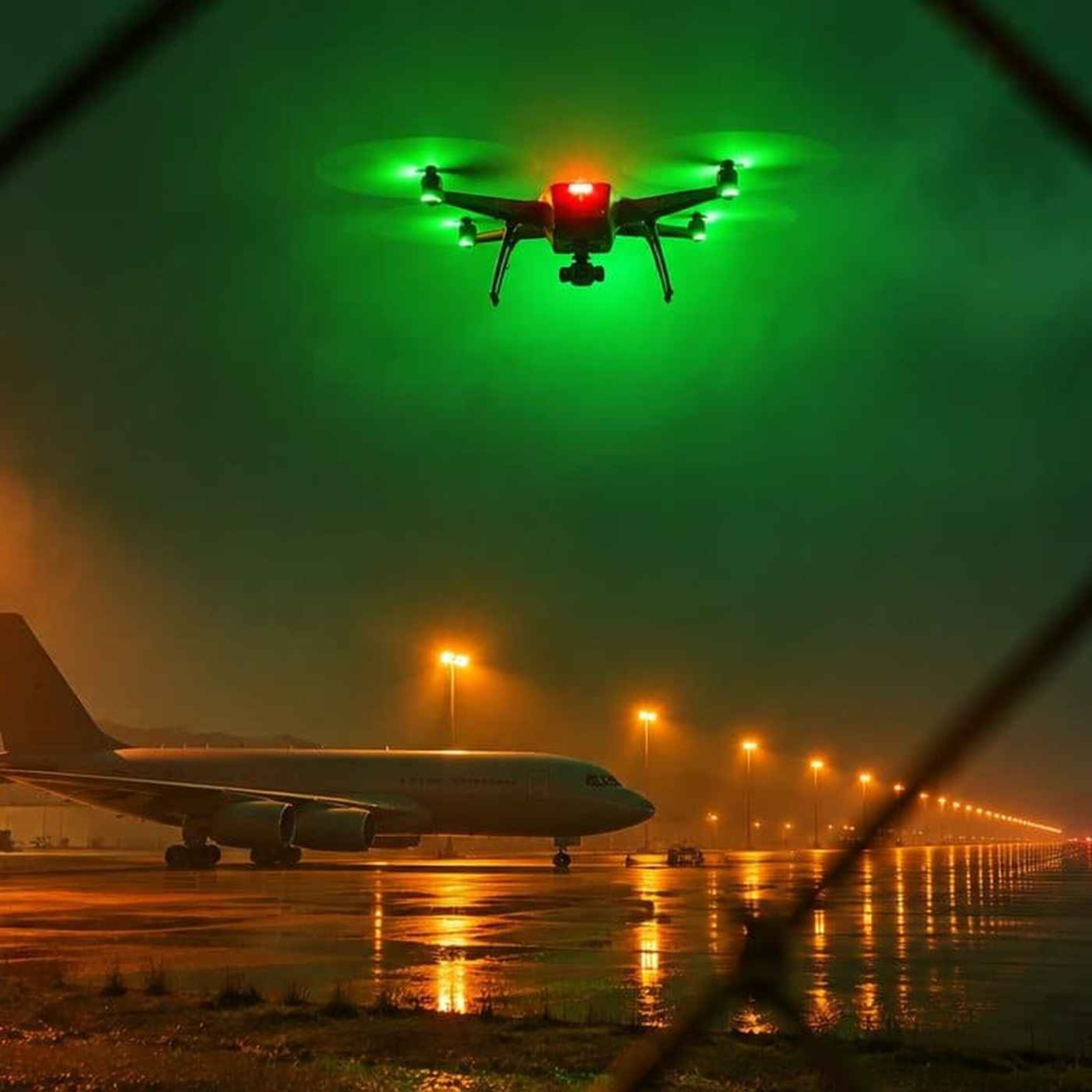
In today's brief: Drones over Sigonella: the US Navy says three drones were detected over its base in Sicily; Italian sources say one small quadcopter, probably a prank. The vampire camel: researchers at the American Museum of Natural History name a 10 to 13 million year old camel with fangs. Carbon from the core: a Columbia-led study says heavy carbon in Kilauea's rocks may be leaking from Earth's core, and may first have come from space. Cautious inquiry: Tom Rogan argues in UnHerd that the Bigfoot and UFO files deserve a proper look. Cryptid stamps: Mothman, Sasquatch, the Jackalope, the Squonk and Champ get a USPS stamp set in 2027. SIGNAL: an AI assistant for ghost hunters that checks for ordinary explanations first. Quick hits: the Juarez "pterodactyl" looks like a heron; drones over Canadian bases; a fourth Galileo Project observatory. Every story and source: https://believepod.com/ufo-paranormal-news-25-november-2026/ New episodes every morning. Keep your eyes on the sky. Sourc
A fake job interview helped open the door to a reported $6.3 billion theft from Binance. The FBI attributed the heist to North Korea, which has used cryptocurrency theft to raise revenue and evade sanctions. This week, former federal prosecutor Maya Song joins Frank Cilluffo to explain why tracing stolen cryptocurrency is easier than getting it back, what prosecutors need to turn an attribution into a criminal case, and how companies and law enforcement can work together to limit the damage after a breach. Main Topics The fake recruiting scheme the led to $6.3B loss The theft and fraudulent IT work funding North Korea Tracing, freezing, and recovering stolen cryptocurrency Public attribution and the evidence needed for an indictment When companies should contact law enforcement How indictments and asset seizures can disrupt future operations Key Quotes "Law enforcement generally, when it comes to the cybercrime threat, they have at the federal level taken an attitude of deter, disrupt,
The human brain remains one of the greatest unsolved mysteries in science. We have roughly 86 billion neurons firing in a way that somehow produces intelligence, and yet the brain is still largely a black box. In the early days of AI, researchers looked to the brain for clues about how to build smarter machines. But today, that relationship has been flipped on its head. Join Professor Hannah Fry and neuroscience researchers Maria Eckstein and Kim Stachenfeld to see how scientists are using AI to better understand the human mind. Please leave us a review on Spotify or Apple Podcasts if you enjoyed this episode. We always want to hear from our audience whether that's in the form of feedback, new idea or a guest recommendation! Hosted by Simplecast, an AdsWizz company. See https://pcm.adswizz.com for information about our collection and use of personal data for advertising.
As their name suggests, “forever chemicals” have extraordinary staying power. When these nearly indestructible compounds find their way into our soil and water, they don’t break down for hundreds or thousands of years. PFAS – the name for these synthetic chemicals – isn’t just in our natural environment. Scientists have found it everywhere, including in the blood of nearly every living being. In this episode, we talk to the reporter who broke open the story about a decades-long corporate coverup regarding forever chemicals, look at what we know about their health effects, and consider how a kneecapping of the EPA’s regulatory power may weaken the best tool we have for protecting ourselves from PFAS contamination. Guests: Nathaniel Rich (https://nathanielrich.com/) – Author of “Second Nature: Scenes from a World Remade (https://bookshop.org/p/books/second-nature-scenes-from-a-world-remade-nathaniel-rich/ced7f351cb7854eb),” and the New York Times Magazine article, “The Lawyer Who Became
We can now follow where Monarch butterflies go when they leave our gardens with tiny sensors that track their impressive 3,000-mile migrations from Canada to Mexico. The significant challenges that the journey poses are depicted in a new science exhibit at the American Museum of Natural History featuring artwork by Mad Magazine illustrator and environmentalist Peter Kuper. Their plight highlights the threats that chemicals and habitat loss pose to all insects, but all is not dire. Surprising research into how Monarchs protect themselves from disease shows the remarkable self-healing capacities of not only our colorful, vital pollinators but a diversity of species, from birds to dogs to chimpanzees. Guests: Sean Decatur (https://www.amacad.org/person/sean-m-decatur) – President of the American Museum of Natural History in New York City Jessica Ware (https://www.amnh.org/research/staff-directory/jessica-ware) – Entomologist, Chair of the Division of Invertebrate Zoology, Curator, Monarch
Expanding universities should help pay for the pressures they create on surrounding neighborhoods.
Share your view, then see how readers voted. No sign-in required. This poll is shared across stories.
Do you agree or disagree?
Common Quandary
A Common Quandary to discuss
Another conversation to explore, separate from this news story.
Your family connection could get your child into their dream school. Do you use it?
A university argues that considering family ties builds loyalty and encourages donations that fund scholarships. Critics say the preference preserves inherited advantage and takes places from stronger applicants.
Can benefits to the whole institution justify an unequal admissions advantage?