Sligo Creek Center v. HHS and the Right to a Jury Trial
14 min
Listen through the publisher, then discuss the episode here or arrange an in-person Roundtable. Your city determines where to meet.
Roundtables are designed for groups of four, with a shared subject and room for everyone to speak. Come for discussion, with no dating expectation.
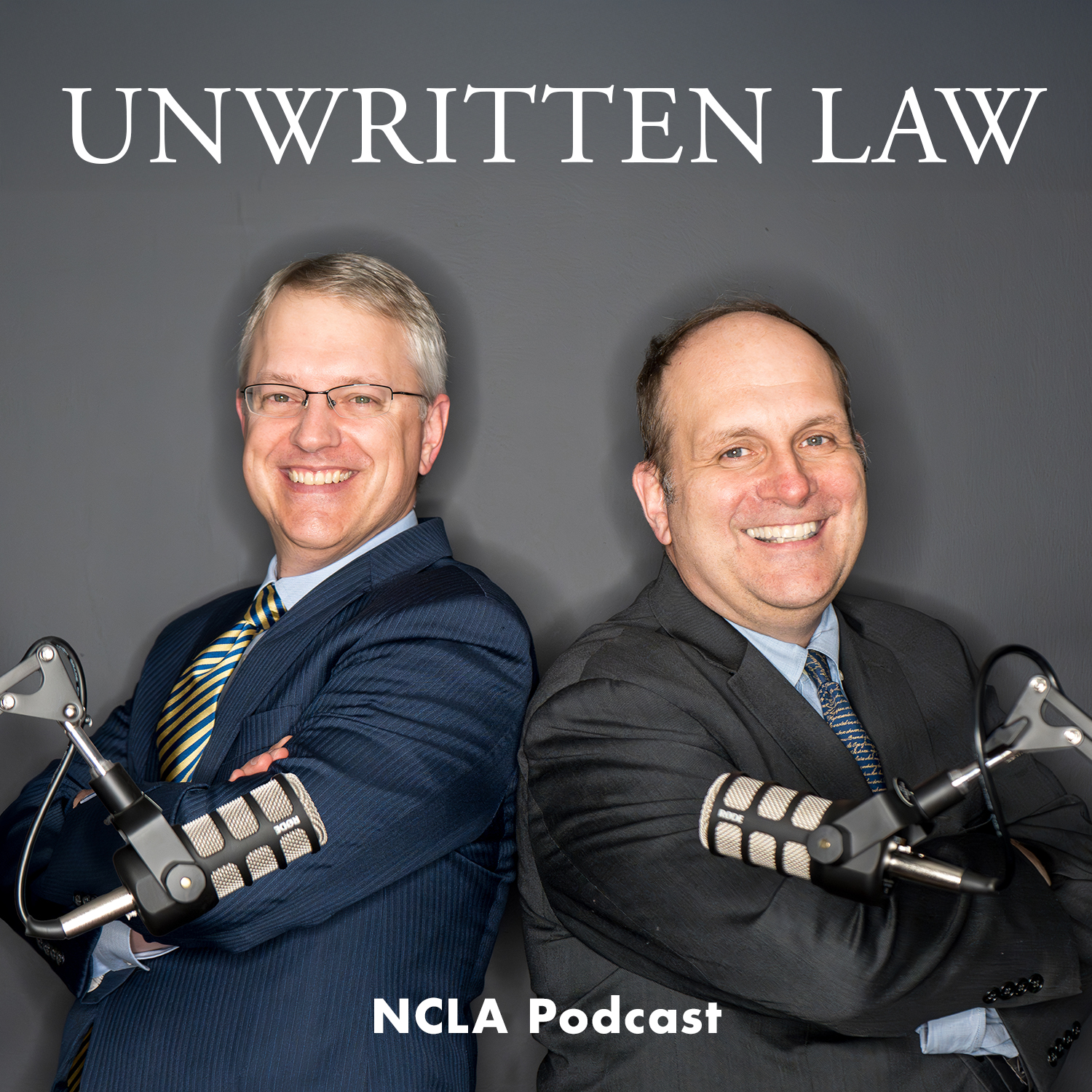
Can a federal agency impose a $1.45 million penalty and decide the challenge to that penalty in its own administrative proceedings? NCLA Senior Litigation Counsel Peggy Little joins Mark Chenoweth and John Vecchione to discuss NCLA’s Supreme Court amicus brief in Sligo Creek Center v. HHS. The conversation covers the Fourth Circuit’s reliance on Atlas Roofing, the government’s argument that participation in a federal benefits program is a privilege, and what founding-era public health laws can tell us about the right to a jury trial today. Read NCLA’s amicus brief (https://nclalegal.org/wp-content/uploads/2026/11/FILING_Sligo-Creek-Center-v.-HHS_Brief-Amicus-Curiae-of-NCLA-in-Support-of-Petitioner_11092026.pdf)
Episode information is provided by the publisher. Listening takes place on the publisher’s service.
On Friday’s Mark Levin Show, Rich Valdes fills in for Mark. Hackers breached the U.S. Air Force’s Cloud One platform, a system that stores sensitive personnel and logistics data across more than 200 Air Force locations worldwide. Is this connected to the other recent breaches and disruptions involving government agencies, cloud systems, transportation, and infrastructure? Is the United States is experiencing a form of fifth generation warfare conducted through cyberattacks and technological disruption rather than traditional military conflict? China, Russia, and Iran could be probing American vulnerabilities to create confusion and weaken confidence. President Trump’s efforts to restrict China’s access to advanced AI technology and loopholes in chip exports have been good. Later, Thanksgiving and American traditions are constantly being maligned by Marxists and leftist activists. NYC Public Advocate Jumaane Williams and the radical left use Thanksgiving to put America on trial. Their a
What can this human-like robot really do? You might know Atlas, the famous robot that does parkour and throws heavy objects in Boston Dynamics’ popular YouTube videos. I visited Boston Dynamics to challenge Atlas to a little friendly competition, to see what this robot can REALLY do. I wanted to answer a question I’ve had since I was a kid: When are all the robots coming? Like C-3PO! The Iron Giant! Sonny from “I, Robot”! Human-like machines that can help people do more than we can by ourselves. For most of my life, humanoid robots have seemed pretty far away. But recently? Not so much. Tesla with Optimus, Boston Dynamics with Atlas, NASA with Valkyrie, startups like Figure and many more are all making huge leaps in this field. In this video, we take you to the cutting edge of humanoid robots, to show you what they can actually do right now… and what you can expect in the robot future that’s coming. Chapters: 00:00 What is a humanoid robot? 01:16 Is Boston Dynamics Atlas real? 02:31 Wh
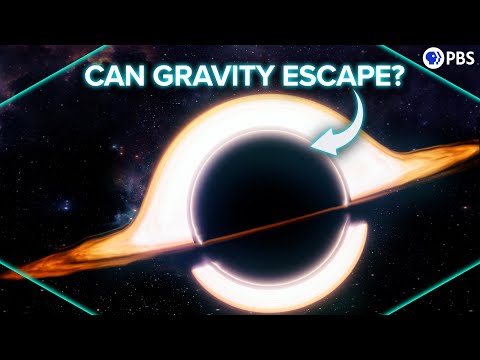
PBS Member Stations rely on viewers like you. To support your local station, go to: http://to.pbs.org/DonateSPACE Uploaded 27-01-22 Take the Space Time Fan Survey Here: https://forms.gle/wS4bj9o3rvyhfKzUA Sign Up on Patreon to get access to the Space Time Discord! Fact: in a black hole, all of the mass is concentrated at the singularity at the very center. Fact: every black hole singularity is surrounded by an event horizon. Nothing can escape from within the event horizon unless it can travel faster than light. Fact: gravity travels at the speed of light. So how does a black hole manage to communicate its gravitational force to the outside universe? How does gravity escape a black hole? Check out the Space Time Merch Store Sign up for the mailing list to get episode notifications and hear special announcements! Hosted by Matt O'Dowd Written by Matt O'Dowd Post Production by Leonardo Scholzer, Yago Ballarini, Pedro Osinski, Adriano Leal and Stephanie Faria GFX Visualizations: Ajay Manu
Is the law protecting predators and making it harder for victims of sexual assault to get justice?The Russell Brand trial has reignited questions about the use of rape myths in court, after his defence barrister was criticised for questioning the behaviour of the women who gave evidence against him.Meanwhile, allegations against comedian and broadcaster David Walliams, which he strenuously denies, have raised further questions about the use of aggressive legal threats to stop people speaking out.Now the government is backing new legislation designed to protect victims, journalists and whistleblowers from so-called SLAPPs - strategic lawsuits used by powerful individuals and organisations to silence their critics.But will the changes go far enough? And what about the women who are still bound by non-disclosure agreements?Jackie Long speaks to Sarah Sackman KC, the Justice Minister, about rape myths in court, the Russell Brand trial, NDAs and whether the law is doing enough to protect vi
Homelessness is one of Canada's most pressing challenges, and Alberta is at the centre of an increasingly urgent conversation. What's driving the crisis, why are so many people still living on the streets, and are we actually making any meaningful progress toward solutions? We get Real with Johanna Knettig of Bissell Centre, Tim Pasma of Hope Mission, and Sandra Clarkson of Calgary Drop-In Centre in our feature interview (7:00) presented by Mercedes-Benz Edmonton West. Plus, a major constitutional decision announced midway through this episode, as Canada's Supreme Court upholds Quebec's Bill 21, the province's secularism law, with a limited exception. Jespo breaks down the ruling (1:20:30) at first glance, including what it means for religious freedoms and constitutional rights, and the broader implications for the notwithstanding clause and Canadian Confederation. 1:31:00 | Real Talkers Mena, Natalie, Chelsea, and Scott are fired up over Alberta's changes to high school graduation req
Voters in Victoria have joined big queues at polling stations, as they decide who'll govern the state for the next four years. Energy Minister Chris Bowen says it's 'inevitable' changes will be made to the federal government's electric vehicle and home battery incentives. Experts from Britain's National Cyber Security Centre are investigating a suspected hack at the government ministry which deals with pensions and benefits.
Can New York punish someone for an inaccurate business statement even when no one was deceived, no one relied on it, and no one suffered a financial loss? That's the First Amendment issue NCLA is raising in the New York civil fraud case against President Donald Trump. NCLA has submitted an amicus brief to New York's highest court challenging the constitutionality of Executive Law § 63(12), a sweeping statute that NCLA argues allows the state attorney general to punish mere inaccuracies without proving the traditional elements of fraud, including intent to deceive, reliance, and harm. On this episode of Unwritten Law, Mark Chenoweth and John Vecchione welcome NCLA Senior Litigation Counsel Caitlin Moyna, who authored the brief, to explain why the law poses a threat to free speech far beyond this particular dispute. They discuss the enormous financial penalty originally imposed against Trump, the intermediate appellate court's decision to strike down that monetary award, and the danger o
A small North Dakota gas station challenged a Federal Reserve regulation that had been on the books before the business even existed. After winning a landmark Supreme Court ruling in 2024, Corner Post's challenge has now resulted in another major victory. The U.S. Court of Appeals for the Eighth Circuit affirmed a lower court ruling invalidating the Federal Reserve's debit-card interchange fee cap because the agency failed to follow the limits Congress established. On this episode of Unwritten Law, Mark Chenoweth and John Vecchione welcome NCLA Senior Litigation Counsel Kara Rollins to discuss the latest development in Corner Post v. Board of Governors of the Federal Reserve System. They explain how debit-card transaction fees work, why the Federal Reserve exceeded its statutory authority, and how the Supreme Court's decisions in Corner Post and Loper Bright are reshaping challenges to federal regulations. The discussion also examines a troubling trend: After the Supreme Court overturn
Major project cost overruns should trigger a public review before more money is committed.
Share your view, then see how readers voted. No sign-in required. This poll is shared across stories.
Do you agree or disagree?
Common Quandary
A Common Quandary to discuss
Another conversation to explore, separate from this news story.
A stranger rings up fancy apples as the cheap kind. Do you mind your own business?
At self-checkout, the shopper beside you labels expensive organic apples as the cheapest variety. An employee is distracted nearby. The difference is only a few dollars, the store is a huge chain, and the shopper notices that you noticed.
When does witnessing a small cheat make it any of your business?