Listen through the publisher, then discuss the episode here or arrange an in-person Roundtable. Your city determines where to meet.
Roundtables are designed for groups of four, with a shared subject and room for everyone to speak. Come for discussion, with no dating expectation.
Are we heading towards war in outer space? The increased crowding of orbit and the development of anti-satellite and space based weapons systems could be putting the world’s superpowers on a collision course beyond earth’s atmosphere. This week on Giant Leap we explore the potential dangers of, and ways we might prevent, conflict in outer space. With guest astrophysicist Jonathan McDowell. Featuring: Jonathan McDowell Taylor Wilson Joey Lovato Hosted on Acast.
Episode information is provided by the publisher. Listening takes place on the publisher’s service.
In this calm and sleepy facts episode, we journey far beyond our own solar system to explore the thousands of worlds orbiting distant stars, places we have only recently learned to find and are only just beginning to understand. We start with the basics of what an exoplanet is and how astronomers detect them, from the gentle dimming of a star as a planet passes in front of it to the tiny gravitational wobble a hidden world imprints on its sun. We visit the extraordinary harvest of the Kepler space telescope, which revealed that planets are not rare exceptions but the rule, scattered across nearly every star in the Milky Way. Along the way we encounter strange and extreme worlds, gas giants so close to their stars that they complete an orbit in mere days, tidally locked planets with one face locked in permanent daylight and the other in endless night, and rogue planets drifting alone through interstellar space with no star to call home. We explore the habitable zone, the narrow region a
Check Out Untold Earth on PBS Terra: https://www.youtube.com/watch?v=-BVHSUMAWR4&list=PLzkQfVIJun2J5q9CIXPAlL95FSb0tJul7&index=85 PBS Member Stations rely on viewers like you. To support your local station, go to:http://to.pbs.org/DonateSPACE Sign Up on Patreon to get access to the Space Time Discord! We humans have always been explorers. The great civilizations that have arisen across the world are owed to our restless ancestors. These days, there’s not much of Earth left to explore. But if we look up, there’s a whole universe out there waiting for us. Future generations may one day explore the cosmos and even settle entire other galaxies. But there is a hard limit to how much of the universe we can expand into. So, how big can humanity get? Episodes Referenced: How Much Of The Universe Can Humanity Ever See?: https://youtu.be/eVoh27gJgME Is Interstellar Travel Possible?: https://youtu.be/wdP_UDSsuro What If Humanity Is Among The First Spacefaring Civilizations?: https://youtu.be/uTrF
StayCurious Newsletter on Snyder’s Fiber Randomized Controlled Trial: https://staycuriousmetabolism.substack.com/p/fiber-is-good-for-you-is-lazy-science?r=40ekz2 StayCurious Newsletter on Inulin and Fructose Resistance: https://staycuriousmetabolism.substack.com/p/the-fiber-that-fights-fat-how-inulin?r=40ekz2 Snyder Interview 1, Four Types of Diabetes: https://youtu.be/mCrc4gfbK2o Snyder Interview 2, Most Viral Aging Study: https://youtu.be/kMpGkg4zMOU Snyder Interview 3, Most Beautiful Exercise Study: https://youtu.be/_9ywulQF2Ho Why does the same food spike one person’s blood sugar while barely affecting another? In this fourth conversation with Stanford’s Professor Michael Snyder, we explore new research on individualized glycemic responses, insulin resistance subtypes, and why one-size-fits-all nutrition advice keeps failing. From rice spiking glucose more than ice cream, to the power of the grape-to-potato ratio, and beyond, this discussion reveals how metabolism, microbiome, immu
On this week’s episode, Graig Suvannavejh, Tim Opler, BrianSkorney, Chris Garabedian, and Matt Gline opened with a look at the biotech market, with the XBI up roughly 17% to 18% year to date, though the group noted that AI-driven demand for capital and the possibility of an AI bubble are weighing on sentiment. The co-hosts then discussed expectations for 2027 as a significant M&A year, following conversations with pharma M&A leaders at the Jefferies Global Healthcare Conference. The group also covered the withdrawal of Heidi Overton’s FDA Commissioner nomination and what the uncertainty could mean for agency stability and volatility. Next, they discussed market rumors of a potential Sanofi acquisition of Insmed, including Brinsupri’s performance and raised guidance, and what a deal of that size could signal for the broader M&A landscape. The group also covered Lilly’s oncology deals with Stipple Bio and Calytrix, and the growing opacity of biobucks headlines and undisclosed upfront pay
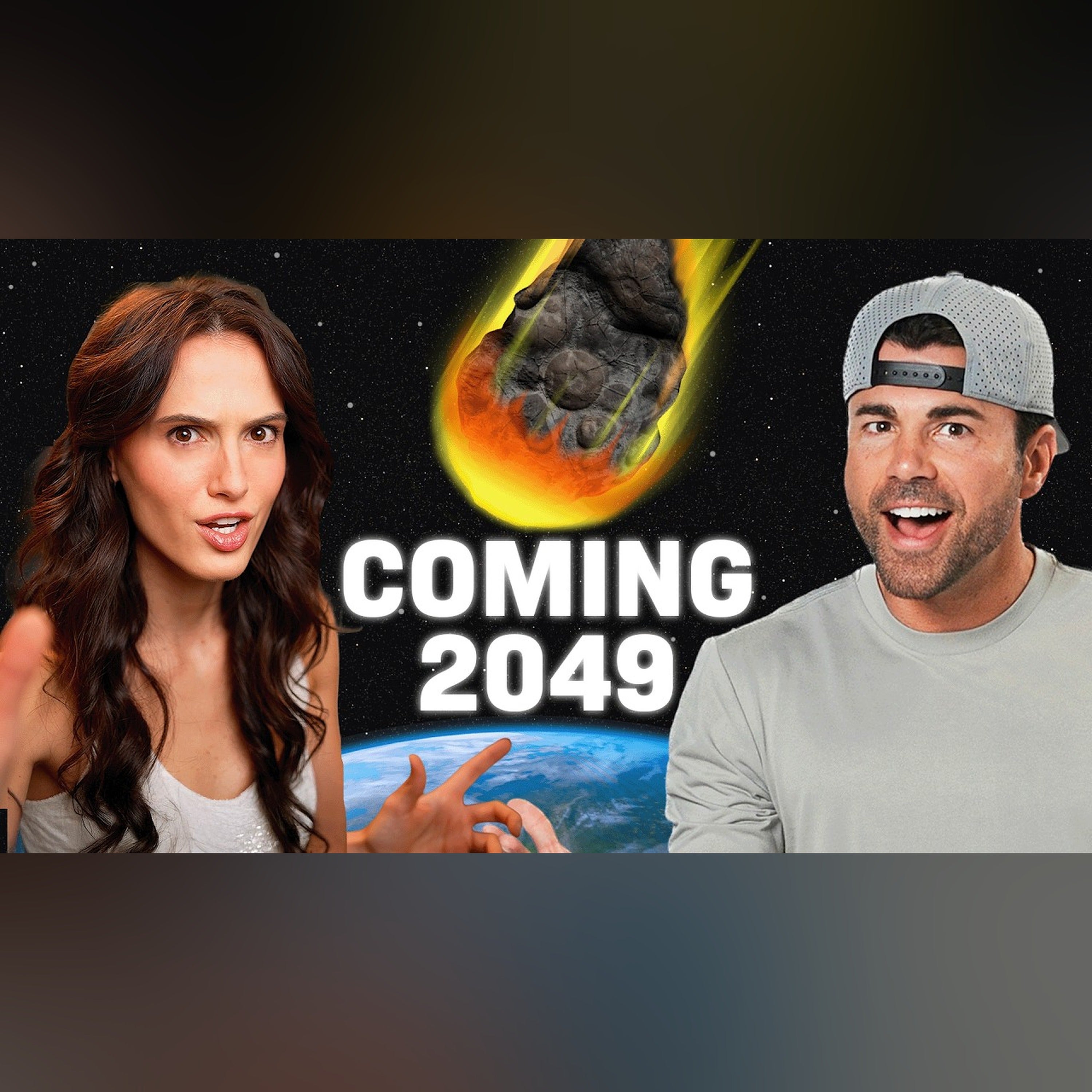
If an asteroid is coming for Earth… what would we really do? Have a coffee with me! Try Cometeer with code CLEO for $20 off your Discovery Box on http://cometeer.com/cleo Imagine, it’s 2034, and a rock the size of a mountain, far off in our solar system is on a direct impact course for Earth. How would we know? And what would we actually DO about it? In this video, we play out a fictional asteroid headed for Earth – with help from my friend and former NASA engineer Mark Rober and rare access into a remote facility where they discover NEW asteroids – to show you all the real science and tech we would use to defend our planet if an asteroid is about to hit Earth! [SPOILER] Our rock was published in the Minor Planet Electronic Circular (MPEC) here! MPEC 2025-K125 : 2025 KS6 Chapters: 00:00 Did an asteroid hit Earth? 01:00 What happens if an asteroid is headed towards Earth? 01:52 Is that Mark Rober? 03:26 How big was the asteroid that killed the dinosaurs? 04:30 What happens when an aster
Dig into Moore’s Law and explore its 4 main limitations and how they could change how we are able to make progress in computing. -- Moore’s Law states that every 1 to 2 years the number of transistors that can fit on a given size computer chip will double. Thanks to this law, chips have gotten smaller, faster, more efficient, and cheaper. But today, there are four key problems that trip up this trend, potentially ending Moore’s Law and fundamentally changing how computing progresses. Sajan Saini and George Zaidan investigate. Lesson by Sajan Saini and George Zaidan, directed by Jeff Le Bars, JetPropulsion.space. A special thanks to Anuradha Murthy Agarwal who provided information and insights for the development of this video. Artists and artworks referenced in the animation: "The Persistence of Memory and The Disintegration of the Persistence of Memory" by Salvador Dalí "Composition VIII" by Wassily Kandinsky "Oh Jeff and Girl with Tear III" by Roy Lichtenstein "Black Square on a Whit
What is orbiting above our heads? Someone is keeping track of all of the stuff we launch into outer space, right? And we must have a plan to safely navigate around space junk and dispose of it? The surprising answers to these questions, this week on our Space Debris episode of Giant Leap. With guest astrophysicist Jonathan McDowell. Featuring: Jonathan McDowell Taylor Wilson Joey Lovato February 10th, 2009, a communications satellite called Iridium 33 hurdles through space orbiting Earth. The 1,200 pound hunk of metal had been in space for twelve years, part of a constellation of Satellite phone infrastructure. As Iridium 33 silently speeds through low earth orbit, on the horizon appears an object approaching at an incredible speed. Kosmos 2251 was a dead Russian satellite – space debris – weighing over 200 pounds, once used for military communications, but now completely deactivated without any means to maneuver or change course. Observers on the ground expect a conjunction, not a col
Giant Leap returns with Season 2! Audio only, available here on your podcast app. Humankind is a curious species. Curiosity is what drove us from the cover of the trees, that led us across continents and oceans, and propelled us beyond the earthy grasp of our planet’s gravity into the dark unknown above. To interrogate, to question to pursue a glimpse truth… there is nothing more human that to wonder why? and what? and how? Our species is unique in its quest for answers. In this season, we posit many questions: Could the collision of two satellites create enough debris to trap us on Earth? Did dinosaurs have feathers? Can invasive species ever be a good thing? What is lightning? On Giant Leap we ask questions — big and small, and then find the scientists and experts who have devoted their lives to seeking answers. That’s Giant Leap, Season two available here November 13th. Hosted on Acast.
Long-term environmental commitments should require public review before a new government abandons them.
Share your view, then see how readers voted. No sign-in required. This poll is shared across stories.
Do you agree or disagree?
Common Quandary
A Common Quandary to discuss
Another conversation to explore, separate from this news story.
If a good deed is filmed for likes, is it still a good deed?
A local creator films themselves buying groceries for strangers. The videos generate substantial income, but they also inspire donations and allow the creator to help more people.
Do mixed motives diminish a genuinely helpful act?