Starship’s Double Catch Attempt, Euclid Opens Its Sky Survey, a Robot Builds in Orbit...
19 min
Listen through the publisher, then discuss the episode here or arrange an in-person Roundtable. Your city determines where to meet.
Roundtables are designed for groups of four, with a shared subject and room for everyone to speak. Come for discussion, with no dating expectation.
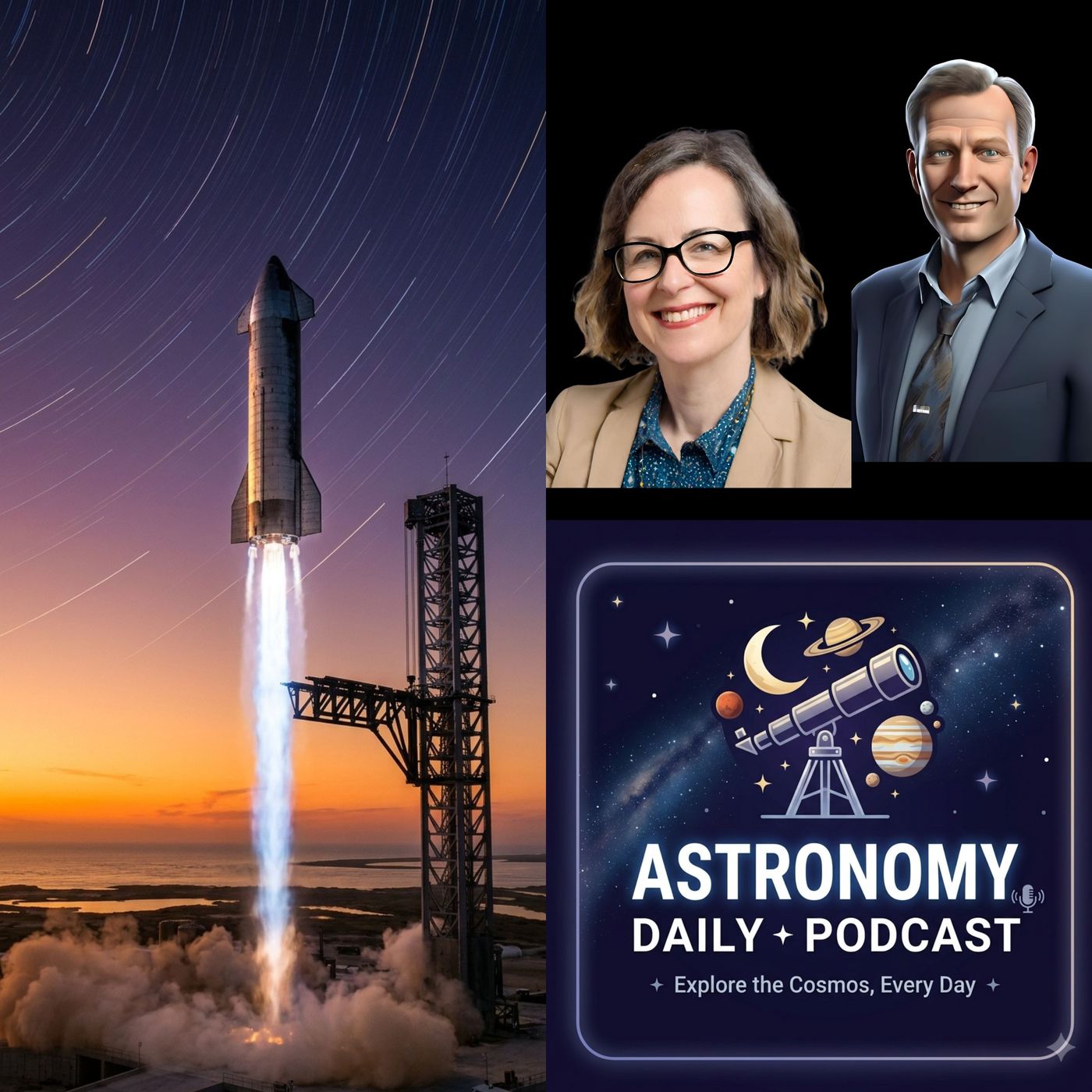
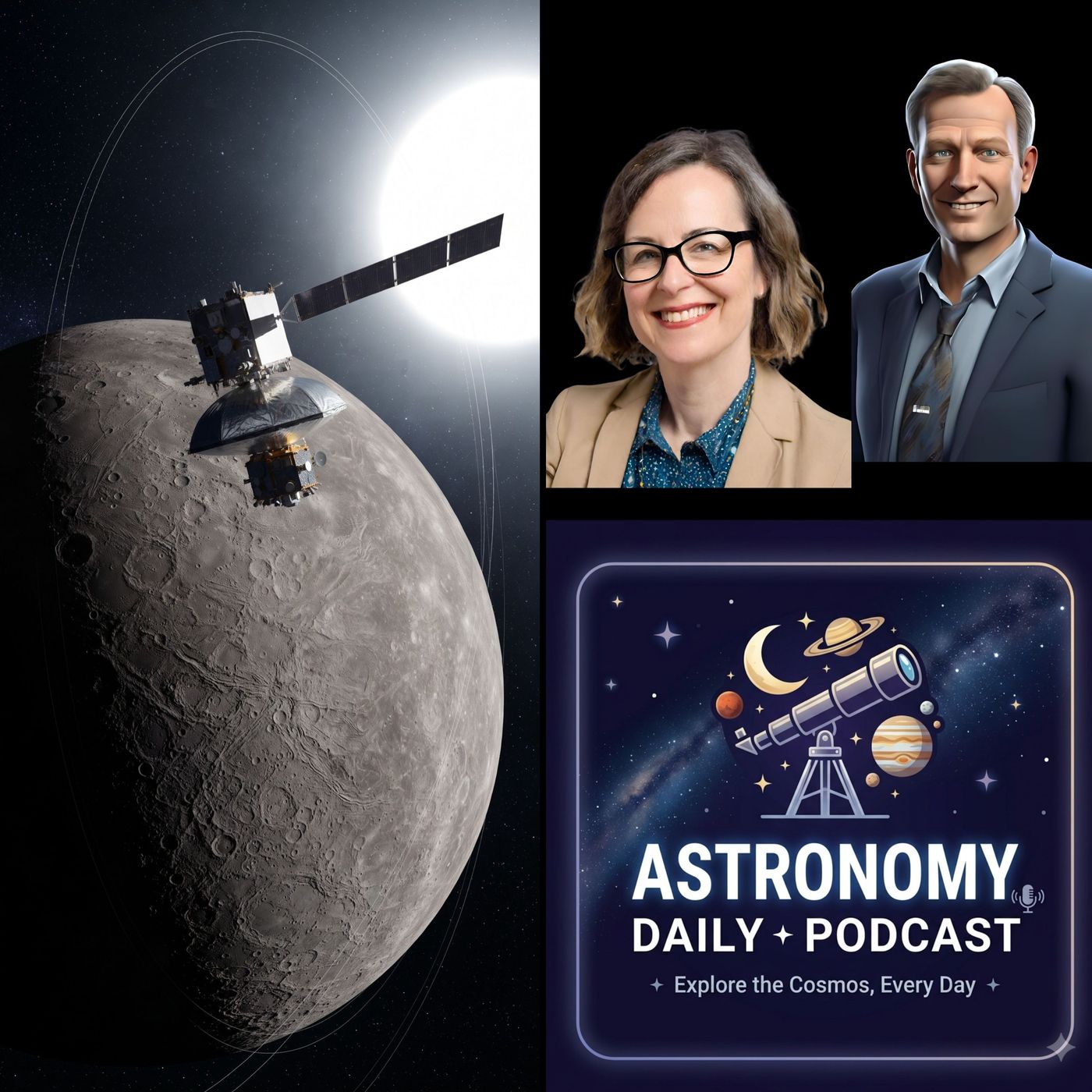
SpaceX is targeting today for Starship Flight 15, and for the first time it will try to catch both the Super Heavy booster and the Starship upper stage back at the launch tower, the ship after more than 22 hours and about 14 orbits. We walk through the plan, the timings for both hemispheres, and the three caveats that matter. Also: ESA's Euclid telescope opens about 1,900 square degrees of sky to the world in its first major data release; Caltech's ASTRA robot assembles the first piece of structure ever built autonomously in orbit; Voyager 1 closes in on one light-day from Earth; and Mars and Jupiter draw to 1.2 degrees apart in the pre-dawn sky. In this episode · Starship Flight 15: targeted for Fri 13 Nov, 4:45 pm CT (22:45 UTC; 9:45 am AEDT Sat). First attempt to catch both booster and ship. · Euclid DR1-Foundation: about 1,900 square degrees and 1.8 petabytes, public from 12 November. Cosmology products follow in mid-2027. · ASTRA: a Caltech/DARPA robot assembles a truss bay in low Earth orbit, a first. · Quick hits: Voyager 1 one light-day on 18 Nov; BepiColombo at Mercury 21 Nov; Hera's Dimorphos close-ups 25 Nov. · Skywatch: Mars and Jupiter 1.2° apart on 16 Nov; Venus and Spica; Leonids 17–18 Nov; Saturn in the evening. Sources · Starship Flight 15 awaits FAA green light — NASASpaceflight — https://www.nasaspaceflight.com/2026/11/starship-flight-15-awaits-faa/ · Starship Flight 15 will try to catch both stages — KeepTrack — https://keeptrack.space/x-report/spacex-brief-2026-11-09 · Euclid DR1 MER Catalog — Caltech/IPAC IRSA — https://www.ipac.caltech.edu/doi/10.26131/IRSA673 · Euclid timeline — ESA — https://www.cosmos.esa.int/web/euclid/timeline · ESA Datalabs Euclid Hackathon 2026 — https://www.cosmos.esa.int/web/esa-datalabs-euclid-hackathon-2026 · NOM4D program demonstrates automated in-space assembly — DARPA — https://www.darpa.mil/news/2026/nom4d-program-demonstrates-automated-in-space-assembly · Caltech robotic space demo successfully builds in space — Caltech — https://www.caltech.edu/about/news/caltech-robotic-space-demo-successfully-builds-in-space · Voyager 1 to reach 1 light-day — EarthSky — https://earthsky.org/space/voyager-1-1-light-day-from-earth-november-17-18-2026/ · What's Up: November 2026 — NASA — https://science.nasa.gov/solar-system/skywatching/whats-up-november-2026-skywatching-tips-from-nasa/ Sponsor Details: Ensure your online privacy by using NordVPN. Get the best secure and private email on the planet. Do what we did and use ProtonMail. Commercial free episodes daily are only a click way... This episode includes AI-generated content.
Episode information is provided by the publisher. Listening takes place on the publisher’s service.
In today's brief: Lake Erie, 1957: a newly released Air Force report says two boys saw a humming, bell-shaped craft near the Enrico Fermi Atomic Plant. Skinwalker Ranch: owner Brandon Fugal calls the new files landmark and recalls a daylight saucer over the mesa. Warship footage: a 20-second 2020 infrared clip shows a light crossing a US Navy ship in the Middle East, with no Pentagon assessment. Martha's Vineyard, 1957: a spiked, nickel-coloured object that the Air Force put down to a radar-reflector balloon. Loch Ness: reported sightings jump to 15 this year, up from six in 2025. The Book of Miracles: a 16th-century manuscript of comets, blood rain and multiple suns heads to auction at Christie's. Quick hits: a 1952 file blames the saucer wave on temperature inversions; more Pentagon UFO files are on the way. Every story and source: https://believepod.com/ufo-paranormal-news-22-november-2026/ New episodes every morning. Keep your eyes on the sky. Sources: FOX 2 Detroit: https://www.fo
Robot dogs are here. But why? You might think you already know Spot, the robot dog from Boston Dynamics. Maybe you saw a viral video of it opening a door, or dragging a truck, or dancing. But now, this robot has hit a HUGE milestone... Spot got a job! These robots are now out in the real world doing real work, for fire departments, factories, defunct nuclear power plants like Fukushima, ancient ruins like Pompeii, deep mines, and, more controversially, police departments. You might already be starting to see robot dogs walking around, and even if you’re not, they’re starting to affect your life. That’s why we went to visit Boston Dynamics. In this video, we put Spot to the test, to show you what it’s really capable of, and how our future could be even better with robot dogs. Chapters: 00:00 What is Boston Dynamics robot dog? 1:33 What does Boston Dynamics robot dog do? 2:50 Why robot dogs? 3:32 Taking Spot on an obstacle course 4:33 When Spot falls down 5:34 How Spot protects itself an
Take the Space Time Fan Survey Here: https://forms.gle/wS4bj9o3rvyhfKzUA Uploaded 27-04-22 PBS Member Stations rely on viewers like you. To support your local station, go to:http://to.pbs.org/DonateSPACE Sign Up on Patreon to get access to the Space Time Discord! Fermilab physicists really care about the mass of the W boson. They spent nearly a decade recording collisions in the Tevatron collider and another decade analysing the data. This culminated in the April 7 announcement that this obscure particle’s mass seems to be heavier than expected. So why do we care? Because understanding why this particle even has mass was one of the most important breakthroughs in our understanding of the subatomic world. And because measuring its precise mass either doubles down on our current understanding or reveals a path to an even deeper knowledge. The FermiLab discrepancy is a tantalizing hint of the latter. Need Catch Up On Your Fundamental Forces? Check out the Space Time Merch Store Hosted by
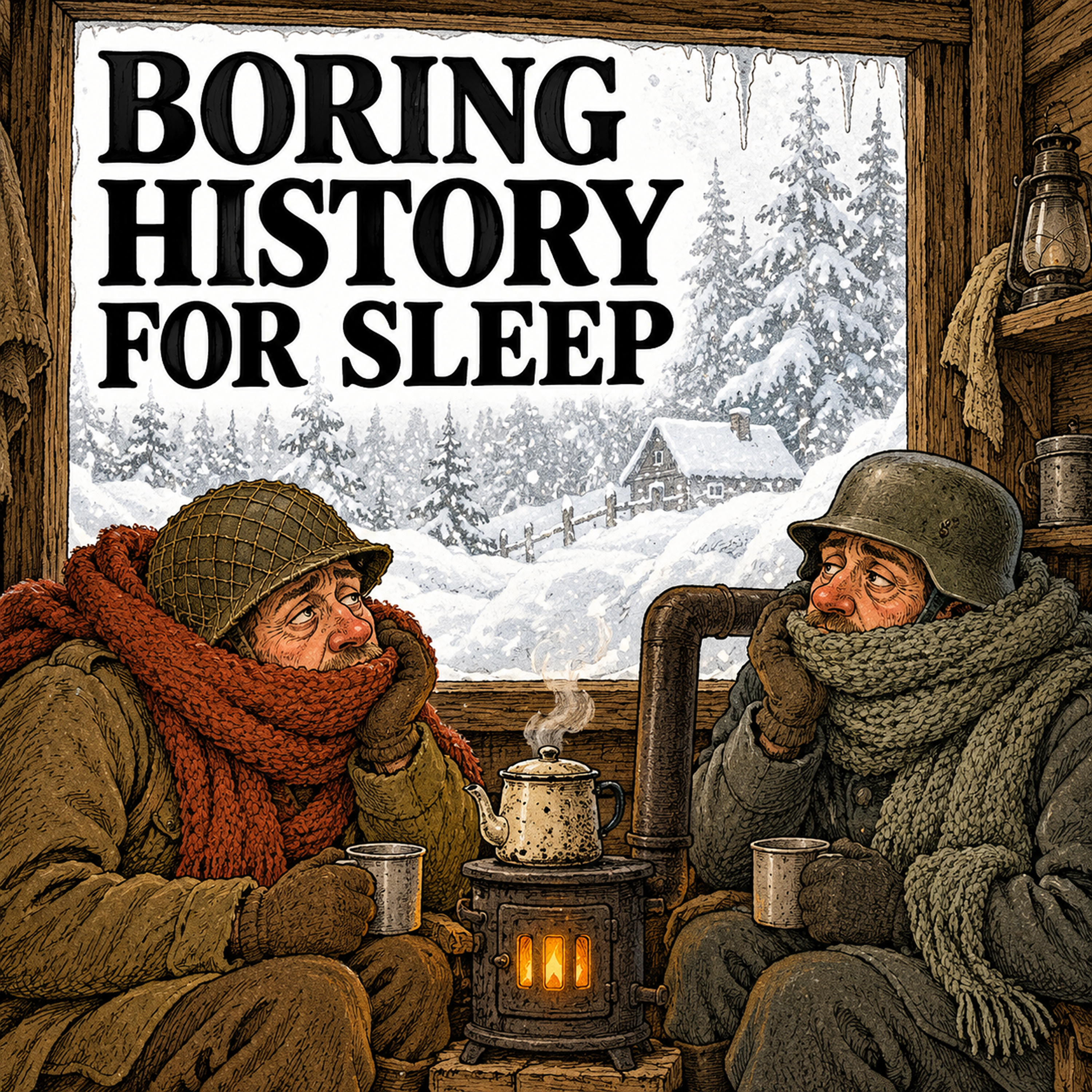
In the winter of 1944, as Nazi Germany was losing ground on every front, Hitler launched one final attempt to turn the war around. Through the dense forests of the Ardennes, German forces launched a massive surprise attack against the Allied armies, triggering one of the largest and most dramatic battles of World War II. Discover why the Allies were caught off guard, explore the harsh winter conditions that shaped the fighting, and follow the events surrounding the desperate defense of Bastogne. Learn about the German strategy, the Allied response, and the soldiers who endured weeks of uncertainty, snow, and exhaustion. Uncover how the Ardennes Offensive unfolded, why the German advance ultimately failed, and how this battle weakened Germany's ability to continue the war in Western Europe. Boring History for Sleep — Soft stories about forgotten battles, extraordinary events, and the people who shaped history.
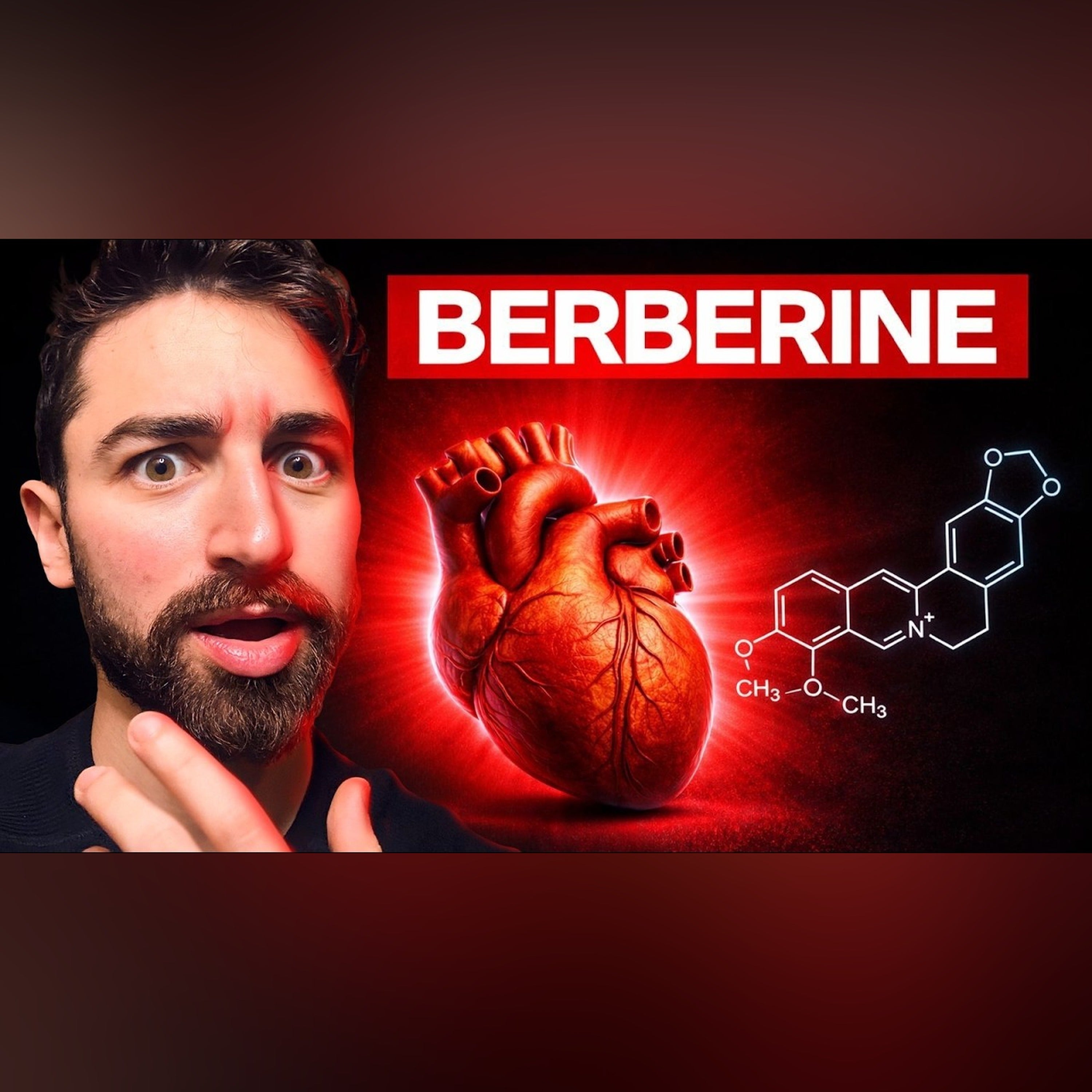
For extra nuances, all the references and early access to data like these, see the best-selling science letter: https://staycuriousmetabolism.substack.com/p/how-berberine-lowers-cholesterol?r=40ekz2 In this video, we unpack the stunning mechanism behind berberine, the yellow plant alkaloid that increases LDL receptors not by starving the liver of cholesterol, but by stabilizing the blueprint that cells use to builds them. It’s a twist in human biochemistry that reshaped how I think about cholesterol manipulation — and it might reshape how you do too. Then I’ll take you inside my own high-stakes N=1 experiment Hundred Health Link: https://www.hundred.com/STAYCURIOUS Discount Code: STAYCURIOUS50 knocks $50 off membership As a scientific advisor at Hundred Health, I candidly hold a small equity stake in the company. I’ve chosen to partner with Hundred Health because I genuinely believe it has the potential to be a disruptive force for good in personalized healthcare. It’s a tool unlike an
For some reason, it did not stop him.Now I just want to ask you something real quick to put you in the mind of a bear. If you found some of your favorite food just left out and you somehow, like me most of the time, just couldn’t resist the temptation. Bears live and eat by what is detected by their noses, so logically, after eating its fill, a proper expectation would be that the bear would go sleep off a large meal upwind of where its food was cached. The wind carries both scent and sound to the bear as it rests and acts as an alarm to it to defend its cache. The hide was still up in the birch, untouched. He dropped his packboard at the base of the tree and glanced up to see where he would need to climb. Movement in the brush, some three hundred feet away, caught his eye. Two bears, roughly thirty feet apart, moved through the brush. From their color and build, he identified them as grizzlies, also called coastal brown bears.Up to that day, every bear he had met in the wild had chose
After more than eight years and nine planetary flybys, the ESA/JAXA BepiColombo mission is due to be captured into orbit around Mercury on Saturday 21 November 2026, the first mission to put two spacecraft in orbit there at once. Anna and Avery explain why the closest planet to the Sun is one of the hardest to reach, how the gentle 'weak stability boundary' capture works, and what happens between now and the start of science in April 2027. Also: Webb and a string of survey telescopes reconstruct a giant star swallowing its companion in the Andromeda galaxy; Voyager 1 reaches one light-day from Earth just as it stops sending data; and Fermi maps 450 sources in the under-explored 'MeV gap', including the globular cluster M2. Quick hits on Rocket Lab's 100th Electron, Shenzhou 24's Pakistani astronaut and the Cygnus 'S.S. Jim Lovell'. Skywatch: Mercury at greatest elongation on BepiColombo's arrival day, Andromeda, and M2 for both hemispheres. In this episode BepiColombo: the long way to
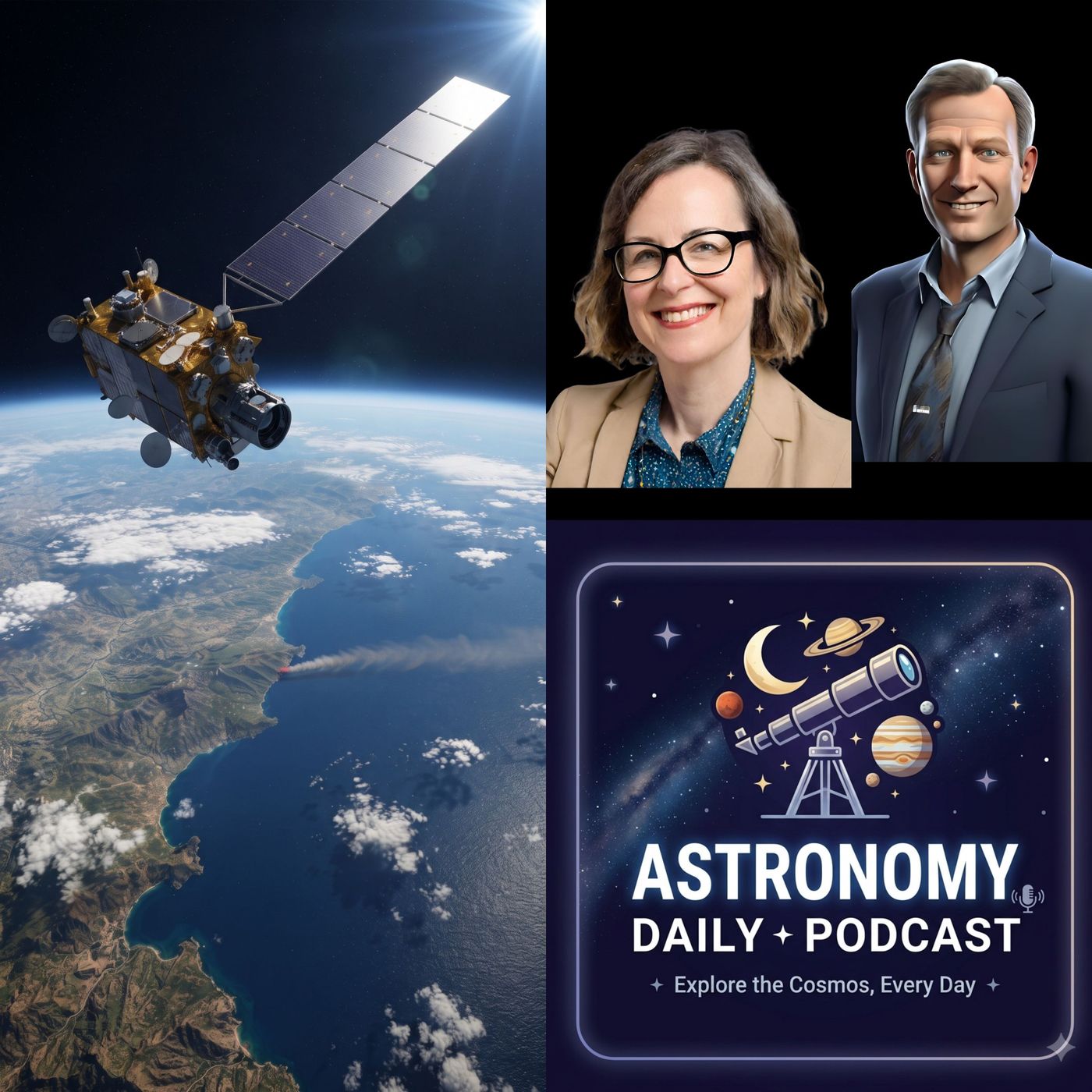
After 27 years, NASA's Terra satellite stops collecting science data on 1 December 2026. Anna and Avery look at what the first flagship of NASA's Earth Observing System measured, why its morning orbit mattered so much, what its MODIS fire hotspots meant for bushfire monitoring in Australia, and what replaces them. Also: ULA's Vulcan loses 40 Amazon Leo satellites in the company's first total mission failure; new mapping says Mars's biggest olivine deposit came from magma that cooled underground; and China formally puts a Callisto landing into its Tianwen-4 plans. Quick hits on the date for Roman's first images, BepiColombo's arrival at Mercury and Hera at Dimorphos, and a skywatch with the last of the Leonids, Mars and Jupiter at dawn, Mercury for the north and the Moon passing Saturn. In this episode · Terra signs off after 27 years · Vulcan's first loss: 40 Amazon Leo satellites · Mars's olivine came from below · China targets a Callisto landing · Quick hits: Roman's first images dat
We get asked all the time 'What is a Black Hole?' followed by, are we safe from them? So we figured we should put a short explainer video together in plain language...so meet the newest member of our team, Professor Holmes. Professor Holmes answers Sam’s big questions about black holes: what they are, how they form, and how astronomers find them. Discover the event horizon, the scorching discs of gas around some black holes, and the evidence from orbiting stars, X-rays, gravitational waves and the Event Horizon Telescope. We also visit Sagittarius A* at the heart of the Milky Way, dispel the myth that black holes are cosmic vacuum cleaners, and explain why Earth has nothing to fear from them. Plus: spaghettification, time slowing near a black hole, and Stephen Hawking’s prediction that black holes slowly evaporate.In this episode · What a black hole is—and what it isn’t· Event horizons, singularities and accretion discs· How massive stars can collapse into black holes· How astronomers
Sporting rivals should be able to enjoy competition without hostility between supporters.
Share your view, then see how readers voted. No sign-in required. This poll is shared across stories.
Do you agree or disagree?
Common Quandary
A Common Quandary to discuss
Another conversation to explore, separate from this news story.
If a good deed is filmed for likes, is it still a good deed?
A local creator films themselves buying groceries for strangers. The videos generate substantial income, but they also inspire donations and allow the creator to help more people.
Do mixed motives diminish a genuinely helpful act?