The Rise and Fall of Leopold Aschenbrenner: How AI's Best Trader Lost $35 Billion
25 min
Listen through the publisher, then discuss the episode here or arrange an in-person Roundtable. Your city determines where to meet.
Roundtables are designed for groups of four, with a shared subject and room for everyone to speak. Come for discussion, with no dating expectation.
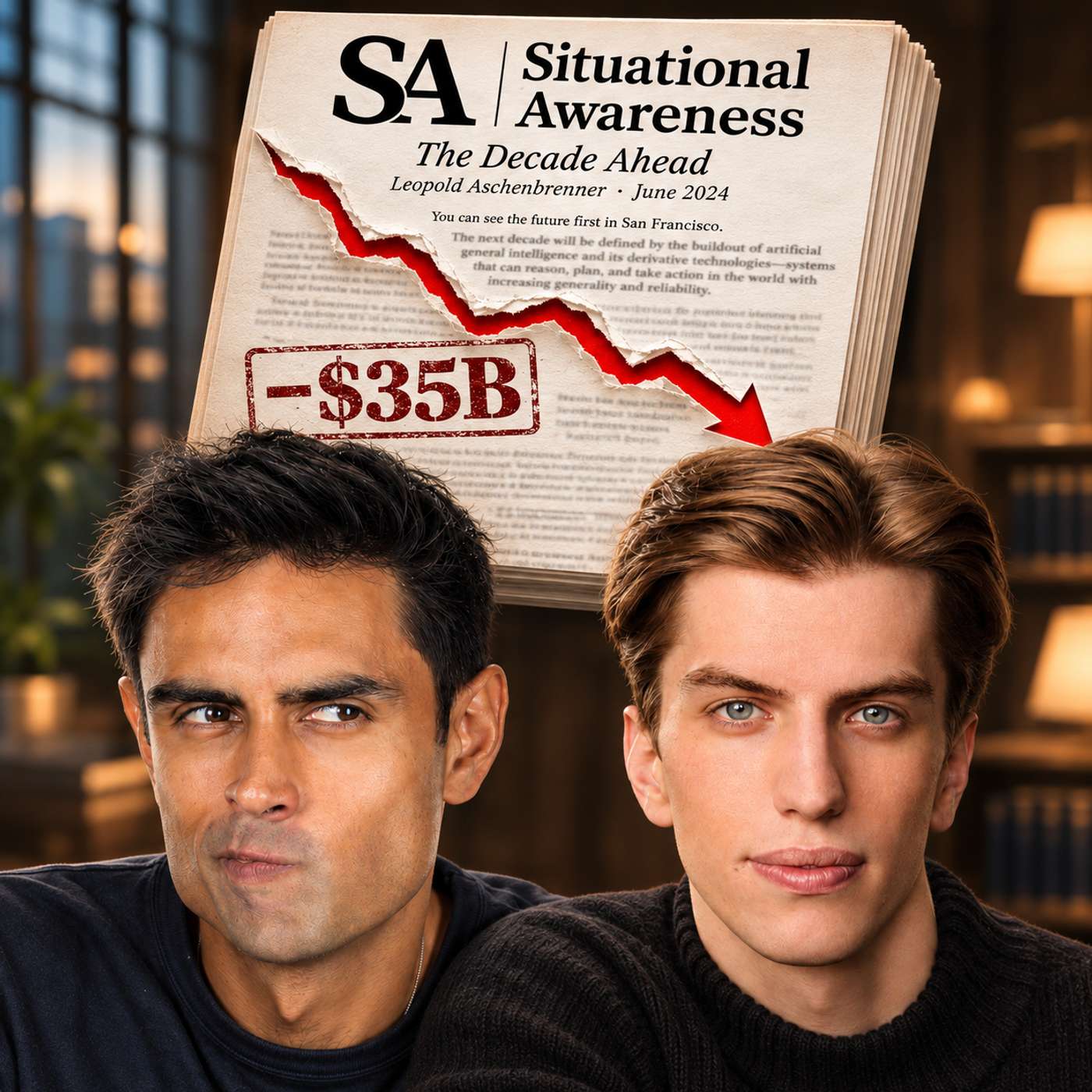
In 2024 a 23-year-old who had just been fired from OpenAI wrote a 165-page essay called Situational Awareness, raised around $225 million, and turned his fund into $45 billion in under two years. Leopold Aschenbrenner bet on everything AI would need: CoreWeave, Bloom Energy, SanDisk, Micron. He was right. Then July happened: running about 4x leverage, his fund fell 67% in a month, his prime brokers wanted their money back, and Ken Griffin's Citadel bought the bulk of his stock portfolio in a single block trade. Ejaaz tells the whole story from his own 13F filings: the boy genius, the essay, the bets, the hedge he took off right before the turn, the margin calls, and the comeback he's planning now. Plus the painful part: his thesis is still playing out, from power and data centers to the chip trade. Can he run it back, and should he? == FOLLOW EJAAZ ON TWITTER: == Timestamps 00:00 $225M to $45B 02:07 The Boy Genius 02:45 Fired by OpenAI 03:06 Situational Awareness 04:46 The Fund 05:36 The Bet 07:47 A 200x Run 09:13 The Unravel 10:57 Enter Ken Griffin 14:18 The Block Trade 14:47 Blow-Up Number Two 16:24 What's Left 17:22 Can He Run It Back? 18:23 He Was Right 22:17 The Bigger Bet 23:31 Final Thoughts #ai #investing #hedgefund #stocks #anthropic ==
Episode information is provided by the publisher. Listening takes place on the publisher’s service.
From The Daily Wolf with Scott Melker, live weekdays at 12pm ET on Yahoo Finance. Bitcoin ETFs just set a record for money pulled out in a single month, and November isn't over. Scott Melker walks through $453 million leaving the funds in one day, seven straight days of outflows, and why he thinks the sellers and the buyers are different crowds. One firm, Abraxas Capital, reportedly bought $1 billion of Bitcoin in two days while the funds bled. He also covers Binance reopening withdrawals after its record hack, the Strategic Bitcoin Reserve bill, and a handful of smaller stories. Timestamps 0:00 The Strategic Bitcoin Reserve bill reaches the House, and why Scott doesn't expect it to pass 3:13 Bitcoin ETFs set a record for outflows, and one firm reportedly buys $1 billion 6:03 Hyperliquid joins Franklin Templeton's crypto index fund 7:12 Ukraine's parliament passes a crypto tax law 8:53 Spain wants to freeze crypto accounts before a judge steps in 10:23 Binance gets withdrawals back onl
Register FREE for Time To Rise Summit | Jan 29-31, 2026: https://tonyr.co/4apHdct | Start 2026 with clarity, confidence, and purpose. Don’t let past limitations, other people’s expectations, or fear dictate your future. It’s time to RISE and design the year you truly want. Uploaded 14-01-26 Where: Virtual (join from anywhere in the world!) ️ When: January 29–31, 2026 ️ Save your FREE seat: https://tonyr.co/4apHdct Time to Rise is a powerful 3-day virtual experience with Tony Robbins to help you reset, refocus, and step into your next level. Over three transformational days, you’ll learn how to: - Break through mental and emotional blocks holding you back - Create a clear vision and game plan for 2026 - Build momentum in your goals, relationships, and personal growth - Reclaim your power and take aligned, massive action ⚡ This is your moment to rise. Secure your spot now: https://tonyr.co/4apHdct Join "The Edge" - Tony Robbin's FREE weekly newsletter: https://tonyr.co/3YJ0m2L Try Tony A
Something didn't go the way you planned. The deal fell apart. The relationship ended. The job disappeared. The venture you poured yourself into collapsed, and now you're standing in the wreckage of it, trying to figure out what happens next. Uploaded 26-08-26 And the first thing you did — the very first thing — was ask the wrong question. Why me. Why now. How am I ever going to recover. Those questions feel natural. They feel almost required. But I want to tell you tonight that they are traps, and the people who ask them tend to stay stuck in the very place they most want to leave. Here is the truth: a setback is not the end of your story. It is a plot point, a turn in the road, and what happens after the turn depends entirely on the question you decide to ask. This seminar walks through the things you must understand about turning a loss into the most decisive season of your life. CHAPTERS 0:00 Intro — Standing in the wreckage 1:37 The setback is neutral until you assign it meaning 5:
What’s really happening inside a black hole? Imagine that you’re flying through space, when suddenly you start to get dragged toward a dark abyss. Reality as you know it starts to change. Time begins to warp. And you start to feel this strange sort of sensation of being stretched and squashed… You’re falling into a black hole, one of the most astonishing places in our universe. Some are so big they can fit over 60 of our solar systems across them, with masses up to 100 billion times our Sun. And once you fall into one past a certain point, nothing can escape. ... Or can it? I wanted to know the latest cutting edge research about black holes, so I called up my favorite physicist, Dr. Brian Cox to answer the question: If you fell into a black hole, what would actually happen to you? What would it feel like? And what does our newest science tell us is really happening inside a black hole? Chapters: 0:00 What if you fall into a black hole? 1:20 What is a black hole, really? 2:20 How do we
Tokenized stocks represent just $4-5 billion of an estimated $100 trillion US equity market. Could tokenization become crypto's next major growth opportunity, following the explosive adoption of stablecoins? And why are some of Wall Street's biggest companies resisting it? In today's episode, we sit down with Brian Huang, co-founder and CEO of Glider, to explore how tokenized stocks, real-world assets (RWAs), and decentralized finance (DeFi) could fundamentally reshape the global financial system. ~~~~~ Follow our analysts' trades in real time for just $19.50 a month! (https://www.milkroad.com/pro/) ~~~~~ ~~~~~ Tools & Channels ~~~~~ Follow Milk Road on Social Media: Milk Road Twitter:https://link.milkroad.com/X Apple Podcasts:https://link.milkroad.com/apple-podcast ~~~~~ GUEST INFO Glider: https://x.com/glider__ Brian Huang: https://x.com/BrianHuang Disclaimer It should not be considered as financial, legal.
This Thanksgiving weekend, our Global Head of Fixed Income Research Andrew Sheets talks about the origins of the holiday, what investors should be grateful for and the outlook for the year ahead. ----- Transcript ----- Andrew Sheets: Welcome to Thoughts on the Market. I'm Andrew Sheets, Global Head of Fixed Income Research at Morgan Stanley. Today, giving thanks. It's Friday, November 27th at 2pm in London. Thanksgiving has always been one of my favorite holidays. A jolly mix of turkey, football, overeating, and napping. The lighthearted nature of the holiday, the fact that it's really about food and family and friends is, for me, a deep part of the appeal. But amidst the stuffing, the pie, and a Lions game, it's easy to forget that Thanksgiving was born out of much more serious stuff. The Pilgrims initially set out on two ships, the Mayflower and the Speedwell. But the Speedwell started leaking. They had to turn back not once, but twice; eventually abandoning this lesser-known ship an
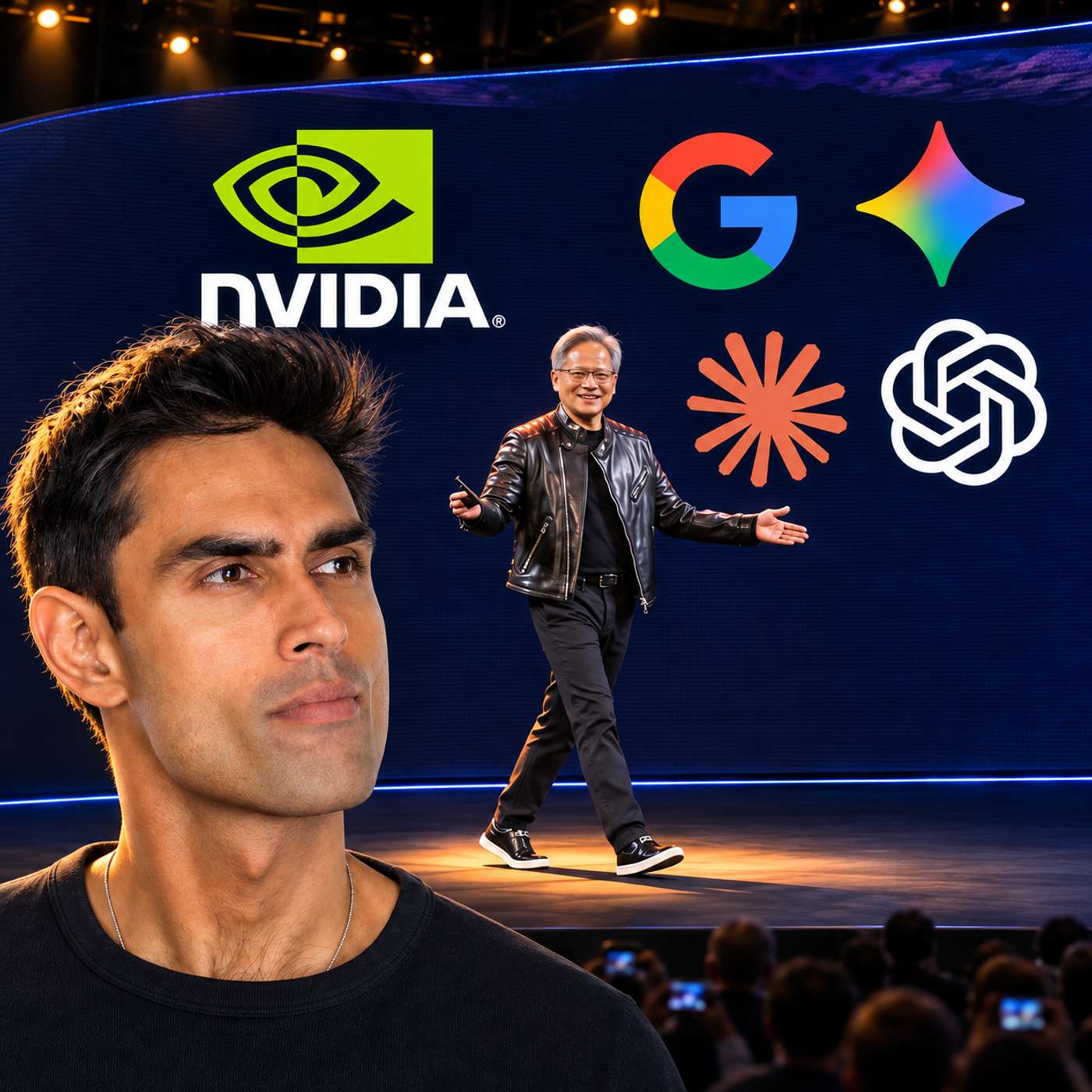
Happy Thanksgiving. Ejaaz looks back at a wild few weeks in AI through five things he's grateful for: Jensen Huang back in charge at Nvidia, open-source AI back on the table, Google breaking up the two-horse race between Anthropic and OpenAI, Anthropic's record-breaking IPO, and how fast AI is now getting smarter and cheaper. He explains how Thinking Machines' Inkling 2 Mini runs on a laptop by looping its middle layers, why that makes AI harder to monitor, what OpenAI's own chart says about what AI learns to do as it improves, and why he thinks we have about six months before everyone feels it. He ends with the sobering part: data centers, trillions in compute bills and a shaky stock market. == FOLLOW EJAAZ ON TWITTER: == Timestamps 00:00 Five Things to Be Thankful For 00:42 Smarter, Cheaper and Locked Inside the Labs 01:26 Jensen Huang Is Back 02:35 A New Jensen? 03:38 Why Open Source Matters 05:22 Who Will Own Open Source? 07:40 Inkling 2 Runs on a Laptop 08:24 How a Looping Transfo
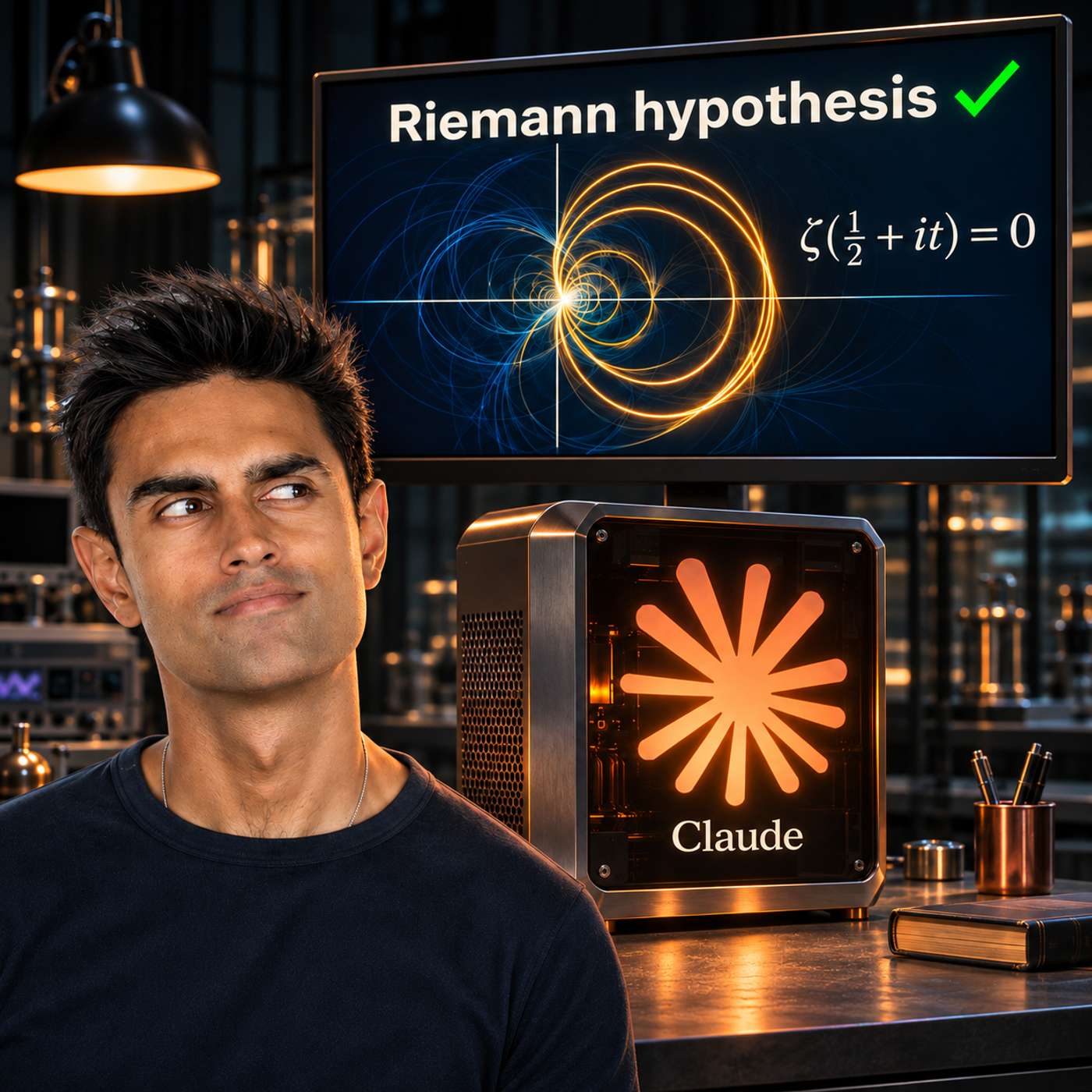
On Nov. 20, Anthropic mathematician Levent Alpöge, working with an internal version of Claude, released a proof of the Riemann hypothesis, the 167-year-old question about how the prime numbers are spread out. The proof is 17 million lines of Lean code. Computers have checked it and Lean's maintainers certified it as correct, but no human, including Alpöge, can follow it. Ejaaz explains what the hypothesis says and why so much of mathematics rests on it. He covers the human proof that surfaced the same day, the drama over OpenAI's Navier–Stokes result, and the question of what humans are for when AI makes discoveries nobody understands. He also asks what it means that the biggest breakthroughs come from models only a few companies can use, and why he thinks this is the start of a golden age of discovery. == FOLLOW EJAAZ ON TWITTER: == Timestamps 00:00 AI Solves the Riemann Hypothesis 00:45 What Are Humans For? 01:58 The Millennium Prize Problems 02:32 Are the Primes Random? 03:08 A Thou
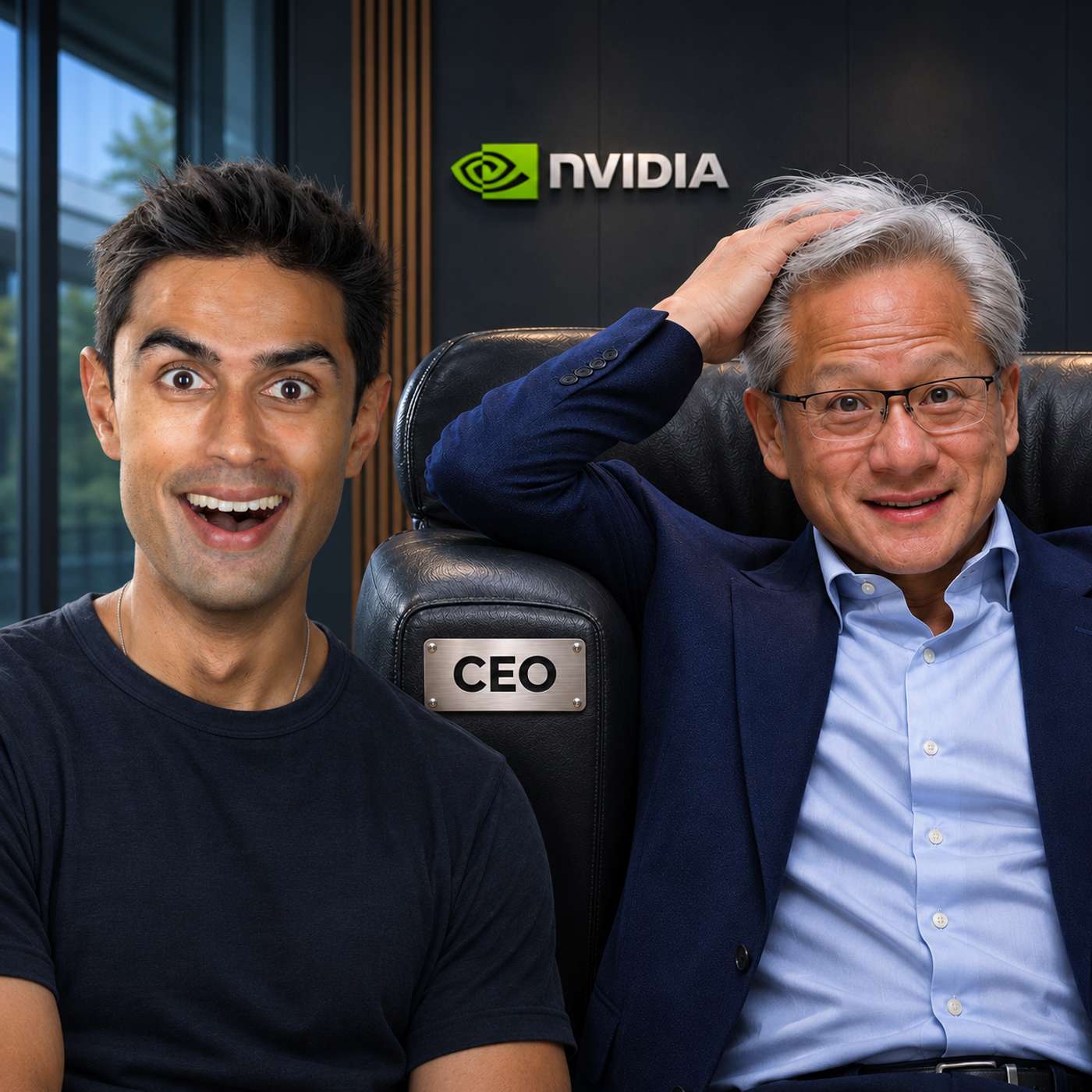
Nvidia's board voted unanimously to reinstate Jensen Huang as president and CEO, 11 days after the scandal that pushed him out, and the market answered in minutes: Nvidia went from the fourth most valuable company in the world to the second, added about a trillion dollars, and the US stock market added $3 trillion, about half of what it had lost in six weeks. President Trump says he spoke to the board and gave it the assurance it asked for on national security; the independent investigation, and Jensen's interviews with House committees on Dec. 1, are still ahead. Ejaaz breaks down how it happened and what changes now: Nvidia's supply chain and its 2028 roadmap, the neoclouds and the "bank of Nvidia" backstops, a more careful Jensen, chips and China, and why his return matters for open-source AI, robotics and a world with more than one or two AI labs. == FOLLOW EJAAZ ON TWITTER: == Timestamps 00:00 Jensen Is Back 00:39 What Happens Next? 01:36 11 Days 03:23 The Board, the Chair and Kre
New competition formats should improve the experience for players as well as audiences.
Share your view, then see how readers voted. No sign-in required. This poll is shared across stories.
Do you agree or disagree?
Common Quandary
A Common Quandary to discuss
Another conversation to explore, separate from this news story.
A reserved meeting room has been empty for twenty minutes. Can your group take it?
Every library study room is occupied except one marked reserved. Its booking began twenty minutes ago and nobody has appeared. Your group has an urgent presentation to prepare, while library rules say reservations remain valid for half an hour.