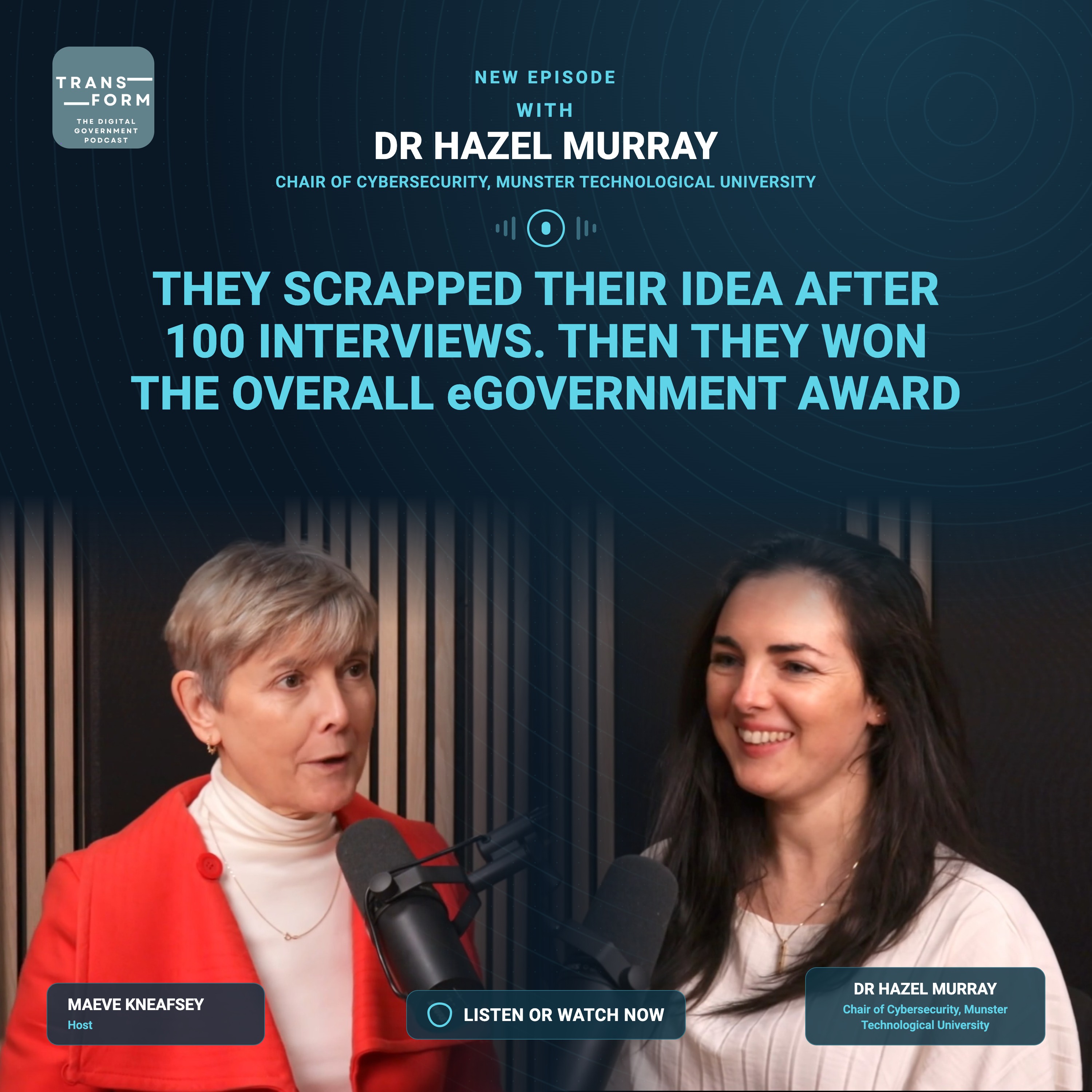
They scrapped their idea after 100 interviews. Then they won the overall eGovernment Award.
Listen through the publisher, then discuss the episode here or arrange an in-person Roundtable. Your city determines where to meet.
Roundtables are designed for groups of four, with a shared subject and room for everyone to speak. Come for discussion, with no dating expectation.
What if the most valuable thing you could do before building a public service was to talk to 100 people first? In this episode, the overall winner of the 2026 Ireland eGovernment Awards explains how listening changed everything. In this episode of Transform Gov, we speak to Dr Hazel Murray, Chair of Cybersecurity at Munster Technological University (MTU), who led MTU's Cyber Resilience Project, winner of its category and the overall winner this year. Her team set out to build a complex digital twin, but changed course after interviewing 100 small business owners. The resulting tool is set to launch on the National Cyber Security Centre website in 2027. This conversation offers this advice: Talk to your users before you build anything. MTU interviewed 100 small business owners and dropped its original idea. Reach people through the organisations they already trust. Local enterprise offices opened doors when €50 vouchers didn't. Give people three things to do, not 300. The barrier wasn't resistance, it was overwhelm. Ask questions your users can answer. 45 business questions, tested with around 30 owners, tailored by sector. Decide deliberately where to use AI. The team chose not to, so the advice would be consistent every time. Follow up to see whether anything changed. 956 businesses used the tool in three months, and 73% had acted on a top action six weeks later. For civil servants and public sector workers, this episode is a wealth of valuable, actionable advice on designing services around the people who'll use them. #TransformGov #PublicSector #Cybersecurity #UserResearch #DigitalGovernment Hosted on Acast.
Episode information is provided by the publisher. Listening takes place on the publisher’s service.
Listen at the source ↗