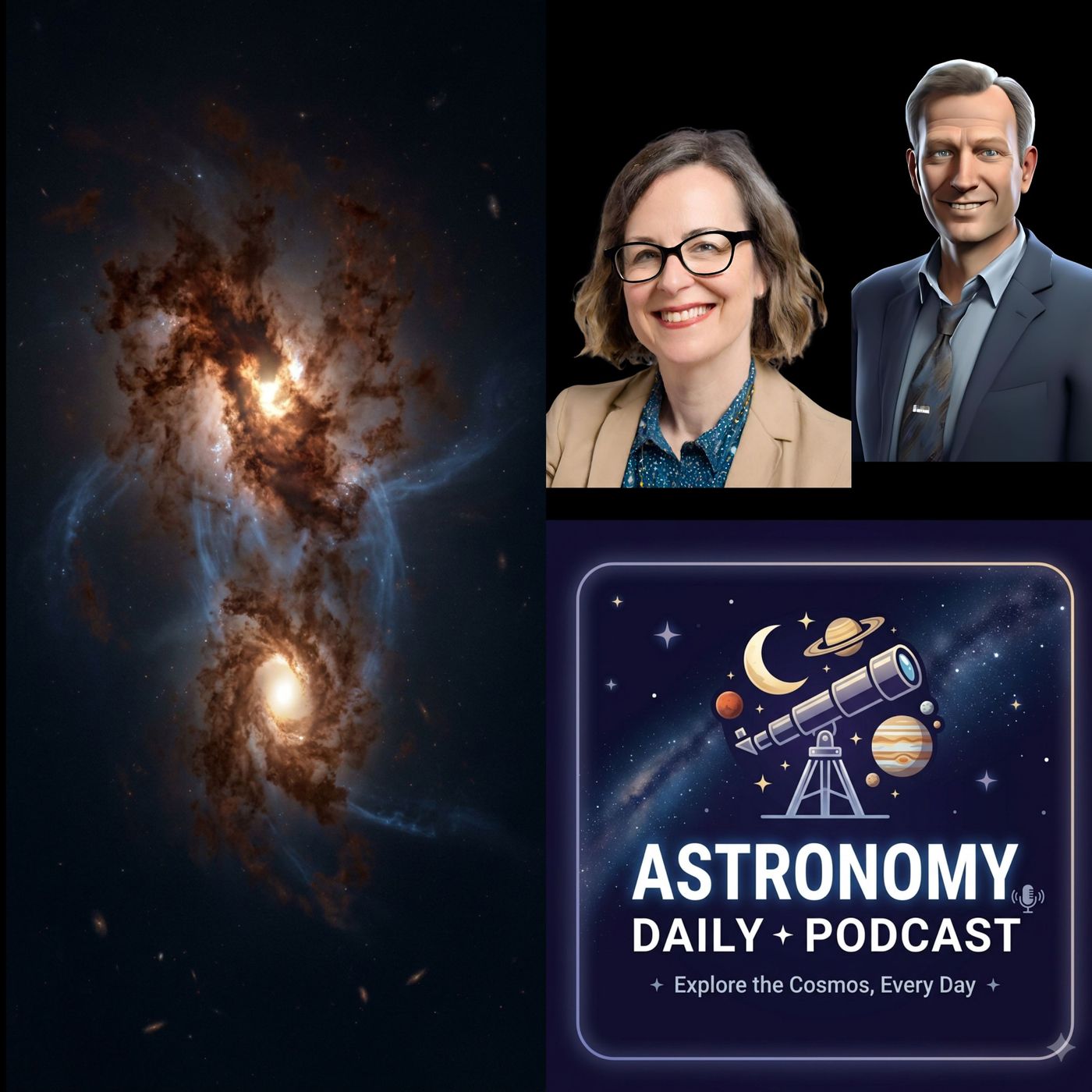
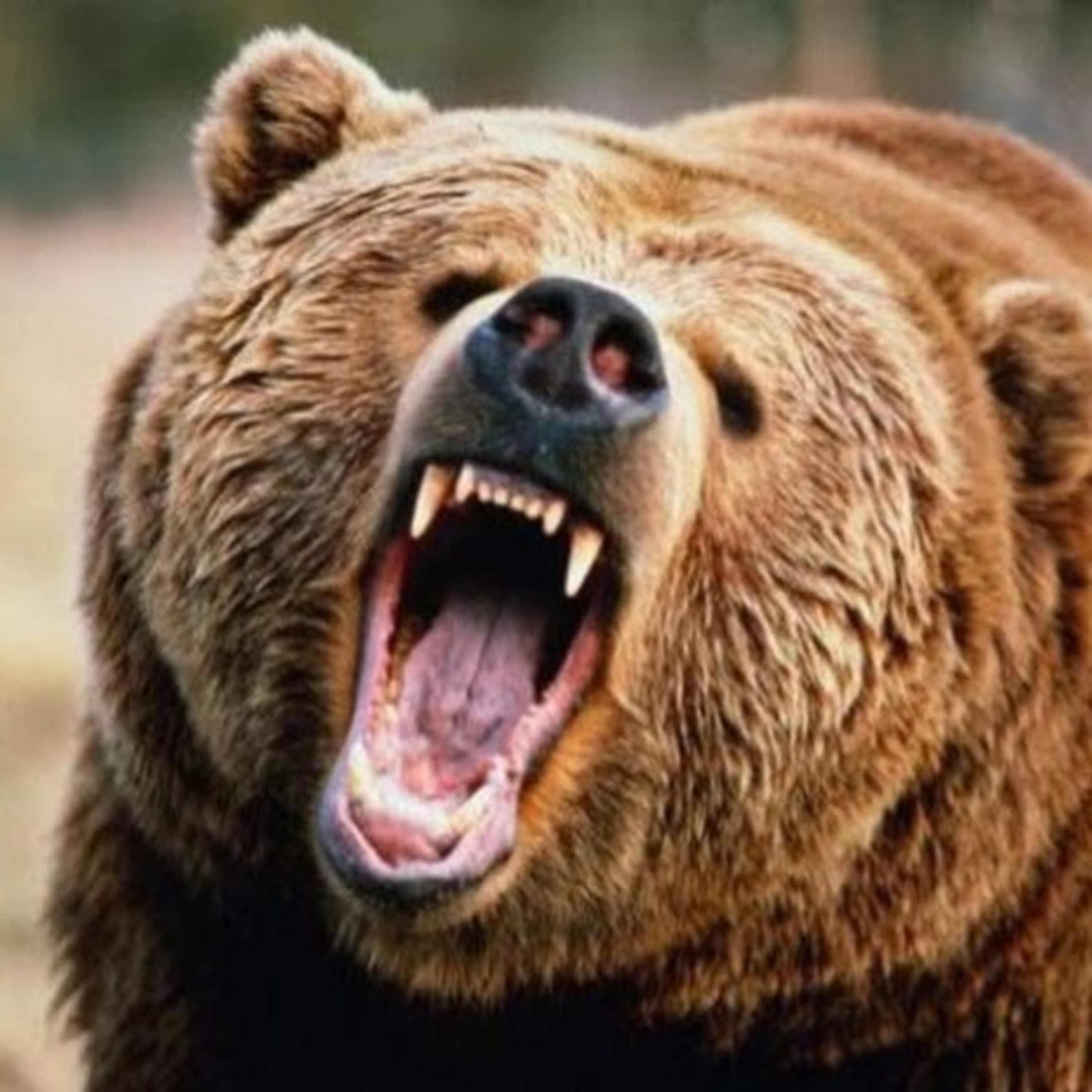
Two Black Holes Behind the Dust: Webb Reveals a Hidden Pair in the Early Universe
23 min
Listen through the publisher, then discuss the episode here or arrange an in-person Roundtable. Your city determines where to meet.
Roundtables are designed for groups of four, with a shared subject and room for everyone to speak. Come for discussion, with no dating expectation.
Show notes Two black holes caught feeding side by side just 1.3 billion years after the Big Bang. JWST and ALMA confirm LID-1166, the first close dual AGN found beyond the nearby universe. Plus: Swift's final days and NASA's call for ideas to save Hubble, Rubin finds Neptune's missing trailing Trojans as Lucy enters Jupiter's, TRACERS' first look at where the solar wind gets in, and a both-hemispheres skywatch built around the Mars-Jupiter meeting on 16 November. Two Hearts in One Galaxy (LID-1166) JWST/NIRSpec integral-field spectroscopy resolves two feeding black holes ~1.5 kpc (~4,900 ly) apart at z~4.5; ALMA [CII] finds matching cold gas around each. Both appear super-Eddington yet already sit on the local black hole-host mass relation. One system, projected separation; preprint posted July, published in Nature Astronomy this week. Living on Borrowed Altitude Swift ended operations on 20 October and is expected to re-enter in early November. NASA's 29 October Request for Information asks industry about boosting, servicing or safely de-orbiting Hubble, likely to re-enter in 2033-34. Not a commitment; responses due 30 November. Trojan Week Rubin early data confirms 2025 MH348 and 2025 NN80 as long-lived trailing Neptune Trojans, plus candidate 2025 MD138 (Schwamb et al., ApJL). Lucy becomes the first spacecraft to enter the Jupiter Trojan region; Eurybates flyby 11 August 2027. TRACERS: Where the Solar Wind Gets In First results (JGR: Space Physics) suggest cusp reconnection is largely spatial rather than temporal. Mission extended to spring 2027. Quick hits BepiColombo Mercury orbit insertion 21 November; Starship Flight 15 targeted November with a double catch attempt; Voyager 1 one light-day from Earth around 18 November. Skywatch Mars and Jupiter 1.2 degrees apart before dawn on 16 November; Venus, a thin Moon and Spica low at dawn 7-10 November; Saturn high in southern evenings; zodiacal light around New Moon (9 Nov); Leonids 17-18 November; supermoon 24 November. ISO 12312-2 solar safety reminder. Sponsor Details: Ensure your online privacy by using NordVPN. Get the best secure and private email on the planet. Do what we did and use ProtonMail. Commercial free episodes daily are only a click way... This episode includes AI-generated content.
Episode information is provided by the publisher. Listening takes place on the publisher’s service.
Black holes reveal something astonishing about our universe. Take your personal data back with Incogni. This extended cut is a deep dive into cutting edge research about black holes. It’s an interview with famous physicist Dr. Brian Cox. We start with “what if you fell into a black hole?” and end on the cutting edge research that had me questioning my whole reality. I interviewed Dr. Cox originally for a shorter Huge If True episode all about what would happen if you fell into a black hole. Watch our Huge If True episode about “What If You Fell Into A Black Hole?” here: https://youtu.be/BKIkTKqWMfg?si=bTde4QxUeN6bN1Io But there was SO much weird and mind bending stuff about the cutting edge of black holes that didn't fit into that shorter episode, and we knew you'd want to hear it. So we decided we had to release the full conversation. It's just too cool and I think you'll love it. Now, strap in, because the cutting edge of black holes is absolutely WILD. As always, if you want more op
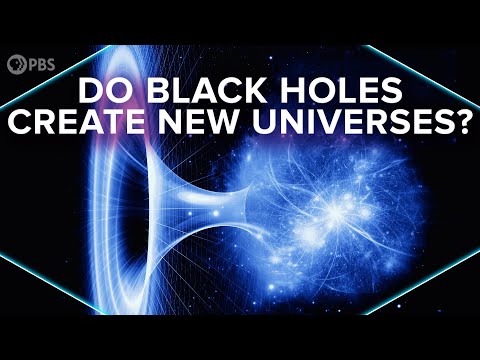
Thanks to Brilliant for supporting PBS. Learn more at: https://brilliant.org/spacetime Uploaded 17-12-19 PBS Member Stations rely on viewers like you. To support your local station, go to: http://to.pbs.org/DonateSPACE What if every single black hole that formed in our universe sparked the big bang of a new universe? Cosmological natural selection proposes exactly this - but even better, it claims to be able to test the hypothesis. Sign Up on Patreon to get access to the Space Time Discord! Check out the Space Time Merch Store Physicists have been struggling for some time to figure out why our universe is so comfy. Why, for example, are the fundamental constants - like the mass of the electron or the strength of the forces - just right for the emergence of life? Tweak them too much and life, stars, galaxies, the universe as we know it wouldn’t exist. In recent episodes we explored one possible explanation for this - the anthropic principle and the idea of the multiverse. If there are c
THE SEARCH FOR THE ULTIMATE RED LIGHT THERAPY IS OVER! After decades of exploring wellness technologies, Michael Jaco sits down with Rob Rene, founder of Exodus Strong, to explore the Red Light+ Total Body Reset system, the science behind red and near-infrared light, and why this technology has become such an important part of their wellness conversation. Rob's remarkable personal journey—including surviving five near-death experiences—inspired his mission to develop practical wellness tools that people can incorporate into their everyday lives. Discover the full-body Red Light+ Mat, designed for convenient 20-minute sessions, and the portable Red Light+ Wand, created for targeted use on areas such as the knees, shoulders, hands, and lower back. Michael and Rob discuss the technology, personal experiences, and how red light therapy may support a daily wellness routine. BLACK FRIDAY–CYBER MONDAY LISTENER EXCLUSIVE! This is your opportunity to explore Exodus Strong's special holiday offe
For additional nuances, references, and early access to content, see the StayCurious Metabolism Newsletter: https://staycuriousmetabolism.substack.com/p/hijacking-cancer-to-kill-alzheimers?r=40ekz2 Check out this link to access our StayCurious Brain Health Archives: https://staycuriousmetabolism.substack.com/p/brainhealth Omega-3 and Brain Health Video: https://youtu.be/B-kEn0FukXM To try the Accentrate Omega Max supplement containing LPC-DHA, click here: https://www.fenixhealthscience.com/staycurious Lithium Brain Health Video: https://youtu.be/Hcz0Eyp1LE4 NAD+ Brain Health Letter: https://staycuriousmetabolism.substack.com/p/never-get-alzheimers-disease-the?r=40ekz2 A new paper published in Cell reveals an unexpected biological connection between cancer and Alzheimer’s disease—one that challenges long-held assumptions about both. In this video, MD-PhD neuroscientist Nick Norwitz walks through the actual data behind the study, showing how proteins secreted by cancer cells reduced amyl
Explore how the Hubble Space Telescope reveals the Universe, from iconic images to major discoveries, and how it complements the James Webb Space Telescope. "ASTROMAN: the Dark Sky Guardian" is a podcast channel that aims to explore popular science in multiple disciplines and research on interdisciplinary approaches, such as sustainability, dark-sky protection, astrophotography, space exploration, astronomy innovation, inclusive science communication, and STEAM Education by integrating science and arts. Exodus Chun-Long Sit, also known as the ASTROMAN, is a transmedia astronomy educator, popular science author, STEAM educator, and science communicator in Hong Kong. He is recently the National Astronomy Education Coordinator (Chair of Hong Kong, China) of the International Astronomical Union and President of Starrix. He was also an International Committee Member of the Dark Sky International, regularly organizing public lectures at the Hong Kong Space Museum and the Hong Kong Science Mu
For some reason, it did not stop him.Now I just want to ask you something real quick to put you in the mind of a bear. If you found some of your favorite food just left out and you somehow, like me most of the time, just couldn’t resist the temptation. Bears live and eat by what is detected by their noses, so logically, after eating its fill, a proper expectation would be that the bear would go sleep off a large meal upwind of where its food was cached. The wind carries both scent and sound to the bear as it rests and acts as an alarm to it to defend its cache. The hide was still up in the birch, untouched. He dropped his packboard at the base of the tree and glanced up to see where he would need to climb. Movement in the brush, some three hundred feet away, caught his eye. Two bears, roughly thirty feet apart, moved through the brush. From their color and build, he identified them as grizzlies, also called coastal brown bears.Up to that day, every bear he had met in the wild had chose
Eleven billion years ago two quasars blazed side by side, and this week astronomers weighed the invisible gas around them by the shadow it casts on the cosmic microwave background. There is 3.6 times more heat in it than gravity can explain. Plus a triple star 28 light-years away that 'should not exist', a pulsar found in ten hours with an algorithm borrowed from cryptography, The Week That Was, and the weekend sky from both hemispheres. In this episode Lead: Hot bubble around the dual quasar J1549+1245 at z = 2.37, measured with ALMA via the thermal Sunyaev–Zel'dovich effect (Hall, Zakamska et al., Nature Astronomy, 18 Nov 2026). Fresh item: Welopōʻai, the closest known triple with two white dwarfs, 28 light-years away (Artigau et al., A&A, 19 Nov 2026). Week That Was: Starship Flight 15 ship catch, CSIRO GenDIReCT and M87, SN 2026ahvu, failed supernovae in gravitational waves (E230); Voyager 1 one light-day, Beta Pictoris ices, heavy-oxygen water, Roman alignment (E231); Terra ends,
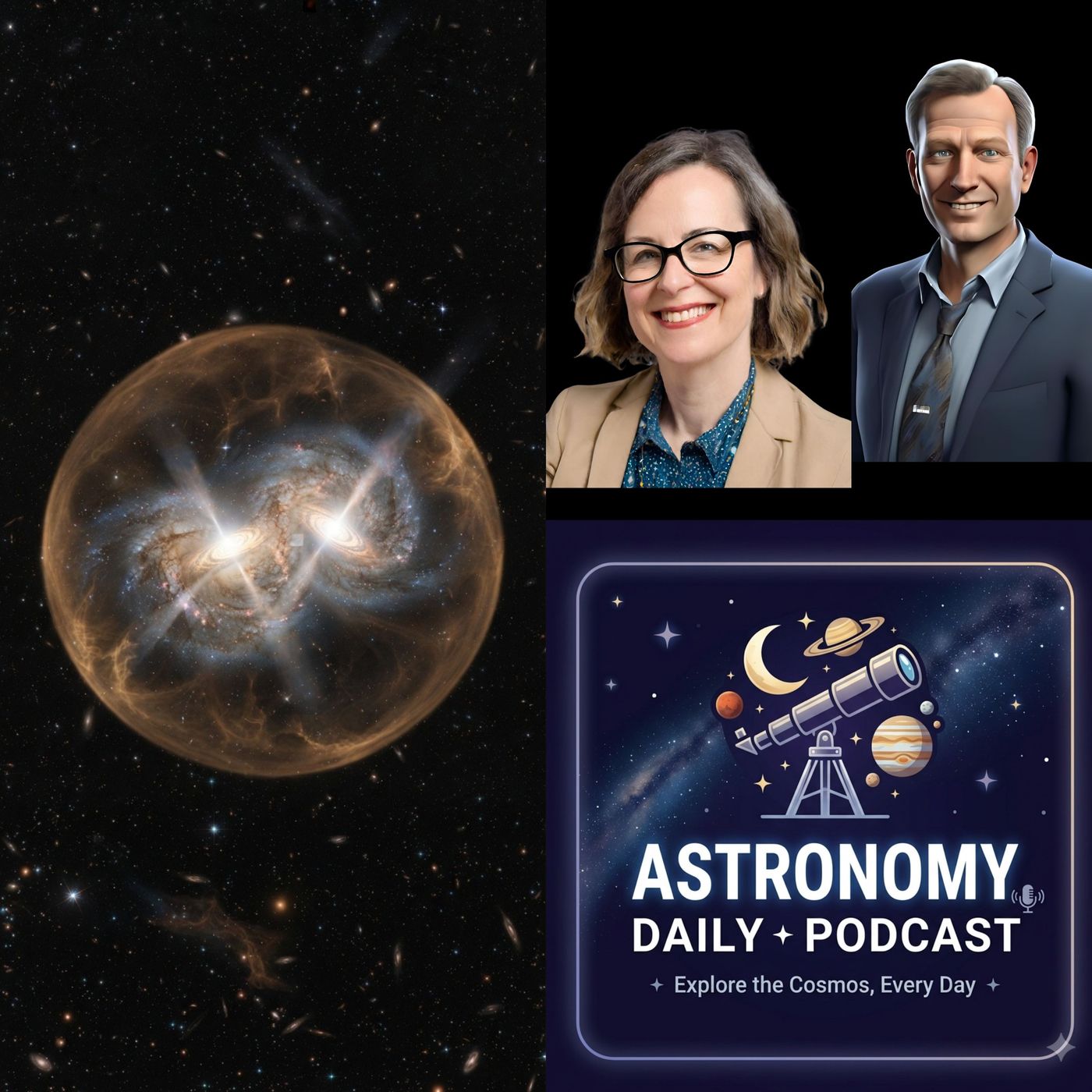
After more than eight years and nine planetary flybys, the ESA/JAXA BepiColombo mission is due to be captured into orbit around Mercury on Saturday 21 November 2026, the first mission to put two spacecraft in orbit there at once. Anna and Avery explain why the closest planet to the Sun is one of the hardest to reach, how the gentle 'weak stability boundary' capture works, and what happens between now and the start of science in April 2027. Also: Webb and a string of survey telescopes reconstruct a giant star swallowing its companion in the Andromeda galaxy; Voyager 1 reaches one light-day from Earth just as it stops sending data; and Fermi maps 450 sources in the under-explored 'MeV gap', including the globular cluster M2. Quick hits on Rocket Lab's 100th Electron, Shenzhou 24's Pakistani astronaut and the Cygnus 'S.S. Jim Lovell'. Skywatch: Mercury at greatest elongation on BepiColombo's arrival day, Andromeda, and M2 for both hemispheres. In this episode BepiColombo: the long way to
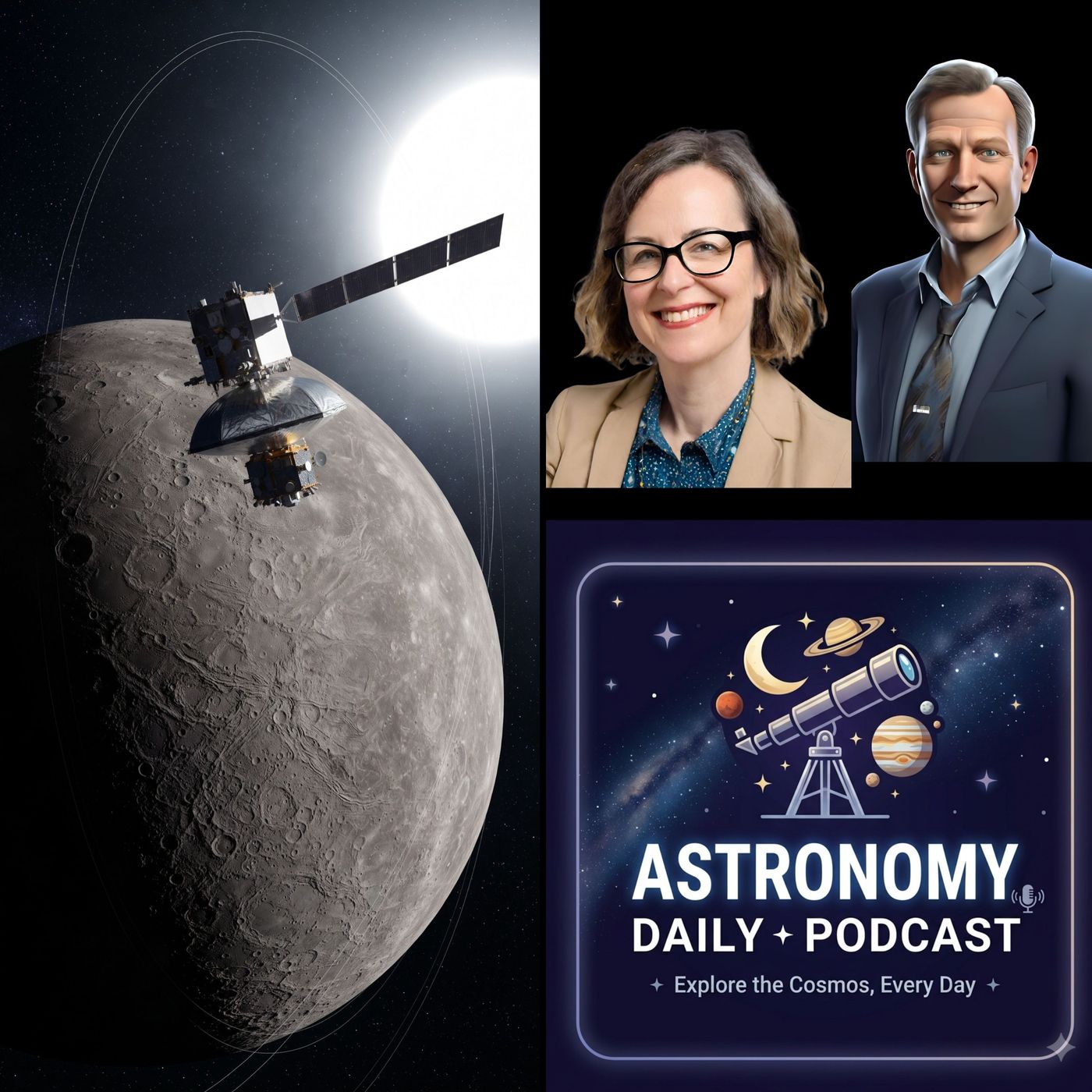
After 27 years, NASA's Terra satellite stops collecting science data on 1 December 2026. Anna and Avery look at what the first flagship of NASA's Earth Observing System measured, why its morning orbit mattered so much, what its MODIS fire hotspots meant for bushfire monitoring in Australia, and what replaces them. Also: ULA's Vulcan loses 40 Amazon Leo satellites in the company's first total mission failure; new mapping says Mars's biggest olivine deposit came from magma that cooled underground; and China formally puts a Callisto landing into its Tianwen-4 plans. Quick hits on the date for Roman's first images, BepiColombo's arrival at Mercury and Hera at Dimorphos, and a skywatch with the last of the Leonids, Mars and Jupiter at dawn, Mercury for the north and the Moon passing Saturn. In this episode · Terra signs off after 27 years · Vulcan's first loss: 40 Amazon Leo satellites · Mars's olivine came from below · China targets a Callisto landing · Quick hits: Roman's first images dat
Youth sport should prioritize lasting participation over early selection of elite performers.
Share your view, then see how readers voted. No sign-in required. This poll is shared across stories.
Do you agree or disagree?
Common Quandary
A Common Quandary to discuss
Another conversation to explore, separate from this news story.
Software says a student cheated with AI. Is that enough to fail the paper?
A teacher suspects several essays were written with AI. Detection software marks one student's work as highly likely to be generated, but the software is known to make mistakes and the student denies using it.
How should responsibility be assigned when evidence is powerful but unreliable?