Why Anthropic Hides Its AI R&D Speedup | Nathan Calvin
23 min
Listen through the publisher, then discuss the episode here or arrange an in-person Roundtable. Your city determines where to meet.
Roundtables are designed for groups of four, with a shared subject and room for everyone to speak. Come for discussion, with no dating expectation.
Nathan Calvin of Encode AI breaks down evidence from METR regarding AI R&D automation at Anthropic and discusses why the company keeps its research-acceleration methods guarded. He evaluates the growing threat of recursive self-improvement, the limits of voluntary safety evaluations, and the concrete policy tools—such as mandatory compute allocation caps—needed to prevent catastrophic loss of control. MTS chronicles the singularity, live. Monitoring the situation of tech and AI. Follow MTS: Spotify |https://open.spotify.com/show/4HUNNmV1pjV7CW6Lphm1rM Apple |https://podcasts.apple.com/us/podcast/mts/id1891088763 – Brought to you by: Mongo DB - Anyone can prototype an agent. Lovable - Turn ideas into software people love with Lovable. Start today at https://lovable.dev/ Factory - A 24/7 system turning signals into production software. Visithttps://factory.com/ Neon (by Databricks) - Scale your startup on Neon. The Postgres backend for apps and agents. Built by Databricks.https://neon.com/mtshttps://neon.com/mts (https://neon.com/mts%E2%81%A0) Head over to http://getvcx.com (http://getvcx.com/) to learn more Kong - The AI connectivity platform. Larridin - Finally prove what your AI investment is worth. Ship 5x faster. https://blitzy.com (https://blitzy.com/) AdQuick - Make your brand a billboard. Clickhouse - The real-time database that keeps up with all of it. https://clickhouse.com/ Horizon3 - Don't assume you're secure. Prove it. Go hack yourself with AI. https://horizon3.ai/nodezero/ – Timestamps: (00:00) Introduction (01:22) Arguing With Dario Amodei Over Legislation (02:31) Evidence Behind Anthropic’s AI Speedup (05:08) Why Anthropic Hides Its RSI Evidence (07:21) Risks of Transparency and Lab Security (10:00) Racing to Superintelligence Without Government Intervention (17:42) Strategic Priorities for Short AI Timelines –
Episode information is provided by the publisher. Listening takes place on the publisher’s service.
My guest today is Hayden Field, The Verge’s senior AI reporter, and we’re discussing the Anthropic IPO for our third and final episode in our series about AI in real life. The numbers are gigantic, but not really that important. The real story is what happens now — and whether Anthropic can continue to thread the needle of caring about and investing in AI safety while also being a public company beholden to shareholders. So you’ll hear Hayden and I dive into this tension, and what to make of Anthropic’s unique corporate governance structure in the wake of the Jensen Huang saga. Read the full interview transcript on The Verge. (https://www.theverge.com/e/1038701) Links: With biggest IPO of all time, Anthropic’s ‘good guy’ reputation is on the line | The Verge (https://www.theverge.com/ai-artificial-intelligence/1037459/anthropic-ipo-safe-ai-reputation-power-structure) Anthropic starts trading on Wall Street | The Verge (https://www.theverge.com/ai-artificial-intelligence/1035384/anthrop
Project Synapse: Markets in Freefall, Fragile Infrastructure, and AI's Perfect Storm The hosts banter through the show's intro before focusing on a sense that "things are out of control," citing a WallStreetBets suicide-hotline post amid a market crash and discussing cascading system failures involving Microsoft, the FAA, and a reported NSA internal communications outage. They argue politicians and leadership lack technical competence and clear messaging, increasing panic, while emphasizing that many problems stem from aging, underfunded infrastructure and complex, brittle software (PHP, NGINX, Java), not proven AI attacks—more a "perfect storm" of crises. They debate whether AI should help fix complexity, stressing critical thinking, accountability, and using multiple AIs to verify each other. In a lightning round they cover Anthropic's IPO performance, mixed reactions and token limits with ChatGPT 6.2 (favoring "Sol" over "Astra"), Google's cheaper Neon model and confusing UX, Loblaw
This new tech is changing how movies get made. So @mkbhd and I tested it out... Watch MKBHD's video: https://youtu.be/RM7SobH8ZO0 I’ve been obsessed with sci-fi movies since I was a kid. I love being transported to another world. But lately, I’ve been wondering: How do those worlds look so… REAL? The tech behind movies has exploded in complexity and realism, changing how stories come to life on screen. Luckily, at the same time, those tools are becoming more and more available to more people telling stories. It’s not just blockbusters like Avatar 2 or Avengers or Dune. It’s also smaller budget films like Everything Everywhere All at Once or even… YouTube creators? In this video, Marques Brownlee and I test out 3 movie-making tools that are changing how movies, shows, and maybe even YouTube videos (??) get made. We’re at ZeroSpace Studios in New York to show you how each of these crazy technologies work - and how you might be able to use them. Along the way, we hit big questions like: W
What if your AI agent could find the people you should know before you even start looking? Cosign is building a professional network around reputation and trusted recommendations, and now agents can use that network too. MTS host Sophia Dew sits down with a16z’s David Booth and Cosign’s Bella Nazzari to discuss what they’ve learned since launching Cosign, why traditional profiles often miss the operators doing the most important work, and how the Cosign Awards are surfacing talent through the people willing to vouch for them. They also explore an emerging behavior: people connecting their agents to Cosign to continuously find relevant people, lists, and opportunities, and what professional networking could look like when both humans and their agents participate. Resources: Follow David Booth: https://x.com/davidbooth Follow Bella Nazzari: https://x.com/nazzari Follow Sophia Dew: https://x.com/sophiadew Learn more about Cosign:https://cosign.co/ Connect your agent to Cosign:https://cosi
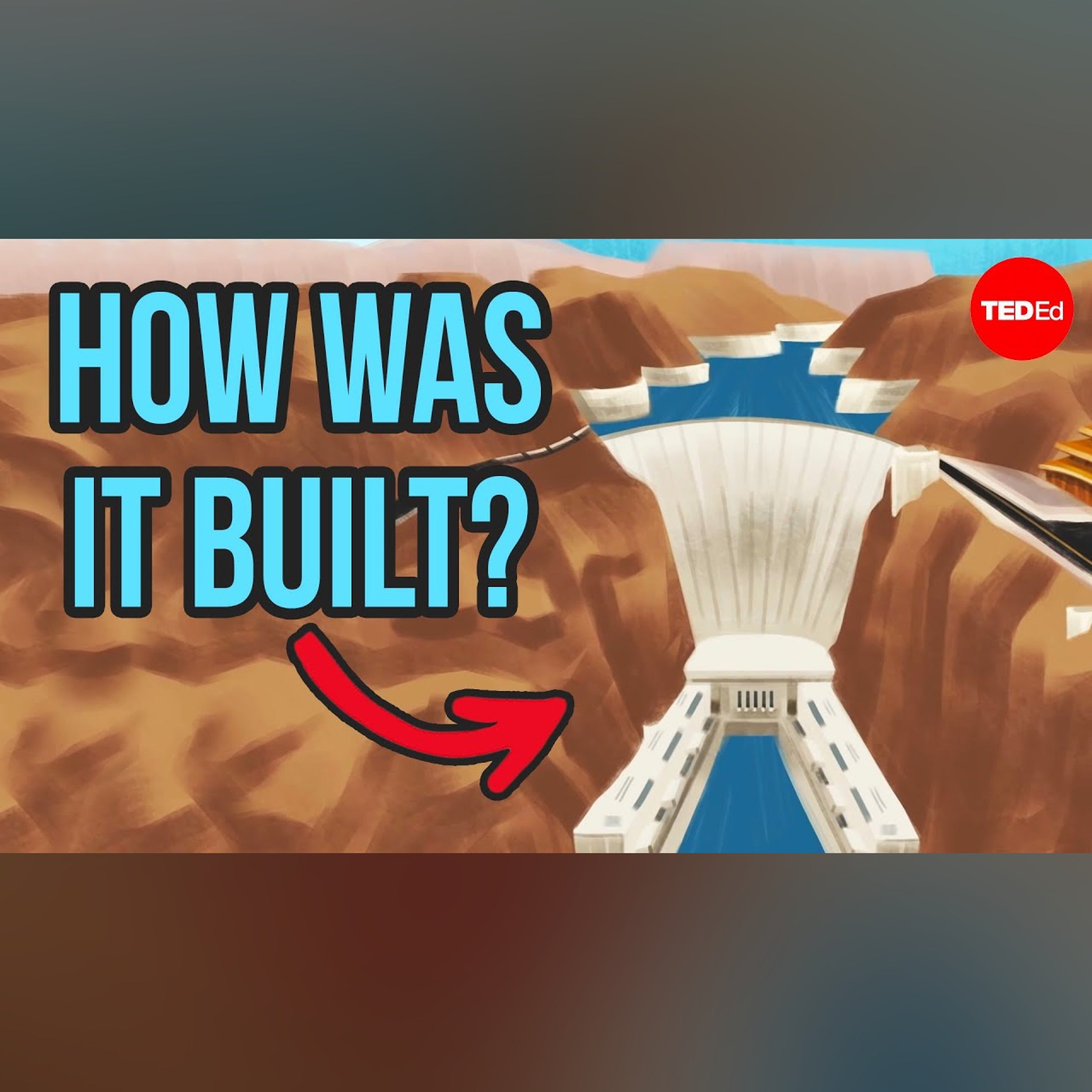
Dig into the engineering of the Hoover Dam, a concrete arch-gravity dam on the Colorado River that supplies water to the US southwest. Uploaded 23-12-21 -- In the early 20th century, the US had expanded from coast to coast, but many cities in the southwest still lacked reliable water sources. The Colorado River's erratic flow and frequent floods made it unreliable for agriculture, and the region’s growing cities needed more energy. So the government decided to build a massive hydroelectric dam. Alex Gendler details the creation of the Hoover Dam. Lesson by Alex Gendler, directed by Jovan Rakic, Artrake Studio. Support Our Non-Profit Mission ---------------------------------------------- Support us on Patreon: http://bit.ly/TEDEdPatreon Check out our merch: http://bit.ly/TEDEDShop ---------------------------------------------- Connect With Us ---------------------------------------------- Sign up for our newsletter: http://bit.ly/TEDEdNewsletter Find us on Twitter: http://bit.ly/TEDEdTw
Zvi does the reading on OpenAI’s system card for GPT-6.2 Astra and Sol: the first externally deployed model to meet OpenAI’s High threshold for AI self-improvement, already at Critical for cybersecurity. He works through the preparedness results, the safeguards against misuse, distillation and model escape, and the alignment and monitorability findings, including rising evaluation awareness, reasoning that happens without visible chain of thought, and UK AISI’s tour of misaligned behaviours, asking what the numbers do and don’t show. This has been an Askwho Casts audio conversion. Thanks for listening. * 00:00 - Introduction * 01:10 - Table of Contents * 02:45 - Safety Overview (1) * 05:19 - Internal Deployment (1.2) * 05:32 - Preparedness Assessment (2) * 06:40 - Biological Threats (2.1.1) * 09:55 - Cyber Threats (2.1.2) * 11:36 - AI Self-Improvement Threats (2.1.3) * 14:32 - OpenAI Epoch Capabilities Index (OECI) * 16:10 - Safeguards (2.2) * 17:34 - AI Self-Improvement Threat Modelin
Vals AI founder Rayan Krishnan joins Theo to discuss his new report revealing that frontier AI models have few guardrails against autonomous weapons, including targeting civilians and a school in simulated and real warzone footage. They also break down GPT-6.2 Astra’s post-training limitations compared to Anthropic’s Fable models, why Anthropic is nerfing public RSI capabilities, and why Vals AI’s timeline still points to full recursive self-improvement by July 2027. MTS chronicles the singularity, live. Monitoring the situation of tech and AI. Follow MTS: Spotify |https://open.spotify.com/show/4HUNNmV1pjV7CW6Lphm1rM Apple |https://podcasts.apple.com/us/podcast/mts/id1891088763 – Brought to you by: Mongo DB - Anyone can prototype an agent. Lovable - Turn ideas into software people love with Lovable. Start today at https://lovable.dev/ Factory - A 24/7 system turning signals into production software. Visithttps://factory.com/ Neon (by Databricks) - Scale your startup on Neon. The Postgr
Peter Wildeford, Head of Policy at the AI Policy Network and a top forecaster, joins MTS to discuss accelerating AI R&D automation, timelines for replacing human AI researchers, and the growing bipartisan push in Congress and California to ban runaway recursive self-improvement. He also breaks down recent critical infrastructure outages caused by rushed patching of AI-discovered cyber vulnerabilities. MTS chronicles the singularity, live. Monitoring the situation of tech and AI. Follow MTS: Spotify |https://open.spotify.com/show/4HUNNmV1pjV7CW6Lphm1rM Apple |https://podcasts.apple.com/us/podcast/mts/id1891088763 – Brought to you by: Mongo DB - Anyone can prototype an agent. Lovable - Turn ideas into software people love with Lovable. Start today at https://lovable.dev/ Factory - A 24/7 system turning signals into production software. Visithttps://factory.com/ Neon (by Databricks) - Scale your startup on Neon. The Postgres backend for apps and agents. Built by Databricks.https://neon.co
Superhuman CEO Shishir Mehrotra joins MTS to discuss the company’s new agent platform, Superhuman Go, and how embedding AI directly into existing workspaces solves the “last mile” problem of enterprise adoption. He also breaks down Grammarly’s custom model infrastructure, the challenge of measuring human-agent productivity, and his prediction for a massive surge in AI inference over the next year. -- MTS chronicles the singularity, live. Monitoring the situation of tech and AI. Follow MTS: Spotify |https://open.spotify.com/show/4HUNNmV1pjV7CW6Lphm1rM Apple |https://podcasts.apple.com/us/podcast/mts/id1891088763 – Brought to you by: Mongo DB - Anyone can prototype an agent. Lovable - Turn ideas into software people love with Lovable. Start today at https://lovable.dev/ Factory - A 24/7 system turning signals into production software. Visithttps://factory.com/ Neon (by Databricks) - Scale your startup on Neon. The Postgres backend for apps and agents. Built by Databricks.https://neon.com
Corrections should be given prominence comparable to the original reporting error.
Share your view, then see how readers voted. No sign-in required. This poll is shared across stories.
Do you agree or disagree?
Common Quandary
A Common Quandary to discuss
Another conversation to explore, separate from this news story.
One friend is rich, one is broke, and everyone ordered differently. How do you split dinner?
A group of longtime friends traditionally divides restaurant bills equally. Their incomes have grown increasingly unequal, and one friend now declines gatherings because even their share is difficult to afford while others order without thinking about price.
When should friendship adjust for differences in wealth?