Why You Stopped Believing in Yourself (and How to Get It Back)
17 min
Listen through the publisher, then discuss the episode here or arrange an in-person Roundtable. Your city determines where to meet.
Roundtables are designed for groups of four, with a shared subject and room for everyone to speak. Come for discussion, with no dating expectation.
Em explains the neuroscience of connecting to your inner power and shares simple practices to reduce stress and overwhelm, build self trust, and feel more confident and inspired. I'm Going on Tour! Here's the link to RSVP for your city!
Episode information is provided by the publisher. Listening takes place on the publisher’s service.
He solved “the most important unsolved problem in science”… If you need more optimistic science and tech stories, subscribe to support HUGE*! Demis Hassabis is a Nobel Prize winner and CEO of Google DeepMind. He is one of the most important people alive on what is quickly becoming the biggest technological advance of our lifetime. Because the biggest way AI is going to impact your life, you can’t see. It’s not a chatbot or an image generator. It’s the tools he and his team are building that are invisible to you – in new drug design, nuclear fusion, natural disasters detection, quantum computers. So who Demis is and what he chooses to build matters a lot. And he’s fascinating… He’s a childhood chess prodigy who at 17 turned down a reportedly million dollar job offer from a gaming company to go to college instead, and then get a PhD in neuroscience. He founded his company DeepMind with a mission to “solve intelligence” – starting with beating video games. He sold that company to Google s
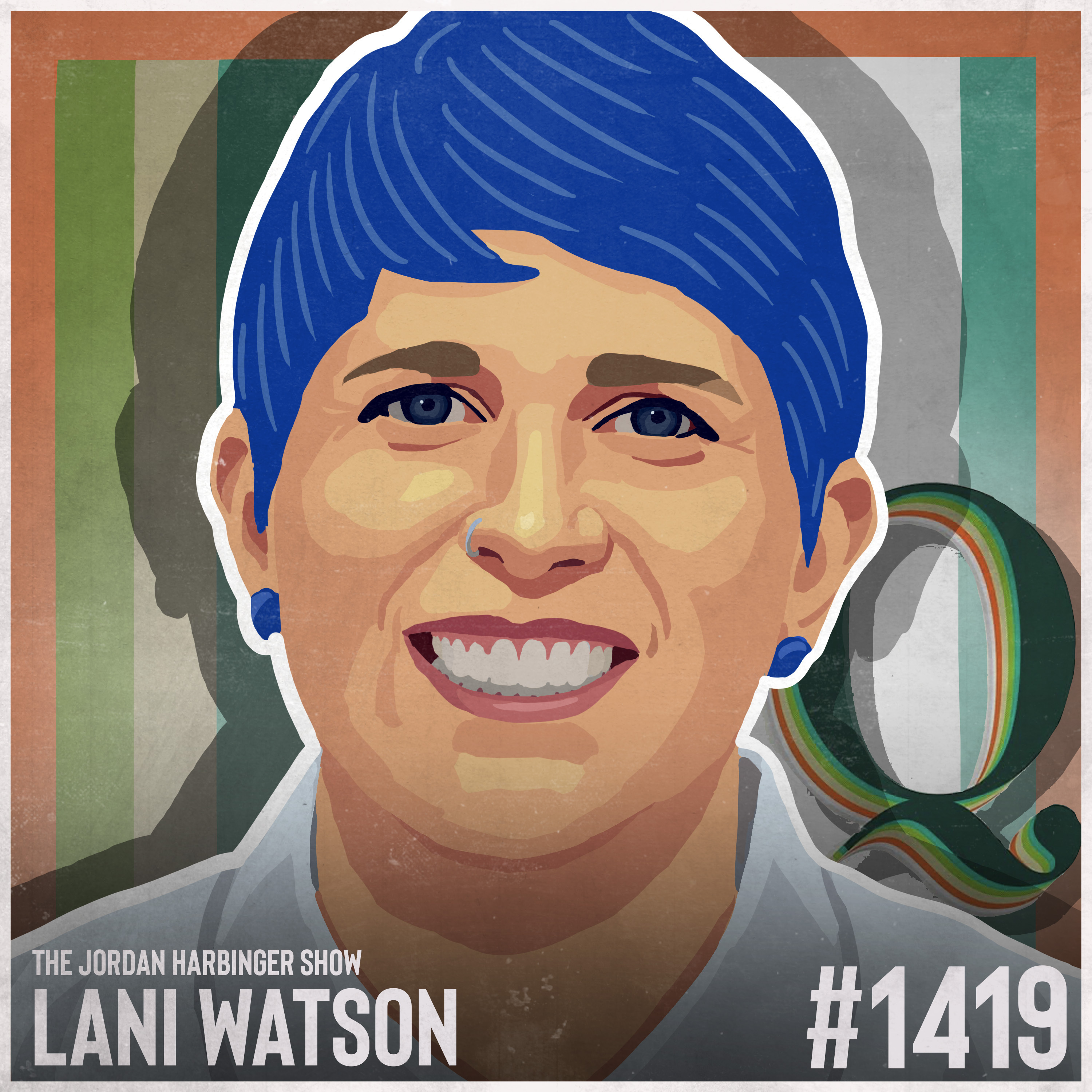
Kids ask about 107 questions an hour. Then school happens. Philosopher Lani Watson explains what we lose when we stop asking, and how to get it back. Full show notes and resources can be found here: jordanharbinger.com/1419 (https://jordanharbinger.com/1419) What We Discuss with Lani Watson: How a recurring question after giving birth — "Should it hurt this much?" — kept Lani's attention on her worsening pain and pushed clinicians to respond, revealing a severe ileus needing urgent treatment that simply saying "I'm in pain" might have left overlooked. Why there's no such thing as "just asking questions" — every question involves choices about what, who, when, and how to ask, so loaded headlines and rhetorical what-ifs can steer attention and smuggle in assumptions while dodging accountability. Why kids who ask around 107 questions an hour grow into adults afraid of sounding stupid: schools reward answering over asking, but the Right Question Institute's question formulation technique a
Can you rewire your brain to turn down chronic pain? Your pain is real, but your brain decides how loud that pain feels and new science shows that self-hypnosis may offer a new route to pain relief. One that goes beyond relying on pills alone. In today’s episode, Stanford psychiatrist Dr. David Spiegel, who has spent decades researching pain, explains how the brain controls pain. You’ll learn why chronic pain can be worsened by fear, anxiety and poor sleep. David explains how pain signals travel from your body to your brain, and why the brain can turn them up or down. He also shares how tools like hypnosis can help with pain management. By the end of the episode, you’ll have a simple 7-step self-hypnosis exercise for drug-free pain relief you can try at home. Build healthy habits. Download the ZOE app today Join ZOE (https://zoe.com/buymembership) Follow ZOE onInstagram (https://www.instagram.com/zoe/). Timecodes 00:00 Intro 01:49 Is your pain really in your brain? 09:07 Can't sleep? H
Is it bad to leave your phone charging overnight? Should you avoid using it while it's plugged in? And can the way you charge it shorten the life of the battery? There are plenty of myths about smartphone charging, and some of the advice you've heard may be completely wrong. Listen as I separate fact from fiction and reveal what really helps keep your phone's battery working longer. https://www.makeuseof.com/myths-misconceptions-charging-your-phone-debunked/ You probably think your brain simply takes in information and tells you what's happening around you. But that's not quite how it works. Your brain is constantly making predictions about what you're going to experience — and those predictions can actually shape what you feel and perceive. Even something as simple as expecting a shot to hurt can make it feel more painful. So how much of your reality is created by your own expectations? Andy Clark, professor at the University of Sussex and author of The Experience Machine: How Our Min
My special guest tonight is Dr. Stephen Flowers who's here to discuss the history of Mazdan magic from his book called Original Magic: The Rituals and Initiations of the Persian Magi (https://www.amazon.com/Original-Magic-Rituals-Initiations-Persian/dp/1620556448/ref=sr_1_2?dchild=1&keywords=ancient+Persian+magic&qid=1604461378&sr=8-2)c A complete guide to the theory, practice, and history of Mazdan magic, the first organized system of magic • Provides a complete curriculum of magical study and initiation centered on exercises keyed to the sacred Zoroastrian calendar • Details advanced magical rituals and practices based on archaic Persian formulas, including fire rituals and divine invocations • Explores the history and lore of Persian magic, explaining how the author reconstructed the original Mazdan system of magic Stephen Flowers explores the history, theory, practice, rituals, and initiations of the Mazdan magical system practiced by the Magi of ancient Persia, who were so skilled
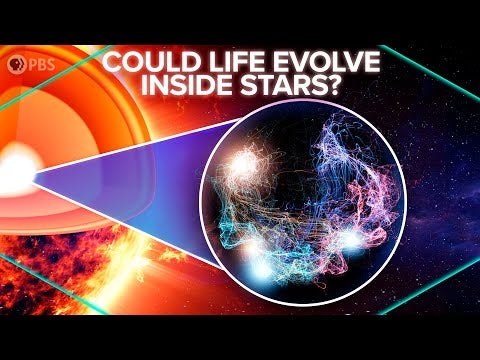
PBS Member Stations rely on viewers like you. To support your local station, go to: http://to.pbs.org/DonateSPACE ↓ More info below ↓ Uploaded 21-09-20 Take the PBS Digital Studios annual survey: http://to.pbs.org/2020survey One of the most bizarre proposals for life not as we know it doesn’t even use atoms. It proposes that fundamental kinks and defects in the fabric of the universe - cosmic strings beaded with magnetic monopoles - may evolve into complex structures, and even life, within stars. This idea was just published in Letters High Energy Physics Letters by physicists Luis Anchordoqui and Eugene Chudnovsky, and today on Space Time Journal Club we’re going to see how legit this actually is. Can Self-Replicating Species Flourish in the Interior of a Star? Paper Link Sign Up on Patreon to get access to the Space Time Discord! Check out the Space Time Merch Store Sign up for the mailing list to get episode notifications and hear special announcements! Hosted by Matt O'Dowd Written
Em shares a science-backed formula to build a system that sticks, helps you stay consistent, and turns you into the version of you who has what you want. I'm Going on Tour! Here's the link to RSVP for your city!
Em explains the neuroscience of procrastination and gives three brain-based strategies to stop putting things off, get started, and finally finish what you have been avoiding. I'm Going on Tour! Here's the link to RSVP for your city!
Em breaks down seven psychological principles of attraction and shows how to become more magnetic to the people, opportunities, and experiences you want. Pre-order my book MindCraft HERE!: https://www.emonthebrain.com/pre-order-here I'm Going on Tour! Here's the link to RSVP for your city!https://laylo.com/emonthebrain/m/2jAoUd?utm_id=97760_v0_s00_e0_tv3 (https://laylo.com/emonthebrain/m/2jAoUd)
Public projects should publish comparisons of promised and actual outcomes.
Share your view, then see how readers voted. No sign-in required. This poll is shared across stories.
Do you agree or disagree?
Common Quandary
A Common Quandary to discuss
Another conversation to explore, separate from this news story.
Someone reserves the best gym machine with a towel. When may you move it?
At a crowded gym, a towel has occupied the most popular machine for fifteen minutes while its owner chats across the room. Gym rules prohibit reserving equipment, but everyone occasionally steps away between sets.
How long may convenience masquerade as continued use?