Explore the history of the 1937 Haitian Massacre, where thousands of Haitians were murdered on the orders of Rafael Trujillo. Uploaded 25-01-18 -- When historians talk about the atrocities of the 20th century, we often think of those that took place during and between the two World Wars. But two months before the Rape of Nanking in China, and a year before Kristallnacht in Germany, a horrific ethnic cleansing campaign occurred on an island between the Atlantic Ocean and Caribbean Sea. Edward Paulino details the 1937 Haitian Massacre. Lesson by Edward Paulino, animation by Tomás Pichardo-Espaillat. Support Our Non-Profit Mission ---------------------------------------------- Support us on Patreon: http://bit.ly/TEDEdPatreon Check out our merch: http://bit.ly/TEDEDShop ---------------------------------------------- Connect With Us ---------------------------------------------- Sign up for our newsletter: http://bit.ly/TEDEdNewsletter Find us on Twitter: http://bit.ly/TEDEdTwitter Peep us
In this talk, planetary scientist Joel Levine shows some intriguing -- and puzzling -- new discoveries about Mars: craters full of ice, traces of ancient oceans, and compelling hints at the presence, sometime in the past, of life. He makes the case for going back to Mars to find out more. (Filmed at TEDxNASA.) Uploaded 01-08-13 Talk by Joel Levine.
View full lesson: http://ed.ted.com/lessons/a-guide-to-the-energy-of-the-earth-joshua-m-sneideman Uploaded 30-06-14 Energy is neither created nor destroyed — and yet the global demand for it continues to increase. But where does energy come from, and where does it go? Joshua M. Sneideman examines the many ways in which energy cycles through our planet, from the sun to our food chain to electricity and beyond. Lesson by Joshua M. Sneideman, animation by Marc Christoforidis.
View full lesson on ed.ted.com http://ed.ted.com/lessons/jane-hirshfield-the-art-of-the-metaphor How do metaphors help us better understand the world? And, what makes a good metaphor? Explore these questions with writers like Langston Hughes and Carl Sandburg, who have mastered the art of bringing a scene or emotion to life. Lesson by Jane Hirshfield, animation by Ben Pearce
SETI researcher Seth Shostak bets that we will find extraterrestrial life in the next twenty-four years, or he'll buy you a cup of coffee. At TEDxSanJoseCA, he explains why new technologies and the laws of probability make the breakthrough so likely -- and forecasts how the discovery of civilizations far more advanced than ours might affect us here on Earth. (Filmed at TEDxSanJoseCA.) Uploaded 21-08-13 Talk by Seth Shostak.
Drummers Tony Succar, Matt Flynn, Matt Tong, and Matt Johnson share what it takes to improve your skills and find your rhythm. -- "Think Like A Musician" connects you with working musicians who want to help the music-curious and music-passionate hone and share the gift of music with the world. Part interview, part animated course, our first season "Think Like A Performer" features artists sharing their insight on the ins and outs of fine-tuning your instrument and crafting a great performance. Each episode features free supplemental learning materials developed by Education Through Music (https://etmonline.org) (https://etmonline.org)/) — a nonprofit with over 30 years of experience developing classroom-adaptable curriculum for music educators. Directed by Kozmonot Animation Studio. A special thanks to the musicians who provided their insights and expertise for this video. You can check out their pages here: Support Our Non-Profit Mission ----------------------------------------------
Dive into four different voting systems: plurality, instant runoff, tactical, and the Condorcet method, and find out which is fairest. Uploaded 11-06-20 -- Imagine we want to build a new space port at one of four recently settled Martian bases, and are holding a vote to choose its location. Of the 100 colonists on Mars, 42 live on West Base, 26 on North Base, 15 on South Base, and 17 on East Base. Assuming that everyone wants the port to be closest to their home base, what is the fairest way to conduct the vote? Alex Gendler digs into voting systems. Lesson by Alex Gendler, directed by Biljana Labovic. Sign up for our newsletter: http://bit.ly/TEDEdNewsletter Support us on Patreon: http://bit.ly/TEDEdPatreon Find us on Twitter: http://bit.ly/TEDEdTwitter Peep us on Instagram: http://bit.ly/TEDEdInstagram View full lesson: https://ed.ted.com/lessons/which-voting-system-is-the-best-alex-gendler Thank you so much to our patrons for your support! Without you this video would not be possibl
View full lesson: http://ed.ted.com/lessons/describing-the-invisible-properties-of-gas-brian-bennett How do you explain the properties of something we can't see? See how scientists use scientific principles, such as gravity, to observe gases. This lesson explores gases and how we have come to know what we know about them. Lesson by Brian Bennett, animation by Cognitive Media.
Puzzle through this classic ethical dilemma and decide: should parents be able to choose genetic traits for their children? -- Andre and Leslie are a deaf couple who have decided to have a child, and they’re considering using a process to ensure deafness in their child. As deaf parents, they feel they could provide better guidance to a child that would share their lived experience and grow up immersed in deaf culture. But is this genetic intervention ethical? Michael Vazquez and Raye Ploeger explore this classic dilemma. Lesson by Michael Vazquez and Raye Ploeger, directed by Luisa Holanda. This video was produced in collaboration with the Parr Center for Ethics, housed within the renowned Philosophy Department at the University of North Carolina at Chapel Hill. The Parr Center is committed to integrating abstract work in ethical theory with the informed discussion of practical ethical issues, and prides itself on the development of innovative and inclusive approaches to moral and civi
For foreigners, learning to speak Chinese is a hard task. But learning to read the beautiful, often complex characters of the Chinese written language may be less difficult. ShaoLan walks through a simple lesson in recognizing the ideas behind the characters and their meaning -- building from a few simple forms to more complex concepts. Call it Chineasy. Uploaded 03-12-13 Talk by ShaoLan.
What can economists learn from linguists? Behavioral economist Keith Chen introduces a fascinating pattern from his research: that languages without a concept for the future -- "It rain tomorrow," instead of "It will rain tomorrow" -- correlate strongly with high savings rates. Uploaded 03-12-13 Talk by Keith Chen.
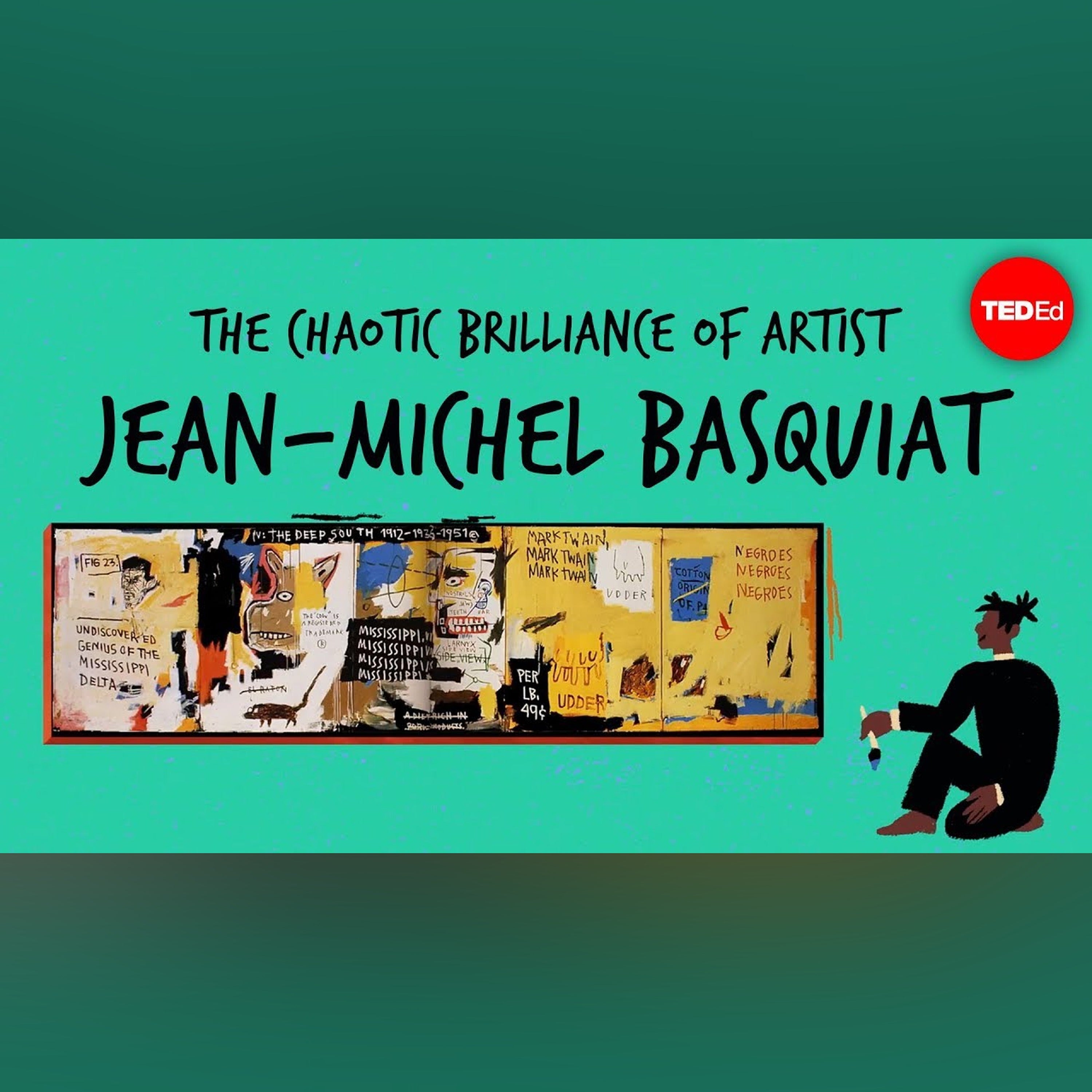
Learn about the life of American artist Jean-Michel Basquiat, from his start as part of graffiti duo SAMO to his rise as an internationally renowned painter. Uploaded 28-02-19 -- Like Beat writers who composed their work by shredding and reassembling scraps of writing, artist Jean-Michel Basquiat used similar techniques to remix his materials. Pulling in splintered anatomy, reimagined historical scenes and skulls, he repurposed present day experiences and art history into an inventive visual language. Jordana Moore Saggese explores the chaotic and prolific art of Basquiat. Lesson by Jordana Moore Saggese, directed by Héloïse Dorsan Rachet. Sign up for our newsletter: http://bit.ly/TEDEdNewsletter Support us on Patreon: http://bit.ly/TEDEdPatreon Find us on Twitter: http://bit.ly/TEDEdTwitter Peep us on Instagram: http://bit.ly/TEDEdInstagram View full lesson: https://ed.ted.com/lessons/the-chaotic-brilliance-of-artist-jean-michel-basquiat-jordana-moore-saggese Thank you so much to our
Throughout human evolution, multiple versions of humans co-existed. Could we be mid-upgrade now? At TEDxSummit, Juan Enriquez sweeps across time and space to bring us to the present moment -- and shows how technology is revealing evidence that suggests rapid evolution may be under way. Uploaded 21-08-13 Talk by Juan Enriquez.
View full lesson: http://ed.ted.com/lessons/rethinking-thinking-trevor-maber Every day, we meet people and process our interactions--making inferences and developing beliefs about the world around us. In this lesson, Trevor Maber introduces us to the idea of a ladder of inference and a process for rethinking the way we interact. Lesson by Trevor Maber, animation by TED-Ed.
Uploaded 23-06-15 View full lesson: http://ed.ted.com/lessons/how-speaking-multiple-languages-benefits-the-brain-mia-nacamulli It’s obvious that knowing more than one language can make certain things easier — like traveling or watching movies without subtitles. But are there other advantages to having a bilingual (or multilingual) brain? Mia Nacamulli details the three types of bilingual brains and shows how knowing more than one language keeps your brain healthy, complex and actively engaged. Lesson by Mia Nacamulli, animation by TED-Ed.
Get to know the story of the Mirabal sisters, who led a revolution against Rafael Trujillo’s dictatorship in the Dominican Republic. Uploaded 08-03-21 -- For over 30 years, thousands of people were imprisoned, tortured, and murdered under Rafael Trujillo’s dictatorship in the Dominican Republic. Three sisters would go on to lead an underground revolution. But while their courage inspired many, it threatened the man in power, and their lives would come to a tragic early end. Who were these brave women? Lisa Krause tells the story of Las Mariposas. Lesson by Lisa Krause, directed by Tomás Pichardo-Espaillat. Support Our Non-Profit Mission ---------------------------------------------- Support us on Patreon: http://bit.ly/TEDEdPatreon Check out our merch: http://bit.ly/TEDEDShop ---------------------------------------------- Connect With Us ---------------------------------------------- Sign up for our newsletter: http://bit.ly/TEDEdNewsletter Find us on Twitter: http://bit.ly/TEDEdTwitte
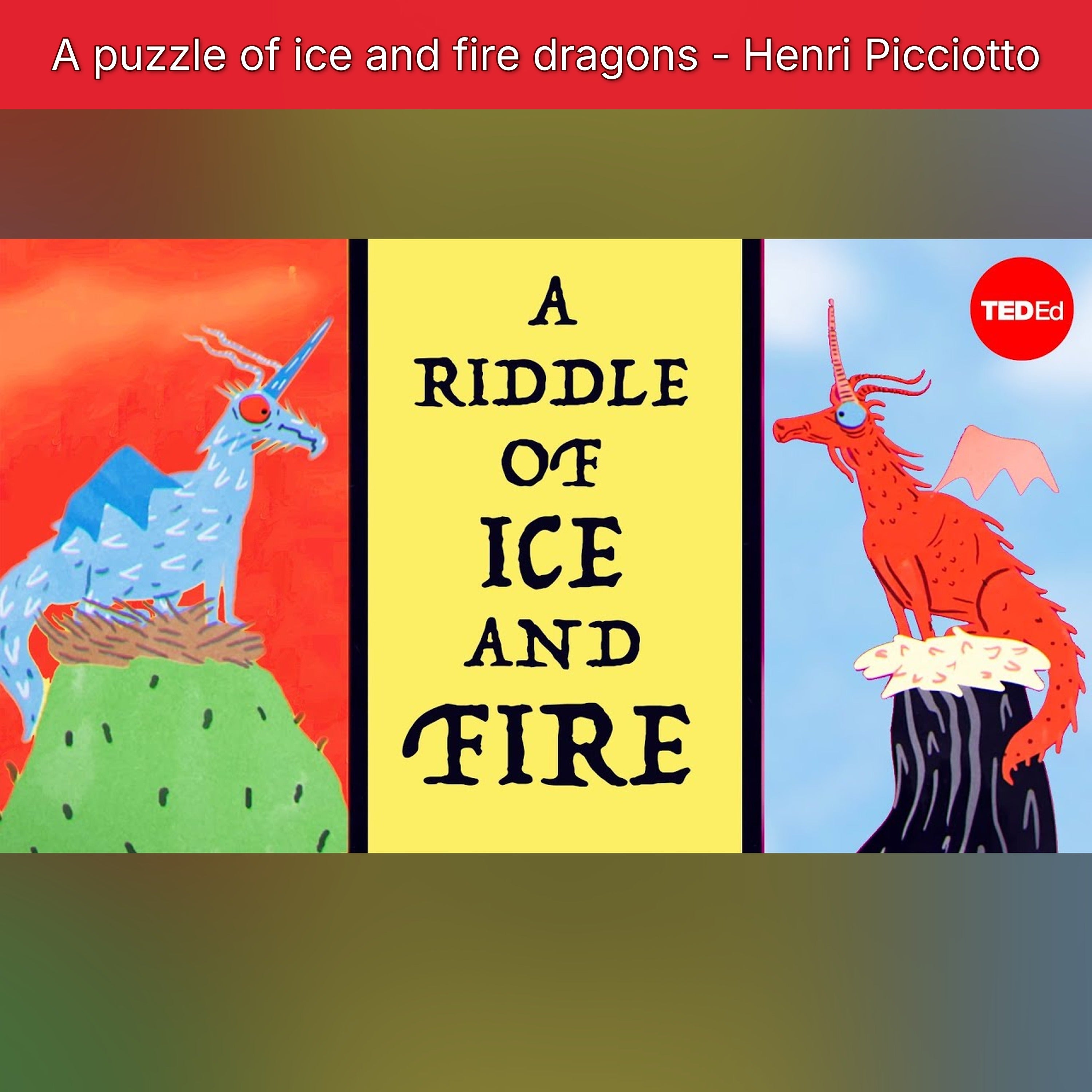
Practice more problem-solving at https://brilliant.org/TedEd -- It’s your first day as Center Realm’s official cartographer, and you’ve already got a big problem. Center Realm is home to three elder dragons: two ice, one fire, and they’ve lived in harmony for centuries. But scouts have sighted three fire dragons and five ice dragons flying towards the region. Can you figure out where to place the new dragons? Henri Picciotto shows how. Lesson by Henri Picciotto, directed by Igor Coric, Artrake Studio. Try your hand at drawing the new dragon regions with these downloadable (and drawable!) maps: https://bit.ly/TEDEdMaps Henri Picciotto is a math educator, retired from teaching after 42 years in K-12 classrooms. He maintains a website (https://www.mathed.page) (https://www.mathed.page)/) and a blog (https://blog.mathed.page) (https://blog.mathed.page)/) for math teachers, including many online and downloadable puzzles. Support Our Non-Profit Mission ---------------------------------------
Dig into the history of credit cards in the United States, and how they have evolved since the 1950s into the industry we know today. -- Today, credit cards are a $500 billion-a-year industry. Banks consider these lines of credit when deciding whether or not to approve loans, incentivizing customers to maintain multiple credit cards. So, how did this lending system originate? And how did they get to be so popular? Nidhi Upadhyaya digs into the history of credit cards in the United States. Lesson by Nidhi Upadhyaya, directed by Jeff Le Bars, JetPropulsion.space. Support Our Non-Profit Mission ---------------------------------------------- Support us on Patreon: http://bit.ly/TEDEdPatreon Check out our merch: http://bit.ly/TEDEDShop ---------------------------------------------- Connect With Us ---------------------------------------------- Sign up for our newsletter: http://bit.ly/TEDEdNewsletter Find us on Twitter: http://bit.ly/TEDEdTwitter Peep us on Instagram: http://bit.ly/TEDEdIns
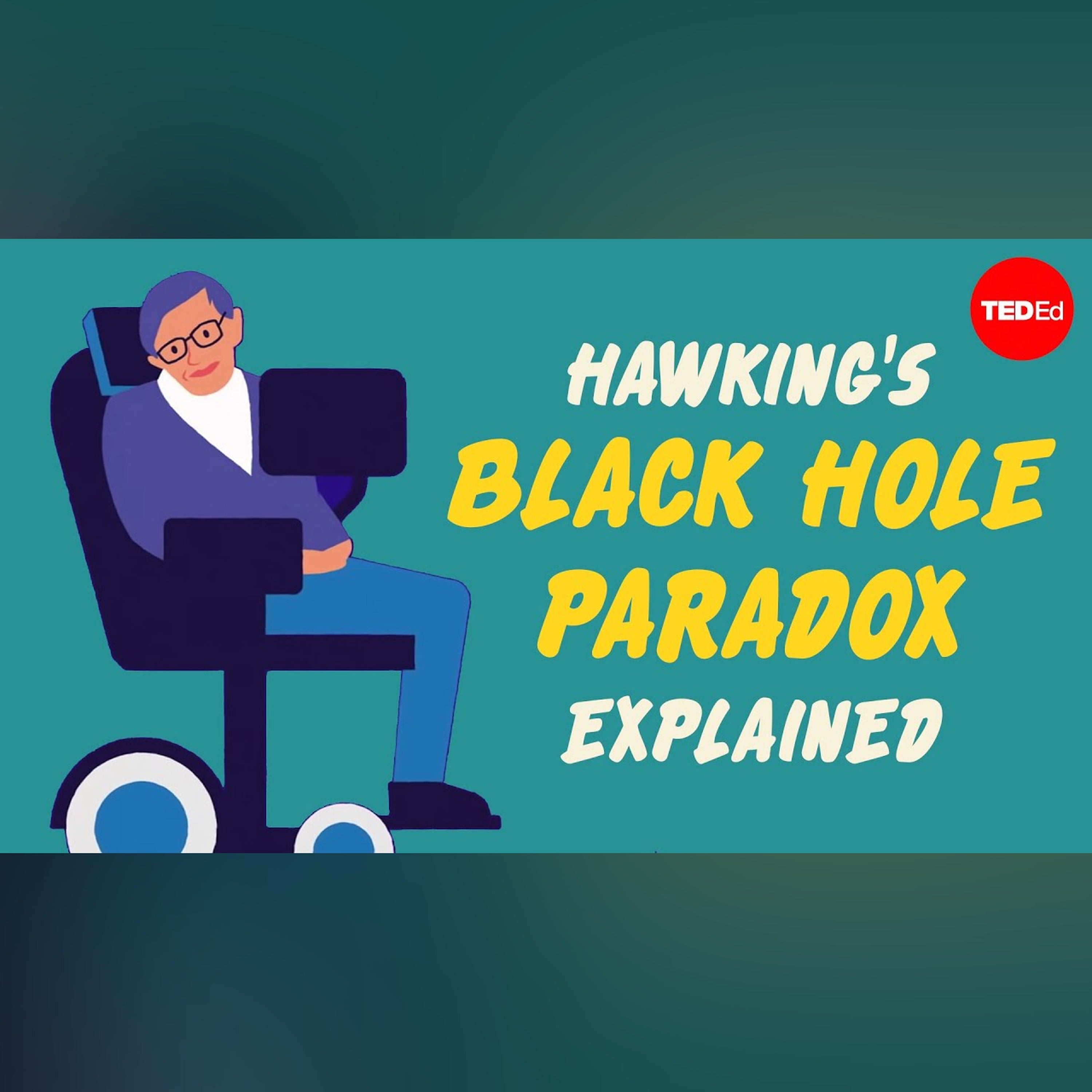
Where does quantum information go when it enters a black hole? Investigate the theories of the black hole information paradox. Uploaded 22-10-19 -- Today, one of the biggest paradoxes in the universe threatens to unravel modern science: the black hole information paradox. Every object in the universe is composed of particles with unique quantum properties and even if an object is destroyed, its quantum information is never permanently deleted. But what happens to that information when an object enters a black hole? Fabio Pacucci investigates. Lesson by Fabio Pacucci, directed by Artrake Studio. Animator's website: https://www.artrake.com (https://www.artrake.com/) Sign up for our newsletter: http://bit.ly/TEDEdNewsletter Support us on Patreon: http://bit.ly/TEDEdPatreon Find us on Twitter: http://bit.ly/TEDEdTwitter Peep us on Instagram: http://bit.ly/TEDEdInstagram View full lesson: https://ed.ted.com/lessons/hawking-s-black-hole-paradox-explained-information-paradox Thank you so much
Opera singer Denyce Graves-Montgomery shares how to find your voice, range, breath, and, ultimately, your truth. -- "Think Like A Musician" connects you with working musicians who want to help the music-curious and music-passionate hone and share the gift of music with the world. Part interview, part animated course, our first season "Think Like A Performer" features artists sharing their insight on the ins and outs of fine-tuning your instrument and crafting a great performance. Each episode features free supplemental learning materials developed by Education Through Music (https://etmonline.org) (https://etmonline.org)/) — a nonprofit with over 30 years of experience developing classroom-adaptable curriculum for music educators. Directed by Kozmonot Animation Studio. A special thanks to Denyce Graves-Montgomery who provided her insights and expertise for this video. You can check out her page here: https://www.youtube.com/channel/UC4IGqi6jnpDTct8_ij6LBag Support Our Non-Profit Missio
Dig into the truffle’s unique and mysterious biology to find out what makes them so rare and the limitations of farming them. -- Truffles are one of the world’s most expensive foods— in part because global demand often outstrips supply. And truffles are becoming even more rare and more expensive as deforestation and climate change shrink their suitable terrain. But why are these fungi so rare? And why don’t we just farm more of them? Carolyn Beans digs into the truffle’s unique and somewhat mysterious biology. Lesson by Carolyn Beans, directed by Denys Spolitak. Support Our Non-Profit Mission ---------------------------------------------- Support us on Patreon: http://bit.ly/TEDEdPatreon Check out our merch: http://bit.ly/TEDEDShop ---------------------------------------------- Connect With Us ---------------------------------------------- Sign up for our newsletter: http://bit.ly/TEDEdNewsletter Find us on Twitter: http://bit.ly/TEDEdTwitter Peep us on Instagram: http://bit.ly/TEDEdIn
View full lesson: http://ed.ted.com/lessons/do-you-speak-monkey-the-language-of-cotton-top-tamarins-anne-savage Uploaded 26-06-14 The cotton-top tamarin is a very vocal monkey -- the species communicates using a sophisticated language of 38 distinct and grammatically structured calls! Anne Savage teaches a few of these chirps and whistles, taking us through a day in the life of Shakira the tamarin (using sounds pulled from the wild) as Shakira signals to her family, talks to her food and warns against potential predators. Lesson by Anne Savage, animation by Avi Ofer.
View full lesson on ed.ted.com http://ed.ted.com/lessons/what-s-invisible-more-than-you-think-john-lloyd Gravity. The stars in day. Thoughts. The human genome. Time. Atoms. So much of what really matters in the world is impossible to see. A stunning animation of John Lloyd's classic TEDTalk from 2009, which will make you question what you actually know. Lesson by John Lloyd, animation by Cognitive Media.
Catherine the Great presided over a golden age of Russian expansion — but was she a dedicated ruler or a ruthless oppressor? -- Catherine the Great, Empress of Russia for over three decades, used strategic dalliances, military might, and cutting-edge philosophy to modernize, expand, and transform the Russian Empire. But was she a dedicated ruler determined to move Russia into the future, or a ruthless monarch who oppressed anyone who questioned her? Carolyn Harris puts this controversial figure on trial. Lesson by Carolyn Harris, directed by Brett Underhill, PorkchopBob Studio. Support Our Non-Profit Mission ---------------------------------------------- Support us on Patreon: http://bit.ly/TEDEdPatreon Check out our merch: http://bit.ly/TEDEDShop ---------------------------------------------- Connect With Us ---------------------------------------------- Sign up for our newsletter: http://bit.ly/TEDEdNewsletter Find us on Twitter: http://bit.ly/TEDEdTwitter Peep us on Instagram: http: