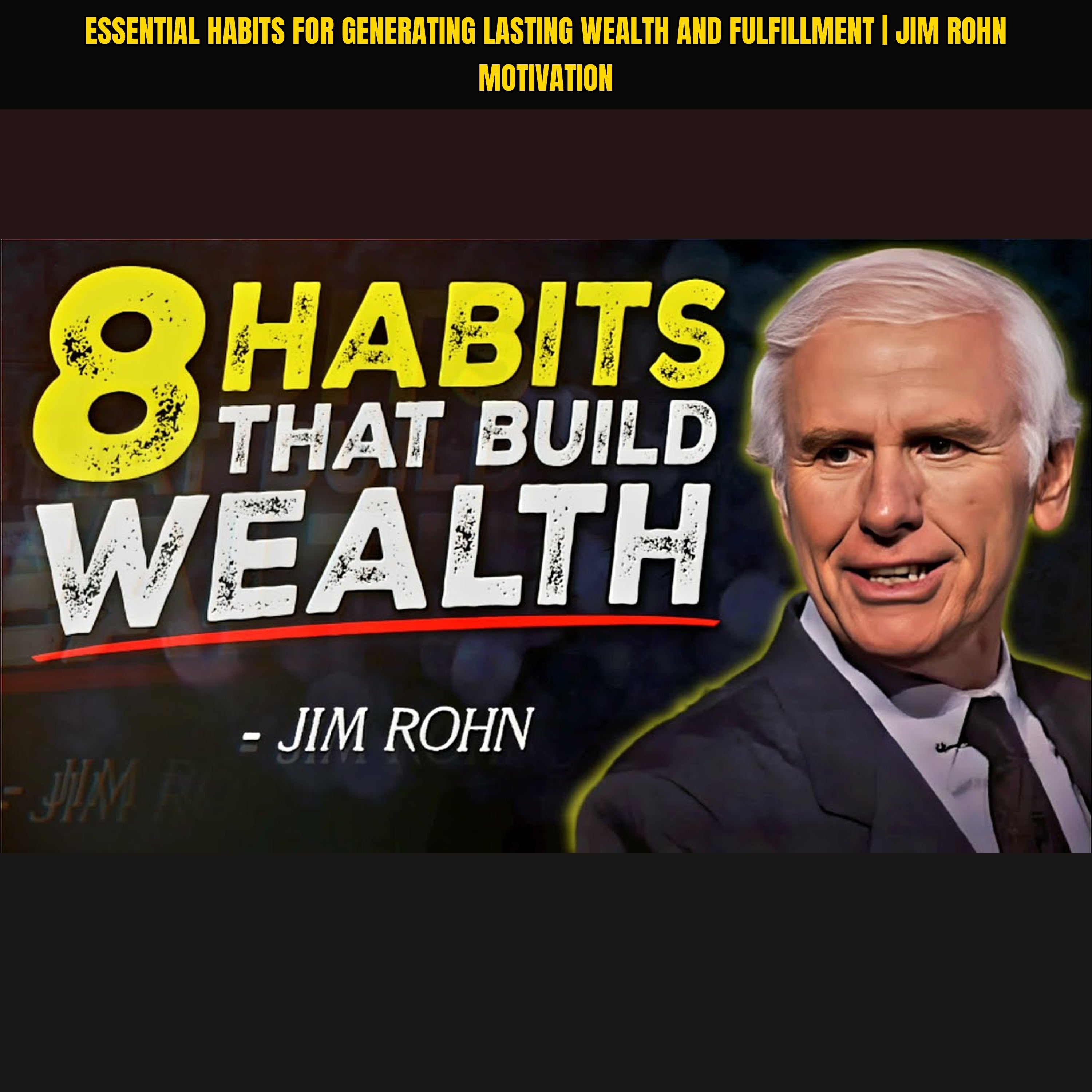
#JimRohnMotivation #JimRohn #JimRohnSpeech In this Jim Rohn Motivation video, we break down the habits behind lasting wealth and real fulfillment. This isn’t about hacks or hype—it’s about identity, clarity, and systems. If you’ve ever wondered how to build a life that not only *works* but *feels right*, this message is your blueprint. Key Topics From This Motivational Video: Why managing your time with precision multiplies everything How your money mindset shapes your financial reality Why energy, not effort, determines execution How self-talk and emotional mastery unlock high performance Why values—not feelings—should drive your life This Jim Rohn motivational video teaches you that success and fulfillment are not separate paths—they’re built from the same habits. When your energy, money, mindset, and environment are aligned, results follow naturally. But it takes intention. This isn’t about reacting to life—it’s about designing it. You’ll learn the eight foundational habits that cre
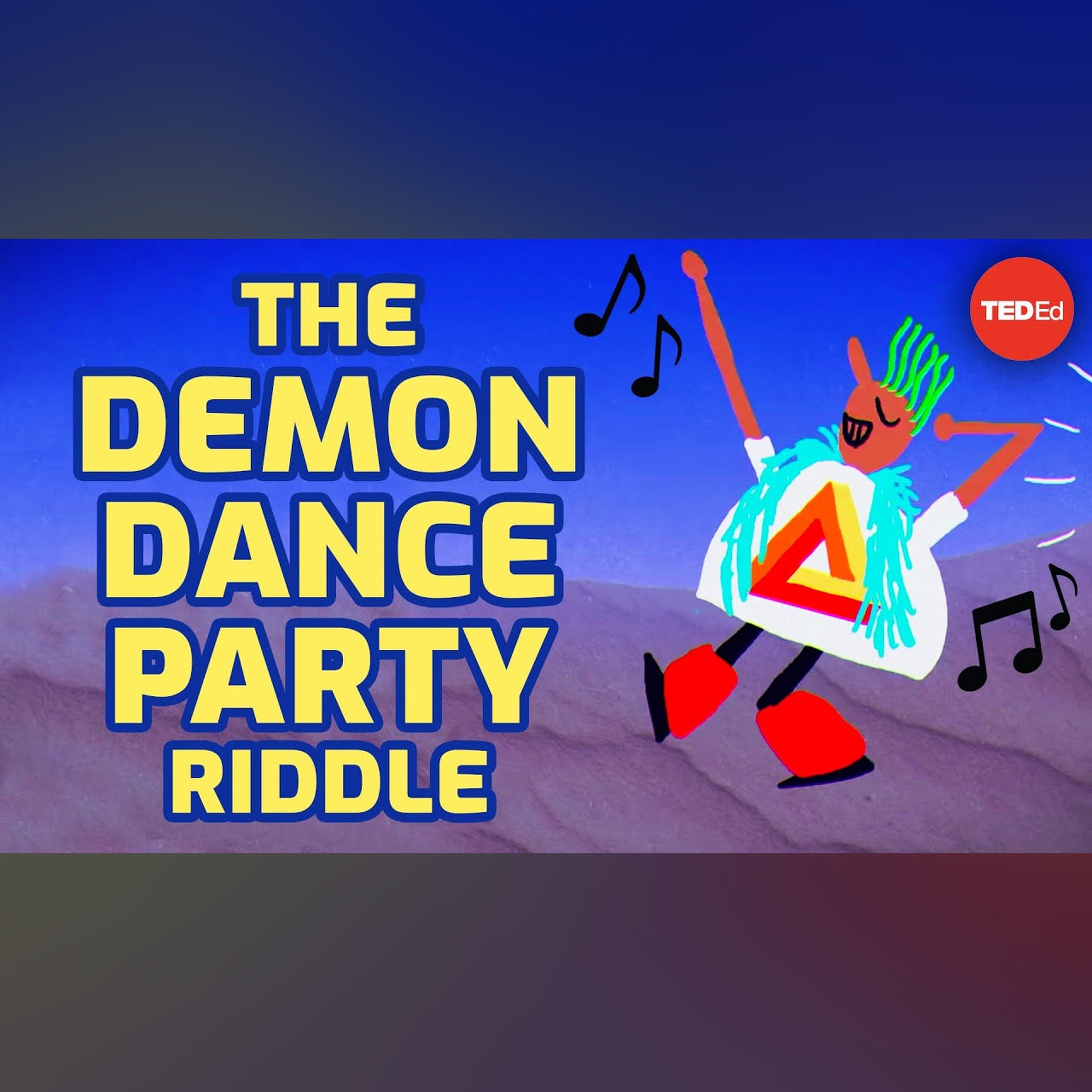
The only way into the world’s most exclusive club is to solve a challenge from the Demon of Reason. Can you get into the party? Uploaded 23-02-21 -- Once a year, thousands of logicians descend into the desert for Learning Man. At the center of that gathering is the world’s most exclusive club, where under the full moon the annual logician’s rave takes place. The entry is guarded by the Demon of Reason, and the only way in is to solve one of his dastardly challenges. Can you get into the rave? Edwin Meyer shows how. Lesson by Edwin Meyer, directed by Artrake Studio. Support Our Non-Profit Mission ---------------------------------------------- Support us on Patreon: http://bit.ly/TEDEdPatreon Check out our merch: http://bit.ly/TEDEDShop ---------------------------------------------- Connect With Us ---------------------------------------------- Sign up for our newsletter: http://bit.ly/TEDEdNewsletter Find us on Twitter: http://bit.ly/TEDEdTwitter Peep us on Instagram: http://bit.ly/TEDE
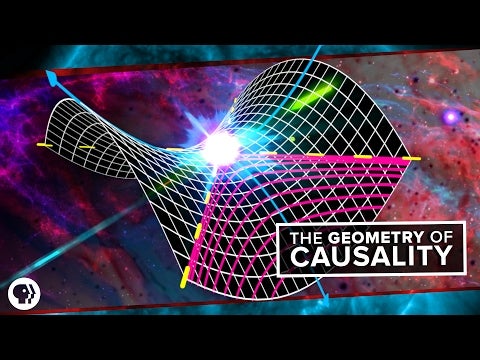
Viewers like you help make PBS (Thank you ) . Support your local PBS Member Station here: https://to.pbs.org/DonateSPACE Uploaded 02-02-17 Using geometry we can not only understand, but visualize how causality dictates the order of events in our universe. Start your Audible trial today at http://www.audible.com/spacetime You can further support us on Patreon at https://www.patreon.com/pbsspacetime Get your own Space Time tshirt at http://bit.ly/1QlzoBi Tweet at us! @pbsspacetime Facebook: facebook.com/pbsspacetime Email us! pbsspacetime [at] gmail [dot] com Comment on Reddit: http://www.reddit.com/r/pbsspacetime Help translate our videos! https://www.youtube.com/timedtext_cs_panel?tab=2&c=UC7_gcs09iThXybpVgjHZ_7g (https://www.youtube.com/timedtext_cs_panel?c=UC7_gcs09iThXybpVgjHZ_7g&tab=2) In this episode we dive deeper into the relationship between space and time and explore how we can geometrically map the causality of the universe and increase our understanding of how time and dist
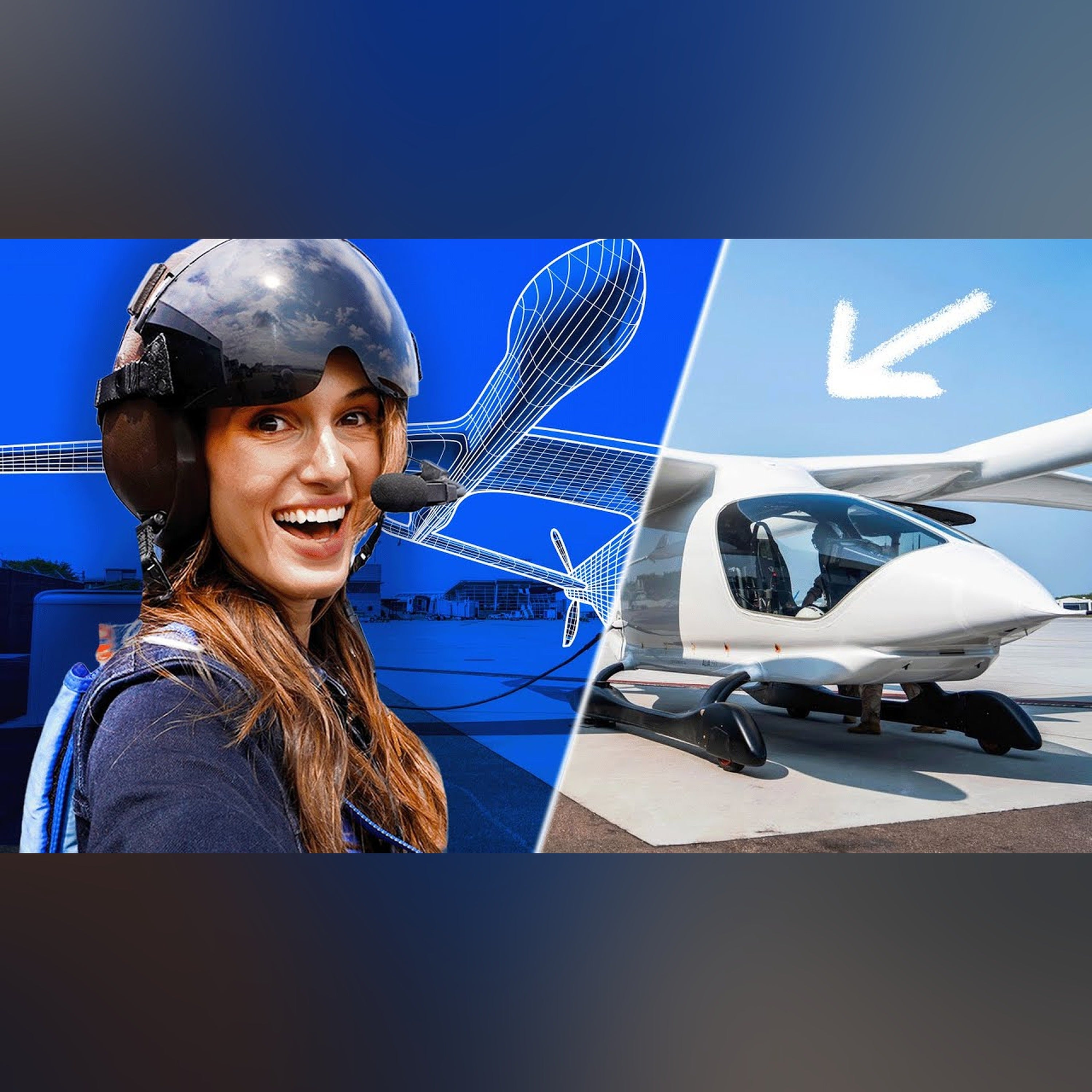
Electric planes are already here. But they don't look like I thought... If you want more optimistic stories about technology, subscribe to support our show! Are electric planes possible? And if so, when are they coming?? Turns out, they’re already here. For this episode of Huge If True, I went to visit an electric plane company called Beta. Before the shoot, I thought the weight of batteries basically meant electric planes weren’t that useful, and wouldn’t be for a long time. What I learned is that in the last 10 years, we’ve gotten a lot better at making batteries (look at your phone!). Those gains mean electric planes are starting to do more. And that’s a big deal - for carbon emissions and climate change, but also for redesigning how planes look and fly. The future of aviation will look very different than the planes you take today. I couldn’t fly in one of the electric planes (trust me, I tried!), but I did get up in the air another way… To support Huge If True, please consider sub
Walk through any room of adults and you will hear it. The dreams. The plans. The businesses they are going to start, the books they are going to write, the bodies they are going to have. The talking is constant, the conviction is real, the wanting is genuine. Uploaded 29-06-26 Here is the truth: most of those people will never build any of it. Not because the dreams were bad. Not because they did not want it. They will not build the life they talk about because they have confused the talking with the building — and the confusion has been running so long they can no longer tell the difference. There is a specific gap between the version of you who describes the life you want and the version who actually builds it. The gap is not desire; both versions want it. It is not intelligence; both are smart. It is something quieter, less glamorous, less talked about — and almost nobody knows where the gap actually lives, which is why almost nobody closes it. This seminar walks through 5 things yo
Today's math curriculum is teaching students to expect -- and excel at -- paint-by-numbers classwork, robbing kids of a skill more important than solving problems: formulating them. In his talk, Dan Meyer shows classroom-tested math exercises that prompt students to stop and think. (Filmed at TEDxNYED.) Uploaded 01-08-13 Talk by Dan Meyer.
Viewers like you help make PBS (Thank you ) . Support your local PBS Member Station here: https://to.pbs.org/DonateSPACE Uploaded 21-06-17 Paul Dirac’s insights into the nature of Quantum Mechanics laid the foundation for Quantum Field Theory and predicted the existence of anti-matter. Part 1 in our series on Quantum Field Theory. Try Skillshare at http://skl.sh/spacetime You can further support us on Patreon at https://www.patreon.com/pbsspacetime Get your own Space Time tshirt at http://bit.ly/1QlzoBi Tweet at us! @pbsspacetime Facebook: facebook.com/pbsspacetime Email us! pbsspacetime [at] gmail [dot] com Comment on Reddit: http://www.reddit.com/r/pbsspacetime Help translate our videos! https://www.youtube.com/timedtext_cs_panel?tab=2&c=UC7_gcs09iThXybpVgjHZ_7g (https://www.youtube.com/timedtext_cs_panel?c=UC7_gcs09iThXybpVgjHZ_7g&tab=2) Review our quantum mechanics playlist: http://bit.ly/2rWTYSO Book recommendations: The Quantum Divide, by Christopher Gerry and Kimberley Bruno Th
Did you know Peru was the first country in South America to produce wine? On today’s episode, Peruvian winemaker Daniel Valverde takes us on an extraordinary 600-year journey through one of the wine world’s most fascinating and forgotten histories. From producing some of the finest wines in the New World to the collapse of an entire industry, the rise of Pisco, and an unlikely modern renaissance, this is a story of triumph, tragedy, and reinvention that only Peru could tell.
#JimRohnMotivation #JimRohn #JimRohnSpeech In this Jim Rohn Motivation video, learn how unstoppable confidence is not inherited but constructed through discipline, clarity, and daily follow-through. Confidence isn’t ego — it’s ownership over your behavior, your standards, and your mindset. Key Topics From This Motivational Video: Why confidence is earned, not given How to build self-trust through small daily promises The power of challenging your comfort zone Why your internal dialogue defines your identity The importance of finishing what you start This Jim Rohn motivational video dismantles the myth that confidence is something you wait to feel. It reveals confidence as a system — a series of repeatable, intentional actions. When you confront patterns, shift your self-talk, and honor your commitments, you don't chase confidence — you carry it. It becomes who you are, not something you need to find. This Jim Rohn Motivational Video Is Perfect For: Anyone struggling with self-doubt or
View full lesson: http://ed.ted.com/lessons/beware-of-nominalizations-aka-zombie-nouns-helen-sword Few mistakes sour good writing like nominalizations, or, as Helen Sword likes to call them, zombie nouns. Zombie nouns transform simple and straightforward prose into verbose and often confusing writing. Keep your nouns away from the elongating nominalizations! Lesson by Helen Sword, animation by Bran Dougherty-Johnson.
If you have ever walked away from a conversation feeling embarrassed, unheard, or disrespected, this episode is for you. Maybe you rambled, used the wrong words, or totally froze when someone put you on the spot. You don’t have to go through that again. Today, Mel sits down with world-renowned communication expert Vinh Giang for a masterclass in how to stop sounding insecure, speak more clearly, and get people to listen when you talk. You can be great at what you do, have incredible ideas, and work harder than everyone else. But if you struggle to communicate, Vinh says people may never recognize what you have to offer. That’s why he’s breaking down the simple skills you can learn to speak with more confidence, get your point across, and make yourself heard, whether you're at work, having a difficult conversation with a family member, or just trying to find the right words in any interaction. You’ll learn: -How to stop rambling -What to do when your mind goes blank -How to stop saying
Each day is the chance to reinvent yourself, to become someone new, someone better. Take that chance.Follow the podcast & turn on notis Leave your review for this episode in the Q&A Section. Join the 10k Accelerator Course ---------- ---- Keywords: masculinity podcast, men's self improvement, men's psychology, business motivation, boxing training, men's lifestyle, millionaire mindset, male entrepreneurship
In 1703, the so-called 'man in the iron mask' died in prison. In 1863, President Abraham Lincoln delivered the Gettysburg Address. In 1975, the movie ‘One Flew Over the Cuckoo’s Nest’ was released in theaters. In 1969, Pelé scored career goal number 1000. In 1990, the pop duo Milli Vanilli became the first performers to have their Grammy rescinded.
Merriam-Webster's Word of the Day for November 19, 2026 is: upbraid • \up-BRAYD\ • verb To upbraid someone is to speak to them in an angry or critical way in response to something they have done wrong—in other words, to scold them. // The teacher upbraided the class after discovering the chalkboard erasers had been clapped all over the walls. See the entry > (https://www.merriam-webster.com/dictionary/upbraid) Examples: “An industrious ant spends all summer gathering food for the cold months, while a lazy grasshopper dances and sings. Once winter hits, the grasshopper is cold and hungry, and goes begging for food from the ant, who refuses to share any of its bounty, upbraiding the grasshopper for failing to plan.” — David A. Graham, The Atlantic, 17 Apr. 2026 Did you know? First things first: do not confuse upbraid with topknot lest you be upbraided for it. Topknot is a noun referring to a hairstyle, while upbraid is a verb (and an ancient one at that) meaning “to criticize or scold se
Amber Guild had no family history of breast cancer and didn’t think she was at particularly high risk. Although her doctors recommended that she begin screening at 40, she delayed her first mammogram until she was 43. That mammogram found breast cancer. Now the CEO of Susan G. Komen, Amber joins Dr. Thaïs Aliabadi and Mary Alice Haney to share what she learned from her own diagnosis and why she wants more women to understand their individual breast cancer risk long before something feels wrong. Amber walks through her diagnosis, lumpectomies, radiation and tamoxifen treatment and reflects on how differently she would advocate for herself today. Dr. A explains why family history is only one part of breast cancer risk and discusses the importance of breast density, lifetime risk calculations, genetic testing and individualized screening. They also discuss the increasing incidence of breast cancer among younger women, racial disparities in breast cancer outcomes, and why Black women are m
It takes a village to raise a child. But what happens when the village starts telling you how to parent? Today, Dale is joined by returning guest Ali Knowles, emotional therapist and founder of the Ollie Model, to discuss why it takes a village to help raise a child (https://thesendcast.com/why-it-takes-a-village-to-help-a-child), and what that support should really look like. Together, they explore: - Why the village has changed, and why so many parents now feel isolated. - The difference between offering support and giving advice, and why wisdom helps where instructions don't. - How social media and well-meaning opinions can wear down parents' confidence. - Why a parent's own school experiences can quietly shape how they respond to their child. - What 'safe' means to a child, and why feeling safe is not the same as being told you are. When parents ask her what they should do, Ali's answer is always the same: "I can't tell you, because there isn't a book. You haven't written it. This
Released on International Men's Day, 19 November, this special episode of The Firefighters Podcast explores why mental health is a team sport. Drawing on my own experiences of addiction, recovery, leadership and firefighting, I challenge how we think about resilience, asking for help and supporting others. From the bystander effect to becoming an emotional first responder, this episode offers simple, practical tools to help us recognise when somebody needs support, start meaningful conversations and take action. Because you don't have to be a first responder to be the first person who responds. Please check out our Partners supporting this episode are MSA The Safety Company (https://gb.msasafety.com/) JAFCO (https://www.jafcotools.com/) DELTA FIRE (https://www.deltafire.co.uk/)
Jacob Beningo talks with RTOS pioneer Bill Lamie, creator of Nucleus, ThreadX, and PX5 RTOS, about how to write efficient, high-performance real-time code. They cover POSIX pthreads, keeping software simple, RTOS benchmarking, test-driven development, using AI as a development teammate, and practical tips for structuring RTOS applications. Key Takeaways: • Keep it simple: complexity is the biggest enemy of embedded software, and a complex solution is probably not the right one. • Minimize nested function calls in critical paths, since pushing and popping registers and return addresses is expensive. • Design for performance from the start. Every comparison and data reference matters in the real-time path, and performance can't be bolted on at the end. • Use an error-checking veneer selectively. Enable it for new or untrusted code and call the direct API for proven code to save cycles. • Standardizing on the POSIX pthreads API makes it easier to share code between Linux and RTOS-based pr
Gallet is a name with two centuries of watchmaking history behind it. Founded in 1826, the Swiss brand built a reputation for chronographs associated with aviation, motorsport, sailing, and exploration. Now, following its acquisition by Breitling, Gallet is entering a new chapter. And with its relaunch coinciding with its 200th anniversary, there is plenty to discuss. In this special episode of Fratello Talks, Nacho and RJ are joined by Managing Director Erwan Rossignol. Together, they discuss the thinking behind Gallet (https://www.fratellowatches.com/watchbrands/gallet)’s return and the work involved in bringing a historic name back to the market. With Breitling (https://www.fratellowatches.com/watchbrands/breitling) providing the manufacturing expertise and infrastructure, Gallet has a strong foundation. But how do you make the most of that support without losing the identity that made the brand worth reviving in the first place?
In this Jim Rohn Motivation speech, discover why failure doesn’t come from one catastrophic collapse—it comes quietly, through small neglects and excuses This powerful speech reveals how the “little things” you let slide today become the big regrets of tomorrow. Discipline is the decider. If you let it slide, you let it decide. Key Topics From This Motivational speech: Why small neglects compound into massive failures How excuses hand control of your future to chance The compound effect of daily discipline vs daily drift Why neglect always chooses decline, weakness, and regret How small acts of discipline reclaim control of your life This Jim Rohn motivational speech is a wake-up call to take the small things seriously. Success and failure both come the same way: choice by choice, day by day. The skipped workout, the late bill, the broken promise—each looks harmless in the moment but compounds into weakness, erosion, and regret. On the other hand, every small discipline—every promise k
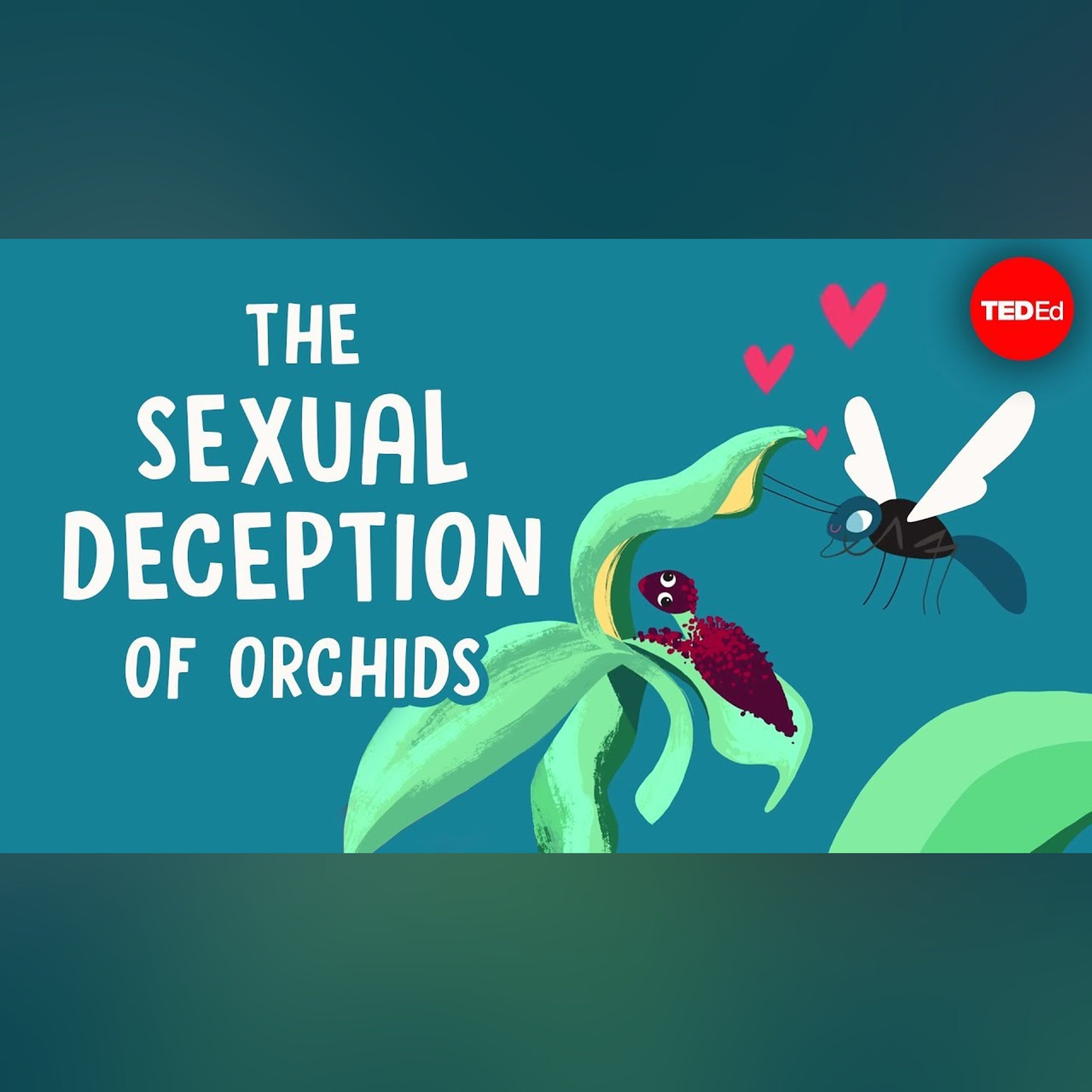
Check out the fascinating ways orchids trick insects into pollinating, using sexual deception, pheromones and mimicking the shapes of other plants. Uploaded 14-02-19 -- Nearly 28,000 species of orchid grow all around the world, bearing every imaginable color, shape and pattern. There’s a cunning purpose behind these elaborate displays: many orchids trick insects into pollinating, sometimes even into having sex with them. How do they deploy these deceptive tactics? Anne Gaskett dives into the surprisingly complex ways orchids attract insects. Lesson by Anne Gaskett, directed by Mette Ilene Holmriis. Sign up for our newsletter: http://bit.ly/TEDEdNewsletter Support us on Patreon: http://bit.ly/TEDEdPatreon Find us on Twitter: http://bit.ly/TEDEdTwitter Peep us on Instagram: http://bit.ly/TEDEdInstagram View full lesson: https://ed.ted.com/lessons/the-sexual-deception-of-orchids-anne-gaskett Thank you so much to our patrons for your support! Without you this video would not be possible! F
Uploaded 16-01-18 View full lesson: https://ed.ted.com/lessons/can-we-grow-human-brains-outside-our-bodies-madeline-lancaster Shielded by our thick skulls and swaddled in layers of protective tissue, the human brain is extremely difficult to observe in action. Luckily, scientists can use brain organoids — pencil eraser-sized masses of cells that function like human brains but aren’t part of an organism — to look closer. How do they do it? And is it ethical? Madeline Lancaster shares how to make a brain in a lab. Lesson by Madeline Lancaster, animation by Adam Wells. Thank you so much to our patrons for your support! Without you this video would not be possible! Nik Maier, Robert Sukosd, Mark Morris, Tamás Drávai, Adi V, Peter Liu, Leora Allen, Hiroshi Uchiyama, Michal Salman, Julie Cummings-Debrot, Gilly , Ka-Hei Law, Maya Toll, Aleksandar Srbinovski, Jose Mamattah, Mauro Pellegrini, Ricardo Rendon Cepeda, Renhe Ji, Andrés Melo Gámez, Tim Leistikow, Moonlight , Shawar Khan, Chris, Alex
Sign up for our newsletter and never miss an animation: http://bit.ly/TEDEdNewsletter Welcome to the world of Lucius Popidius Secundus, a 17-year old living in Rome in 73 AD. His life is a typical one of arranged marriages, coming-of-age festivals, and communal baths. Take a look at this exquisitely detailed lesson on life of a typical Roman teenager two thousand years ago. Lesson by Ray Laurence, animation by Cognitive Media.
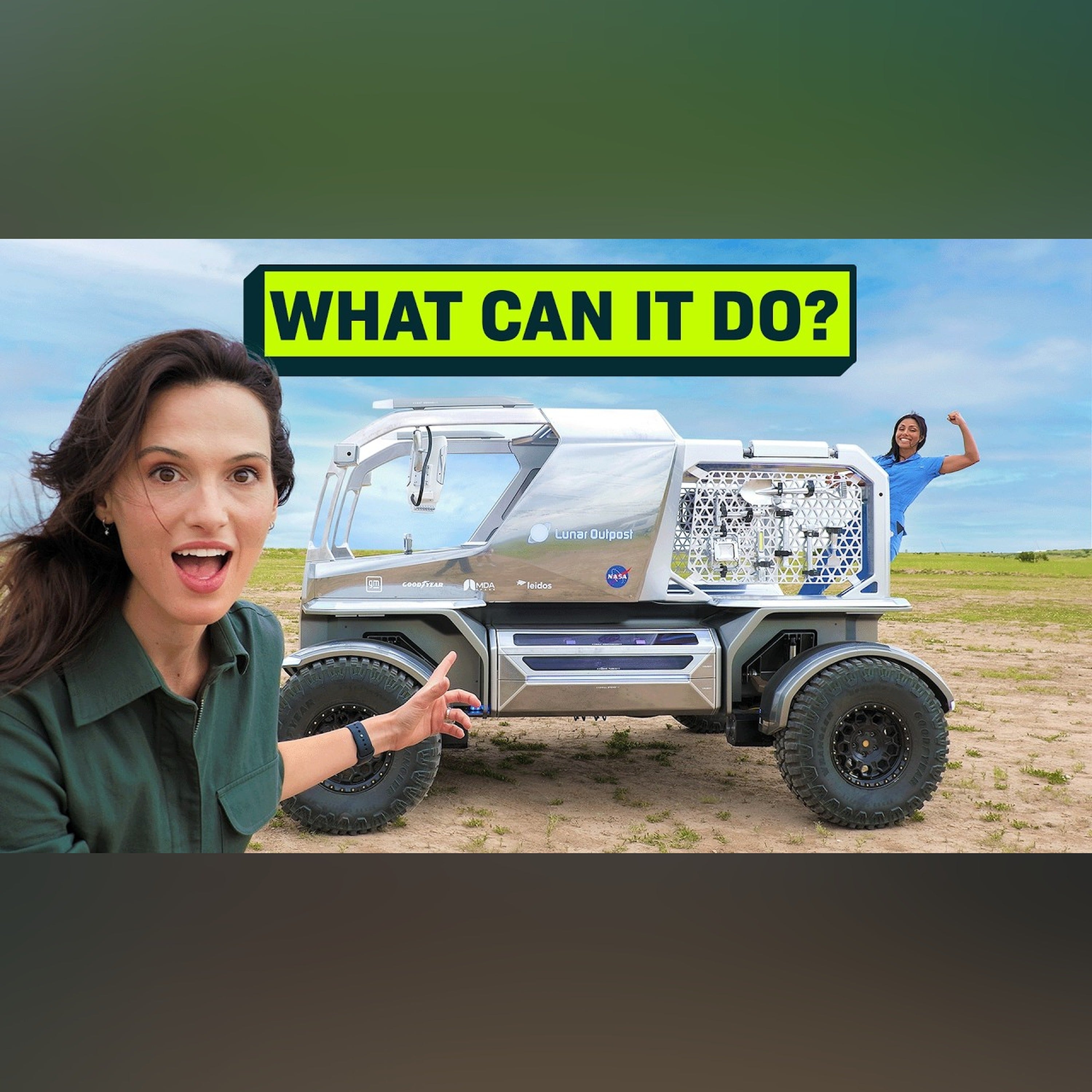
This truck is going to the moon. So we put it to the test… Get an exclusive 15% discount on Saily data plans. Use code CLEO at checkout. Download Saily app or go to https://saily.com/cleo This is the world’s first “space truck.” It’s going to the moon to help us go farther, faster, and discover places we’ve never been… Because humans are about to go back to the moon for the first time in 50 years! And no one but its builders have ever driven it… until today. In this video I'm going to put this brand new space truck to the test in a series of 5 challenges. And I've invited someone who knows a thing or two about challenges: YouTube daredevil and host of Challenge Accepted… Michelle Khare! Let’s go. Chapters: 0:00 This is the world’s first space truck 0:38 Introducing Michelle Khare! 01:04 What is a space truck? 01:52 How do astronauts drive? 02:21 First impressions! 02:47 Moon truck v normal truck 04:47 How fast can you drive on the moon? 05:18 Will we crash? 08:36 Can we break the lunar