Today, I’m joined by Dr. Tony Nader (https://drtonynader.com/), a physician and neuroscientist who leads the global Transcendental Meditation (TM) organization. Dr. Nader’s story is remarkable—what started as a short sabbatical from his MIT neuroscience research turned into decades at the forefront of exploring consciousness and the mind-body connection. Episode Timestamps: Introduction of guest and episode theme: caring, carrying, and aging ... 00:00:00 Mind, happiness, fulfillment, and physiological longevity ... 00:04:23 Biohacking’s recognition of nervous system and stress ... 00:07:34 Caring as an evolutionary trait and its biological effects ... 00:11:02 Carrying vs. caring: burnout and learning conscious care ... 00:14:39 Empathy, chronic stress, and physiological costs of over-carrying ... 00:17:44 Practical approaches: conscious caring, holding space, and self-care ... 00:21:19 Small acts of kindness, connection, and behavioral contagion ... 00:35:36 Digital connections, overs
My girlfriends and I have a plan: When we’re 85, we’re all moving into one big house together, somewhere warm, of course. Our own modern-day Golden Girls. (I’ll be Sophia.) But it turns out there’s real science behind that plan. Research shows friendships and social connection are just as important to healthy aging as diet, exercise and sleep. So why does making friends get so much harder as we get older? For the latest episode of The Art of Aging, I sat down with Priya Parker, author of The Art of Gathering and The Art of Fighting, to talk about how to build community when kids grow up, friends move away, and our social circles start to shrink. In partnership with Pantene and Olay. Hosted on Acast.
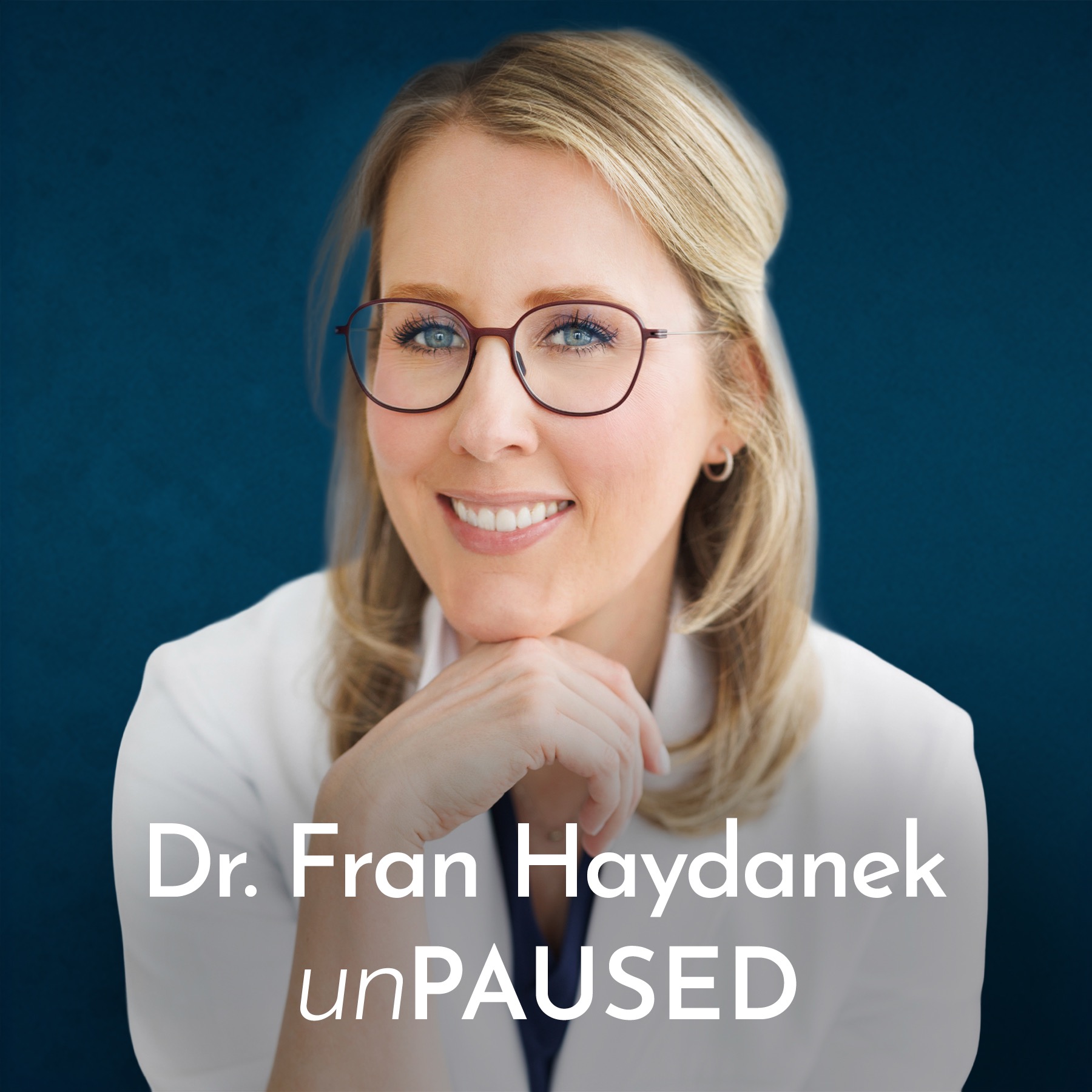
What happens in the gap between your last baby and your first hot flash? Dr. Mary Claire Haver sits down with Dr. Fran Haydanek — board-certified OB/GYN and the science communicator behind Paging Dr. Fran — to connect the dots most women are never shown. They unpack “reproductive hormone sensitivity”: why women whose brains react to hormone fluctuations with PMS, PMDD, or postpartum depression face a dramatically higher risk of depression in perimenopause — in the largest study to date, almost 13-fold — and why that history sits unread in your own chart. They also get practical about diagnosis: why there’s no blood test for perimenopause, the conditions that mimic it — iron deficiency (and the new ferritin guidelines), thyroid disease, sleep apnea, diabetes — and what your pregnancy history predicts about your future health, from gestational diabetes to preeclampsia and heart disease. Because knowing your own history means you never have to be blindsided by symptoms that were completel
What would change in your life if you genuinely believed the future you desire was possible? In today's episode, I break down the power of conviction, identity and embodying your future self before the external evidence arrives. We explore why so many people wait for their circumstances to change before giving themselves permission to feel confident, successful and abundant, and how shifting the way you think, make decisions and take action can completely change the trajectory of your life. Remember, your past is evidence of who you've been, not a limitation on who you can become. Including: custom macros, easy meal plans + shopping lists, my self-talk and limiting beliefs mindset software, one click store for supps, internal calorie tracker (with the ability to track meals by simply taking a photo of your food) + much more.Click here to start your 7-day free trial (https://dannykennedyfitness.us12.list-manage.com/track/click?e=a1f82ded2a&id=269ba14c90&u=5282aad1afb52512010cc93ad) @djk
Can We REALLY Communicate With the Dead? Suzanne Giesemann Reveals Shocking Evidence, Afterlife Secrets & the Science of Intuition Is the afterlife closer than you think? What if the difference between an ordinary thought and a message from Spirit comes down to something you can actually learn to recognize? In this episode of Mayim Bialik's Breakdown, spiritual teacher and evidential medium Suzanne Giesemann shares extraordinary experiences, groundbreaking insights, and compelling examples of information she believes came from beyond the veil, including a chilling case involving a boy who knew he was going to be struck and killed by lightning. She also breaks down her experience channeling Kirk and Anne Douglas during a reading, raising a profound question: How do we distinguish vague intuition from genuinely evidential information? From the mysteries of consciousness after death to the role of the nervous system in mediumship, Suzanne explores what might be happening beneath our consc
Research out in Sept 2026 showed a big overlap with ADHD and IBS so I loved chatting to nutritional therapist Sarah Osborne about ADHD. We covered: Sarah's introduction to nutrition and then into specialising in ADHD How Sarah's clinic defines ADHD and how this differs from some of the standard definitions Why cooking and preparing meals with ADHD can be more tiring, and what is time blindness, task switching and executive function Why following a restrictive diet can be so appealing for some people and the all or nothing mentality Tips for managing your eating when you have ADHD and IBS. Research we mentioned - https://www.sciencedaily.com/releases/2026/09/260911003840.htm About Sarah Sarah Osborne is a registered Nutritional Therapist, nutritionist, lecturer, TEDx and C-Talks speaker, and founder of So Nutrition, a specialist nutrition and coaching practice supporting neurodivergent people and their families. Alongside her steam, Sarah specializes in ADHD, autism, gut health, emotion
Ibogaine is back in the national spotlight, but what does it actually do inside the body? Licensed psychologist Jonathan Dickinson, co-founder of Ambio Life Sciences, joins Gary Brecka to break down the Stanford research on veterans with traumatic brain injury, what brain scans showed after treatment, how ibogaine affects opioid withdrawal, and why the heart is the real risk. Plus what 4,000+ treatments have taught his team about screening, magnesium, and safety. Don’t guess, test. Get Jonathan Dickinson’s book, “Ibogaine and the Bicameral Mind”: https://bit.ly/4AnHCWt To learn more about ibogaine treatment, visit Ambio Life Sciences: https://bit.ly/4k7B1e2 Connect with Jonathan Dickinson Website: https://bit.ly/4zAf2B0 Instagram: https://bit.ly/4iHzzwf Facebook: https://bit.ly/4iye9TL TikTok:https://bit.ly/4iKVUZW LinkedIn: https://bit.ly/48a39Wx Thank you to our partners BREW: THE ULTIMATE COFFEE: https://bit.ly/4elHM82 COLD LIFE: THE ULTIMATE HUMAN PLUNGE: https://bit.ly/4eULUKp GEN
Chris and Xand van Tulleken continue their conversation with Katherine Whitcroft, ear, nose, and throat surgeon at Sheffield Children's Hospital and co-director of the Sheffield Chemosensory Research Lab. Together, they hear what drew her to the nose, and further explore nasal polyps. They look at nose reshaping procedures, and the medical and aesthetic reasons behind them. If you'd like to share your thoughts on this or any other topic covered on the podcast, you can email us at [email protected] Presenters: Drs Chris and Xand van Tulleken Guest: Katherine Whitcroft Producer: Maia Miller-Lewis Researcher: Grace Revill Executive Producer: Rami Tzabar Visual Producer: Leon Gower Technical Lead: Reuben Huxtable Digital Lead: Richard Berry Composer: Phoebe McFarlane Sound Design: Melvin Rickarby At the BBC: Assistant Commissioner: Greg Smith Commissioning Editor: Rhian Roberts A Loftus Media production for BBC Radio 4.
Robert Greene, author of The 48 Laws of Power, Mastery, and The Laws of Human Nature, nearly died of a stroke in 2018. It left him unable to type, so he spent the next seven years writing his new book, The Law of the Sublime, by hand. Michael speaks with Robert about what coming close to death did to his mind, why he believes humans need transcendent experiences as much as food and shelter, how comfort and old grudges keep our world small, and the everyday rituals he uses to wake back up to it. They discuss: (00:00) Cold open (00:59) The stroke (04:56) What nearly dying does to you (07:12) The book he waited 20 years to write (12:16) What is the sublime? (15:31) Finding amazement in his backyard (24:26) A need as deep as food (28:26) The lost rites of passage (33:18) How to make your own rituals (36:49) 40 minutes of meditation a day (45:37) What boredom is good for (50:31) How adults can slow down (53:36) Why nature matters (58:58) Choose discomfort (1:02:48) Death and the afterlife (
Welcome to What's Up Docs?, the podcast where doctors and identical twins Chris and Xand van Tulleken explore the ideas shaping our health and wellbeing. In this episode, they turn their attention to the nose, an organ we use with every breath but rarely stop to think about. Joined by Miss Katherine Whitcroft, ear, nose, and throat surgeon at Sheffield Children's Hospital and co-director of the Sheffield Chemosensory Research Lab, Chris and Xand explore how the nose is built and what it does for us, why we produce so much mucus and where it goes, and why our noses run when we cry or eat spicy food. The conversation also covers how our sense of smell changes across our lives, the most common things that go wrong with the nose, and what the evidence says about treatments such as nasal sprays. If you want to get in touch, you can email us at [email protected]. Presenters: Drs Chris and Xand van Tulleken Guest: Miss Katherine Whitcroft Producer: Maia Miller-Lewis Researcher: Grace Revi
Height is a loaded topic – especially during adolescence – because we live in a height-ist society. It helps to know the real science behind the hormone that fuels growth. In this episode, we detail where growth hormone is produced in the body, how it tells bones to lengthen, and how it impacts other organs, too. We also get into why and when a doctor might prescribe growth hormone as a treatment. Make sense of this complicated topic, where the emotional stakes are high. Show Notes: To submit listener questions email [email protected] Produced by Peoples Media (https://www.peoplesmedianetwork.com/)
Jeff Cobb (@jeffcobb (https://www.instagram.com/jeffcobb)) is a professional wrestler best known for his time in WWE and NJPW. He sits down with Chris Van Vliet in Las Vegas to discuss being released by WWE, why he signed with WWE after previously turning them down, being a part of the MFTs and wearing face paint, representing Guam in the Olympic Games, being Matanza Cueto in Lucha Underground, why he returned to New Japan, wrestling Will Ospreay, and more! Please support our sponsors: Max $20 discount HELIX SLEEP: Flash sale! PURE PLANK: The future of core fitness! Follow CVV on social media:
Susan is worried about her elderly father, who has started dating a woman in her 60s. Got a dilemma? Follow on social media: Facebook.com/DrLaura (http://facebook.com/DrLaura) YouTube.com/DrLaura (http://youtube.com/DrLaura) Join the Dr. Laura Family!! >> Receive my weekly newsletter, perks, and more! Sign up now, it's FREE > DrLaura.com (https://www.drlaura.com/) Hosted by Simplecast, an AdsWizz company.
Have you ever felt like you don't really deserve your success? Maybe you got a promotion, landed a great job, or accomplished something impressive, but instead of feeling proud, you worry that you've somehow fooled everyone into thinking you're more capable than you really are. You wonder if it's only a matter of time before someone figures out you don't know what you're doing. That's often called imposter syndrome, and it can affect even highly successful, accomplished people. But here's an interesting twist: What if feeling like an imposter isn't necessarily a bad thing? What if those feelings of self-doubt are actually a sign that you're challenging yourself, growing, and doing something that matters to you? According to Dr. Jill Stoddard, the goal isn't necessarily to eliminate self-doubt but to stop letting it dictate what you do. She is a mental health care provider and author of the book Imposter No More: Overcome Self-Doubt and Imposterism to Cultivate a Successful Career (http
Most nights, Niecy Nash and her daughter, Dia, end up in bed talking true crime, and now they’re inviting you in. Mother Knows Murder is hosted by actress Niecy Nash and her daughter, Dia Nash. Each week, one of them brings a case and the other hears it for the first time. They catch different details and lock in their own verdicts, with humor that keeps things fun even when the cases get dark, and they never lose sight of the real people at the heart of these stories. Follow Mother Knows Murder for a new episode every Tuesday: https://pod.link/6827634300 Mother Knows Murder is a Crime House Original powered by PAVE Studios.
Why do you keep repeating the same relationship patterns even when you know better? In this episode, Sabrina explains why knowing your patterns isn’t the same as breaking them, and gives you a practical plan for changing them. She covers how to catch yourself falling into old habits while it’s happening, how to calm your nervous system with “sensation without explanation” and the 90-second emotion rule, and how to stop self-abandoning in relationships that keep ending at the same point. She also answers listener questions on anxious attachment, dating avoidant partners, setting boundaries you actually keep, and how to believe that healthy, secure love really exists. Plus, Sabrina explains how dopamine loops from social media and dating apps keep you stuck, how to cut back on screen time a little at a time without burning out, and why healthy love is less complicated than you think. She also shares her “rename the contact” tool to help you stop texting the people who keep pulling you ba
Your GLP-1 stopped the food noise. But what if that’s costing you more than you think? In your 40s, the real risk on a GLP-1 is not eating enough. I want you to THINK differently about eating on a GLP-1 in your 40s, so inside this episode I'm walking you through my own food noise story, what happened when that quiet tipped into undereating, and exactly how I plan my protein around my medication days now. After listening you'll understand why eating less, skipping meals, and waiting for hunger to show up don't work when the GLP-1 has turned your appetite down, and why the scale alone can't tell you whether you're losing fat or muscle. If you're constantly asking yourself "Am I eating enough, or is this how it’s supposed to feel on a GLP-1?", this episode is for you. You'll learn how to discover your weekly appetite pattern, what a protein-first low-appetite day looks like, and four simple ways to check that you're holding on to your muscle. And if you're not on a GLP-1 yet but you're co
A welfare caseworker first told Ms. Pat she had a knack for turning painful stories into comedy. She was 20, fresh out of prison for selling drugs, and already in charge of six kids–some hers, some the children of family members who needed a safe place to stay. It would take 10 more years for Ms. Pat to get on stage at an open mic, but once she started, she didn’t stop. She now sells out shows and has starred in a BET+ sitcom based on her life for five seasons. In this episode, Ms. Pat talks about moving between economic classes and the lies she told to blend in, learning to manage money from her husband, and building the big, full house she never had growing up. Ms. Pat’s latest memoir is called Ms. American Dream: A Memoir of Making It, No Matter What. (https://www.simonandschuster.com/books/Ms-American-Dream/Patricia-Williams-Lee/9781668044216) Podcast production by Zoe Azulay Death, Sex & Money is produced by Slate! To support us and our colleagues, please sign up for our membershi
Get the 200+ Page Optimal Living Daily Workbook (PDF) - Free. Want to turn today's episode into an actionable plan? Episode 3601: Mark Fisher explains why so many people stay on track with fitness Monday through Thursday, only to lose the thread once the weekend arrives. He offers three fixes: picking up hobbies that support your goals, stocking the kitchen so the easy choice is the healthy one, and planning indulgences ahead so they feel chosen rather than accidental. The point is not perfection but building healthy habits that leave room for fun. Read along with the original article(s) here: https://markfisherfitness.com/how-to-prevent-your-weekends-from-derailing-your-fitness-2/ Quotes to ponder: "It's 100% ok to enjoy yourself on your fitness journey." "Placing a little friction between you and what you wish to avoid can be super helpful." "Each human has to decide for themselves when self-care means getting a massage and when it means lasagna."
Should the midterm elections, the president, Congress, or the political direction of the country change whether you pursue Air Force Special Warfare or join the military at all? Aaron, Trent, and Peaches address the questions they are already getting from candidates and make the argument that Washington probably matters far less to your daily military experience than you think. If election results are enough to derail your plan, the guys argue that politics may simply be giving you a more respectable excuse for fear, hesitation, or uncertainty about committing to the pipeline. The conversation turns toward the things candidates can actually control. Your running, Zone 2 cardio, mobility, water confidence, strength, preparation, and ability to show up ready matter a hell of a lot more than the latest political headline. Aaron argues that candidates who keep waiting for the perfect administration, perfect military culture, or perfect moment are likely to remain on the sidelines when real
Most hormone advice assumes you control your day. Get morning sunlight. Eat on a schedule. Go to bed at the same time every night. But what if you are on hour 10 of a 12-hour night shift, standing at mandatory PT at 6 a.m., or living on a ship where you have not seen the sun in weeks? Cycle Syncing® was never about having a perfect life. It was about knowing what your body needs in each phase and using every choice you do have, even when there are not many. In this episode of The Ovary Club, I sit down with two women who have lived this in one of the most extreme ways possible. We get into how shift work shows up in your cycle, why your ovaries care what time it is, how to eat well when you do not control the menu, and the simple framework that makes cycle care realistic when the mission has to come first. We are releasing this one the day before Veterans Day on purpose. To every woman who has served, and every nurse and first responder working the shifts the rest of us depend on, this
Recorded poolside from Palm Springs, Meatball and Big Dipper chat about Pride parties, sexual exploits, and what's really wrong with each other. Should they open a nightclub? Call us with your sex stories at 213-536-9180! Or e-mail us at [email protected] FOLLOW SLOPPY SECONDS (https://www.instagram.com/sloppypod) FOLLOW BIG DIPPER (https://www.instagram.com/bigdipperjelly) FOLLOW MEATBALL (https://www.instagram.com/spiciestmeatball)
Can eating more plants give your skin a glow—and change how attractive you are? Dr. Matt Nagra joins Chuck Carroll to unpack the research behind the "vegans are sexier" headlines. Nagra, a Vancouver-based naturopathic doctor and co-author of research on vegan attractiveness, explains three connections between diet and perceived attractiveness: skin coloration, body odor, and body composition. Find out why carrots, sweet potatoes, tomatoes, and peppers enter the conversation; garlic's surprising effects; and why carbohydrate quality matters more than simply fearing carbs. You will learn: Carotenoids and the science behind the "glow" How researchers test whether diet changes body odor Meat intake, sweat, and the limits of the evidence The surprising garlic findings Plant-forward eating versus a vegan label Body composition without assuming thinner always means better Why beans, fruit, and whole grains belong in the carbohydrate conversation How quickly some changes may appear Matt's rese