Two people refuse to leave their homes, but are they afraid of the same thing? One worries about being judged, embarrassed, or criticized, while the other fears being trapped somewhere without a way to escape. Their behavior may look identical, but what's happening inside their minds can be very different. In this episode of Off the Couch Psychology Podcast, Dr. Jerry Cunningham explores the differences between social anxiety disorder and agoraphobia through the stories of Michael and Janice. You'll discover how these disorders develop, why avoidance can make anxiety worse, and how fear can gradually turn everyday activities into overwhelming challenges. We'll also visit the world of The Secret Garden, where a frightened young boy discovers that life has much more to offer beyond the safety of his bedroom. Could the difference between these disorders explain something you've noticed in yourself or someone you love? And what does it take to begin reclaiming the freedom anxiety has taken
In 1850, a German-Jewish migrant stepped off the boat in New York City, and found a home in its crime-ridden Lower East Side — then called “Kleindeutschland”. But Fredericka Mandelbaum wasn't just tired and poor. She was a six-foot, 250-pound colossus, not just in stature but ambition, going from peddler to fence to underworld queenpin in just a few short years. By the mid-1870s, “Marm,” as her gang of misfit shoplifters and pickpockets called her, was an underworld titan, with half the city's political class in her pocket. But when she stepped into the world of bank heists, things got hot. And eventually, Marm would find herself hunted down by America's most famous detective agency.
Get Dr. Vonda's insights Want to understand what's happening in your body — and what to do next? Each week, Dr. Vonda shares science-backed guidance on strength, bone health, muscle, and longevity — the same way she speaks to her patients. Clear. Practical. No noise. What if the problem was never you? So many women are told something is wrong with their bodies, treated for conditions they don't have, and left feeling ashamed of what's completely normal. Sometimes it takes one doctor asking a better question to change the story. Dr. Shannon Klingman, OB-GYN, inventor, and founder of Lume, to talk about the courage it takes to step off the curb. She funded her own study as a resident, heard "no" from every major brand, and mortgaged her home to bet on one ad before growing Lume into a nine-figure business and selling to Harry's. Then we go deeper into her lobular breast cancer diagnosis and how she rebuilt her health through sleep, strength training, and eating to feed her immune system.
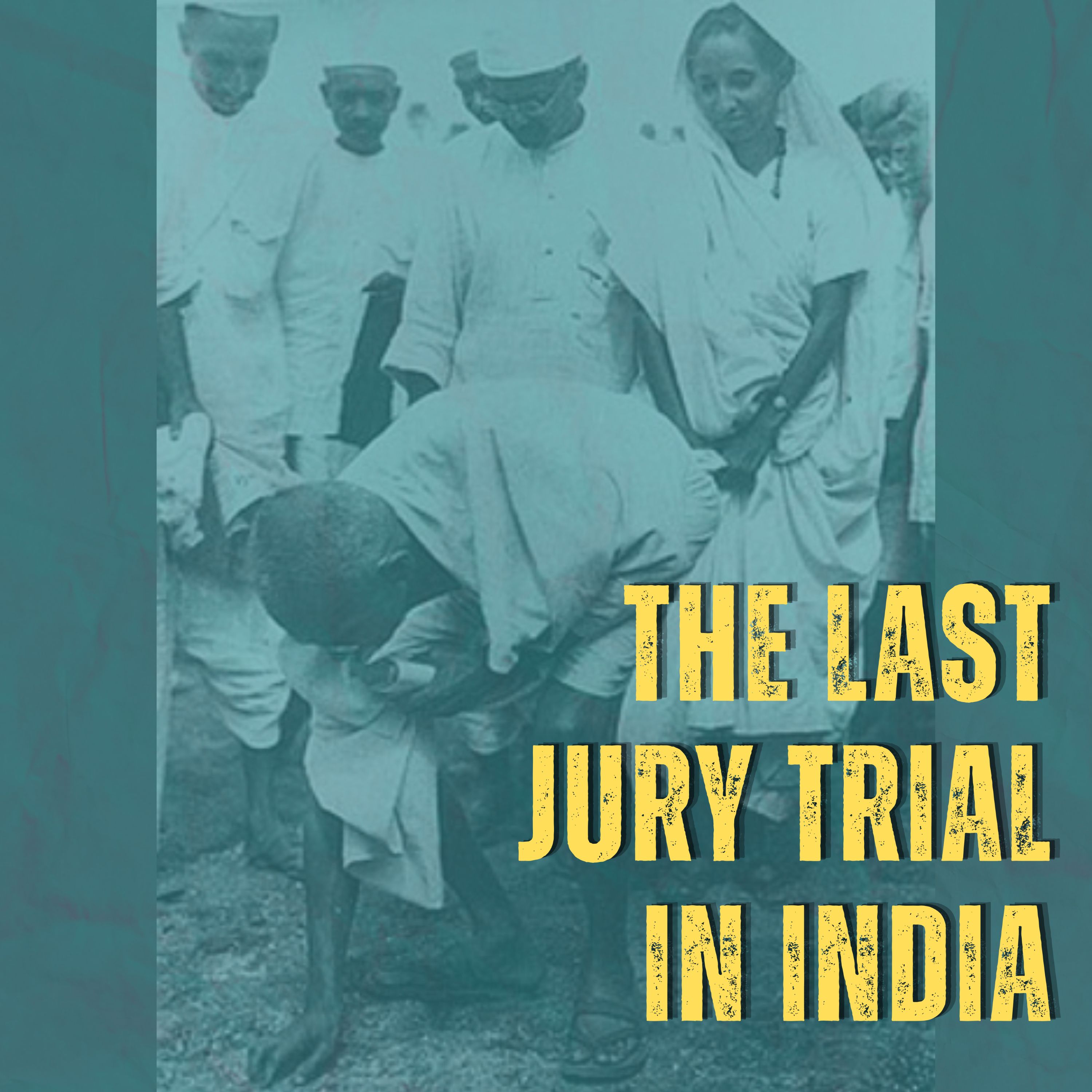
Even though jury trials were suspended for many nationalist leaders charged with political crimes, there were still moments when jurors exerted their power. One example is the trial of Communist organizer, Philip Spratt, a focus of the episode. The threat of a jury undermining the prosecution in the sprawling Meerut Conspiracy Trial also led the colonial government to take drastic action. Lastly, this episode also looks at the drafting of the 1950 Indian Constitution and asks, “Why did a country that committed to universal suffrage decide that the jury trial was not worth fighting for?” Hosted by Simplecast, an AdsWizz company.
Heart disease is the number one killer of women — not breast cancer — and the window that sets the trajectory opens during perimenopause. Dr. Mary Claire Haver sits down with Dr. Jeremy London, a board-certified cardiovascular surgeon with more than 25 years of experience and thousands of heart surgeries behind him, to put cardiovascular health at the center of the menopause conversation. They break down what heart disease actually is, why 80–90% of it comes down to blockages in the coronary arteries, and what really happens in the transition: LDL cholesterol rising an average of 18%, blood pressure starting to accelerate, and visceral fat appearing — all as estrogen’s lifelong protection of the arteries withdraws. Dr. London explains cholesterol the way no one learns it at the doctor’s office — why ApoB and Lp(a) matter more than your LDL number, and why menopause raises cholesterol because the liver clears less, not makes more. They also cover why women get missed: risk factors that
What if the disease you've been told is "incurable" is really your body asking for help? In this episode, I'm joined by Dane Johnson, a certified holistic nutritionist and the founder of Crohn's Colitis Lifestyle, to unpack his story. At 26, Dane was 6'2", weighed 120 pounds, and was having as many as 25 bloody bowel movements a day. Today, he describes himself as more than a decade surgery-free, medication-free, and symptom-free. This one isn't just for people with Crohn's or colitis. Whatever you're dealing with, you need to hear it. We also get into the root causes Dane says were missed for years, including a hidden virus (cytomegalovirus, or CMV), mold, parasites, and round after round of antibiotics. Dane walks through the five gut imbalances he works on with clients, his SHIELD framework, and the simple, low-cost 30-day foundation he says anyone can start today, beginning with the mind. What you'll learn: What the early signs of IBD can look like, and why IBS may be an early warn
What if UFOs aren’t simply “objects” in the sky, and what if the biggest mystery isn’t where they come from, but what they actually are? In this episode of Mayim Bialik's Breakdown, legendary UFO researcher Dr. Jacques Vallée (scientist, computer scientist, and one of the most influential figures in UAP research) takes us deep inside nearly seven decades of investigating UFOs, UAP, Non-human intelligence, consciousness, and unexplained phenomena. Vallée reveals the patterns he has discovered across thousands of cases, cultures, and eyewitness accounts, and explains what he believes UAP and NHI may actually be. He also explores one of the strangest questions in the field: Why do UAP appear to crash? Could these events be part of some kind of game, interaction, or deception? He shows us his collection of unknown biological materials gathered over years of investigation, samples currently being tested to determine whether they could have extraterrestrial origins. He explains what research
Before starting a family, Ian Somerhalder learned he had an MTHFR mutation and elevated lead and thallium his body couldn’t clear. He and Nikki Reed join Gary Brecka to talk about leaving Hollywood for a regenerative farm, Nikki’s journey with PCOS and learning to advocate for herself, why synthetic folic acid ends up in so much of our food, and how little most of us know about what we’re putting into our bodies. Don’t guess, test. Disclaimer: This episode is for educational purposes and isn’t medical advice. If you’re pregnant or trying to conceive, talk with your physician before changing any prenatal supplements. Shop Ian & Nikki’s company:http://absorbmore.com/https://bit.ly/3Vourpn Connect with Ian Somerhalder Website: https://bit.ly/3Vourpn Instagram: https://bit.ly/4AtQ7zc Facebook: https://bit.ly/4eFFiSp TikTok: https://bit.ly/4eGxzn0 X: https://bit.ly/4eyBJxi Connect with Nikki Reed Website: https://bit.ly/4f9sXWC Instagram: https://bit.ly/4eGDwQV Facebook: https://bit.ly/4C7i
Fr. Mike highlights how Jesus didn't pray in order get something from God, he prayed in order to be close to God. He also points to Jesus' prayer in the Garden of Gethsemane as a perfect example of how we should pray with honesty and trust. Lastly, Fr. Mike provides insights on the significance of the walk to Emmaus and Jesus' last words on the cross. The readings are Luke 22:39-24:53 and Proverbs 26:20-23. Support The Bible in a Year (with Fr.
Drs Chris and Xand van Tulleken continue their conversation about health optimisation with Jack Naylor, Head of First Team Sports Science at Everton Football Club. This time, they get a glimpse of life inside a Premier League football club. How do top athletes train and eat? Do they, too, struggle with motivation to exercise? And what tricks might help the rest of us get moving? Chris and Xand also ask what happens when we lean into creativity, rather than control, when it comes to our health. If you’d like to share your thoughts on this or any other topic covered on the podcast, you can email us at [email protected]. Presenters: Drs Chris and Xand van Tulleken Guest: Jack Nayler Producer: Rami Tzabar Assistant Producer: Dr Samara Linton Researcher: Dr Samara Linton Executive Producer: Jo Rowntree Visual Producer: Leon Gower Technical Lead: Reuben Huxtable Digital Lead: Richard Berry Composer: Phoebe McFarlane Sound Design: Melvin Rickarby At the BBC: Assistant Commissioner: Greg S
Impressionism emerged in 19th-century France as a radical departure from academic traditions, driven by artists seeking to capture fleeting atmospheric conditions, shifting sunlight, and contemporary daily life through visible brushwork and impasto texture. The movement's iconic moniker originated as a derogatory review by critic Louis Leroy following the anonymous cooperative society exhibition of 1874, where Claude Monet's Impression, Sunrise was singled out for its sketch-like quality; rather than rejecting the insult, the artists embraced the title. Technological advancements played a pivotal role in enabling plein-air painting, particularly John Goffe Rand's 1841 invention of the collapsible tin paint tube, which replaced fragile pig-bladder pouches and allowed artists to work portably outdoors alongside newly developed synthetic pigments like cobalt blue and viridian. Key figures shaped both the aesthetic trajectory and institutional permanence of Impressionism. Mary Cassatt prov
Over the last 100 years, the world has gotten safer and better in almost every single way, yet depression and mental health issues are higher than they've ever been. Dr. Kelly Lambert, a neuroscientist at the University of Richmond and author of Lifting Depression and Wild Brains, argues that one reason for this is that our brain is built to work for its rewards and to look forward to good things.The problem: Modern life is built to bypass all effort and give instant gratification. Michael speaks with Kelly about worker rats and trust fund rats, why crafts and hobbies may work like medicine, what wild animals reveal about modern stress, problems with how pharmaceutical studies are constructed, and why looking forward to something good may matter as much as getting it. They discuss: (00:00) Intro (01:05) Why mental health hasn't improved (06:02) Exercise and working for rewards (09:29) Why hard-won rewards feel better (11:40) Wild rats vs. lab rats (17:44) Why behavior often beat pills
Welcome to What’s Up Docs?, the podcast where doctors and identical twins Chris and Xand van Tulleken explore the ideas shaping our health and wellbeing. In this episode, they discuss the growing drive to optimise our health. We have more data about our bodies than ever before - wearables, apps and trackers that measure our sleep, diet, exercise, body temperature, oxygen levels and more, all in the hope of hitting the right numbers. But what does optimisation really mean? Should we always strive to be more efficient? Or is there a more helpful way to think about the complex system that is our health? To help answer these questions, the Docs are joined by Jack Naylor, former Head of First Team Sports Science at Everton Football Club. If you want to get in touch, you can email us at [email protected]. Presenters: Drs Chris and Xand van Tulleken Guest: Jack Nayler Producer: Rami Tzabar Assistant Producer and researcher: Dr Samara Linton Editor: Jo Rowntree Visual Producer: Leon Gower
Eamon Javers is CNBC's Senior Washington Correspondent, keeping Wall Street up to date with goings-on at the White House. He's also fascinated by espionage. Sometimes, those two fields combine - and when they do, you get a story like this. In this conversation with True Spies producer Eleanor Sly, Eamon discusses the case of John Harold Rogers, a former Federal Reserve advisor who was convicted of leaking trade secrets to China. Rogers is the subject of Eamon's latest investigation, Inside Man: How Chinese Spies Used Lies, Love and Betrayal to Target the Fed. From SPYSCAPE, the home of secrets. A Cup And Nuzzle production. Series producer: Joe Foley. Produced by Eleanor Sly.
Family gatherings can bring joy, connection — and plenty of stress, especially when old patterns and emotional triggers resurface. This week, Rio Wilson, founder of Brain-Body Therapy, talks about how movement can help regulate the nervous system, build resilience, and make it easier to navigate challenging relationships during the holidays. She explains why the right kind of movement can improve mental well-being, reduce stress, and help us respond more thoughtfully when family dynamics get complicated. In this episode, you’ll learn: Why family gatherings can reactivate old emotional patterns and triggers. How exercise helps regulate stress and strengthen emotional resilience. Practical ways to use movement and boundaries to navigate the holiday season with greater ease.
If you don’t learn to care for these parts, then your nervous system will protect them on your behalf. You’ll learn about trauma feedback loops, how to identify them, how to actually help your younger parts, and more. Discover how resolving past trauma can unburden your parts, break unhealthy patterns, and help you to feel more like yourself. Episode Highlights: • [00:00] Introduction • [01:23] Examples of when you may react out of character • [03:12] Why you cannot reason with your younger parts • [08:20] What happens internally when your experience is hijacked • [13:13] An example of a big reaction coming from a younger part • [21:18] Understanding the trauma feedback loop • [25:53] Becoming a competent protector • [33:00] Showing your parts the present is different • [36:26] Question 1 - How do I access adult self when I’m really triggered? • [42:55] Question 2 - How do I stop reacting and start responding? • [48:21] Question 3 - Can I know my parts if I don’t remember my childhood?
Tonight we have alien grays, cursed parks, haunted courthouses, contact with the dead and much more. Keep it spooky and enjoy! Season 21 Episode 55 of Monsters Among Us Podcast, true paranormal stories of ghosts, cryptids, UFOs and more, told by the witnesses themselves. SHOW NOTES: Tonight's Sponsor - ShipStation - Access top carrier discounts & streamline your shipping. Get 60 days free at ShipStation.com (http://shipstation.com/) with code MAU. MAU Merch Shop - https://www.monstersamonguspodcast.com/shop MAU Discord - https://discord.gg/ybjc9KUagY Monsters Among Us Junior on Spotify - Courthouse where my Great Grandparents lived - https://bit.ly/4cJnxkY Griffith Park Curse - https://www.youtube.com/watch?v=-zs53BLjGlw Griffith Park Curse Deeper Dive - https://www.kcrw.com/shows/greater-la/stories/griffith-park-curse The Telepathy Tapes - https://podcasts.apple.com/us/podcast/the-telepathy-tapes/id1766382649 Otherworld Podcast "The Valley" - https://podcasts.apple.com/us/podcast/epis
In today's episode, Elizabeth sits down with Michelle Shapiro, a registered dietitian who works with highly sensitive bodies, to talk about the rise of mystery symptoms and the role of the nervous system. Michelle shares her own health journey, from panic attacks in college to a severe flare-up that shaped how she works with clients. She explains how the nervous system and immune system work together and what is happening in conditions like MCAS and POTS. They get into where functional medicine can go wrong for sensitive bodies and why gentler support often works better. Michelle also shares how she helps clients support their symptoms and their nervous system at the same time. Follow Michelle Shapiro: Instagram: https://www.instagram.com/michelleshapirord/?hl=en Instagram: https://www.instagram.com/thewellnessprocesspod TikTok: https://www.tiktok.com/@thewellnessprocess YouTube: https://www.youtube.com/@TheWellnessProcess Bon Charge: Save 15% at boncharge.com (http://boncharge.com/) w
After getting broadsided by the Stockholm, the crew on board the Andrea Doria quickly realized their ship had been fatally damaged. The crew raced to deploy lifeboats, but due to the angle of the ship’s list, half of them were unusable. The captain put out a desperate SOS to other ships in the area, but it was unclear who would answer the call or if they would arrive before the Andrea Doria sank. Join Audible today by downloading the Audible app.
Having a "race" on the calendar provides a ton of motivation to walk today...even when you don't feel like it. Dave explains during this ten minute walk. [email protected] Support the sponsors of Walking is Fitness: Check out Topo Athletic shoes (https://www.topoathletic.com/). You can buy online or find a retailer near you
Get the 200+ Page Optimal Living Daily Workbook (PDF) - Free. Want to turn today's episode into an actionable plan? Episode 3609: Riley Pearce explains how nutrition supports muscle growth, starting with why the quality of calories matters and how much protein to aim for. Riley walks through the research on carbohydrates and nutrient timing, what dietary fat does and does not do, and which supplements such as creatine and essential amino acids may help, while stressing that every body responds differently. Read along with the original article(s) here: https://freeformfitness.ca/a-special-recipe-for-muscle-mass-part-2-diet-nutrition/ Quotes to ponder: "You do not need supplements to gain muscle, but they can be included in your hypertrophy nutrition protocol to advance your gains." "Experiment with protein sources and content and take note of how your body responds."
We hear a lot about the importance of sleep, exercise, nutrition, and mindfulness for our health. But what about sexual pleasure? In this episode, we’ll explore a fascinating new study on how masturbation affects our well-being, whether there’s an optimal amount of self-pleasure, and how to prioritize pleasure without turning it into another wellness obligation. My guest is Danielle Bezalel (https://www.sexedwithdb.com/), aka DB. Danielle earned a Master of Public Health with a focus on sexuality and reproductive health from Columbia University, and she is the Creator, Executive Producer, and Host of Sex Ed with DB (https://www.sexedwithdb.com/podcast). She is also the host of Pleasure People (https://pod.link/6819871177/episode/ZjcyZDA2ZGItMmYzMC00MzZlLWEwY2ItMDUwY2ZkMWJkYzAz), a new 6-part limited audio series exploring what happens when we treat pleasure as a legitimate part of our health and well-being. Some of the specific topics we cover include: Why is self-pleasure often overlo
Why do some people cry when they orgasm? Amy Baldwin and Paigge Gilbert answer that and 3 more listener sex questions on the Shameless Sex podcast. Paigge started out as a Shameless Sex listener who wrote in with her own sex question. 8 years later, she's our marketing director and part of the teaching staff at every retreat. She's also training as a sex and relationship coach with Somatica®, so it's a full-circle moment when she joins Amy to answer yours. First up is a round of "Would You or Have You Tried?" Golden showers, fisting, and paying (or getting paid) for sex are all on the table. Amy's golden shower story is a strong argument for talking it all through first. In this episode, you'll learn: Why some people cry during orgasm, and how to give a casual partner a heads-up so nobody panics What to do after your partner kink-shames you Why regular sex and relationship check-ins make kink conversations easier How small "leans" toward each other's desires can work better than full c
Professor Jonathan Shepherd (https://profiles.cardiff.ac.uk/emeritus/shepherdjp) CBE is Professor Emeritus of Oral and Maxillofacial Surgery at Cardiff University. Early in his career, he found that most assaults treated in hospital were never reported to the police. He built the Cardiff Model (https://rcem.ac.uk/wp-content/uploads/2025/06/The-Cardiff-Model-explained-FINAL.pdf) to address this gap by combining anonymised A&E data with police data. This approach has helped cut violence by up to 60% across England and Wales. More recently, Professor Shepherd has focused on building the evidence ecosystem. He helped to create the What Works Centres, the College of Policing, and the Chartered College of Teaching. Three takeaways from me from this episode were: * The value of a small team: Professor Shepherd discussed the importance of having fewer people in the room, each of whom could take action and get things done. * The evidence ecosystem - a phrase he coined. His goal is to put everyt