Listen through the publisher, then discuss the episode here or arrange an in-person Roundtable. Your city determines where to meet.
Roundtables are designed for groups of four, with a shared subject and room for everyone to speak. Come for discussion, with no dating expectation.
Impressionism emerged in 19th-century France as a radical departure from academic traditions, driven by artists seeking to capture fleeting atmospheric conditions, shifting sunlight, and contemporary daily life through visible brushwork and impasto texture. The movement's iconic moniker originated as a derogatory review by critic Louis Leroy following the anonymous cooperative society exhibition of 1874, where Claude Monet's Impression, Sunrise was singled out for its sketch-like quality; rather than rejecting the insult, the artists embraced the title. Technological advancements played a pivotal role in enabling plein-air painting, particularly John Goffe Rand's 1841 invention of the collapsible tin paint tube, which replaced fragile pig-bladder pouches and allowed artists to work portably outdoors alongside newly developed synthetic pigments like cobalt blue and viridian. Key figures shaped both the aesthetic trajectory and institutional permanence of Impressionism. Mary Cassatt provided a vital American perspective within the Parisian avant-garde, focusing her canvases on intimate domestic moments and leveraging her exhibitions to support women's suffrage and major museum acquisitions. Meanwhile, Gustave Caillebotte acted as a crucial patron and organizer, utilizing his personal wealth to fund exhibitions, support struggling contemporaries like Monet and Pierre-Auguste Renoir, and assemble a foundational collection later bequeathed to the French state. Monet himself pushed optical experimentation to its limits through methodical series painting, such as his celebrated Grainstacks, and continued innovating even after 1923 cataract surgery granted him perception into the ultraviolet light spectrum, permanently altering his color palette and cementing Impressionism as a cornerstone of modern art. More episodes to explore: Who ARTed | Cassatt (https://pod.link/1485813093/episode/NzdhYzE4YjYtODQ0Yy0xMWVmLTlkMDItY2JlYjJiNzllNWI0) Who ARTed | Caillebotte (https://pod.link/1485813093/episode/NzE0MWJjMGEtMDM0ZC0xMWVlLTk5NDQtN2I1OGQ0YThhZjEx) Who ARTed | Monet (https://pod.link/1485813093/episode/MmEyZDVmY2UtMTA0MC0xMWYxLTgzYzUtM2Y3MmZlYjI0Y2Yy) Who ARTed | Renoir (https://pod.link/1485813093/episode/MzcwNTE3Y2EtZWI3Ny0xMWYwLThmNmMtMGZhYmM2NDIwNjE0) Want to learn more? The image used in the episode cover art is Monet's Impression Sunrise, the painting that gave the movement its name. Fun Facts Daily is an Airwave Media Podcast.
Episode information is provided by the publisher. Listening takes place on the publisher’s service.
Today, I’m honored to connect with Dr. Troy Badger. He is a board-certified cardiologist and interventionalist and the founder of Cardiostrong, a concierge preventive cardiology clinic in Provo, Utah, focused on reducing cardiovascular risk, optimizing metabolic health, and improving strength and cardiorespiratory fitness for executives and athletes. In today’s conversation, we discuss Dr. Badger’s gender- and age-specific approach to heart health, including treatment differences for men and women, and diagnoses such as INOCA, SCAD, vasospastic disease, and Takotsubo. We examine emotions and their influence on heart health, coronary ischemia and cardiomyopathies, labs and diagnostics, how Dr. Badger assesses risk in his patients, and the differences between a CAC and a CCTA. Dr. Badger also shares the labs he finds essential for all patients and discusses the role of VO2 Max, cardiovascular training, and lifestyle—specifically nutrition, the use of GLP-1 drugs, and a multidisciplinary
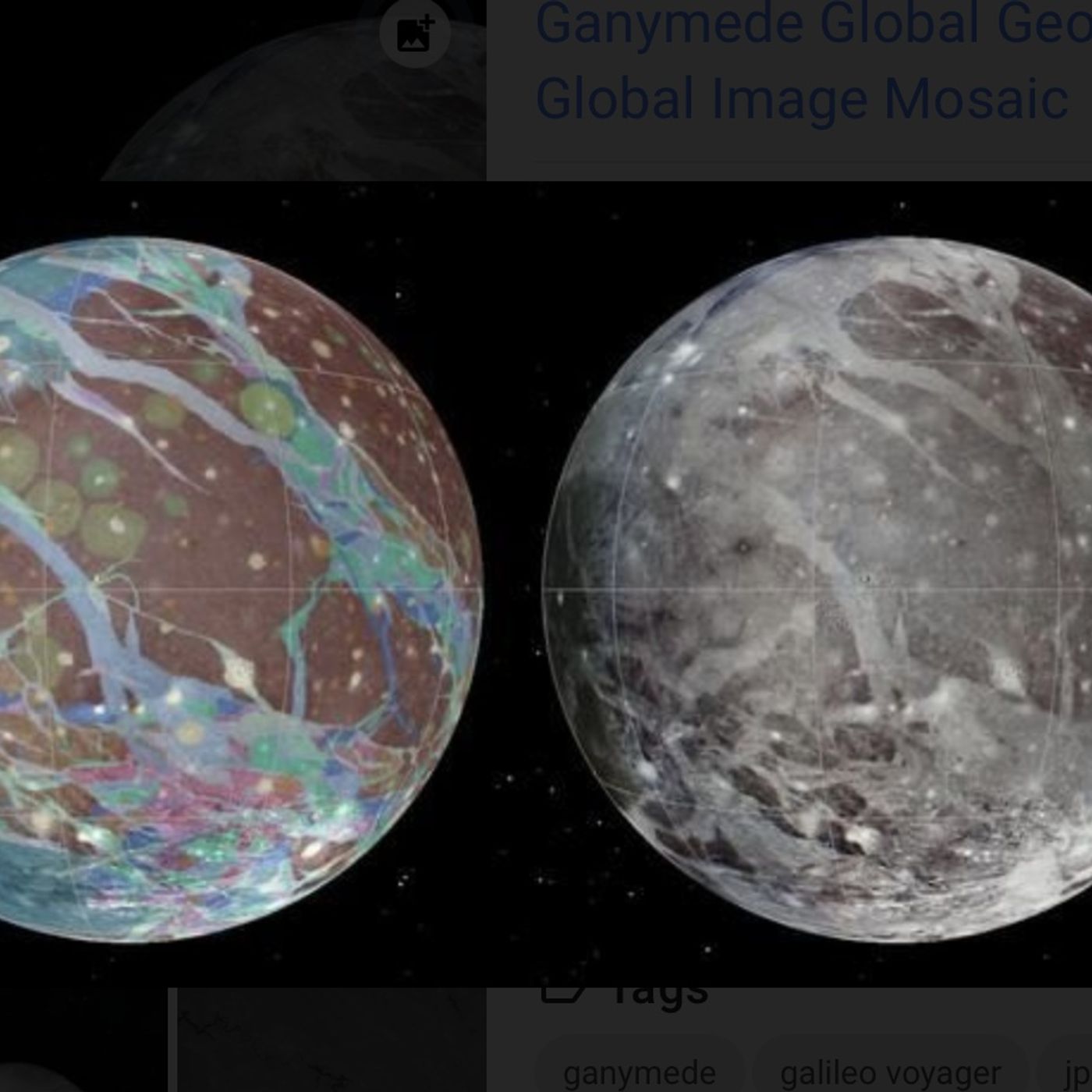
2014 GANYMEDE CONTENTS JOHN BATCHELOR SHOW 11-20-2026 California Storms Train Robberies City Politics — Part One Jeff Bliss reports that severe Pacific storms are dumping heavy snow across Lake Tahoe while driving massive coastal surges against the sand berms protecting beaches. Meanwhile, Los Angeles Mayor-elect Nithya Raman faces mounting criticism over thousands of missed votes, and police have apprehended a gang that stole twenty million dollars in goods from moving freight trains. (1) Beatles Vegas Historic Atomic Tests Formula — Part Two Jeff Bliss recalls how, in August 1964, the Beatles transformed Las Vegas entertainment by moving from the small Congo Room to the Convention Center for sixteen thousand fans. Archival footage from 1957 shows unwitting spectators on Fremont Street watching atmospheric nuclear tests, while today's Las Vegas hosts thrilling Formula Oneraces. (2) Iranian Conflict Regime Change War Powers — Part One Richard Epstein analyzes the military clashes betwe
#JimRohnMotivation #JimRohn #JimRohnSpeech In this Jim Rohn Motivation video, we explore the transformative power of vision and how it can break the grip of limitations. Jim Rohn reveals why a clear, compelling picture of the future is the key to growth, discipline, and success—no matter your current circumstances. Key Topics From This Motivational Video: Why vision must be bigger than your limits How to overcome excuses and obstacles with purpose The link between discipline and a powerful vision Why waiting for perfect conditions leads to regret How small actions connected to vision lead to big change This powerful Jim Rohn motivational video shows that limits are not permanent—they only feel that way when your vision is too small. Jim illustrates, through real stories and timeless principles, how a larger vision fuels effort, creates direction, and makes even the most daunting challenges manageable. Vision, when backed by discipline, transforms ordinary lives into extraordinary ones.
Merriam-Webster's Word of the Day for November 21, 2026 is: meet-cute • \MEET-kyoot\ • noun Meet-cute refers to a cute, charming, or amusing first encounter between romantic partners. A meet-cute can be such an encounter as shown in a movie or television show, or one that happens in real life. // Their meet-cute felt as if it came straight out of a romantic comedy. See the entry > (https://www.merriam-webster.com/dictionary/meet-cute) Examples: “Two women, Dylan and Melanie, cross paths on an artificial beach in a near-apocalyptic meet-cute: one has emerged from the underwater pod in which she was raised, the other works at a luxury resort as a bartender… and may also be a robot.” — Natalie Zutter, Literary Hub, 2 Jan. 2026 Did you know? Isn’t it cute how two words can be introduced to each other and become an inseparable pair soon after? Well, that’s exactly what happened when meet and cute got together in the early 1950s. The duo was spotted in The New York Times Book Review in 1952
We live in extraordinarily turbulent times. A lot of businesses haven’t made it, or won’t make it. Yet a lot of businesses have also innovated during this time. They’ve refocused their energy where it matters: on the customer. And they’ve come out even stronger. Uploaded 06-06-19 How can the average investor prosper and yet still protect themself? How do we navigate the financial landscape today to create long-term wealth? While you may get many different answers to these questions, one thing remains the same – you must understand the economic environment you are investing in and leverage it to your advantage. In this episode of the Tony Robbins Podcast, you will hear from Ashwin Vasan as he discusses how he built one of the most successful hedge funds during an economic winter. Ashwin is the Chief Investment Officer of macro hedge fund Trend Capital and a renowned economist with over 25 years of investment experience. He’ll share his expertise about the current global trends that may
Dinosaurs were not like I thought... Check out https://groundnews.com/Cleo for a data-driven, balanced approach to staying informed. Use my link to save 50 percent on the Vantage plan and see how current events are framed from every perspective. I’m finally learning the truth about dinosaurs. I’ve loved dinosaurs since I was a kid, but it turns out a lot of what I thought I knew is wrong… or at the least outdated. So, in this video, I’m gonna show you the cutting edge of dinosaur discovery. I’ll give you rare access into a warehouse full of dinosaur bones, try to find my own fossil, and show you something new these scientists just discovered… Chapters: 00:00 What were dinosaurs really like? 01:08 Why is today a big deal for dinosaur discovery? 03:31 How big were dinosaurs, really? 05:49 When did dinosaurs actually live? 08:20 How many dinosaurs have we found? 09:26 What was the T-Rex like? 10:39 Did I find a bone?? 11:55 What IS a dinosaur? 14:31 What did dinosaur skin feel like? 15:06
From ancient sundials to modern atomic timekeepers, the history of clocks reveals how human societies have measured time with growing precision. Early mechanical clocks in the Northern Hemisphere adopted a clockwise motion to mirror the sweep of sundial shadows across the sky, while exceptions such as Prague's 16th-century Jewish Town Hall clock and La Paz's modified legislative clock demonstrate cultural and regional variations. Practical timekeeping milestones include Levi Hutchins's 1787 4:00 a.m. alarm clock, Antoine Redier's 1847 adjustable alarm patent, and the November 18, 1883 establishment of four North American standard time zones to replace chaotic local solar times across towns and railroads. Precision timekeeping spans from monumental pendulums to quantum-scale oscillators. London's Great Clock in Elizabeth Tower relies on a two-second pendulum regulated with pre-decimal pennies to adjust its daily rate by two-fifths of a second, whereas cesium-133 atomic clocks define the
The human nervous system is an intricate, high-speed biological network comprising the brain, spinal cord, and an extensive web of peripheral nerves that regulate nearly every bodily function, sensation, and movement. Nerve signals travel at varying speeds depending on myelination, with insulated alpha motor neurons transmitting electrical impulses at speeds up to 268 miles per hour via saltatory conduction, while unmyelinated pain fibers transmit sensations at much slower rates. Specialized neural pathways, such as reflex arcs, bypass the brain entirely during emergencies, routing signals through the spinal cord and interneurons to initiate rapid protective muscular reactions in fractions of a second before conscious processing occurs. Beyond the central nervous system, the human body features specialized decentralized networks like the enteric nervous system within the gastrointestinal tract, which contains roughly 100 million neurons and produces the vast majority of the body's sero
Zebras are iconic African equines recognized worldwide for their distinctive black-and-white striped coats, which conceal jet-black skin beneath unpigmented white and pigmented black hair. Far from functioning as camouflage against large savanna predators like lions, whose visual acuity fails to distinguish individual stripes at distances exceeding 164 feet, these high-contrast patterns act as an effective optical defense against biting horseflies. The overlapping visual lines scramble the insects' flight mechanics, causing them to miss their landing and bounce off the coat. Because every individual possesses a unique stripe arrangement akin to a human fingerprint, researchers use automated pattern-recognition tools and databases to track populations across the three recognized species: plains zebras, mountain zebras, and Grevy's zebras. Beyond their striking appearance, these animals exhibit remarkable ecological behaviors and physical adaptations across diverse African habitats. Plai
Elected representatives should serve people who voted against them as seriously as their supporters.
Share your view, then see how readers voted. No sign-in required. This poll is shared across stories.
Do you agree or disagree?
Common Quandary
A Common Quandary to discuss
Another conversation to explore, separate from this news story.
A stray cat adopts you—and starts killing birds. Do you keep feeding it?
A stray cat visits your yard daily and appears to depend on the food you leave out. Neighbors complain that outdoor cats kill birds and say feeding it encourages the problem without taking responsibility for the animal.
Does caring for one visible animal excuse harm to less visible ones?