EDITOR'S NOTE: While modern-day Veterans Day in the United States honors and thanks all living American military veterans who served honorably in the U.S. Armed Forces, it was born out of the commemoration of the armistice signed between the Allied nations and Germany, which took effect at the 11th hour of the 11th day of the 11th month in 1918. It originally honored both living and deceased veterans. The National Cemetery Administration (NCA), fulfills the nation's commitment to permanently honor its military veterans. Wars are costly affairs. It costs money to raise and train and equip militaries. The cost to rebuild societies after the destruction of battle is tremendous. But most costly is the staggering human cost of war. And so as we approach Memorial Day in the United States it's only fitting that this episode examines how the nation memorializes and honors those who have died in service to their country. A BETTER PEACE welcomes Kate Clarke Lemay to examine the history and signi
In this episode, we sit down with physiologist and wellness expert Oli Patrick to break down the science behind human performance, why so many of us are constantly tired, and how to get more out of our bodies and minds. We discuss the six pillars of health, the importance of sleep and recovery, mindset, gratitude, biohacking, blood testing, and why the basics will always matter more than the latest wellness trends. New episodes every Tuesday and Friday. 00:00 – Meet Oli Patrick: The Science of Human Performance 14:43 – The Essential Pillars of Health and Performance 18:01 – Why Recovery Is About More Than Sleep 24:32 – The Power of Boredom and Switching Off 29:38 – How Your Mindset Impacts Physical Performance 38:05 – Gratitude: A Secret Weapon for Performance 44:50 – Why Everyone Is So Tired: The Energy Crisis 56:15 – Can Helping Others Reduce Stress and Burnout? 01:08:09 – Retirement, Identity and Finding Purpose 01:12:52 – Biohacking, Blood Tests and What Actually Works Whoop — 1 mo
Do you feel bored but also have no idea what you actually want to do? And then, on top of that, do you make yourself feel guilty for not knowing how to entertain yourself or keep your kids occupied? In this Coaching Hotline episode, I answer a listener's question about boredom, activity, and productivity, and why she feels so much shame around struggling with all three. I explain why the first step isn't figuring out how to be more productive or finding more interesting things to do. It's understanding why you've decided that being bored or not knowing what to do is something to feel bad about. Submit your own question here and it might get answered on a future episode: unfuckyourbrain.com/coachinghotline (https://unfuckyourbrain.com/coachinghotline) Get full show notes, transcript, and more information here: https://schoolofnewfeministthought.com/543
When David Cole disappeared, the people closest to him seemed to know very little about where he had gone. But as detectives looked deeper into the home he shared with his son and daughter-in-law, Brittany, the stories they told began to fall apart.
Plenty of novels entertain and move us, but only a few become cultural landmarks in their own right: capturing the state of a nation at a particular moment in time, and sparking conversations and arguments that continue long after their publication. Christos Tsiolkas’s The Slap is one of them. When it was published in 2008 it scandalized, delighted, outraged and sent shock reverberations literally across the world. The Slap upturned lazy stereotypes about who and what Australia is as a nation. At the Sydney Writers’ Festival Homegrown program in August 2026, Sophie and Jonty interviewed Christos about writing a novel that was destined to become a touchstone for Australian identity, worldwide. The inciting incident of the book is, of course, the slap itself. It’s delivered by Harry, a self-made businessman of Greek heritage, against a four-year-old boy, at a barbeque in suburban Melbourne. Harry’s split-second transgression changes the lives of everyone present, and exposes faultlines t
Henry was diagnosed at the end of his freshman year and went right back to college. His mom Stacey is learning how to support him from home. Eversense CGM (https://bit.ly/evercgm) MiniMed (https://bit.ly/jbpmini) Tandem Mobi (https://bit.ly/4hyIrTn) ** Dexcom G7 (http://bit.ly/DexAd) Touched By Type 1 (http://bit.ly/TByType1) Take the T1DExchange (https://bit.ly/t1dexjbp) survey Thank you! *The Pod has an IP28 rating for up to 25 feet for 60 minutes. The Omnipod 5 Controller is not waterproof. RX ONLY. Safety info: tandemdiabetes.com/safetyinfo
Does testosterone help women with more than low libido?Real-world data from Dr Louise’s research team says yes. Content advisory: this episode includes themes of mental health and suicide. In this episode, Dr Louise Newson is joined by Aini Kamal, a neuroscience graduate and researcher with Newson Research, the small team Louise funds to study hormone health. Aini shares how her mum’s mental illness drew her to neuroscience, and how a gap year showed her just how under-researched women’s health still is. Together they discuss data showing testosterone improving joint pain, vaginal dryness, urinary symptoms and mood, research linking HRT with fewer suicidal thoughts, why FSH blood tests can mislead doctors diagnosing menopause, and why female athletes are being denied testosterone.Louise also explains why every cell in the brain responds to hormones. Aini closes with the three things she most wants her research to achieve, from easier access to care to closing cultural gaps in hormone e
In 1975, the SS Edmund Fitzgerald sank in Lake Superior. All 29 men on board died. In 1928, Notre Dame football coach Knute Rockne delivered his 'Win one for the Gipper' speech. In 1957, golfer Charlie Sifford became the first black golfer to win a professional golf tournament. In 1969, Sesame Street debuted on television.
This week's guest is from Insignis Cash which helps doctors to maximise money from existing pots. Check them out here: www.insigniscash.com/medical?utm_campaign=medics_money&utm_source=medics_money&utm_medium=email (https://www.insigniscash.com/medical) Individual: https://investengine.com/affiliate-welcome/?utm_medium=Affiliate&utm_source=Medics Money&utm_content=Podcast&partner_id=550 (https://investengine.com/affiliate-welcome/?partner_id=550) Business: https://investengine.com/affiliate-business-welcome/?utm_medium=Affiliate&utm_source=Medics Money&utm_content=Podcast&partner_id=550 (https://investengine.com/affiliate-business-welcome/?partner_id=550) Terms and Conditions apply. Capital at risk. You must remain invested for 12 months to retain the welcome bonus. One Bonus per client. These are affiliate links and Medics Money may get a commission at no cost to you if you go onto open an account. Want the latest financial tips for doctors and exclusive invites? Join 71,000 doctors h
What does it mean to live the American dream? And what responsibility do we have to make that dream possible for others? In this special Veterans Day episode of Passion Struck, John R. Miles sits down with Major General Charles Bolden, former NASA administrator, Marine combat pilot, and astronaut, for a powerful conversation about Astronauts for America (https://www.astronautsforamerica.org/), the Constitution, democracy, and our shared responsibility to bridge America's growing divisions. Growing up in the Jim Crow South, Bolden experienced firsthand how exclusion can limit people's opportunities. His parents, both educators, instilled in him the importance of education, responsibility, and service. Those values would guide him through a remarkable career spanning military aviation, space exploration, and national leadership. In this conversation, you'll discover: Why Astronauts for America was created: The concerns that brought former astronauts together to defend the Constitution, d
Nearly 8 in 10 young adults studied had at least one cardiovascular-kidney-metabolic (CKM) risk factor, even though their average age was only 22.9 years Young adults with more advanced CKM problems had cardiovascular health scores about 13 points lower than those without CKM risk factors Ultrasound revealed thicker carotid artery walls as CKM advanced, showing that early arterial injury was already detectable in people barely into their 20s Even young adults without CKM risk factors often fell short of high cardiovascular health, highlighting an opportunity to improve metabolic health before disease develops Cutting excess linoleic acid from seed oils, eating enough carbohydrates and protein, staying active and tracking insulin resistance are practical starting points for supporting metabolic health early
Dr. Mark Hyman joins SheMD for a deep dive into functional medicine, metabolic health and what it means to focus on preventing disease rather than waiting until something goes wrong. Dr. Hyman explains why he believes insulin resistance sits at the root of many chronic health conditions and why understanding biomarkers like fasting insulin, cardiovascular markers, inflammation, vitamin D and other health data may help patients get a clearer picture of what is happening inside their bodies. He also discusses the difference between simply falling within a laboratory reference range and looking at health through a more individualized lens. Dr. Hyman, Dr. Thaïs Aliabadi and Mary Alice Haney also cover ultra-processed foods, sugar and starch, protein, fiber, gut health, the microbiome, supplements, creatine and the everyday habits that can have a major impact when practiced consistently. Plus, they tackle GLP-1 medications, peptides, biohacking, hormone therapy, endometriosis and why Dr. Hy
Join Drift Off Premium for fresh new bedtime stories every Tuesday & Thursday. Tonight's bedtime story is Chapter 10 of The Railway Children by E. Nesbit, calmly narrated to help you relax, unwind, and drift off to sleep. Whether you're rediscovering this timeless classic or experiencing it for the first time, I hope this peaceful audiobook narration becomes a comforting part of your bedtime routine. So settle in, get comfortable, and let tonight's soothing narration carry you gently toward a peaceful night's sleep. Sweet dreams, Joanne Thank you! • Fresh new premium episodes every Tuesday & Thursday • Instant access to the complete premium archive • Exclusive access to a library of 12 full-length audiobooks Not using Apple Podcasts? You can subscribe through Supercast here: https://driftoff.supercast.com (https://driftoff.supercast.com/) Every gift, no matter the size, is deeply appreciated!
We’ve got some exciting things in the works for Inside the Masterpiece, and we’ll have more to share soon. Stay tuned! In the meantime, we’re bringing back one of our most popular episodes: Sandro Botticelli’s The Birth of Venus. Enjoy your trip to Renaissance Florence! The narration for this episode was produced using artificial intelligence. Sandro Botticelli’s The Birth of Venus is perhaps the most celebrated icon of the Renaissance, yet it remains a profound exception to the artistic rules of its time. Painted for the private villa of the powerful Medici family, this masterpiece captures the moment Greco-Roman mythology returned to the heart of European culture. In this episode, we dive into 1480s Florence—a city caught between the pursuit of classical wisdom and a rising religious fervor. We examine Botticelli’s unique aesthetic, which famously sacrificed anatomical precision for an ethereal, weightless grace. We also explore the tragic legacy of Simonetta Vespucci, the Florentine
We usually hear about musicians making headlines for their music. Sometimes, though, it's for something much darker. In this episode of Uncharted: Crime and Mayhem in the Music Industry, we dive into a series of shocking true crime stories involving artists accused of murder, attempted murder, and murder-for-hire. From Western swing star Spade Cooley's brutal killing of his wife, to legendary session drummer Jim Gordon's tragic descent into mental illness, to the infamous murder-for-hire plot involving Tim Lambesis of As I Lay Dying, these are some of the most disturbing cases where music and violence collide.
What happens when period pain keeps disrupting your life—but answers remain out of reach? In this episode of The Doc Talk Podcast, we welcome Dr. Mathew Leonardi to discuss recognizing endometriosis, navigating diagnosis and moving care forward. Drawing on CanSAGE’s From Reactive to Proactive: Your Endometriosis Diagnostic & Management Toolkit, we explore practical questions for people experiencing symptoms and the healthcare professionals caring for them. In this episode: What endometriosis is, how it can present and why it is often missed. When period pain warrants further investigation, including symptoms beyond the classic picture. What clinicians can do when they suspect endometriosis, including care while patients await specialist assessment. The role and limitations of ultrasound, and when specialized imaging may be helpful. When to refer, what makes a useful referral and where surgery fits. How patients can prepare for appointments, describe their symptoms and ask about their o
Amy Dowden was 32, newly married and at the height of her career when she found a lump in her breast. In this moving conversation with Just As Well hosts Vicky Pattison and Claire Sanderson, Amy opens up about her breast cancer diagnosis, treatment and the long, complicated road back to herself. She talks about the moment she found the lump, the fertility decisions she and her husband Ben had to make during treatment, and being put into menopause at 32. Amy also reflects on returning to Strictly Come Dancing before she was ready, why getting back on the dance floor couldn’t undo what she had been through, and how therapy helped her begin to process it. Amy shares what she’s learned about breast awareness, recovery and being kinder to yourself, as well as how she’s rebuilding her strength and looking after her bone health. Her message for anyone facing a difficult health journey: take it at your own pace, and don’t compare your experience with someone else’s. Topics include: breast canc
Dr. Mikhail Varshavski, better known online as Dr. Mike, is a board-certified family medicine physician and YouTuber who uses social media to educate the public on healthcare. In this special episode recorded at the Aspen Ideas: Health conference, Dr. Mike and Shoshana discuss the current shortage of primary care physicians and how to think critically about health influencers, tech wearables, and AI. Then Shoshana shares a counterexample from genome researcher Michael Snyder. Michael wears 8 tech devices—smart watches, rings, and glucose monitors—and makes the case for his vision of healthcare where tech can help you be more proactive about your healthcare. Talk featured Why I’m obsessed with health wearables (and you should be too) | Michael Snyder (https://www.ted.com/talks/michael_snyder_why_i_m_obsessed_with_health_wearables_and_you_should_be_too) Hosted on Acast.
"I spent twenty-five years trying to be skinnier and then accidentally got jacked, and I'm happier." That's roughly what Niki Sims, a strength coach at Barbell Logic, posted, and I loved it. In this episode, I'm joined by Niki to ask whether you can change your body without trying to make it smaller. There are still plenty of old gremlins knocking around for women about shrinking our bodies, and she has years of coaching experience to draw on. Niki tells me what made her sit down and write that post: being exhausted by stressing over the scale, and seeing old photos of herself and realising she was skinnier than she thought she was at the time. We talk about why you can't work on your muscle and spot-treat fat, why you need to fuel your training if you want to perform, and what Niki says to a new client who wants to be strong but "could still do with losing ten, fifteen, twenty pounds". Her answer starts with why, and then an honest look at what losing those pounds would take. We also
Jonathan Wilson and Rob Draper begin a series on the origins of the Manchester City case, framed by leaked emails and the role of hacker Rui Pinto. They revisit Football Leaks and Der Spiegel’s reporting, which exposed murky transfer practices, tax issues involving figures such as Mourinho and Ronaldo, and then, in November 2018, published emails alleging City disguised owner funding as sponsorship to meet UEFA Financial Fair Play. They discuss key messages about topping up deals, “Project Longbow,” and internal talk of rewriting contracts, alongside City’s denials of context rather than authenticity. They explain how UEFA’s case at CAS was weakened by time-bar rules, while the Premier League has no time bar and obtained more evidence after years of legal resistance. The episode ends with early details of Pinto’s background and a suspicious Cayman Islands bank transfer in 2013. 00:00 City Ready To Fight 02:34 Meet Rui Pinto 03:18 Impact On Football 05:47 Der Spiegel Drops Emails 07:10
Jordana and Dr. Naomi kick things off with a recap of Jordana's first Halloween as a mom, followed by a trip to the pediatrician where her husband needed a little more TLC than the babies. This week's Overshare comes from a stay-at-home mom who's had enough of her husband's helicopter parenting and constant second-guessing. Next, a Betchicist email raises the complicated question of whether it's okay to plan for an inheritance while grieving the person leaving it behind, especially when that money could open up new doors. Dr. Naomi offers an Intention to a listener struggling with resentment after her husband reveals he no longer wants a second child. Finally, they're Triggered by a Pilates instructor who insists on calling everyone "mama" (including non-mamas), and a boss who seems to think confidence is measured by how loudly you speak.
Have you ever walked into an empty house and immediately turned on the TV? Not because there's something you want to watch. You just want to hear someone. It's funny how a familiar voice can make a room feel less empty. How people we've never met can become part of our everyday lives without us even realizing it. But what happens when that voice goes quiet? And whose life might you be quietly touching without ever knowing? This week, we're exploring the invisible ways we keep each other company, the little pieces of ourselves we leave behind, and how even the smallest presence can mean more than we'll ever know. Join me as we Calm it Down in 3...2...1.
A wandering mind is not a failure of focus. The moment you notice it is where the training begins. Today, Gerry explores presence and concentration as trainable mental skills, inviting you to rethink what happens when your mind wanders and discover how a simple daily practice of stillness can help you build focus in a world that keeps pulling you away.
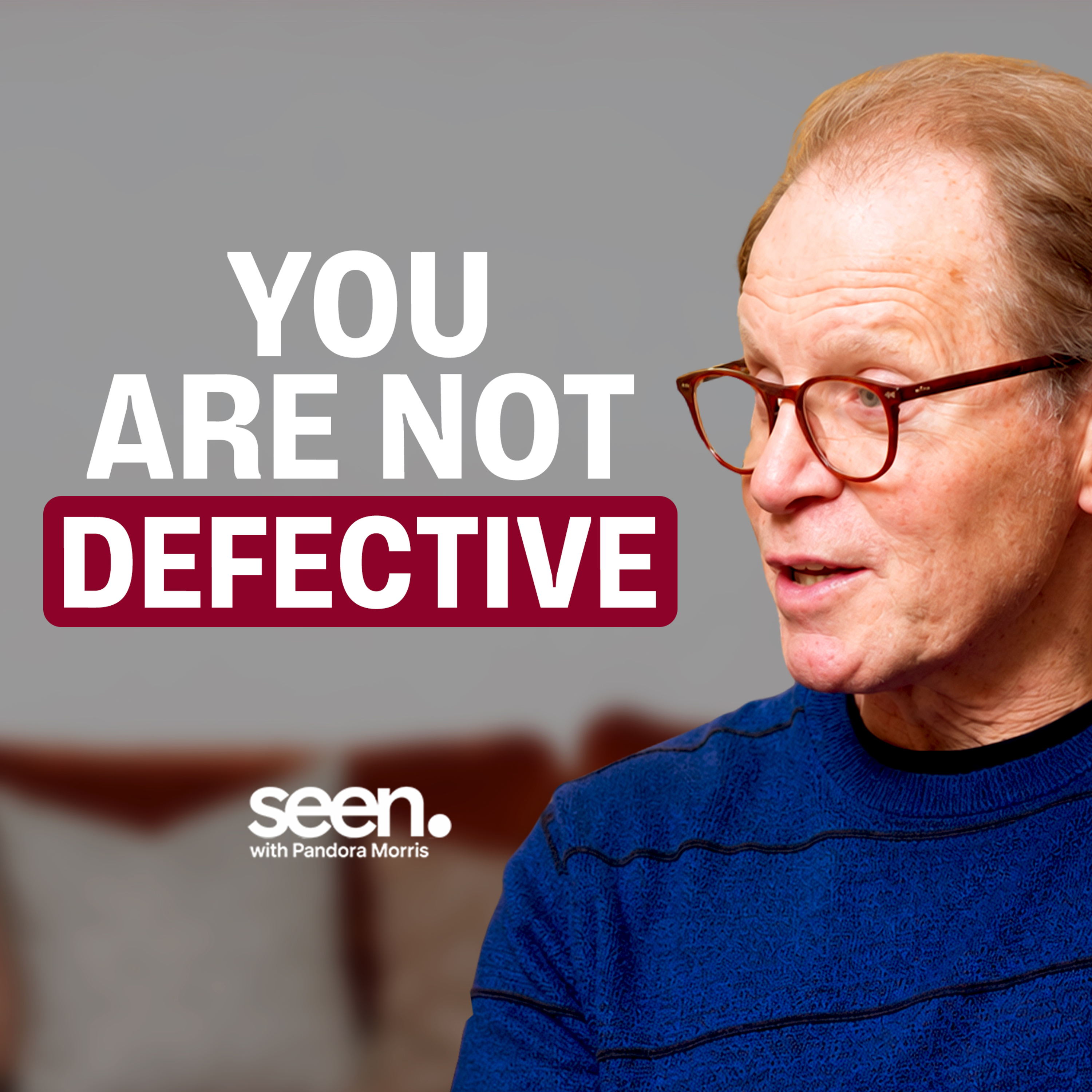
What do all mental health conditions actually have in common? On this episode of Seen, I sit down with Dr Dan Siegel, the psychiatrist who named the field of interpersonal neurobiology. He was the training director in child psychiatry at UCLA, he created the Wheel of Awareness practice, and he is the person who came up with the phrase window of tolerance. He has spent more than thirty years on one question: what actually is the mind? We go through what that looks like in real life. The Wheel of Awareness, and why uncertainty turns out to be another word for freedom. What the psilocybin research shows about a brain dropping out of its old high probability patterns. Temperament and personality, and the twelve year old client who told him OCD should really be called overactive checker deployment. Dan also explains the three things every child needs, which he calls seen, soothed and safe, and why repairing a rupture matters far more than getting it right first time. He says the research pu