No more tears, for sore eyes or sad films. In this episode of Life Without, Alan Davies turns off the tap. What happens when humanity loses the tears that protect our eyes as well as the ones we cry? Alan examines how tears keep eyes working, why artificial replacements may not be enough, and what changes when emotional weeping vanishes too. From courtrooms to funerals, can society show distress and find comfort without them? Featuring Marc Baker, a psychology researcher at the University of Portsmouth, and actor and theatre maker Andreea Tudose, co-creator of the dystopian cabaret Cry For Me. An ITN production for BBC Radio 4
Where have all the acorns gone? And do conkers really keep spiders away? Chris Packham, Kyle Thomas and Megan McCubbin answer an array of intriguing and seasonal wildlife questions. Delving deep into the science and bringing their own anecdotes to the conversation. This episode is followed by an exclusive bonus episode on BBC Sounds. Naturewatch: Down the Rabbit Hole.
Stephen Diener welcomes in the host of the Psicoactivo Podcast, Pavel Ibarra Meda, to get down in the weeds of disclosure and find out what we should keep or throw out. How will the landscape change with the incoming Democratic regime in DC? Is Jake Barber really going to be the new staffer for Eric Burlison? All of this and more is discussed during this important conversation. It's a dirty job, but somebody's gotta do it...
This re-air episode features Eric's chat with 2024 Nobel Laureate Geoffrey Hinton and Stanford Professor Jay McClelland, two pioneers who have spent nearly half a century laying the groundwork for modern-day AI, advancing research on neural networks long before it captured the world's imagination. In fact, their early work faced significant skepticism from the scientific community - an experience they candidly discuss in this episode. This wide-ranging conversation covers everything from the capabilities of recent breakthrough LLMS like DeepSeek to AI agents, the nature of memory and confabulation, the challenges to aligning AI with human values when we humans don’t even agree on our values, and Geoff's fascinating new theory of language, featuring an analogy of words as thousand-dimensional, shape-shifting Lego blocks with hands. Geoff, who retired in 2023, divided his time between the University of Toronto and Google DeepMind. With numerous accolades including the 2018 Turing Award a
Ep 395: Women & Crime: Reconsidered is where we revisit our episode catalog and bring new insights, behind the scenes or updates. Brand new episodes are STILL every Tuesday! Original Airdate: 09/29/20 After accused sexual predator, Jeffrey Epstein’s death, the world and authorities began to take a closer look at his longtime female companion, and alleged "madame". In this episode, Meghan is joined by sex crimes & trafficking expert Dr. Alexa Sardina, as they examine her role in her alleged crimes, explain possible motives and psychologal theories, and how she will be handled in the criminal justice system. Resources: 988 Suicide & Crisis Lifeline (988lifeline.org) Crisis Text Line (crisistextline.org) RAINN (rainn.org) Find A Helpline (findahelpline.com) Sources for Today's Episode: Vanity Fair Documentary “Jeffrey Epstein: Filthy Rich” A report from CBS news NPR report Forbes Reconsidered Sources: DOJ — Maxwell sentenced to 20 years SDNY opinion & order, Jan 21, 2026 CNBC — Maxwell fi
The world has become increasingly divided, and more and more of us find ourselves navigating relationships with people whose views don’t align with our own. This mini-series explores the challenges, humor, and humanity of finding common ground—or learning to live with our differences. In this week’s episode, both of our storytellers navigate conflicting beliefs within their own families. Part 1: A son struggles to preserve his relationship with his mother as her devotion to a cult pushes them further apart. This story is appearing anonymously on our podcast to protect the identity of the storyteller and their family. Part 2: Lexa Graham’s mother has always held alternative beliefs that clash with Lexa’s deep trust in science and evidence. Lexa Graham is an award winning scientist, educator, and comedian who specializes in science centered comedy, humour workshops for professionals, and speaking about the science of success for university students. An expert at mixing science and comedy
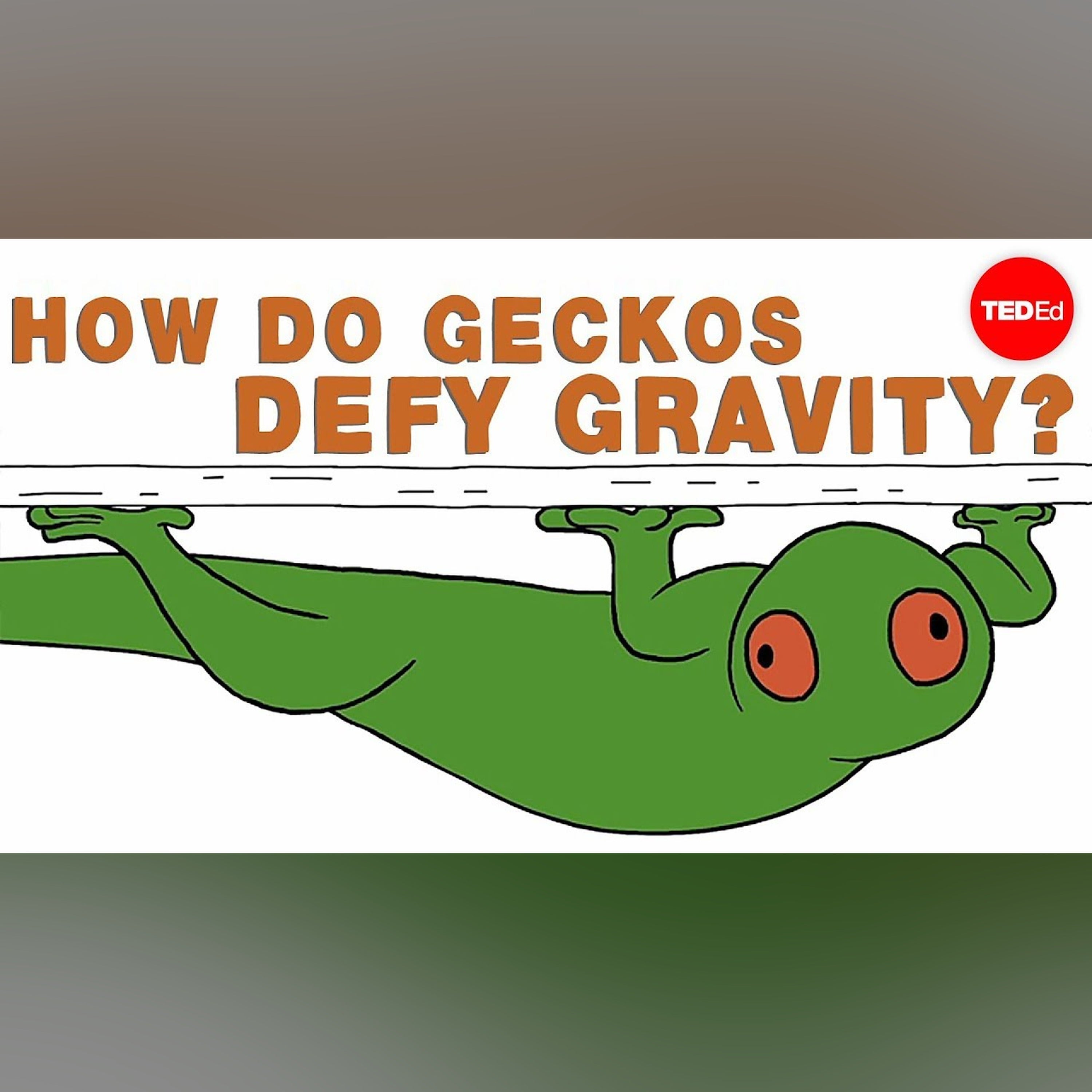
View full lesson: http://ed.ted.com/lessons/how-do-geckos-defy-gravity-eleanor-nelsen Uploaded 30-03-15 Geckos aren’t covered in adhesives or hooks or suction cups, and yet they can effortlessly scale vertical walls and hang from ceilings. What’s going on? Eleanor Nelsen explains how geckos’ phenomenal feet allow them to defy gravity. Lesson by Eleanor Nelsen, animation by Marie-Louise Højer Jensen.
Last week, Hank talked about how stuff mixes together in solutions. Today, and for the next few weeks, he will talk about the actual reactions happening in those solutions - atoms reorganizing themselves to create whole new substances in the processes that make our world the one we know and love. This week, we focus on acids and bases and their proton-exchanging ways. Watch this video in Spanish on our Crash Course en Español channel! https://youtu.be/Or2h02mqvD4 Pssst... we made flashcards to help you review the content in this episode! Find them on the free Crash Course App! Download it here for Apple Devices: https://apple.co/3d4eyZo Download it here for Android Devices: https://bit.ly/2SrDulJ Table of Contents Chemistry Can Cause Death 00:00 Acids and Bases are Complicated 02:25 Conjugate Bases 05:37 Conjugate Acids 04:48 Acid-Base Stoichiometry 06:49 Crash Course is on Patreon! Want to find Crash Course elsewhere on the internet? Facebook - http://www.facebook.com/YouTubeCrashCour
If you compare precipitation around the world with population distribution we can understand a simple but powerful pattern of human geography: where there is water, there are people. But it gets a little more complicated because where there are people and limited resources, there is often conflict and bigger geographical questions at stake. So today, we’re going to zoom in and look more closely at how precipitation patterns around the Great Plains and the western United States has led to many conflicts involving the use and distribution of water resources. *** Watch our videos and review your learning with the Crash Course App! Download here for Apple Devices: https://apple.co/3d4eyZo Download here for Android Devices: https://bit.ly/2SrDulJ Crash Course is on Patreon! Thanks to the following patrons for their generous monthly contributions that help keep Crash Course free for everyone forever: Aziz, Christine Phelan, Nick, DAVID MORTON HUDSON, Perry Joyce, Scott Harrison, Mark & Susan
When we think of world religions, we often think of the Big Five: Judaism, Christianity, Islam, Hinduism, and Buddhism. But why do we think of those? In this episode of Crash Course Religions, we’ll learn why “world religions” is a category constructed by human choices—and why that matters for the communities that are left out. Introduction: "Coexist" 00:00 The "Big Five" 00:53 Colonialism & Religion 01:38 "World Religions" 04:02 Family Resemblance 05:03 Essentialism & Nationalism 07:10 The Limits of "Major Religions" 09:39 Review & Credits 10:30 Sources: https://docs.google.com/document/d/1IRPhziWfx72dIlGC1xIuEPWqb_uwnumdtYnmmsR4jto/edit?usp=sharing *** Support us for $5/month on Patreon to keep Crash Course free for everyone forever! https://www.patreon.com/crashcourse Or support us directly: https://complexly.com/support Join our Crash Course email list to get the latest news and highlights: https://mailchi.mp/crashcourse/email Get our special Crash Course Educators newsletter: http
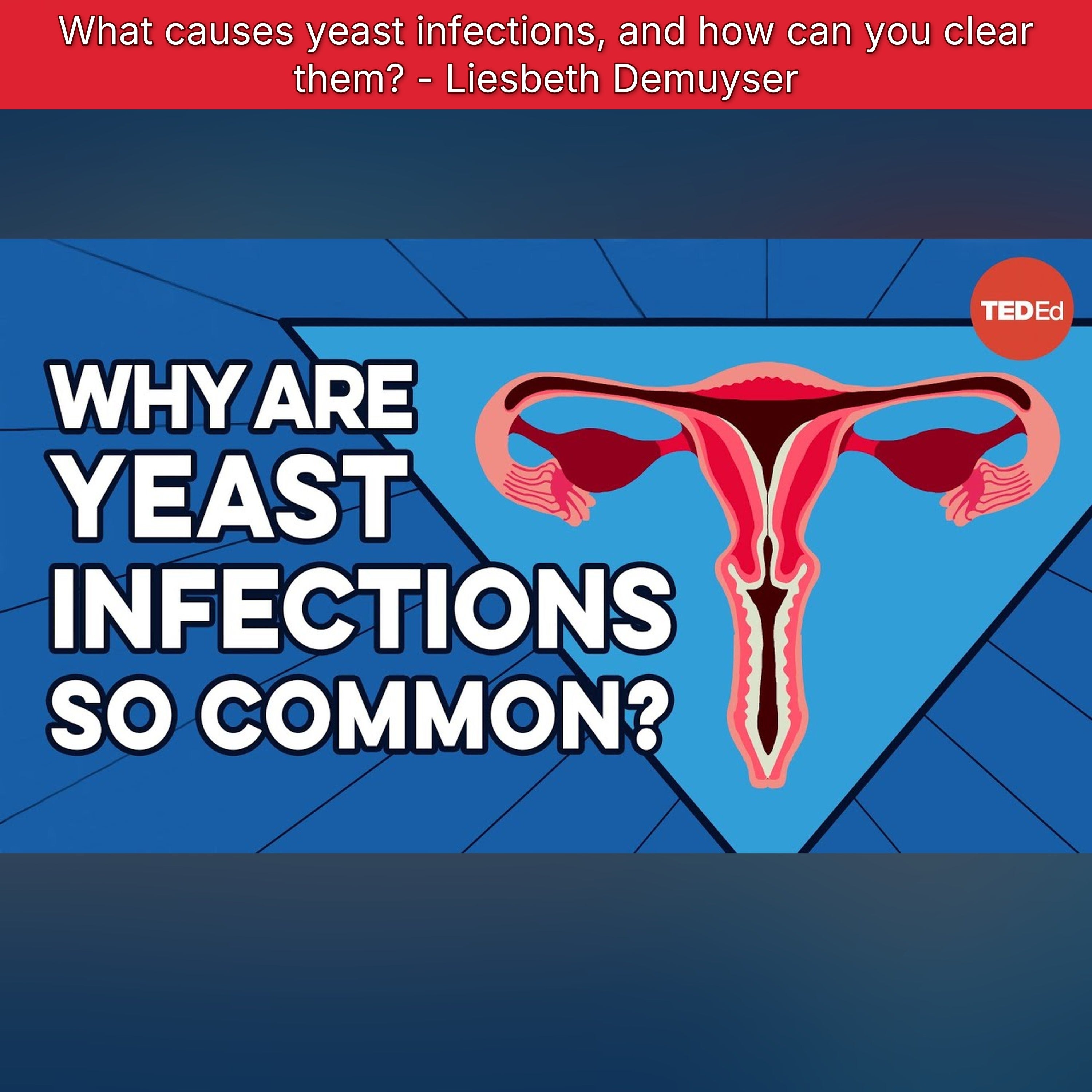
Explore the common causes and treatments of yeast infections, which affect 3 out of every 4 people with a vagina. -- The vagina harbors hundreds of different kinds of microorganisms. Candida yeasts are usually present in small quantities and most of the time, these fungi are harmless. But, under certain conditions, Candida yeasts can cause infections. One species in particular is the usual culprit of vaginal yeast infections. So, how exactly does a yeast infection happen? Liesbeth Demuyser investigates. Lesson by Liesbeth Demuyser, directed by Mette Ilene Holmriis, The Animation Workshop. Support Our Non-Profit Mission ---------------------------------------------- Support us on Patreon: http://bit.ly/TEDEdPatreon Check out our merch: http://bit.ly/TEDEDShop ---------------------------------------------- Connect With Us ---------------------------------------------- Sign up for our newsletter: http://bit.ly/TEDEdNewsletter Find us on Twitter: http://bit.ly/TEDEdTwitter Peep us on Insta
Dig into how foreign corporations exploit African nations like Mali for their gold mining, and often rob them of proper compensation. -- In 2020, Mali produced over 71 tons of gold— an amount worth billions of dollars. And this situation isn’t unique: a number of other gold-rich countries in Africa aren’t seeing the income they should given the price of gold. So, what’s going on? Lyla Latif digs into how foreign corporations exploit African nations for their resources. Lesson by Lyla Latif, directed by Jeffig Le Bars, JetPropulsion.space Support Our Non-Profit Mission ---------------------------------------------- Support us on Patreon: http://bit.ly/TEDEdPatreon Check out our merch: http://bit.ly/TEDEDShop ---------------------------------------------- Connect With Us ---------------------------------------------- Sign up for our newsletter: http://bit.ly/TEDEdNewsletter Find us on Twitter: http://bit.ly/TEDEdTwitter Peep us on Instagram: http://bit.ly/TEDEdInstagram -----------------
Does loneliness make people horny and other questions that demand answers? The human body is a marvel: it can fall in love, write symphonies and forget where it left its keys. It can also decide, with tremendous confidence, that a first date is roughly equivalent to being chased by a wolf. Sex therapist and trauma-informed practitioner Rachel Jane Cook joins the show to explain this curious design flaw. She describes how the nervous system constantly scans for danger, and how past experiences can leave it primed to protect us from intimacy, attention or desire. The result can be anxiety, numbness, avoidance, or a puzzling urge to seek connection in places that do not truly soothe us. We discuss trauma, attachment, loneliness, sexual compatibility and why community—not merely individual willpower—helps people change. Learn to spot the difference between feeling activated, shut down and genuinely safe. Treat avoidance as information, not a moral failure. Invest in relationships that help
Hank resists the urge to devour a slice of pizza so that he can walk you through the way we experience our major special senses. It all boils down to one thing: sensory cells translate chemical, electromagnetic, and mechanical stimuli into action potentials that our nervous system can make sense of. Today we're focusing on smell (olfaction) and taste (gustation), which are chemical senses that call on chemoreceptors. As usual, we'll begin with a quick look at how these things can go wrong. Pssst... we made flashcards to help you review the content in this episode! Find them on the free Crash Course App! Download it here for Apple Devices: https://apple.co/3d4eyZo Download it here for Android Devices: https://bit.ly/2SrDulJ Chapters: Introduction: Anosmia 00:00 How Smell Works 2:13 Olfactory Epithelium 2:47 Olfactory Sensory Neurons 3:19 Glomerulus 3:47 How the Brain Processes Smell 4:48 How Taste Works 6:19 What Are Taste Buds (Taste Receptor Epithelial Cells)? 6:40 Types of Taste Rece
This week Craig talks about police searches and seizures. Now, the fourth amendment says that you have the right to be protected against "unreasonable searches and seizures" but what exactly does this mean? Well, it's complicated. The police often need warrants issued with proof of probable cause, but this isn't always the case - such as when you're pulled over for a moving violation. We'll finish up with the limitations of these protections and discuss one group of people in particular that aren't protected equally - students. Produced in collaboration with PBS Digital Studios: http://youtube.com/pbsdigitalstudios Support is provided by Voqal: http://www.voqal.org (http://www.voqal.org/) All attributed images are licensed under Creative Commons by Attribution 2.0 Want to find Crash Course elsewhere on the internet? Facebook - http://www.facebook.com/YouTubeCrashCourse Twitter - http://www.twitter.com/TheCrashCourse Tumblr - http://thecrashcourse.tumblr.com (http://thecrashcourse.tumbl
Show notes A Northwestern-led team builds a physics-based digital twin of the James Webb Space Telescope's coronagraph and recovers the giant planet 51 Eridani b in two-year-old data where standard processing could not see it. Plus VVV CL001, a dust-hidden cluster near the Milky Way's core dated at 13.4 billion years; China's most detailed account yet of its two-launch crewed Moon landing plan; and the flare alert system that tells sounding rockets exactly when to launch, as sunspot region AR4566 turns magnetically complex. The Planet in the Glare (lead) Ferrer-Chavez, Wang, Bouman, Freeman, Pueyo et al., Nature, 4 Nov 2026, DOI 10.1038/s41586-026-11213-z. FLIP (Physics-based Learning for Imaging Planets) models JWST/NIRCam coronagraph optics as a digital twin and subtracts simulated starlight. Tested on HIP 65426, 51 Eridani and TYC 5899: sensitivity improved 2–15×; 51 Eri b recovered at >5σ in F430M (CO₂ band) data where standard processing failed. Not a new planet; three-star demons
In which John Green teaches you where American politicians come from. In the beginning, soon after the US constitution was adopted, politics were pretty non-existent. George Washington was elected president with no opposition, everything was new and exciting, and everyone just got along. For several months. Then the contentious debate about the nature of the United States began, and it continues to this day. Washington and his lackey/handler Alexander Hamilton pursued an elitist program of federalism. They attempted to strengthen the central government, create a strong nation-state, and leave less of the governance to the states, They wanted to create debt, encourage manufacturing, and really modernize the new nation/ The opposition, creatively known as the anti-federalists, wanted to build some kind of agrarian pseudo-paradise where every (white) man could have his own farm, and live a free, self-reliant life. The founding father who epitomized this view was Thomas Jefferson. By the t
Thomas shares the extremely traumatizing events after being selected by otherworldy beings to assist in their abduction program. If you enjoy iNTO THE FRAY and want more content....join us over on Patreon (https://www.patreon.com/c/iNTOTHEFRAY)! Exclusive interviews, ad-free and early versions of the main show, physical rewards like stickers, signed books, T-shirts, interactive live-on-video guest interviews and group chats with fellow patrons, private RSS feed, Patron-only Discord room and FB group, and more. Click HERE (https://www.patreon.com/c/iNTOTHEFRAY) to check out the various pledge levels. OR...if you prefer Apple Podcasts...subscribe to iTF Premium in your Apple Podcasts app! You'll get all bonus episodes and early releases of the main show. Completely AD-FREE. iNTO THE FRAY Website- https://intothefrayradio.com/ If you have an encounter or encounters you'd like to share, contact me HERE or via email, [email protected] Get your iTF STICKERS....HERE (https://intoth
Mice, bugs and hamsters are no longer the only way to study the brain. Functional MRI (fMRI) allows scientists to map brain activity in living, breathing, decision-making human beings. Read Montague gives an overview of how this technology is helping us understand the complicated ways in which we interact with each other. Talk by Read Montague.
How does a fact become a misconception? Dig into the world of misinformation to see how facts can become distorted and misleading. Uploaded 03-09-20 -- In 1901, David Hänig published research that led to what we know today as the taste map: an illustration that divides the tongue into four separate areas. It has since been published in textbooks and newspapers. There is just one problem: the map is wrong. So how do misconceptions like this spread, and what makes a fake fact so easy to believe? Joseph Isaac dives into the world of misinformation. Lesson by Joseph Isaac, directed by CUB Animation. Animator's website: http://cubanimation.com/en/intro-en/ Sign up for our newsletter: http://bit.ly/TEDEdNewsletter Support us on Patreon: http://bit.ly/TEDEdPatreon Find us on Twitter: http://bit.ly/TEDEdTwitter Peep us on Instagram: http://bit.ly/TEDEdInstagram View full lesson: https://ed.ted.com/lessons/why-people-fall-for-misinformation-joseph-isaac Thank you so much to our patrons for your
A romantic anniversary getaway took an unexpected turn when a couple checked into a charming historic hotel in a small California town. They were allowed to choose their own room, and Room 10 immediately felt like the perfect place to stay. But as evening approached, the comfortable atmosphere began to change. After spotting a mysterious woman dressed in old-fashioned clothing, they decided to try an EVP session. A strangely timed noise made them uneasy, but it was what happened later that night that proved far more unsettling. While her boyfriend slept, she felt something repeatedly pulling the covers off her bed. It wasn't until the following morning that they learned about the hotel's haunted reputation—and the particularly disturbing stories associated with the very room they'd chosen. Had they unknowingly spent their anniversary with someone who never really checked out? #RealGhostStoriesOnline #TrueGhostStories #JulianGoldRushHotel #HauntedHotel #Room10 #HotelGhostStories #Parano
Could the devil really be responsible for murder? That was the extraordinary argument Arne Johnson's attorney hoped to make in a Connecticut courtroom. But before the jury could hear a single claim of demonic possession, the judge shut the defense down. Johnson would have to stand trial without the supernatural explanation that had made his case famous. Yet the verdict was far from the end of the story. Decades later, the people who experienced the alleged possession still disagree about what happened. Some remain convinced something demonic was involved, while others accuse the Warrens of exploiting a troubled family. There are allegations of secret medication, conflicting memories, and questions about who profited as the story became a Hollywood sensation. And amid the books, documentaries, and blockbuster movies, one person has largely been forgotten—the man who lost his life. Was this a genuine case of possession, a terrible tragedy given a supernatural explanation, or something fa
In the heat of high summer, away from the dark, dank of late autumn, we rest on a gate beside a wheat field in Dorset. Here, among the thick of the sun-scorched stalks, slinks a gamebird no bigger than a mistle thrush. We can’t see it, but we can hear it. The curious, insect-like call of a quail. BBC Countryfile Magazine's Plodcast Sound Escapes are a weekly audio postcard from the countryside to help you relax and transport you somewhere beautiful, wherever you happen to be. Recorded by Kevin Parr and introduced by Hannah Tribe. Image by Getty Email the Plodcast team – and send your sound recordings of the countryside – to: [email protected]