Today, Craig is going to talk about something you fans out there have been demanding for months - money in politics. Specifically, we're going to talk about special interest groups and their role in the U.S. political system. Special interest groups are groups of individuals that make policy-related appeals to government - like the NRA, AARP, or the U.S. Chamber of Commerce. It's all pretty controversial, as money plays an important role in the policies and people these groups influence, so we'll bring in the clones to argue for and against them. Produced in collaboration with PBS Digital Studios: http://youtube.com/pbsdigitalstudios Support is provided by Voqal: http://www.voqal.org (http://www.voqal.org/) All attributed images are licensed under Creative Commons by Attribution 4.0 Want to find Crash Course elsewhere on the internet? Facebook - http://www.facebook.com/YouTubeCrashCourse Twitter - http://www.twitter.com/TheCrashCourse Tumblr - http://thecrashcourse.tumblr.com (http://t
We get asked all the time 'What is a Black Hole?' followed by, are we safe from them? So we figured we should put a short explainer video together in plain language...so meet the newest member of our team, Professor Holmes. Professor Holmes answers Sam’s big questions about black holes: what they are, how they form, and how astronomers find them. Discover the event horizon, the scorching discs of gas around some black holes, and the evidence from orbiting stars, X-rays, gravitational waves and the Event Horizon Telescope. We also visit Sagittarius A* at the heart of the Milky Way, dispel the myth that black holes are cosmic vacuum cleaners, and explain why Earth has nothing to fear from them. Plus: spaghettification, time slowing near a black hole, and Stephen Hawking’s prediction that black holes slowly evaporate.In this episode · What a black hole is—and what it isn’t· Event horizons, singularities and accretion discs· How massive stars can collapse into black holes· How astronomers
The world owes much of its cultural legacy to Constantinople's walls. When Constantinople was under seige by neighboring enemies, the Roman city's elaborate system of moats, outer walls, and inner walls stood tall. Surviving numerous fire attacks, the walls were eventually brought down by more modern tools of warfare, but, thankfully, classical culture survived. Lesson by Lars Brownworth, animation by Woland.
I'm launching something new... Over the past two years on Huge If True, we’ve explored all kinds of new ideas and technologies that could change the world we live in. Like quantum computers, particle colliders, humanoid robots, new supersonic planes, and much more. We make this show because we believe that by envisioning better futures, we make them more likely to come true. Along the way, I’ve gotten to talk to some of the most important people building these new tools - the people whose visions of the future you and I might really end up living in! And every time I have one of these conversations, I always have the same feeling: “Man, I wish I could have shared that whole conversation with… you!” So, that’s what we’re going to do! Longer form, more in-depth, optimistic conversations with the people whose ideas are shaping the future. (In addition to the more crafted explainers we make already!) Introducing… Huge Conversations. If you want to know what the people building the future a
What does federal Indian law look like today? In this episode of Crash Course Native American History, we’ll learn how this sprawling, complicated body of law affects individual people, tribes, and their communities in the 21st century. Introduction: A Tangled Mess 00:00 Federal Indian Law 0:25 Individual Level 2:23 Missing & Murdered Indigenous Women 3:25 Community 4:48 Trust Responsibility 6:04 Land Level 8:02 Review & Credits 9:34 Sources: Want to know more about how this series was made? Learn more here: https://docs.google.com/document/d/17yp3u28s40TdjyrJniIf4U9YA8wPtvQ1g1B-HSHQ2Q4/edit?tab=t.0#heading=h.6vtzps565m2 (https://docs.google.com/document/d/17yp3u28s40TdjyrJniIf4U9YA8wPtvQ1g1B-HSHQ2Q4/edit?tab=t.0) *** Support us for $5/month on Patreon to keep Crash Course free for everyone forever! https://www.patreon.com/crashcourse Or support us directly: https://complexly.com/support Join our Crash Course email list to get the latest news and highlights: https://mailchi.mp/crashcou
AI in 2024: 10 Things I'm NOT Looking Forward To: Elections, Drones, Cults, Regulations, Copyright Episode release date: 8 Dec 2023 Core Ideas: Metamodernism: Narratives and emergence view of reality - Reduce suffering - Increase prosperity - Increase understanding mantra: Seek knowledge. DISCLAIMER: This is a community-driven show. ------------ Keywords: artificial general intelligence, ai development, future technology, deep learning, heuristic imperatives, chatbots, david shapiro, machine learning
Have you ever fought a dinosaur? Probably not, but it's a question worth asking. If Rocky Balboa found himself in the ring with a dinosaur, what sort of damage could he expect? In this Dinosaur Bite, Iszi Lawrence puts Dr Dave Hone on the spot to consider the various ways dinosaurs might attack a human opponent. Could a sauropod bite hard enough to break your arm? Would an ankylosaur's tail be a knockout blow? And which dinosaur would make the best boxer? Dave explains why an Allosaurus might have a decent jab and hook, why even apparently harmless herbivores can be extremely dangerous, and why we really have very little idea which dinosaurs were the most aggressive. There's also a rather personal account of the time Dave was bitten by a coati in Peru. Watch this episode on youtube here: https://youtu.be/zUS_fXL9kds For more bonus episodes, support Terrible Lizards on Patreon: https://patreon.com/terriblelizards RAWR!
In this episode of Tiny Show and Tell Us, a listener asks if the film company Kodak really knew about the Trinity atomic bomb test before the public, leading us down a fascinating story about radioactive fallout, x-ray film, and secret agreements. Then we tackle a mind-boggling question: if there are birds that look blue, then why don't any bird feathers contain blue pigment? Related episodes you may enjoy: When movies caught fire: The history and science of nitrocellulose film (https://www.acs.org/pressroom/tiny-matters/nitrocellulose-film.html) [BONUS] Decoding dinosaur colors and the failure of postpartum care (https://www.acs.org/pressroom/tiny-matters/dinosaur-colors-and-postpartum-care.html)
Much has been written about what exactly caused World War I. As befits a true global war, the reality is that there isn't a single cause. There aren't even three causes. There are a vast array of causes. Today we'll get into just a few of those causes, including the complex system of alliances in Europe, the myriad military conflicts that played out in the years and decades leading up to the war, and the event that many point to as the beginning: the assassination of Archduke Franz Ferdinand. Sources -Hunt, Lynn. Making of the West: Peoples and Cultures. Boston: Bedford St. Martins, 2019. -Smith, Bonnie G. Europe in the Contemporary World Since 1900. 2nd ed. London; Bloomsbury, 2020. Crash Course is on Patreon! Thanks to the following patrons for their generous monthly contributions that help keep Crash Course free for everyone forever: Eric Prestemon, Sam Buck, Mark Brouwer, Efrain R. Pedroza, Matthew Curls, Indika Siriwardena, Avi Yashchin, Timothy J Kwist, Brian Thomas Gossett, Haix
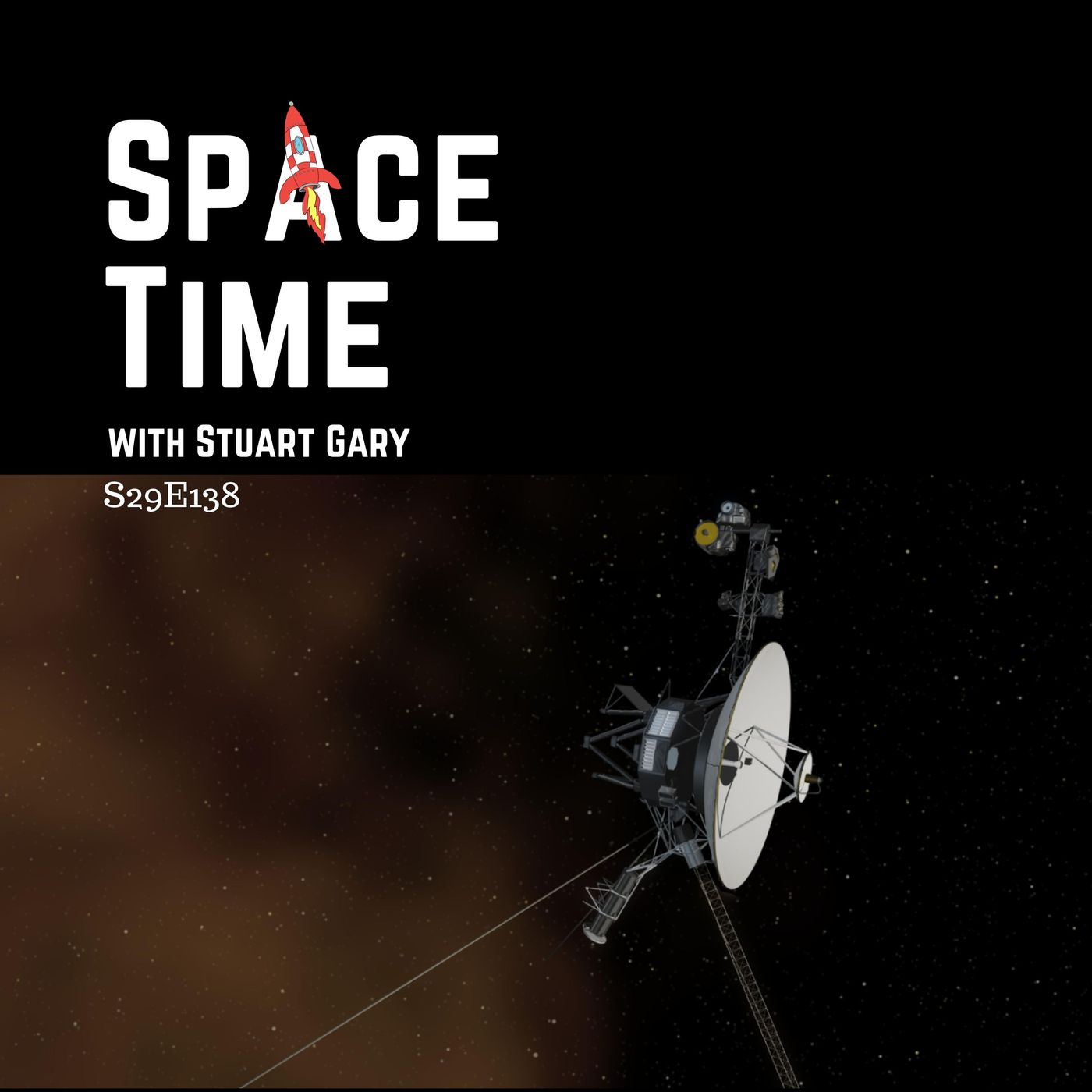
Wednesday SpaceTime 20261118 Series 29 Episode 138 Voyager 1 spacecraft reaches a full light day away from Earth NASA’s Voyager 1 spacecraft has made history today becoming the first man made object to reach a full light day away from Earth. Discovery of a supernova impostor in deep space Astronomers have finally worked out why a giant blue star some 33 time more massive than the Sun undergoes repeated outbursts shining as bright as a supernova. Two more experimental orbital payloads land in the South Australian outback Southern Launch has taken part in two more flights parachuting down into its Koonibba Test Range on the South Australian west coast. The Science Report Study shows vaping worsens your lungs increasing the risk of chronic lung disease. The southern hairy-nosed wombat found to deliver key environmental benefits. Micro plastics found in the blood of lowland tapirs and giant anteaters in the Amazon. Quantum computing pioneer Diraq installs Australia's first quantum computer
Explore the ancient tradition of yoga, and discover how its blend of physical and mental exercise impacts your health. Uploaded 18-06-20 -- There are many different approaches to modern yoga— though most forms have three core elements: physical postures, breathing exercises, and spiritual contemplation.This blend of physical and mental exercise is widely believed to have a unique set of health advantages. But is yoga actually beneficial to your health? Krishna Sudhir examines how this ancient tradition impacts the body and mind. Lesson by Krishna Sudhir, directed by Zsuzsanna Kreif. Educator's website: https://bit.ly/KrishnaSudhir Animator's website: https://www.behance.net/krzsanna and https://animationworkshop.via.dk/ Sign up for our newsletter: http://bit.ly/TEDEdNewsletter Support us on Patreon: http://bit.ly/TEDEdPatreon Find us on Twitter: http://bit.ly/TEDEdTwitter Peep us on Instagram: http://bit.ly/TEDEdInstagram View full lesson: https://ed.ted.com/lessons/what-yoga-does-to-y
View full lesson: http://ed.ted.com/lessons/how-inventions-change-history-for-better-and-for-worse-kenneth-c-davis Invented in 1793, the cotton gin changed history for good and bad. By allowing one field hand to do the work of 10, it powered a new industry that brought wealth and power to the American South -- but, tragically, it also multiplied and prolonged the use of slave labor. Kenneth C. Davis lauds innovation, while warning us of unintended consequences. Lesson by Kenneth C. Davis, animation by Sunni Brown.
Hank and his cat Cameo help teach us about animal behavior and how we can discover why animals do the things they do. References: http://brainconnection.positscience.com/topics/?main=fa/zebras (http://brainconnection.positscience.com/topics/?main=fa%2Fzebras) Crash Course is on Patreon! Want to find Crash Course elsewhere on the internet? Facebook - http://www.facebook.com/YouTubeCrashCourse Twitter - http://www.twitter.com/TheCrashCourse Instagram - https://www.instagram.com/thecrashcourse/ CC Kids: http://www.youtube.com/crashcoursekids
AGI Revolution: How Businesses, Governments, and Individuals can Prepare Episode release date: 17 Oct 2023 Core Ideas: Metamodernism: Narratives and emergence view of reality - Reduce suffering - Increase prosperity - Increase understanding mantra: Seek knowledge. DISCLAIMER: This is a community-driven show. -------- Keywords: prompt engineering, post labor economics, ai podcast, david shapiro, openai
Welcome to episode 24 of The BirdGuides Podcast! In the second in our Travel series, David, Ed, Josh and special guest Miles Cluff are exploring one of the world's great birding destinations: South Africa. South Africa has an amazing diversity of habitats, a remarkable concentration of endemic and near-endemic species, spectacular mammals and some mega seabirding. In this episode South Africa's special birds, from Snowy Albatross to Secretarybird What is it like birding in the world-famous Kruger National Park? Experiences and memories aboard the epic Flock to Marion voyage Seeking endemics and penguins in the Cape South Africa's spectacular interior Mega mammals How to plan a birding trip in South Africa Episode timestamps 00:30 – Intro and each person's trip 05:23 – South Africa: the big picture 09:55 – Kruger 24:20 – Flock to Marion and Southern Ocean birding 37:40 – The Cape 44:30 – KwaZulu-Natal, the Karoo and other key areas 52:24 – Mammals 58:21– Planning a trip 01:00:04 – Top m
Chris Ramsay, host of the renowned Area 52 podcast, joins Stephen Diener to discuss what goes into producing one of the most viewed UFO podcasts around, as well as reactions to some of his most famous guests. Listen as Chris reveals what happened when he played "two truths and a lie" with Richard Doty, and how James Fox put him on to the trail of one of the most underrated UFO sightings in American history. All of this and so much more right now in part one of this revealing conversation...
Language is everywhere. Linguistics is the study of language, but what does that even mean? In this episode of Crash Course Linguistics, we'll begin talking about some of the features and levels of structure of language, and introduce some of the other topics we'll be covering throughout this series. Want even more linguistics? Check out the Lingthusiasm podcast, hosted by the writers of Crash Course Linguistics: https://lingthusiasm.com/ *** Watch our videos and review your learning with the Crash Course App! Download here for Apple Devices: https://apple.co/3d4eyZo Download here for Android Devices: https://bit.ly/2SrDulJ Crash Course is on Patreon! Thanks to the following patrons for their generous monthly contributions that help keep Crash Course free for everyone forever: Catherine Conroy, Patty Laqua, Leonora Rossé Muñoz, Stephen Saar, John Lee, Phil Simmons, Alexander Thomson, Mark & Susan Billian, Junrong Eric Zhu, Alan Bridgeman, Jennifer Smith, Matt Curls, Tim Kwist, Ron Lin,
View full lesson: http://ed.ted.com/lessons/sending-a-sundial-to-mars-bill-nye Bill Nye, otherwise known as The Science Guy, inherited his father's fascination with sundials. And so he campaigned to have sundials aboard the Spirit and Opportunity Mars exploration rovers. A look at how a small device reveals big implications as to our place in space.
Explore the history of the 1937 Haitian Massacre, where thousands of Haitians were murdered on the orders of Rafael Trujillo. Uploaded 25-01-18 -- When historians talk about the atrocities of the 20th century, we often think of those that took place during and between the two World Wars. But two months before the Rape of Nanking in China, and a year before Kristallnacht in Germany, a horrific ethnic cleansing campaign occurred on an island between the Atlantic Ocean and Caribbean Sea. Edward Paulino details the 1937 Haitian Massacre. Lesson by Edward Paulino, animation by Tomás Pichardo-Espaillat. Support Our Non-Profit Mission ---------------------------------------------- Support us on Patreon: http://bit.ly/TEDEdPatreon Check out our merch: http://bit.ly/TEDEDShop ---------------------------------------------- Connect With Us ---------------------------------------------- Sign up for our newsletter: http://bit.ly/TEDEdNewsletter Find us on Twitter: http://bit.ly/TEDEdTwitter Peep us
What is life like for Natives living in cities, and how did they get there? In this episode of Crash Course Native American History, we’ll learn about the unique challenges for Natives in urban areas—and their important contributions to their communities. Introduction: Mohawk Ironworkers 00:00 Relocation & Termination 0:32 Relocation Policies 1:07 Counting Natives in Cities 3:37 Pan-Indianism 6:59 Effects of Pan-Indianism 8:34 Review & Credits 10:12 Sources: Want to know more about how this series was made? Learn more here: https://docs.google.com/document/d/17yp3u28s40TdjyrJniIf4U9YA8wPtvQ1g1B-HSHQ2Q4/edit?tab=t.0#heading=h.6vtzps565m2 (https://docs.google.com/document/d/17yp3u28s40TdjyrJniIf4U9YA8wPtvQ1g1B-HSHQ2Q4/edit?tab=t.0) *** Support us for $5/month on Patreon to keep Crash Course free for everyone forever! https://www.patreon.com/crashcourse Or support us directly: https://complexly.com/support Join our Crash Course email list to get the latest news and highlights: https://mai
Write a Novel w/ ChatGPT - 01 - Main Character, Setting, Theme - Cornelia Valerii - ASCENSIONEpisode release date: 8 Jan 2023Spreading awareness about the works of some of the leading educators in the AI revolution. Core Ideas: Metamodernism: Narratives and emergence view of reality - Reduce suffering - Increase prosperity - Increase understanding mantra: Seek knowledge. ELABORATE: Add depth and detail to understanding, weaving comprehensive and nuanced explanations.DISCLAIMER: This is a community-driven show. ----------------Write a Novel w/ ChatGPT - 01 - Main Character, Setting, Theme - Cornelia Valerii - ASCENSIONEpisode release date: 8 Jan 2023Spreading awareness about the works of some of the leading educators in the AI revolution. Core Ideas: Metamodernism: Narratives and emergence view of reality - Reduce suffering - Increase prosperity - Increase understanding mantra: Seek knowledge. ELABORATE: Add depth and detail to understanding, weaving comprehensive and nuanced explanatio
Sections of rock are completely missing from our geological record across continents. The great unconformity spans just over a billion years of history, leaving out critical periods in the evolution of life. Jonathan Webb speaks with Associate Professor Nicolas Flament about this geological puzzle and what could have caused it. Get in touch with us: [email protected] Featuring: Associate Professor Nicolas Flament, University of Wollongong Further information: The deep Earth origin of the Great Unconformity (https://www.nature.com/articles/s41586-026-11156-5)
In this talk, planetary scientist Joel Levine shows some intriguing -- and puzzling -- new discoveries about Mars: craters full of ice, traces of ancient oceans, and compelling hints at the presence, sometime in the past, of life. He makes the case for going back to Mars to find out more. (Filmed at TEDxNASA.) Uploaded 01-08-13 Talk by Joel Levine.