You've All Been Defining AGI WRONG! And why America Will BEAT China by 2035! Episode release date: 25 Apr 2025 Core Ideas: Metamodernism: Narratives and emergence view of reality - Reduce suffering - Increase prosperity - Increase understanding mantra: Seek knowledge. DISCLAIMER: This is a community-driven show. -------------------
View full lesson: http://ed.ted.com/lessons/the-coelacanth-a-living-fossil-of-a-fish-erin-eastwood Uploaded 29-07-14 The coelacanth, a prehistoric fish that was mistakenly thought to have gone extinct at the same time as the dinosaurs, has managed to stick around our seas for 360 million years. Erin Eastwood details the surprising "back from the dead" discovery of the coelacanth and explains how this fish's fins shed light on the evolutionary movement of vertebrates from water to land. Lesson by Erin Eastwood, animation by James Price for The Foreign Correspondents' Club.
Check out the Space Time Merch Store Sign Up on Patreon to get access to the Space Time Discord! Black holes are inevitable predictions of general relativity—our best theory of space, time and gravity. But they clash in multiple ways with quantum mechanics, our equally successful description of the subatomic world. One such clash is the black hole information paradox—and a proposed solution—black hole complementarity—may forced us to radically rethink what it even means to say that something to exists. PBS Member Stations rely on viewers like you. To support your local station, go to:http://to.pbs.org/DonateSPACE Sign up for the mailing list to get episode notifications and hear special announcements! Search the Entire Space Time Library Here: https://search.pbsspacetime.com/ Hosted by Matt O'Dowd Written by Matt O'Dowd Post Production by Leonardo Scholzer, Yago Ballarini & Stephanie Faria Directed by Andrew Kornhaber Associate Producer: Bahar Gholipour Executive Producers: Eric Brown
Check Out All PBS Earth Episodes: https://www.youtube.com/playlist?list=PLnNZYWyBGJ1F8ofFm4H9UTrHxqU8zngK4 Planet Earth is the jewel of the solar system—the shimmery blue oceans, the verdant green forests, the wispy whimsical cloud formations. Saturn is the only competitor for most gorgeous planet with that giant ring system. Hmm… what if we could put the jewel of the Earth in its own ring? Then no contest. Well, there’s an extremely good chance that Earth once DID have a ring system. At least, that’s the proposal by a recent study that has evidence that a mysterious burst in meteor activity nearly half a billion years ago was actually caused by that ancient ring system collapsing onto the Earth. And, you know, if we had a ring once maybe we can have one again. Check Out Joe Scott’s: What Would Happen If The Earth Had Rings? Sign Up on Patreon to get access to this Month’s Livestream Interview with Dr. Matt Caplan! Check out the Space Time Merch Store Sign up for the mailing list to ge
Dive into the incredible diversity of animal pupils, and how the different shapes indicate the animal’s role in an ecosystem. Uploaded 13-01-22 -- Peering into the eyes of different animals, you’ll see some extraordinarily shaped pupils. House cats, for one, are twilight hunters with vertically elongated pupils. Many grazing animals, like goats, have rectangular pupils. Other animals have crescent- or heart-shaped pupils. So, what’s going on? Why are there so many different pupil shapes? Emma Bryce digs into the science of animal vision. Lesson by Emma Bryce, directed by Bálint Gelley, CUB Animation Ltd. Support Our Non-Profit Mission ---------------------------------------------- Support us on Patreon: http://bit.ly/TEDEdPatreon Check out our merch: http://bit.ly/TEDEDShop ---------------------------------------------- Connect With Us ---------------------------------------------- Sign up for our newsletter: http://bit.ly/TEDEdNewsletter Find us on Twitter: http://bit.ly/TEDEdTwitter
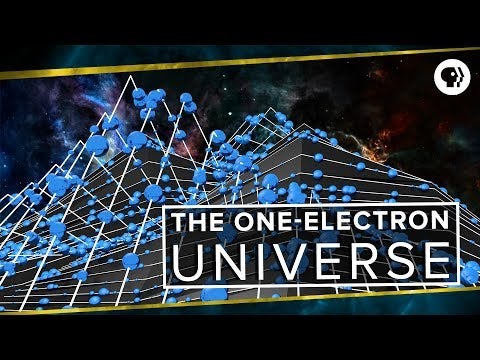
Viewers like you help make PBS (Thank you ) . Support your local PBS Member Station here: https://to.pbs.org/DonateSPACE Uploaded 10-08-17 Could it be that all the electrons in the universe are simply one, single electron moving back and forth through time? You can further support us on Patreon at https://www.patreon.com/pbsspacetime Get your own Space Time tshirt at http://bit.ly/1QlzoBi Tweet at us! @pbsspacetime Facebook: facebook.com/pbsspacetime Email us! pbsspacetime [at] gmail [dot] com Comment on Reddit: http://www.reddit.com/r/pbsspacetime Previous Episode: Dark Flow In the spring of 1940, the great physicist John Archibald Wheeler had a flash of insight. He picked up the phone and called Richard Feynman. The fateful conversation began, “Feynman, I know why all electrons have the same charge and the same mass." "Why?" asked Wheeler’s former graduate student. "Because, they are all the same electron!" Wheeler went on to describe the One-Electron Universe idea: that there exist
Travel into a computer chip to explore how these devices are manufactured and what can be done about their environmental impact. -- Globally, we produce more than a trillion computer chips every year. Which means about 20 trillion transistors are built every second— and this process is done in fewer than 500 fabrication plants. How do we build so many tiny, intricately-connected devices, so incredibly fast? George Zaidan and Sajan Saini explore how photolithography helps build these devices and its environmental impact. Lesson by George Zaidan and Sajan Saini, directed by Kozmonot Animation Studio. Support Our Non-Profit Mission ---------------------------------------------- Support us on Patreon: http://bit.ly/TEDEdPatreon Check out our merch: http://bit.ly/TEDEDShop ---------------------------------------------- Connect With Us ---------------------------------------------- Sign up for our newsletter: http://bit.ly/TEDEdNewsletter Find us on Twitter: http://bit.ly/TEDEdTwitter Peep u
Rumors about DeepMind AlphaCell! This is the path to Longevity Escape Velocity! Core Ideas: Metamodernism: Narratives and emergence view of reality - Reduce suffering - Increase prosperity - Increase understanding mantra: Seek knowledge. DISCLAIMER: This is a community-driven show. ------------ Keywords: ai agents, ai consciousness, artificial general intelligence, deep learning, cognitive ai, ai education, singularity, agi
Explore the incredible diversity of eyes and vision in the animal kingdom, and find out which creature has the best eyesight. Uploaded 25-01-22 -- The animal kingdom boasts an incredible diversity of eyes. Some rotate independently while others have squiggly-shaped pupils. Some have protective lids, others squirt blood. But which creature has the best sight? Which sees best in the darkness? Which sees the most detail? Which animal sees the most color? And finally, which detects motion the fastest? Thomas W. Cronin investigates. Lesson by Thomas W. Cronin, directed by Josefina Preumayr. Support Our Non-Profit Mission ---------------------------------------------- Support us on Patreon: http://bit.ly/TEDEdPatreon Check out our merch: http://bit.ly/TEDEDShop ---------------------------------------------- Connect With Us ---------------------------------------------- Sign up for our newsletter: http://bit.ly/TEDEdNewsletter Find us on Twitter: http://bit.ly/TEDEdTwitter Peep us on Instagra
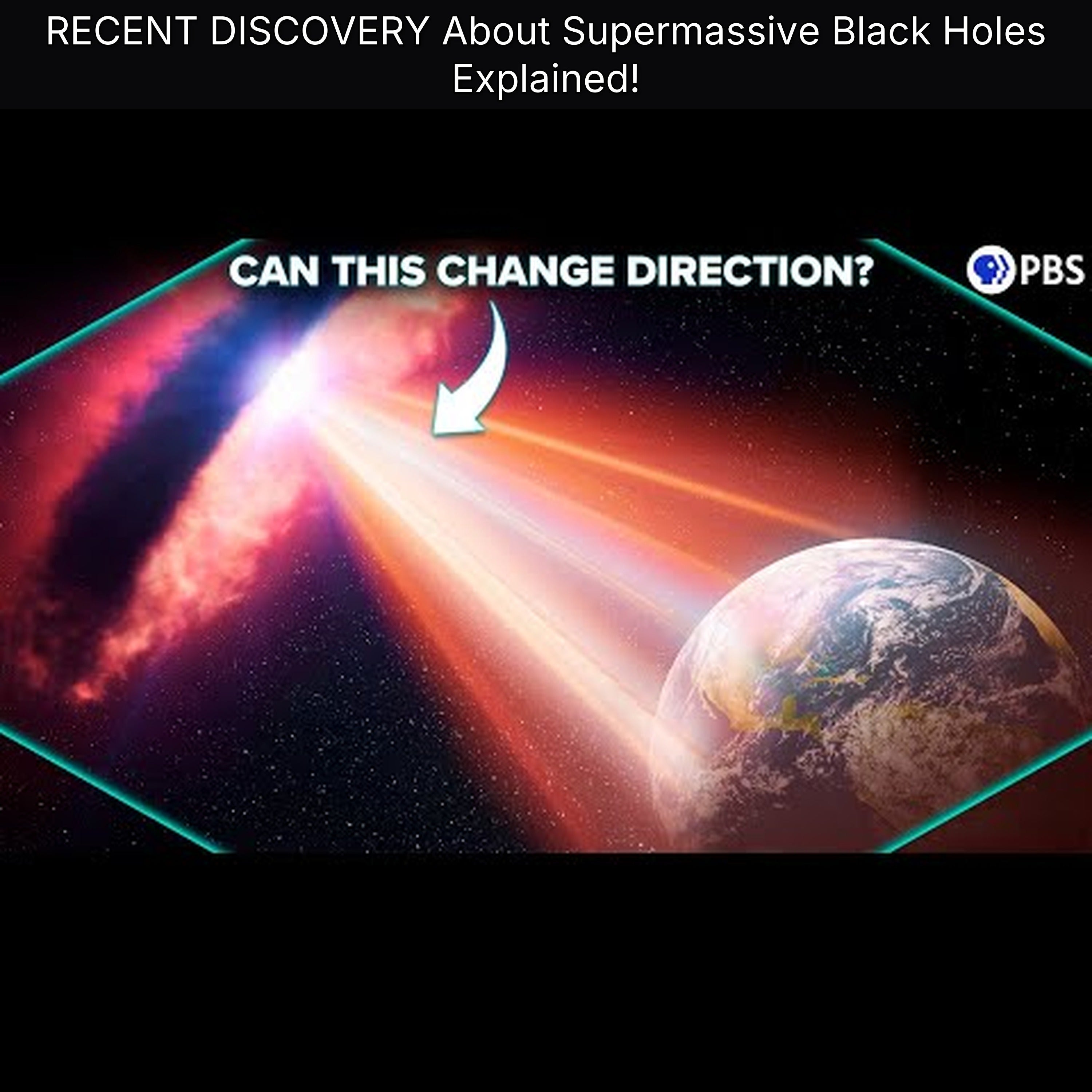
PBS Member Stations rely on viewers like you. To support your local station, go to:http://to.pbs.org/DonateSPACE Sign Up on Patreon to get access to the Space Time Discord! Astrophysicists have discovered a black hole that for millions of years has been blasting vast particle beams in opposite directions across the sky. And has recently swiveled to point its one of these jets directly at us. Is this an intergalactic death ray of an alien civilization that has suddenly noticed us? Absolutely not, and there’s no danger at all. But it’s a pretty cool phenomenon anyway, and something we’ve never seen before. Check out the Space Time Merch Store Sign up for the mailing list to get episode notifications and hear special announcements! Search the Entire Space Time Library Here: https://search.pbsspacetime.com/ Hosted by Matt O'Dowd Written by Matt O'Dowd Post Production by Leonardo Scholzer, Yago Ballarini, Pedro Osinski, Caique Oliveira, Adriano Leal & Stephanie Faria Directed by Andrew Korn
Check out the Space Time Merch Store Sign Up on Patreon to get access to the Space Time Discord! So you’ve decided to jump into a black hole. Good news: as long as the black hole is big enough you can sail through the event horizon without harm and get to experience the interior of the black hole before you’re annihilated by the central singularity. Or so we once thought. These days, quite a few physicists believe that the only way to avoid horrible contradictions in fundamental physics generated by black holes is for all them to be surrounded by screens of extreme energy that prevent anything from ever entering the event horizon. Sounds outlandish? Welcome to black holes. So let’s find out why many of our most brilliant physicists take these black hole firewalls deadly seriously. PBS Member Stations rely on viewers like you. To support your local station, go to:http://to.pbs.org/DonateSPACE Sign up for the mailing list to get episode notifications and hear special announcements! Searc
As an experiment, I ate 600 strips of bacon in 20 days. That is 21,000 Calories from bacon alone, on top of a background ketogenic diet. Similar to the famous Oreo versus statin experiment and the 720 Eggperiment (both linked below), this n = 1 experiment bucks common knowledges and leans on new models around human metabolism and health. This is provocative, intentionally. Stick around and I will explain why this is more than just a media stunt. Chapters 0:00 – I ate 600 strips of bacon 0:35 – Why I ate 600 strips of bacon 1:07 – Sweet Suprise. Cholesterol Dropped, Again 3:17 – Explaining the Results 5:48 – Why did I make this video? Really… #bacon #metabolism #cholesterol #LMHR #LDL #staycurious #nutritiontips 720 Egg video: https://youtu.be/bhUMUCoJOsc OreoVsStatin video: https://youtu.be/L1mMnnyJrgk Lipid Energy Model Paper: https://pubmed.ncbi.nlm.nih.gov/35629964/
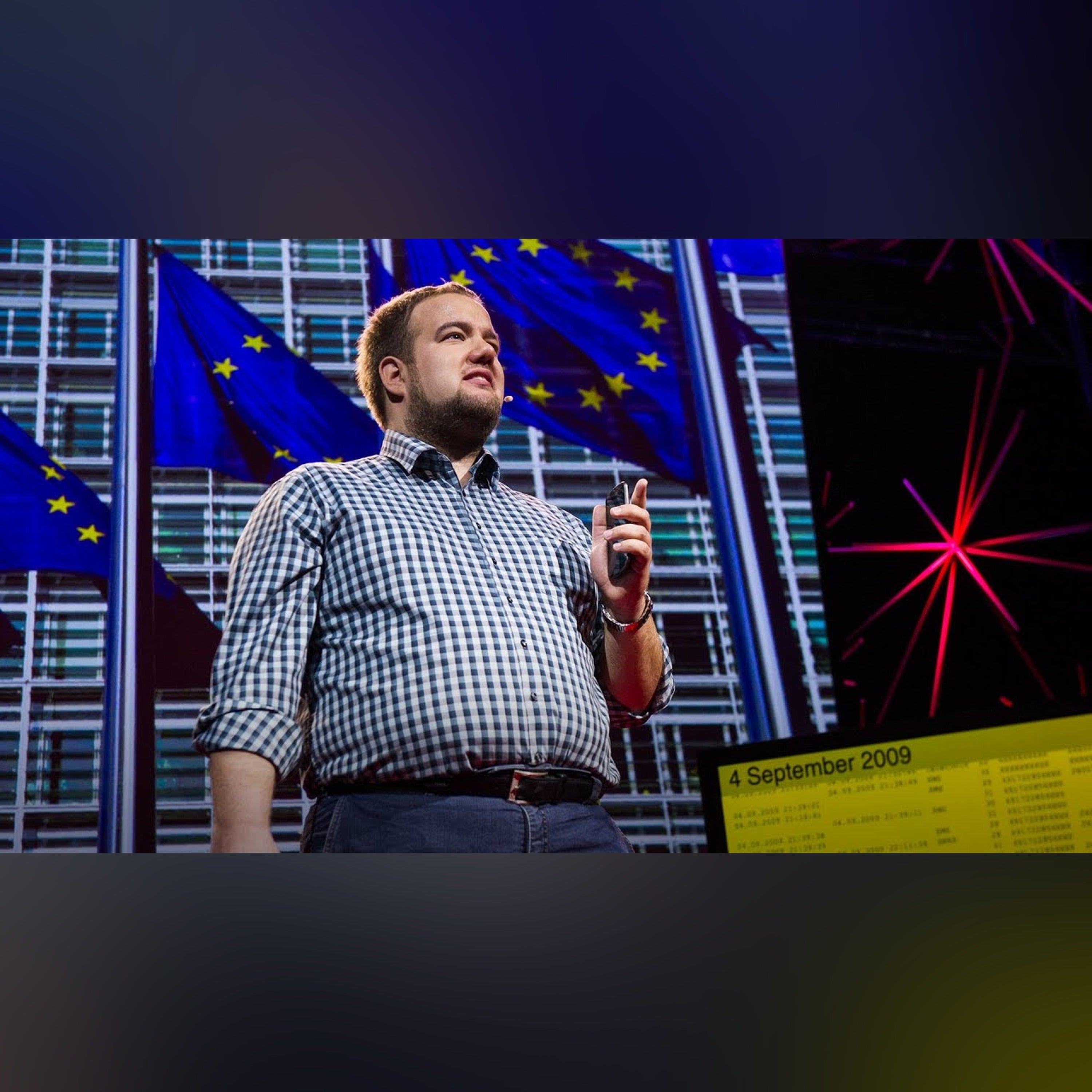
What kind of data is your cell phone company collecting? Malte Spitz wasn't too worried when he asked his operator in Germany to share information stored about him. Multiple unanswered requests and a lawsuit later, Spitz received 35,830 lines of code -- a detailed, nearly minute-by-minute account of half a year of his life. Uploaded 21-06-13 Talk by Malte Spitz.
There is a corruption at the heart of American politics, caused by the dependence of Congressional candidates on funding from the tiniest percentage of citizens. That's the argument at the core of this blistering talk by legal scholar Lawrence Lessig. With rapid-fire visuals, he shows how the funding process weakens the Republic in the most fundamental way, and issues a rallying bipartisan cry that will resonate with many in the U.S. and beyond. Uploaded 23-08-13 Talk by Lawrence Lessig.
Learn More About 80,000 Hours at: https://www.80000hours.org/spacetime PBS Member Stations rely on viewers like you. To support your local station, go to:http://to.pbs.org/DonateSPACE Sign Up on Patreon to get access to the Space Time Discord! From hoverboards to flying cars to cloud cities, anti-gravity is a staple of science fiction and our dream of a less Earth-bound future. But in the real universe gravity appears to be a purely attractive force. Feels like its main MO is keeping us stuck to the surface of this lonely rock. But maybe if we science hard enough we can remove the fiction from science fiction. For the sake of our flying cars we should at least try. And for many years, physicists have wondered whether a certain well-known exotic material may experience gravitational repulsion from the Earth. That material is antimatter, and physicists at CERN have just completed a very long and very difficult experiment to answer a seemingly simple question: does antimatter fall down, o
Take the Space Time Fan Survey Here: https://forms.gle/wS4bj9o3rvyhfKzUA Uploaded 20-04-22 PBS Member Stations rely on viewers like you. To support your local station, go to:http://to.pbs.org/DonateSPACE Sign Up on Patreon to get access to the Space Time Discord! Imagine you’re leading a game of 20 questions and you forget the thing you chose half way through. You have to keep answering yesses and nos and hope that you think of something that’s consistent with all your previous questions before the game is done. Well it could be that’s what the entire universe is doing. I hope it thinks of something good before we run out of questions. Check out the Space Time Merch Store Sign up for the mailing list to get episode notifications and hear special announcements! Hosted by Matt O'Dowd Written by Katie McCormick and Matt O'Dowd Post Production by Leonardo Scholzer, Yago Ballarini, Pedro Osinski, Adriano Leal and Stephanie Faria GFX Visualizations: Ajay Manuel Directed by Andrew Kornhaber A
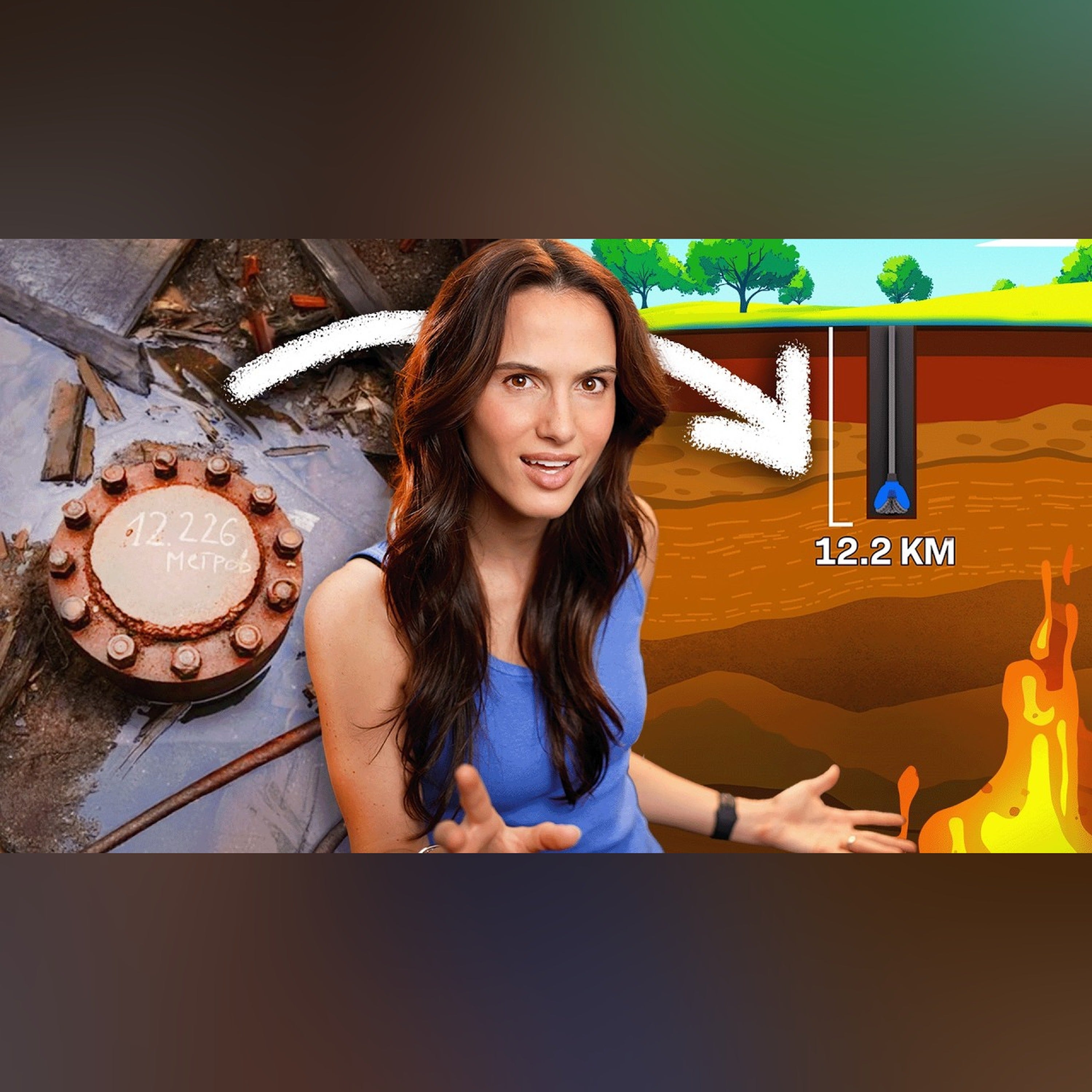
What's really down in the deep Earth? Have you ever thought, “what if I just dug a really really deep hole?” Well, the USSR actually did. The hole they dug is deeper than the deepest part of the ocean. It’s deeper than Mt. Everest is tall! They began digging it in the 1970s as part of a space race, but down. The United States only got to 600 ft before pulling funding. But the USSR kept going for 20 years. They made it about a third of the way through the Earth’s crust and then STOPPED. But what if… you just… kept... digging? If you dug a hole to the center of the Earth, what would you find? What would happen to you? And what does our newest tech tell us is REALLY down below your feet? In this video, we’re going on a journey to the center of the Earth… Chapters: 0:00 What if you dug a hole to Earth’s core? 1:05 What happens when I start digging? 1:36 What are the deepest made-made things? 2:25 What is the deepest hole humans ever dug? 3:03 What happens in the mantle? 3:45 Why is the Ear
For too long now, Catholic scholars and many of the faithful have felt compelled to align themselves with a Darwinian account of life's origins. But as modern evolutionary theory faces a rising wave of disconfirming evidence, the evidence for both intelligent design and a first human couple, Adam and Eve, is stronger than ever. So it's a good time for Catholics to reevaluate their relationship with Darwin. On this classic ID The Future from the archive, physicist Dr. Brian Miller welcomes Father Martin Hilbert to the podcast to discuss his book A Catholic Case for Intelligent Design. Source (https://idthefuture.com/2293/)
Trace the history of rats, from their emergence in Asia to how they became the most successful invasive species in the world. -- Today, rats are often regarded as the most successful invasive species in the world. The most common species of rat scurried onto the scene roughly 1 to 3 million years ago in Asia. There, they craftily survived Earth’s most recent ice age, and eventually, began living around and with humans— though often at the mercy of human priorities. Max G. Levy traces the entangled history of human and rat. Lesson by Max G. Levy, directed by Denys Spolitak. Support Our Non-Profit Mission ---------------------------------------------- Support us on Patreon: http://bit.ly/TEDEdPatreon Check out our merch: http://bit.ly/TEDEDShop ---------------------------------------------- Connect With Us ---------------------------------------------- Sign up for our newsletter: http://bit.ly/TEDEdNewsletter Find us on Twitter: http://bit.ly/TEDEdTwitter Peep us on Instagram: http://bit
Inspired by cell division, Michael Hansmeyer writes algorithms that design outrageously fascinating shapes and forms with millions of facets. No person could draft them by hand, but they're buildable -- and they could revolutionize the way we think of architectural form. Uploaded 21-06-13 Talk by Michael Hansmeyer.
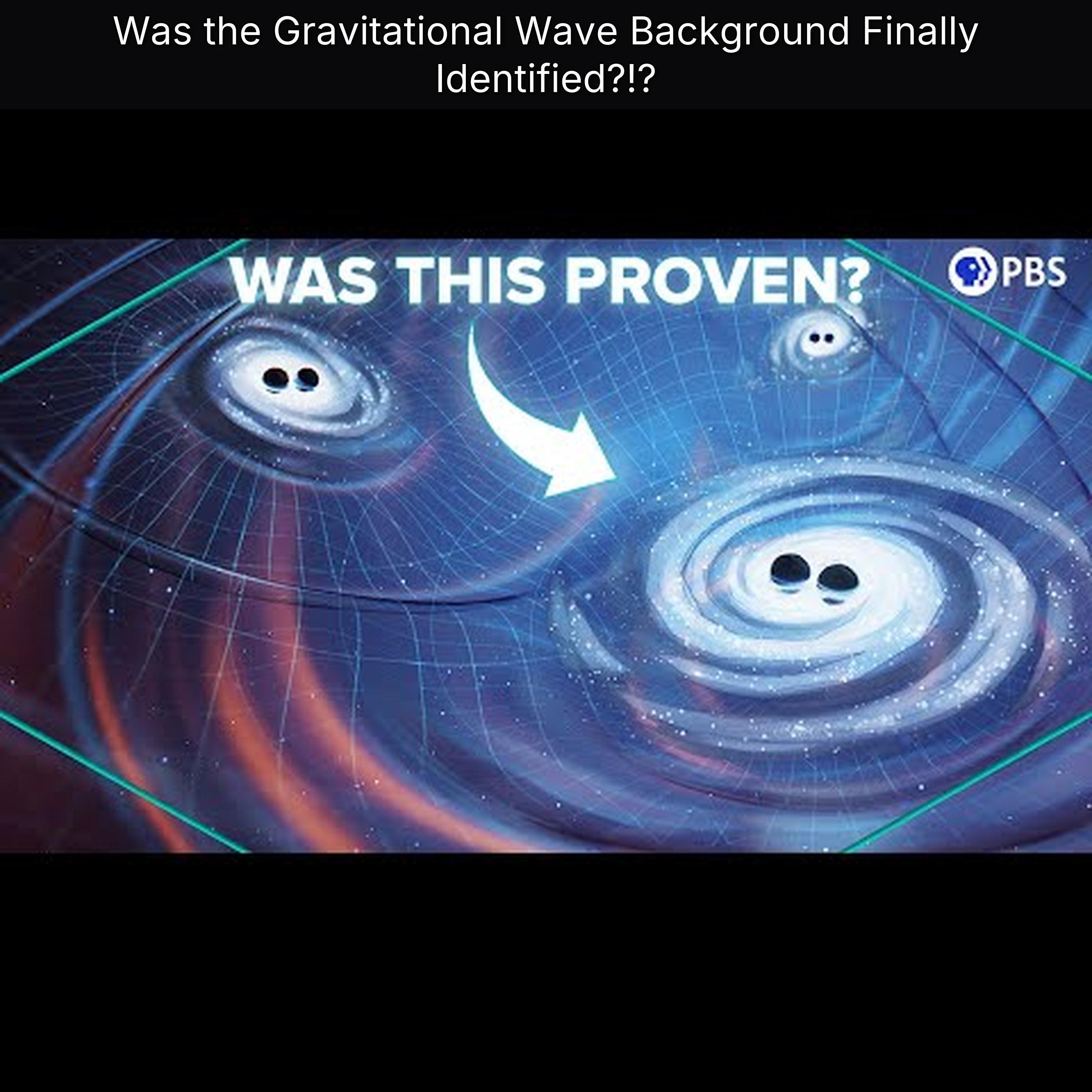
Learn More About Opera One: https://opr.as/Opera-browser-PBS-Space-Time PBS Member Stations rely on viewers like you. To support your local station, go to: http://to.pbs.org/DonateSPACE Sign Up on Patreon to get access to the Space Time Discord! A few weeks ago a large team of gravitational wave astronomers announced something pretty wild. The moderately confident detection of pervasive ripples in the fabric of space time that presumably fills the cosmos, detected by watching for subtle connections between the signals from rapidly spinning cores of dead stars in our galactic neighborhood. In other words, the gravitational wave background has probably been detected using a pulsar timing array. Thumbnail Image Illustration Credit: Olena Shmahalo for NANOGrav Check out the Space Time Merch Store Sign up for the mailing list to get episode notifications and hear special announcements! Search the Entire Space Time Library Here: https://search.pbsspacetime.com/ Hosted by Matt O'Dowd Written
Work-life balance, says Nigel Marsh, is too important to be left in the hands of your employer. Marsh lays out an ideal day balanced between family time, personal time and productivity -- and offers some stirring encouragement to make it happen. (Filmed at TEDxSydney.) Uploaded 08-08-13 Talk by Nigel Marsh.
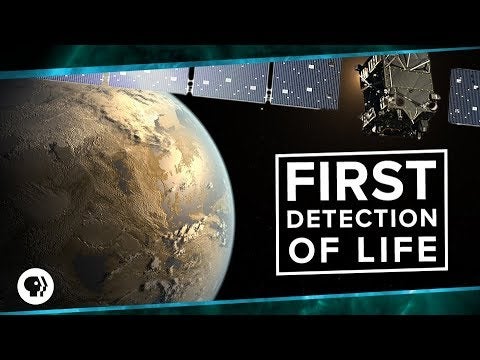
Viewers like you help make PBS (Thank you ) . Support your local PBS Member Station here: https://to.pbs.org/DonateSPACE Uploaded 24-08-17 What does life look like from space? LegalZoom is not a law firm or a substitute for the advice of an attorney. You can further support us on Patreon at https://www.patreon.com/pbsspacetime Get your own Space Time tshirt at http://bit.ly/1QlzoBi Tweet at us! @pbsspacetime Facebook: facebook.com/pbsspacetime Email us! pbsspacetime [at] gmail [dot] com Comment on Reddit: http://www.reddit.com/r/pbsspacetime Help translate our videos! https://www.youtube.com/timedtext_cs_... Previous Episode: In 1990, an experiment conceived by Carl Sagan was performed using using the Galileo spacecraft. The purpose? To detect life on a planet based on measurements by a space probe. The experiment was successful, and abundant life was unequivocally confirmed. That planet? The Earth. Now, a quarter century later, we’re on the verge of conducting that same experiment on