The experience of illness is a universal and substantial part of human existence. Like death, illness raises important philosophical issues. But unlike death, illness, and in particular the experience of being ill, has received little philosophical attention. This may be because illness is often understood as a physiological process that falls within the domain of medical science and is thus outside the purview of philosophy. In Phenomenology of Illness (https://bookshop.org/a/12343/9780198822660) (Oxford UP, 2016) Havi Carel argues that the experience of illness has been wrongly neglected by philosophers and proposes to fill the lacuna. Phenomenology of Illness provides a distinctively philosophical account of illness. Using phenomenology, the philosophical method for first-person investigation, Carel explores how illness modifies the ill person's body, values, and world. The aim of Phenomenology of Illness is twofold: to contribute to the understanding of illness through the use of p
InReframing Dynamism: Indic Philosophies of Being, Time and Freedom (https://bookshop.org/a/12343/9781350576254) (Bloomsbury, 2026), the first book to explore the philosophy of dynamism from classical India, Sthaneshwar Timalsina interrogates central metaphysical questions about the nature of reality. Timalsina argues for change and time as intrinsic to being. Exploring instances from Yaska to Abhinavagupta, and reading philosophical and cultural texts in a comparative light, he reveals the absolute being as inherently dynamic. Alongside Bergson and Husserl, his study directs attention to the importance of the arguments of classical Sanskrit grammarians such as Yaska, Bhartthari, and Kauna Bhatta. By engaging with schools and other Sakta philosophies that have not received serious engagement, Timalsina reinvigorates the conversation on creativity, freedom, dynamism, temporality, and the dynamism of being. His cutting-edge view of time as a fundamental element of reality is necessary re
Humans have come up with some clever ways of keeping cool when it's warm, and staying warm when it’s cool. But unfortunately, our heating and air conditioning systems are worsening the climate crisis. In this episode of Crash Course Climate and Energy, we’ll take a look at some of the ways we might be able to decarbonize those systems to reduce the amount of greenhouse gases they produce. Chapters: Introduction: Heating Without Fossil Fuels 00:00 Fracking & Natural Gas 1:18 The Problem of Heating with Coal 4:17 Cooling Without Fossil Fuels 7:03 Heat Pumps for Heating & Cooling 8:42 Alternative Fuels for Low-Carbon Heating 10:52 Review & Credits 12:28 Sources: https://docs.google.com/document/d/1rRJ-L9TLNfPwPfzn3LdjDEw-wHtThwTfDUe2rDtFXQQ/edit?usp=sharing 2SrDulJ *** Crash Course is on Patreon! Thanks to the following patrons for their generous monthly contributions that help keep Crash Course free for everyone forever: Katie, Austin Zielman, Tori Thomas, Justin Snyder, DL Singfield, Am
We don’t know what the next big scientific breakthrough is going to be or what futuristic diseases we’ll encounter. But when it comes to our health, we actually have a pretty good idea of what could be next. And we also have some ideas about what we need to do today to prepare. In this final episode of Crash Course Public Health, we’re going to take a look into the future with some roadmaps from the present. Chapters: Looking to the Future 00:00 Disease Surveillance 2:55 A Planetary Approach 5:05 Technology & Misinformation 8:12 Health Equity 10:46 Review & Credits 11:39 Check out our shared playlist with APHA: https://www.youtube.com/playlist?list=PLDjqc55aK3kywF2dd97_Jh5iP0d2ARhdo Vanessa’s channel: https://www.youtube.com/braincraft Sources: https://docs.google.com/document/d/1OHJiQ1njj5jWJC1YLDBzQgKC1QfnVgqJbbpK6qs7ekA/edit?usp=sharing *** Crash Course is on Patreon! Thanks to the following patrons for their generous monthly contributions that help keep Crash Course free for everyo
This week Craig Benzine talks about the importance of elections in the strongest branch of the U.S. Government: Congress. He'll talk about the frequency of elections in the Senate and House, the typical characteristics of a candidate, and the motivating factors our congresspeople follow to get re-elected. Produced in collaboration with PBS Digital Studios: http://youtube.com/pbsdigitalstudios Support is provided by Voqal: http://www.voqal.org (http://www.voqal.org/) Chapters: Introduction: Congressional Elections 00:00 How Congressional Elections Work 0:59 How Congressional Candidates Get Elected 2:16 Characteristics of Congressional Candidates 3:05 Incumbency Advantage 4:21 The Electoral Connection & Why Congressional Elections Matter 6:01 Credits 8:25 Crash Course is on Patreon! Want to find Crash Course elsewhere on the internet? Facebook - http://www.facebook.com/YouTubeCrashCourse Twitter - http://www.twitter.com/TheCrashCourse Instagram - https://www.instagram.com/thecrashcourse/
View full lesson: http://ed.ted.com/lessons/sunlight-is-way-older-than-you-think-sten-odenwald Uploaded 12-05-15 It takes light a zippy 8 minutes to reach Earth from the surface of the Sun. But how long does it take that same light to travel from the Sun’s core to its surface? Oddly enough, the answer is many thousands of years. Sten Odenwald explains why by illustrating the random walk problem. Lesson by Sten Odenwald, animation by TOTEM Studio.
In this REALLY IMPORTANT EPISODE of Crash Course Psychology, Hank talks about how we remember and forget things, why our memories are fallible, and the dangers that can pose. Want more videos about psychology? Check out our sister channel SciShow Psych at https://www.youtube.com/scishowpsych! -- Chapters: Introduction: The Banana Thief 00:00 How Memories are Stored 1:12 Memory Retrieval Cues 1:58 Priming & Context-Dependent Memory 2:45 State-Dependent & Mood-Congruent Memory 3:31 Serial Position, Primacy, & Recency Effects 3:52 How Information is Forgotten 4:43 Interference & Misinformation 6:21 Issues with Eyewitness Accounts 7:02 Review & Credits 9:25 -- Crash Course is on Patreon! Want to find Crash Course elsewhere on the internet? Facebook - http://www.facebook.com/YouTubeCrashCourse Twitter - http://www.twitter.com/TheCrashCourse Instagram - https://www.instagram.com/thecrashcourse/ CC Kids: http://www.youtube.com/crashcoursekids
Nearly every environment on Earth — and that includes animals — is home to some kind of parasite. Today we’re going to talk about parasites not just because they’re an essential part of their ecosystems, but also because by studying them we can learn more about their hosts and even their shared evolution and ecology. So stick with us, this one is going to get a little weird! Learn more about Rae here! https://www.raewynngrant.com (https://www.raewynngrant.com/) Watch our videos and review your learning with the Crash Course App! Download here for Apple Devices: https://apple.co/3d4eyZo Download here for Android Devices: https://bit.ly/2SrDulJ Crash Course is on Patreon! Thanks to the following patrons for their generous monthly contributions that help keep Crash Course free for everyone forever: Vincent, Emilee Murphy, Michael Wang, Jordan willis, Krystle Young, Michael Dowling, Alexis B, Rene Duedam, Burt Humburg, Aziz, Nick, DAVID MORTON HUDSON, Perry Joyce, Scott Harrison, Mark & Su
In which John Green teaches you about the poetry of Sylvia Plath. When a lot of people think about Sylvia Plath, they think about her struggles with mental illness and her eventual suicide. Her actual work can get lost in the shuffle a bit, so this video really tries to focus on the poetry. You'll learn about Sylvia Plath's role as a feminist poet, and you'll also learn about her extraordinary ability to recreate the experiences of real life in a beautiful and relatable way. Consider supporting local bookstores by purchasing your books through our Bookshop affiliate link https://bookshop.org/shop/complexly or at your local bookseller. Crash Course is on Patreon! Want to find Crash Course elsewhere on the internet? Facebook - http://www.facebook.com/YouTubeCrashCourse Twitter - http://www.twitter.com/TheCrashCourse Instagram - https://www.instagram.com/thecrashcourse/ CC Kids: http://www.youtube.com/crashcoursekids
Earth's early history may have been shaped by a powerful force we rarely consider: its changing rotation. New research suggests that as our planet gradually slowed down, its crust underwent significant deformation, potentially explaining some of the mysteries behind its earliest geological evolution. This episode includes AI-generated content.
If you go on the internet, you'll find a lot of experts using the internet to tell us why the internet is destroying our kids' mental health. But Ginny Yurich, the founder of 1000 Hours Outside and author of Until the Streetlights Come On, says the decline in kid and teen mental health started in the sixties, and is more linked to kids having less autonomy and time outside, and too much structure with school and extracurriculars. Michael speaks with Ginny about where the 1,000-hour number comes from, how busy families fit it in, how to handle screens without banning them, why bad weather and a little discomfort are good for kids, and where any family, or any adult, can start. They discuss: (00:00) Cold open (00:47) Where 1,000 hours comes from (05:32) Her first good day as a mom (09:25) Minutes outside, hours on screens (11:21) When both parents work (14:56) It works for adults too (17:48) Getting screen-loving kids outside (23:29) Screen time without saying no (25:56) Why play takes 4
You know that uneasy feeling when someone or something gives you the creeps? Is your brain picking up on a hidden danger, or is something else going on? There's some fascinating science behind what makes things creepy and why certain people and situations trigger that feeling. https://www.smithsonianmag.com/science-nature/science-creepiness-180957093/ The world doesn't smell the way it used to. Some odors that were once part of everyday life have disappeared, while others have taken their place. But did people in the past actually smell worse than we do today? What did cities and homes smell like centuries ago? And why haven't we figured out how to eliminate unpleasant smells? Will Tullett, a historian and senior lecturer at the University of York, has spent years studying the history of smell. He joins me to reveal how smells have changed over time, how they shape our lives, and why the history of odors is surprisingly fascinating. He is the author of Sniff: A History of Smells (https
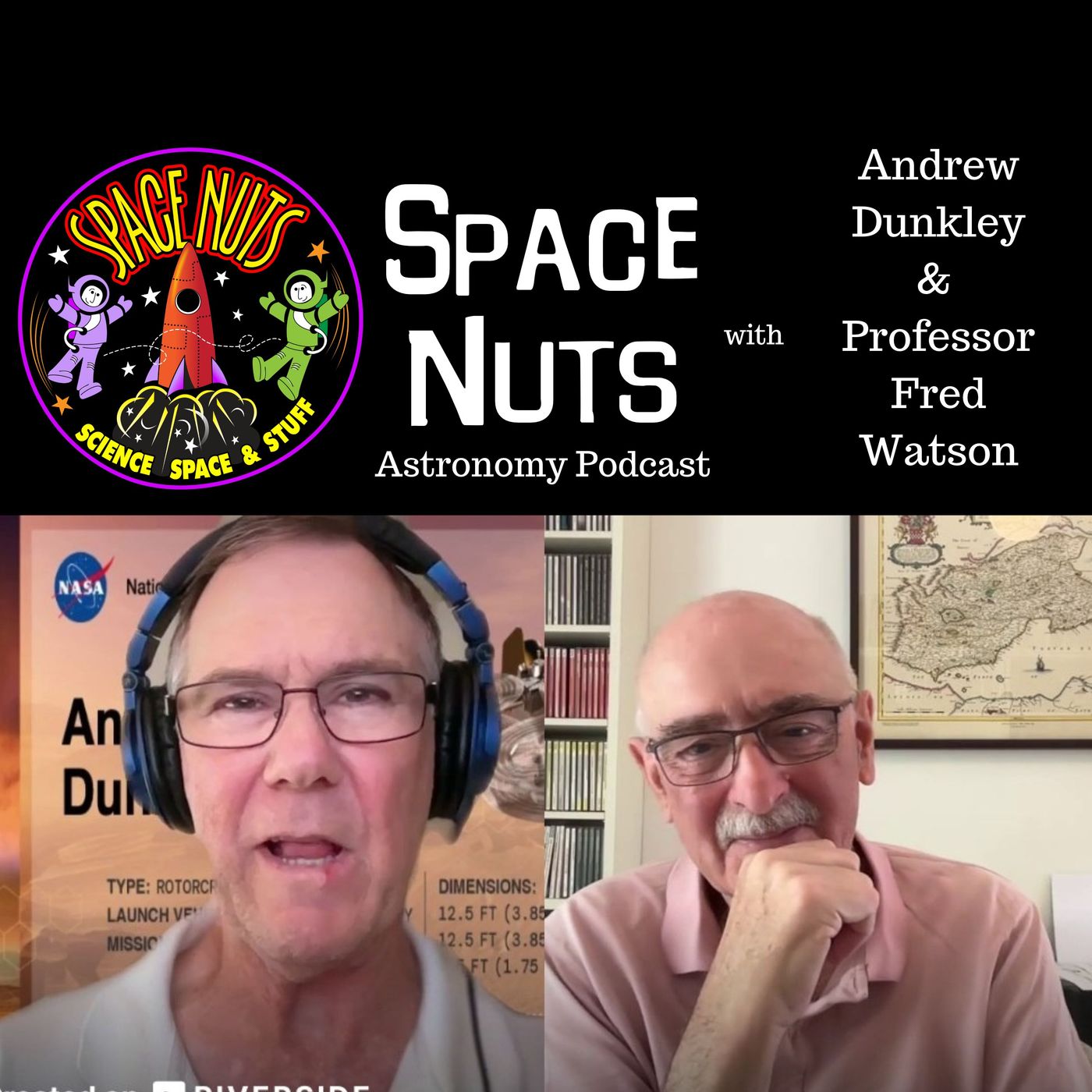
Sponsor Link: This episode of Space Nuts is brought to you with the help and support of NordVPN....the first name you should think of for your online security. To check out special Space Nuts listener deal and save big, visit this URL: www.nordvpn.com.spacenuts (https://www.nordvpn.com/spacenuts) Space Nuts: The M87 Black Hole, a Vanishing Exoplanet and Dragonfly’s Journey to Titan In this episode of Space Nuts, Andrew Dunkley and Professor Fred Watson revisit the Event Horizon Telescope’s landmark image of the black hole in galaxy M87 — and explain how a CSIRO team has now independently confirmed it using artificial intelligence. They then investigate an exoplanet that stopped transiting its star, apparently because the gravity of another planet has tilted its orbit out of view. Finally, Andrew and Fred Watson look ahead to NASA’s Dragonfly mission to Titan, where a flying rotorcraft will explore a moon with methane and ethane lakes. You can even send your name along for the ride. Joi
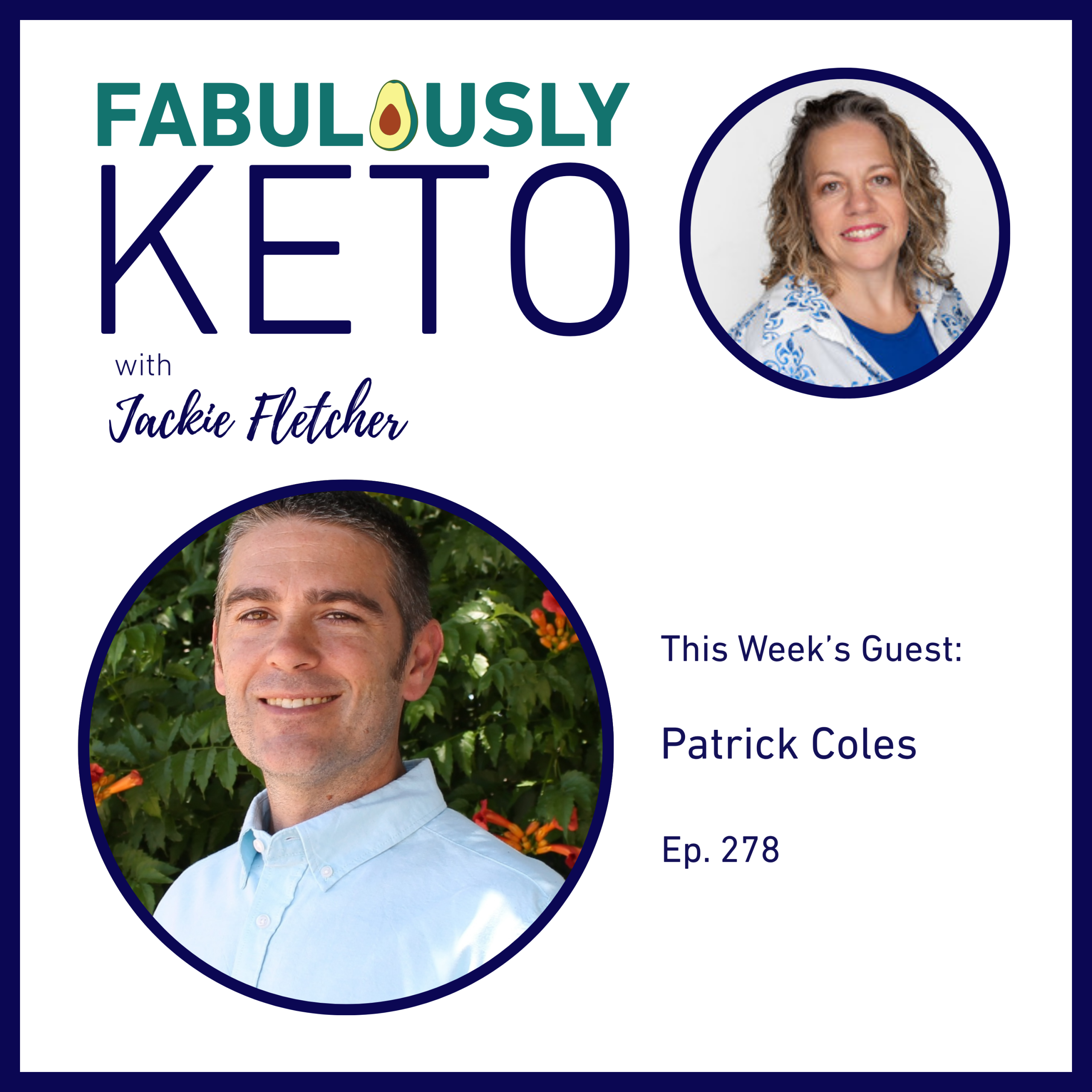
Patrick Coles “I think it’s very important to differentiate between defence mechanisms and actual diseases.” – Patrick Coles Patrick obtained his PhD in Chemical Engineering at Berkeley and his MPhil in Biochemistry at Cambridge. He has co-authored over 170 research papers in physics and computer science. He invented the Toxin Sequestration Theory (TST) of cancer, and he is currently rewriting the theory of disease in terms of toxicity. Patrick’s Top Tips Trust your body. Don’t try to attack your body’s defences. Things like fever, allergies and inflammation are your body protecting you. Give it a healthy, nourishing diet and it’ll do the rest. Carnivore is the diet lowest in toxins. Keto is very good too, because it cuts out sugar, fructose and seed oils. Carnivore just takes it one step further. Keep an open mind and question things. Don’t take things at face value. Trust your own ability to think logically, because you might reason things through better than your doctor Resources Me
Our General Surgery Oral Board Review material includes: 123 audio scenarios 10 interactive video scenarios 97 operative descriptions Oral Board Simulator credits Audio: Each scenario includes two parts. Part A is a perfectly executed general surgery board scenario that mimics the real thing. Scenarios are 5 to 7 minutes long and include a variety of tactics and styles. If you are able to achieve this level of performance in your preparation you are sure to pass the oral exam with flying colors. Part B introduces high-yield commentary to each scenario. This commentary includes tips and tricks to help you dominate the most challenging scenarios in addition to practical, easy-to-understand teaching that covers the most confusing topics we face as general surgeons. We are confident you will find this unique, dual format approach a highly effective way to prepare for the general surgery oral board exam. Please check out the preview episodes below that include Parts A and B, with and withou
Despite multibillion-dollar investments in cybersecurity, one of its root problems has been largely ignored: who are the people who write malicious code? Underworld investigator Misha Glenny profiles several convicted coders from around the world and reaches a startling conclusion. Uploaded 16-08-13 Talk by Misha Glenny.
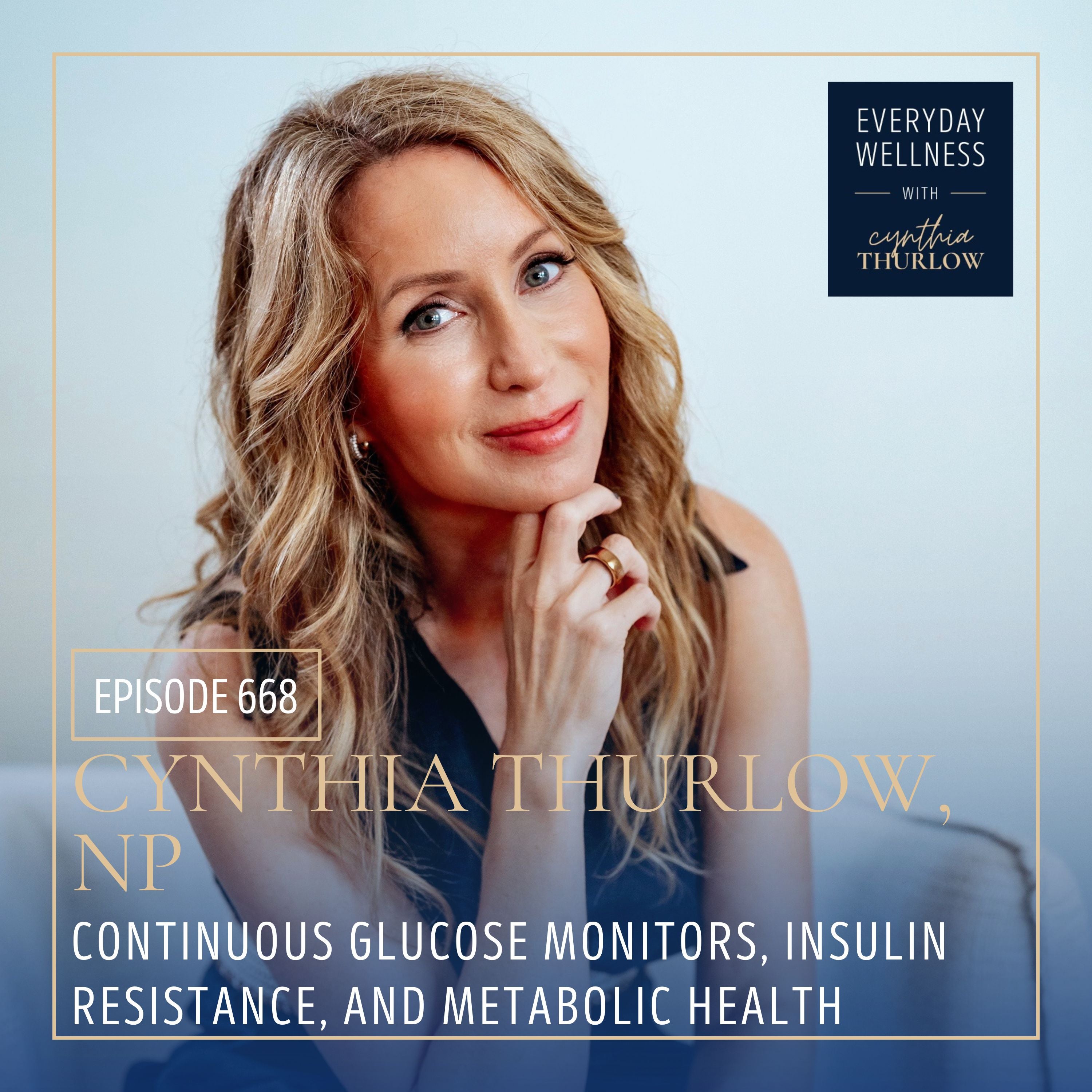
Welcome to this week’s Midlife Minute episode! In this episode, we take a closer look at continuous glucose monitors (CGMs) for individuals without diabetes. Stay tuned to learn what the latest research says, when using a CGM might be worthwhile, and how to interpret your results to understand your own metabolic health—without unnecessary worry. IN THIS EPISODE, YOU WILL LEARN: What the research reveals about CGMs for people without diabetes How CGMs can influence people’s everyday health choices Why glucose responses to the same foods can vary between individuals Why glucose spikes can cause unnecessary anxiety How to approach a CGM trial with a clear plan What to look for when reviewing CGM data Why the gut microbiome matters for personalized nutrition How to decide whether a CGM is worth trying Connect with Cynthia Thurlow Cynthia’swebsite (https://cynthiathurlow.com/). Submit your questions to [email protected] The Midlife Pause Supplement Line (https://themidlifepause.com
Throughout history, prophets and visionaries have claimed to be able to telepathically access knowledge and information that would ultimately steer the course of human history. But if true, where do these individuals get their visions? According to ancient mythologies, there is a universal repository of knowledge known as the Akashic Record. While most mainstream scholars relegate this to the realm of mythology, recent scientific discoveries have opened the possibility that such a repository could actually exist–and is accessible by the human mind. Giorgio A. Tsoukalos meets with neuroscientist Dr. Dario Nardi to measure the brainwaves of Dr. Deepak Chopra as he enters a state of deep meditation to observe the physical chnges in the brain as he connects or taps into something beyond ourselves. Could our ability to tap into the Akashic Record lead to the next giant leap in human evolution–and connect us to other intelligent beings throughout the cosmos?
The warm colors and bright accents of the Bohemian Waxwing might make you think it glows in the dark. For the better part of two thousand years, that’s what people believed. Pliny reported that their feathers “shine like flames” in the dark forests of central Europe. The Germans allegedly used captive birds to light their way at night. But at the end of the sixteenth century, the great Italian birdman Ulysses Aldrovandi dismissed the notion that waxwings emit light. Today, we are fortunate that these winter nomads brighten our days. More info and transcript at BirdNote.org (https://www.birdnote.org/podcasts/birdnote-daily/waxwing-nightlight). Want more BirdNote? BirdNote is a nonprofit. Hosted by Simplecast, an AdsWizz company.
SpaceX Daily Zelensky reports Starshield speed limits resumed at 161 kilometers per hour for frontline troops. Top News Ukraine warns of fresh Starshield disruptions as U.S. envoys arrive in Moscow for talks with Putin Ukrainian President Zelensky stated that Starshield speed limits have resumed at 161 kilometers per hour, hampering frontline military operations. The restrictions affect drone coordination and real-time data links for troops near active combat zones. ... Sources: cnbc.com (https://www.cnbc.com/2026/11/12/starlink-starshield-ukraine-restrictions-spacex.html) · newsquawk.com (https://www.newsquawk.com/headlines/ukrainian-president-zelensky-posts-that-the-spacex-spcx-starshield-system-speed-limits-are-in-effect-at-161-kilometers-per-hour) · straitstimes.com (https://www.straitstimes.com/world/europe/zelenskiy-says-starshield-speed-limited-again-hampering-ukraines-defences) · bloomberg.com (https://www.bloomberg.com/news/articles/2026-11-12/ukraine-says-starshield-limitatio
Are they good swimmers? What are they doing with those gaping jaws? Why are there wild hippos in Colombia? What’s up with pygmy hippos? Actual real life Hippopotomologist Dr. Rebecca Lewison chats about pet hippos, subspecies, daily diets, poo helicopters, terrifying sunscreen, their role as ecosystem engineers, what’s up with their nostrils, and their surprising evolutionary cousins. Visit the Lewison Lab at SDSU (https://www.conservationecologylab.com/) and follow Dr. Lewison on Google Scholar (https://scholar.google.fr/citations?hl=en&user=OUzqVUEAAAAJ) A donation went to The Wechiau Community Hippo Sanctuary (WCHS) (https://wilderinstitute.org/conservation/wechiau-community-hippo-sanctuary/) Full-length (*not* G-rated) Hippopotomology episode + tons of science links (https://www.alieward.com/ologies/hippopotomology) More kid-friendly Smologies episodes! (https://www.alieward.com/smologies) Become a patron of Ologies (https://www.patreon.com/ologies) for as little as a buck a month
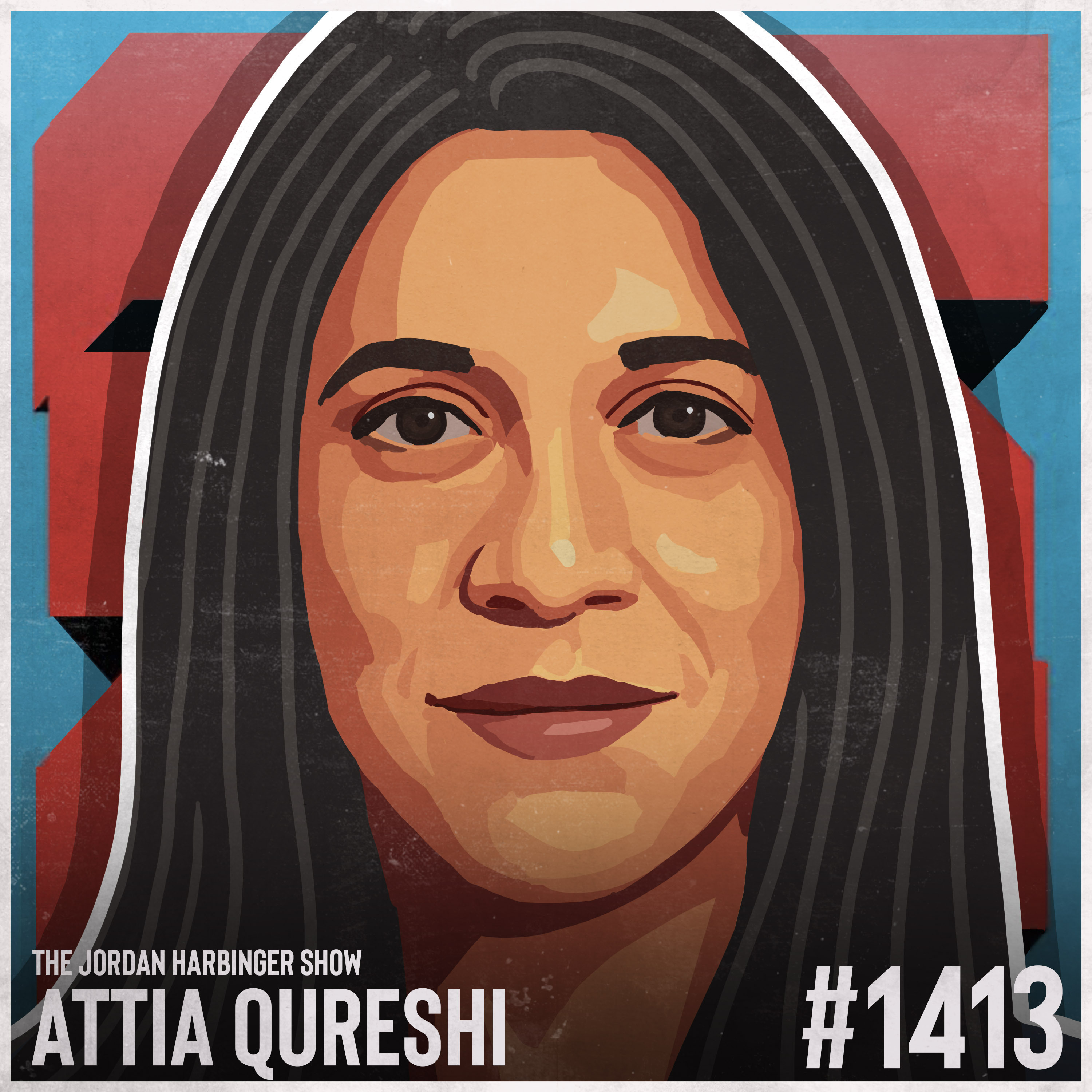
From cartel bosses to cranky neighbors, Attia Qureshi explains how to build negotiation muscle memory in 30 seconds a day — before the stakes get high. Full show notes and resources can be found here: jordanharbinger.com/1413 (https://jordanharbinger.com/1413) What We Discuss with Attia Qureshi: How Attia stood up to a cartel-linked boss derailing a Colombian farming cooperative with a drone, and why showing strength works against bad-faith actors while relational negotiation that meets everyone’s needs wins the other 95 percent of the time. Why small, no-strings gestures of reciprocity (like a box of cherries) can thaw even a hostile relationship and pave the way for a big ask — and the simple test that separates influence from manipulation: would they be upset if you told them exactly what you were doing? Why the “conqueror mentality” and worst-case-scenario thinking keep so many of us from ever making the ask — like the client who took on two promotions’ worth of responsibility over
This week is the 60th anniversary of the very first Mothman sighting, so to mark the occasion, tonight we have a special Best of Mothman episode. Keep it spooky and enjoy! Season 21 Episode 54 of Monsters Among Us Podcast, true paranormal stories of ghosts, cryptids, UFOs and more, told by the witnesses themselves. SHOW NOTES: MAU Merch Shop - https://www.monstersamonguspodcast.com/shop MAU Discord - https://discord.gg/ybjc9KUagY Monsters Among Us Junior on Spotify - Monsterquest "Mothman" - https://www.youtube.com/watch?v=8DLdYna8inY Search for the Mothman - https://www.youtube.com/watch?v=-ZwW7q1mCJc&t=1210s (https://www.youtube.com/watch?t=1210s&v=-ZwW7q1mCJc) Silver Bridge - https://en.wikipedia.org/wiki/Silver_Bridge Mothman Unsolved Mysteries - https://www.youtube.com/watch?v=saciiZan3ug Music from tonight's episode: White Bat Audio Songs: Necronomicon Necromancer Within the Shadows The Shape Returns
In today’s episode of Crash Course Zoology we’re going to solve some phylogenetic mysteries! There are so many more questions we have yet to answer in Zoology so grab some fossils, fire up the DNA sequences, and bring your best hypothesis as we try to figure out where all the baby eels are, explain why spiders seem so lonely, and decide once and for all if horseshoe crabs are arachnids! Learn more about Rae here! https://www.raewynngrant.com (https://www.raewynngrant.com/) Watch our videos and review your learning with the Crash Course App! Download here for Apple Devices: https://apple.co/3d4eyZo Download here for Android Devices: https://bit.ly/2SrDulJ Crash Course is on Patreon! Thanks to the following patrons for their generous monthly contributions that help keep Crash Course free for everyone forever: Michael M. Varughese, Ben Follows, Kyle & Katherine Callahan, Laurel A Stevens, Chris Routh, Evan Lawrence Henderson, Vincent, Emilee Murphy, Michael Wang, Jordan willis, Krystle Yo