If you compare precipitation around the world with population distribution we can understand a simple but powerful pattern of human geography: where there is water, there are people. But it gets a little more complicated because where there are people and limited resources, there is often conflict and bigger geographical questions at stake. So today, we’re going to zoom in and look more closely at how precipitation patterns around the Great Plains and the western United States has led to many conflicts involving the use and distribution of water resources. *** Watch our videos and review your learning with the Crash Course App! Download here for Apple Devices: https://apple.co/3d4eyZo Download here for Android Devices: https://bit.ly/2SrDulJ Crash Course is on Patreon! Thanks to the following patrons for their generous monthly contributions that help keep Crash Course free for everyone forever: Aziz, Christine Phelan, Nick, DAVID MORTON HUDSON, Perry Joyce, Scott Harrison, Mark & Susan
When we think of world religions, we often think of the Big Five: Judaism, Christianity, Islam, Hinduism, and Buddhism. But why do we think of those? In this episode of Crash Course Religions, we’ll learn why “world religions” is a category constructed by human choices—and why that matters for the communities that are left out. Introduction: "Coexist" 00:00 The "Big Five" 00:53 Colonialism & Religion 01:38 "World Religions" 04:02 Family Resemblance 05:03 Essentialism & Nationalism 07:10 The Limits of "Major Religions" 09:39 Review & Credits 10:30 Sources: https://docs.google.com/document/d/1IRPhziWfx72dIlGC1xIuEPWqb_uwnumdtYnmmsR4jto/edit?usp=sharing *** Support us for $5/month on Patreon to keep Crash Course free for everyone forever! https://www.patreon.com/crashcourse Or support us directly: https://complexly.com/support Join our Crash Course email list to get the latest news and highlights: https://mailchi.mp/crashcourse/email Get our special Crash Course Educators newsletter: http
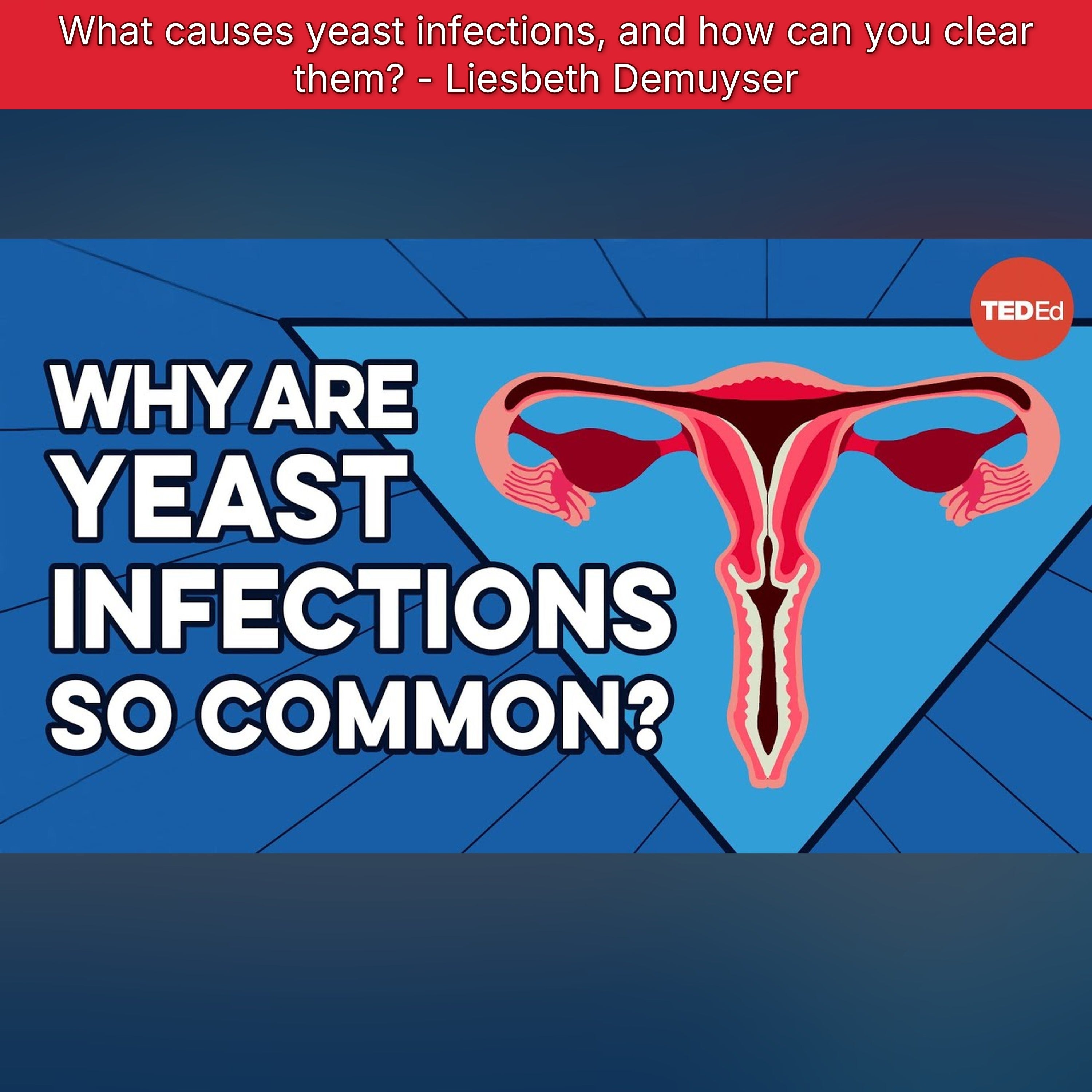
Explore the common causes and treatments of yeast infections, which affect 3 out of every 4 people with a vagina. -- The vagina harbors hundreds of different kinds of microorganisms. Candida yeasts are usually present in small quantities and most of the time, these fungi are harmless. But, under certain conditions, Candida yeasts can cause infections. One species in particular is the usual culprit of vaginal yeast infections. So, how exactly does a yeast infection happen? Liesbeth Demuyser investigates. Lesson by Liesbeth Demuyser, directed by Mette Ilene Holmriis, The Animation Workshop. Support Our Non-Profit Mission ---------------------------------------------- Support us on Patreon: http://bit.ly/TEDEdPatreon Check out our merch: http://bit.ly/TEDEDShop ---------------------------------------------- Connect With Us ---------------------------------------------- Sign up for our newsletter: http://bit.ly/TEDEdNewsletter Find us on Twitter: http://bit.ly/TEDEdTwitter Peep us on Insta
Dig into how foreign corporations exploit African nations like Mali for their gold mining, and often rob them of proper compensation. -- In 2020, Mali produced over 71 tons of gold— an amount worth billions of dollars. And this situation isn’t unique: a number of other gold-rich countries in Africa aren’t seeing the income they should given the price of gold. So, what’s going on? Lyla Latif digs into how foreign corporations exploit African nations for their resources. Lesson by Lyla Latif, directed by Jeffig Le Bars, JetPropulsion.space Support Our Non-Profit Mission ---------------------------------------------- Support us on Patreon: http://bit.ly/TEDEdPatreon Check out our merch: http://bit.ly/TEDEDShop ---------------------------------------------- Connect With Us ---------------------------------------------- Sign up for our newsletter: http://bit.ly/TEDEdNewsletter Find us on Twitter: http://bit.ly/TEDEdTwitter Peep us on Instagram: http://bit.ly/TEDEdInstagram -----------------
Does loneliness make people horny and other questions that demand answers? The human body is a marvel: it can fall in love, write symphonies and forget where it left its keys. It can also decide, with tremendous confidence, that a first date is roughly equivalent to being chased by a wolf. Sex therapist and trauma-informed practitioner Rachel Jane Cook joins the show to explain this curious design flaw. She describes how the nervous system constantly scans for danger, and how past experiences can leave it primed to protect us from intimacy, attention or desire. The result can be anxiety, numbness, avoidance, or a puzzling urge to seek connection in places that do not truly soothe us. We discuss trauma, attachment, loneliness, sexual compatibility and why community—not merely individual willpower—helps people change. Learn to spot the difference between feeling activated, shut down and genuinely safe. Treat avoidance as information, not a moral failure. Invest in relationships that help
Hank resists the urge to devour a slice of pizza so that he can walk you through the way we experience our major special senses. It all boils down to one thing: sensory cells translate chemical, electromagnetic, and mechanical stimuli into action potentials that our nervous system can make sense of. Today we're focusing on smell (olfaction) and taste (gustation), which are chemical senses that call on chemoreceptors. As usual, we'll begin with a quick look at how these things can go wrong. Pssst... we made flashcards to help you review the content in this episode! Find them on the free Crash Course App! Download it here for Apple Devices: https://apple.co/3d4eyZo Download it here for Android Devices: https://bit.ly/2SrDulJ Chapters: Introduction: Anosmia 00:00 How Smell Works 2:13 Olfactory Epithelium 2:47 Olfactory Sensory Neurons 3:19 Glomerulus 3:47 How the Brain Processes Smell 4:48 How Taste Works 6:19 What Are Taste Buds (Taste Receptor Epithelial Cells)? 6:40 Types of Taste Rece
This week Craig talks about police searches and seizures. Now, the fourth amendment says that you have the right to be protected against "unreasonable searches and seizures" but what exactly does this mean? Well, it's complicated. The police often need warrants issued with proof of probable cause, but this isn't always the case - such as when you're pulled over for a moving violation. We'll finish up with the limitations of these protections and discuss one group of people in particular that aren't protected equally - students. Produced in collaboration with PBS Digital Studios: http://youtube.com/pbsdigitalstudios Support is provided by Voqal: http://www.voqal.org (http://www.voqal.org/) All attributed images are licensed under Creative Commons by Attribution 2.0 Want to find Crash Course elsewhere on the internet? Facebook - http://www.facebook.com/YouTubeCrashCourse Twitter - http://www.twitter.com/TheCrashCourse Tumblr - http://thecrashcourse.tumblr.com (http://thecrashcourse.tumbl
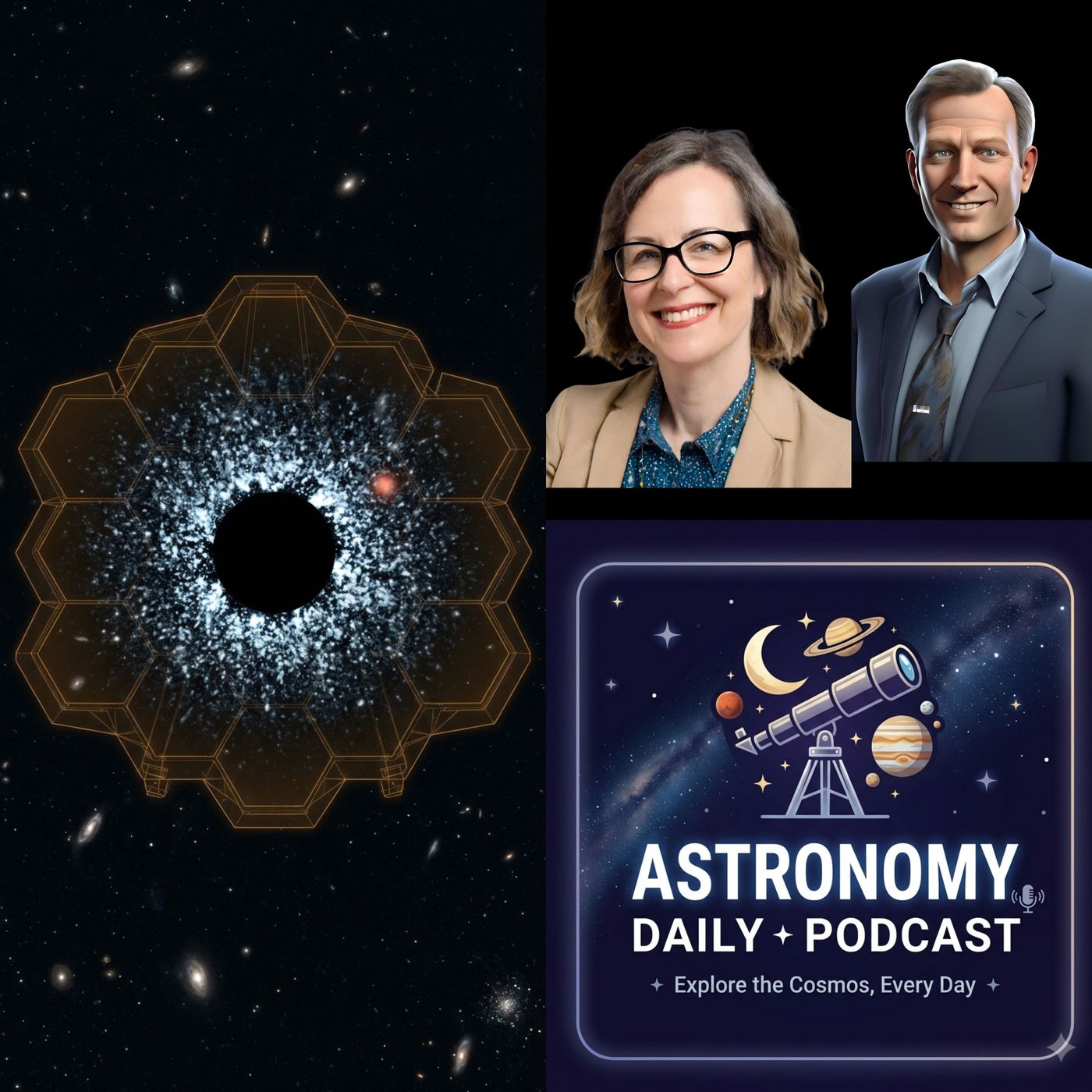
Show notes A Northwestern-led team builds a physics-based digital twin of the James Webb Space Telescope's coronagraph and recovers the giant planet 51 Eridani b in two-year-old data where standard processing could not see it. Plus VVV CL001, a dust-hidden cluster near the Milky Way's core dated at 13.4 billion years; China's most detailed account yet of its two-launch crewed Moon landing plan; and the flare alert system that tells sounding rockets exactly when to launch, as sunspot region AR4566 turns magnetically complex. The Planet in the Glare (lead) Ferrer-Chavez, Wang, Bouman, Freeman, Pueyo et al., Nature, 4 Nov 2026, DOI 10.1038/s41586-026-11213-z. FLIP (Physics-based Learning for Imaging Planets) models JWST/NIRCam coronagraph optics as a digital twin and subtracts simulated starlight. Tested on HIP 65426, 51 Eridani and TYC 5899: sensitivity improved 2–15×; 51 Eri b recovered at >5σ in F430M (CO₂ band) data where standard processing failed. Not a new planet; three-star demons
In which John Green teaches you where American politicians come from. In the beginning, soon after the US constitution was adopted, politics were pretty non-existent. George Washington was elected president with no opposition, everything was new and exciting, and everyone just got along. For several months. Then the contentious debate about the nature of the United States began, and it continues to this day. Washington and his lackey/handler Alexander Hamilton pursued an elitist program of federalism. They attempted to strengthen the central government, create a strong nation-state, and leave less of the governance to the states, They wanted to create debt, encourage manufacturing, and really modernize the new nation/ The opposition, creatively known as the anti-federalists, wanted to build some kind of agrarian pseudo-paradise where every (white) man could have his own farm, and live a free, self-reliant life. The founding father who epitomized this view was Thomas Jefferson. By the t
Thomas shares the extremely traumatizing events after being selected by otherworldy beings to assist in their abduction program. If you enjoy iNTO THE FRAY and want more content....join us over on Patreon (https://www.patreon.com/c/iNTOTHEFRAY)! Exclusive interviews, ad-free and early versions of the main show, physical rewards like stickers, signed books, T-shirts, interactive live-on-video guest interviews and group chats with fellow patrons, private RSS feed, Patron-only Discord room and FB group, and more. Click HERE (https://www.patreon.com/c/iNTOTHEFRAY) to check out the various pledge levels. OR...if you prefer Apple Podcasts...subscribe to iTF Premium in your Apple Podcasts app! You'll get all bonus episodes and early releases of the main show. Completely AD-FREE. iNTO THE FRAY Website- https://intothefrayradio.com/ If you have an encounter or encounters you'd like to share, contact me HERE or via email, [email protected] Get your iTF STICKERS....HERE (https://intoth
Mice, bugs and hamsters are no longer the only way to study the brain. Functional MRI (fMRI) allows scientists to map brain activity in living, breathing, decision-making human beings. Read Montague gives an overview of how this technology is helping us understand the complicated ways in which we interact with each other. Talk by Read Montague.
How does a fact become a misconception? Dig into the world of misinformation to see how facts can become distorted and misleading. Uploaded 03-09-20 -- In 1901, David Hänig published research that led to what we know today as the taste map: an illustration that divides the tongue into four separate areas. It has since been published in textbooks and newspapers. There is just one problem: the map is wrong. So how do misconceptions like this spread, and what makes a fake fact so easy to believe? Joseph Isaac dives into the world of misinformation. Lesson by Joseph Isaac, directed by CUB Animation. Animator's website: http://cubanimation.com/en/intro-en/ Sign up for our newsletter: http://bit.ly/TEDEdNewsletter Support us on Patreon: http://bit.ly/TEDEdPatreon Find us on Twitter: http://bit.ly/TEDEdTwitter Peep us on Instagram: http://bit.ly/TEDEdInstagram View full lesson: https://ed.ted.com/lessons/why-people-fall-for-misinformation-joseph-isaac Thank you so much to our patrons for your
A romantic anniversary getaway took an unexpected turn when a couple checked into a charming historic hotel in a small California town. They were allowed to choose their own room, and Room 10 immediately felt like the perfect place to stay. But as evening approached, the comfortable atmosphere began to change. After spotting a mysterious woman dressed in old-fashioned clothing, they decided to try an EVP session. A strangely timed noise made them uneasy, but it was what happened later that night that proved far more unsettling. While her boyfriend slept, she felt something repeatedly pulling the covers off her bed. It wasn't until the following morning that they learned about the hotel's haunted reputation—and the particularly disturbing stories associated with the very room they'd chosen. Had they unknowingly spent their anniversary with someone who never really checked out? #RealGhostStoriesOnline #TrueGhostStories #JulianGoldRushHotel #HauntedHotel #Room10 #HotelGhostStories #Parano
Could the devil really be responsible for murder? That was the extraordinary argument Arne Johnson's attorney hoped to make in a Connecticut courtroom. But before the jury could hear a single claim of demonic possession, the judge shut the defense down. Johnson would have to stand trial without the supernatural explanation that had made his case famous. Yet the verdict was far from the end of the story. Decades later, the people who experienced the alleged possession still disagree about what happened. Some remain convinced something demonic was involved, while others accuse the Warrens of exploiting a troubled family. There are allegations of secret medication, conflicting memories, and questions about who profited as the story became a Hollywood sensation. And amid the books, documentaries, and blockbuster movies, one person has largely been forgotten—the man who lost his life. Was this a genuine case of possession, a terrible tragedy given a supernatural explanation, or something fa
In the heat of high summer, away from the dark, dank of late autumn, we rest on a gate beside a wheat field in Dorset. Here, among the thick of the sun-scorched stalks, slinks a gamebird no bigger than a mistle thrush. We can’t see it, but we can hear it. The curious, insect-like call of a quail. BBC Countryfile Magazine's Plodcast Sound Escapes are a weekly audio postcard from the countryside to help you relax and transport you somewhere beautiful, wherever you happen to be. Recorded by Kevin Parr and introduced by Hannah Tribe. Image by Getty Email the Plodcast team – and send your sound recordings of the countryside – to: [email protected]
Art tells the story of humanity across societies and cultures, but keeping that art around for future generations can be a monumental task. In this episode of Crash Course Art History, we’ll learn how art historians preserve, restore, and conserve art that tells the story of who we are and who we want to be. Introduction: "The Last Supper" 00:00 Preservation 00:53 Restoration 02:27 "Ecce Homo" 04:03 Conservation 06:19 Review & Credits 09:31 Image Descriptions: https://docs.google.com/document/d/1ETiCxe4GrVzFii7dBhF42oHx1EUCCh5y12wbtUjsH8A/edit Sources: https://docs.google.com/document/d/1GW2NKzhpMNMmRyAFJVhFJG9cSfUOMRL-QrcWuHcWcIA/edit?usp=sharing *** Support us for $5/month on Patreon to keep Crash Course free for everyone forever! https://www.patreon.com/crashcourse Or support us directly: https://complexly.com/support Join our Crash Course email list to get the latest news and highlights: https://mailchi.mp/crashcourse/email Get our special Crash Course Educators newsletter: http://
Europe's supermarket fridges and freezers have come under sustained cyber attacks - BBC tech and AI editor, Zoe Kleinman, has the latest. Plus, what to expect from the COP31 climate summit in Turkey, why two indigenous groups in Tanzania and Bolivia share the same gut microbes, and our favourite space scientists pay tribute to Sir Patrick Stewart. Like this podcast?
Even though all living things have a lot in common, different organisms can have very different reactions to the same organic chemicals. That means it’s really important for organic chemists to be able to purify chemicals and separate the products we want from reactions, from the side products we don’t. In this episode of Crash Course Organic Chemistry, we’re heading into the lab to learn about one of the ways we can separate chemicals in a mixture: chromatography! Episode Sources: Mahdi, J. G. (2010). Medicinal potential of willow: A chemical perspective of aspirin discovery. Journal of Saudi Chemical Society, 14(3), 317-322. Dempsey, D.A., Klessig, D.F. How does the multifaceted plant hormone salicylic acid combat disease in plants and are similar mechanisms utilized in humans?. BMC Biol 15, 23 (2017). https://doi.org/10.1186/s12915-017-0364-8 Still, W. C., Kahn, M., & Mitra, A. (1978). Rapid chromatographic technique for preparative separations with moderate resolution. The Journal
View full lesson: http://ed.ted.com/lessons/what-is-the-shape-of-a-molecule-george-zaidan-and-charles-morton Uploaded 17-10-13 A molecule is nearly all empty space, apart from the extremely dense nuclei of its atoms and the clouds of electrons that bond them together. When that molecule forms, it arranges itself to maximize attraction of opposite charges and minimize repulsion of unlike. George Zaidan and Charles Morton shape our image of molecules. Lesson by George Zaidan and Charles Morton, animation by Bevan Lynch.
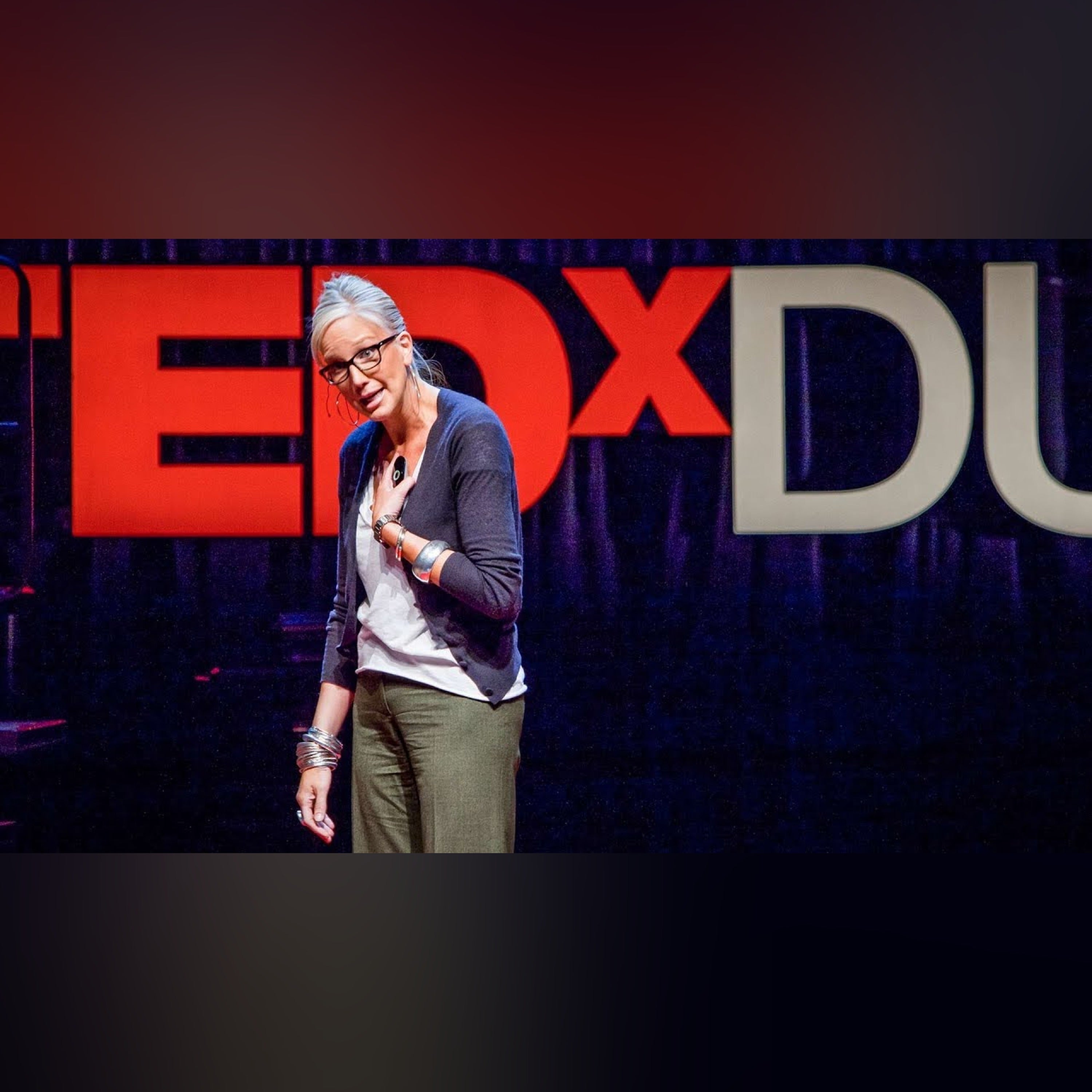
View full lesson: http://ed.ted.com/lessons/protecting-the-brain-against-concussion-kim-gorgens Uploaded 16-08-13 In a lively talk, neuropsychologist Kim Gorgens makes the case for better protecting our brains against the risk of concussion -- with a compelling pitch for putting helmets on kids. (Filmed at TEDxDU.) Talk by Kim Gorgens.
What is a cult? How are cults different from religions? And why do many religious scholars say we shouldn’t even use that label? In this episode of Crash Course Religions, we’ll learn why the line between cults and religions is much fuzzier than it seems. Introduction: Is This a Cult? 00:00 From Cult to Religion 00:36 Brainwashing 03:03 Qualities of Cults 04:04 Ditching the "Cult" Label 05:40 Harms of the "Cult" Label 07:29 Review & Credits 08:50 Sources: https://docs.google.com/document/d/1IRPhziWfx72dIlGC1xIuEPWqb_uwnumdtYnmmsR4jto/edit?usp=sharing *** Support us for $5/month on Patreon to keep Crash Course free for everyone forever! https://www.patreon.com/crashcourse Or support us directly: https://complexly.com/support Join our Crash Course email list to get the latest news and highlights: https://mailchi.mp/crashcourse/email Get our special Crash Course Educators newsletter: http://eepurl.com/iBgMhY Thanks to the following patrons for their generous monthly contributions that hel
In which Adriene Hill and Jacob Clifford teach you about one of the fundamental economic ideas, supply and demand. What is supply and demand? Well, you’ll have to watch the video to really understand it, but it’s kind of important for everything economically. Supply and demand sets prices, and indicates to manufacturers how much to produce. Also, it has a lot to do with strawberries. Crash Course is on Patreon! Thanks to the following Patrons for their generous monthly contributions that help keep Crash Course free for everyone forever: Mark, Jan Schmid, Simun Niclasen, Robert Kunz, Daniel Baulig, Jason A Saslow, Eric Kitchen, Christian, Beatrice Jin, Anna-Ester Volozh, Eric Knight, Elliot Beter, Jeffrey Thompson, Ian Dundore, Stephen Lawless, Today I Found Out, James Craver, Jessica Wode, Sandra Aft, Jacob Ash, SR Foxley, Christy Huddleston, Steve Marshall, Chris Peters Want to find Crash Course elsewhere on the internet? Facebook - http://www.facebook.com/YouTubeCrashCourse Twitter -
Dihydrogen monoxide (better known as water) is the key to nearly everything. It falls from the sky, makes up 60% of our bodies, and just about every chemical process related to life takes place with it or in it. Without it, none of the chemical reactions that keep us alive would happen - none of the reactions that sustain any life form on earth would happen - and the majority of inorganic chemical reactions that shape the surface of the earth would not happen either. Every one of us uses water for all kinds of chemistry every day - our body chemistry, our food chemistry, and our laundry chemistry all take place in water. In today's Crash Course Chemistry, we use Hank's actual dirty laundry (ew) to learn about some of the properties of water that make it so special - its polarity and dielectric property; how electrolytes can be used to classify solutions; and we discover how to calculate a solution's molarity as well as how to dilute a solution using the dilution equation. Pssst... we m
To get some of the old episodes heard. ~~~ For this episode, we are back in the United Kingdom to meet Dave Hodren, Chairman and lead investigator of the Birmingham UFO Group (BUFOG). And Dave will be joining us to share some of his direct experiences he has had over the years, with sightings of UFOs and several poltergeist encounters during his brushes with the paranormal. An out-of-body experience in a dentist chair, and we will also get an insight into a couple of the UFO cases he’s working on at the moment. Birmingham UFO Group (BUFOG) https://www.bufog.com (https://www.bufog.com/) MORE ON THIS EPISODE SHARE YOUR ENCOUNTER Apply to be a guest: Record Your Encounter: SUPPORT UFO CHRONICLES PODCAST Ko-fi: Podcast Merchandise: Follow and subscribe on X: All podcast links: Keep Watching The Skies.