What does it mean to perform magic with only sound, and can Ella perform it LIVE at the Bedford Pub in London? And... wait has Tom not prepared a topic? Timestamps: (00:00:00) Intro (00:03:13) Auditory Magic (00:32:42) The Second Topic (00:59:39) Outro Support us with a Max Fun Membership! (https://maximumfun.org/join/) We also learn about: The Science of Cameron, Shepherd’s tone, phantom words, I heard kill the president, I heard Tom sucks, illusions vs magic, magicians are lazy, auditory trick challenge, David we’ve technically never met, you’re just being nice, the cone of confusion, the unreleased magic trick, magic ethics, THEY’RE DOING NUANCE, the game you can win but not this interaction, alluminum foil! you can take plastic straws away from my cold dead hands, America is not real and it can’t hurt me, testimony, never say santa is not real to anyone, no preference, what’s the sexiest number of legs? Taha’s telling on himself, Geology is the hardest science, sounds like science,
We walk on them, rake them up, often barely give them a thought, but the humble leaf is an extraordinary feat of biological engineering. Adam Rutherford and Jessica Fostekew are joined plant scientist Tracy Lawson, biologist Jonathan Silvertown, and comedian Alex Kealy to uncover the hidden ingenuity of leaves. They explore how leaves evolved, why plants face a constant battle between thirst and starvation, and whether understanding their clever adaptations could help us engineer crops for a hotter, drier future. Producer: Mel Brown A BBC Studios Production
Hank does his best to convince us that chemistry is not torture, but is instead the amazing and beautiful science of stuff. Chemistry can tell us how three tiny particles - the proton, neutron, and electron - come together in trillions of combinations to form ... everything. In this inaugural episode of Crash Course Chemistry, we start out with one of the biggest ideas in chemistry ever - stuff is made from atoms. More specifically, we learn about the properties of the nucleus and why they are important to defining what an atom actually is. This video is available in Spanish on our Crash Course en Español channel! Watch it here: https://youtu.be/G7wUMpsB5k8 Pssst... we made flashcards to help you review the content in this episode! Find them on the free Crash Course App! Download it here for Apple Devices: https://apple.co/3d4eyZo Download it here for Android Devices: https://bit.ly/2SrDulJ Table of Contents Intro 00:00 Einstein & Atoms 02:05 Composition of Atoms 03:18 Atomic Number 04
When a food company breaks the rules, who actually pays? Because the obvious answer, the answer we all assume, is the company. They get fined. They get exposed. They lose our trust. But the deeper truth, the bitter truth, is that the person who pays first, and pays worst, is almost never the company. It is the kid eating a taco. It is the parent packing a lunch. It is the family that trusted a name on a bag and ended up in an emergency room. The company writes a check. You pay with your body. And today I am going to show you how those two things are quietly connected.
Black Americans have long fought in America's wars, very often fighting for a country that doesn't always fight for them. Today we'll learn about the experience of Black Americans in World War II. We'll look at the ways Black men and women served in the armed services during the war, and look at life on the homefront. Clint's book, How the Word is Passed is available now! https://bookshop.org/a/3859/9780316492935 SOURCES: Chateauvart, Melinda, Marching Together: Women of the Brotherhood of Sleeping Car Porters (1998) Todd Moye, Freedom Flyers: The Tuskegee Airmen of World War II (New York: Oxford University Press, 2010). Sandra M. Bolzenius, Glory in Their Spirit: How Four Black Women Took On the Army During World War II (Urbana: University of Illinois Press, 2018). Yvonne Latty, Voices of African American Veterans, from World War II to the War in Iraq (New York: Harper-Collins, 2004) 9-11. Watch our videos and review your learning with the Crash Course App! Download here for Apple Dev
Social media is awash with claims iron deficiency can be identified in the mirror by dark circles, breaking hair and dry skin. But is ‘ferritin face’ real? Madeleine Finlay tells Ian Sample why so many of us struggle to keep our iron levels up, how we can actually diagnose low iron and the best way to correct a deficiency, with help from Hal Drakesmith, a professor of iron biology at Oxford University, and advice from Dr Sue Pavord, a consultant haematologist at Oxford university hospitals and associate senior lecturer in clinical medicine at St Edmund Hall.
Are vented over-roofs and double-stud walls worth the added complexity? Steve, Jake, and Pete debate two high-performance building assemblies where moisture management, thermal performance, cost, and constructability all come into play. First up: vented over-roofs. Adding a ventilation space above the structural roof deck sounds straightforward, but the details get complicated quickly. The crew digs into ventilation gap depth, furring strip configurations, spacer mesh, roofing underlayments, and the challenges of integrating these systems with standing seam metal roofs. They also explore night-sky radiation and how it can affect roof temperatures and moisture behavior. Then the conversation shifts to double-stud wall assemblies and how they compare with exterior continuous insulation systems like Huber ZIP-R and mineral wool XCI. Which approach delivers better performance? How do thermal bridging, moisture management, installation complexity, and cost influence the decision? As usual,
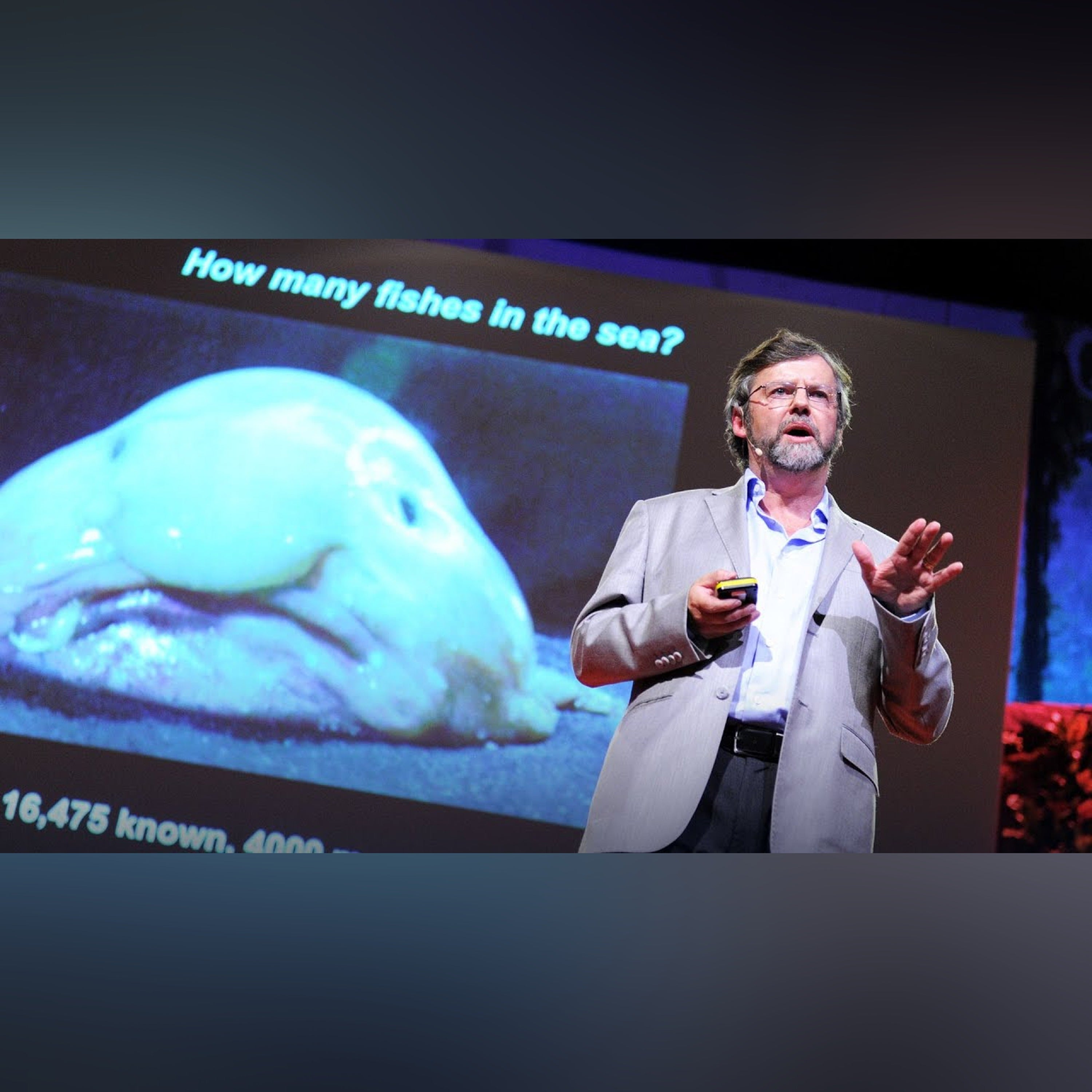
Oceanographer Paul Snelgrove shares the results of a ten-year project with one goal: to take a census of all the life in the oceans. He shares amazing photos of some of the surprising finds of the Census of Marine Life. Uploaded 19-07-13 Talk by Paul Snelgrove.
In November of 1974, a small bungalow at 966 Lindley Street in Bridgeport, Connecticut, became the center of one of the strangest alleged poltergeist cases in New England. The Goodin family had reported unexplained pounding for years, but suddenly furniture began moving, objects fell from walls, and household items seemed to shift on their own. Then the police arrived. Several officers later put their observations in writing, including claims that they watched furniture move and saw a refrigerator lift several inches from the kitchen floor. Within days, however, the case took an unexpected turn when the family’s ten-year-old daughter admitted she had faked some of the activity. That should have solved the mystery. Instead, it created the question that has followed the Lindley Street case ever since: if some of it was a hoax, what exactly did all those witnesses see? #LindleyStreet #LindleyStreetPoltergeist #966LindleyStreet #BridgeportPoltergeist #Poltergeist #TrueHaunting #Paranormal
This is a Grave Talks CLASSIC EPISODE! In Virginia Beach, Virginia, the Ferry Plantation House stands as one of the area’s most historically rich—and paranormally active—sites. While it’s unclear exactly when reports of spirits first began, stories of unexplained activity have followed the home throughout the 20th century and well into the present day. The house is believed to be occupied by as many as eleven distinct spirits, each tied to different periods of its long history. Among the most well-known are Henry, believed to have been enslaved on the property, and Erik, a young boy said to have died inside the home. Visitors and investigators report footsteps, voices, apparitions, and interactions that suggest the house is anything but empty. Cody Green, Vice President of Friends of the Ferry Plantation House and Paranormal Director, explores the history of Ferry Plantation House and the many spirits believed to remain there. Find out more about the house at ferryplantation.org (https
England has a new bovine TB policy: today the Government formally adopts plans it set out in the summer which aim to eradicate the disease from the country by 2038. All this week we are looking at the way we manage water, and farmers are increasingly keen to save water on farm in the winter to use in the summer. While building small reservoirs is one option, another is to create networks of so-called 'smart ponds', with digital monitoring used to track water levels. And seeing financial opportunities in agricultural tech and carbon markets. Presented by Charlotte Smith and produced by Beatrice Fenton.
When doomsday strikes, should you run straight to your nearest Big House? On this week’s episode of The Poshcast, Sophia Money-Coutts and Cleo Watson react to the government’s ominous new ‘Be Ready’ stockpiling campaign. Forget cyberattacks and empty supermarket shelves—pray for Waitrose!—could Britain’s upper crust actually be naturally primed to endure an apocalypse scenario? From scooping mould off jam to surviving without central heating, toffs have been ‘making do’ for generations. Sophia and Cleo also draft their ultimate Apocalypse Survival Squads, and dissect Nicky Haslam’s new common list tea towel. Plus, they tackle another fantastic listener dilemma: what is the proper etiquette when friends announce the arrival of their newborn, only to withhold the name for six agonising weeks. Email us: [email protected] Instagram: @theposhcast Hosted on Acast.
Two crescents hang out in the twilight the next couple of mornings: the Moon and the planet Venus. They’re quite low in the east at dawn. Venus is the “morning star.” It’s below the Moon tomorrow, but will be closer above the Moon on Saturday. Venus and the Moon appear as crescents for the same reason – both of them are passing between Earth and the Sun. That means their daylit sides are facing the Sun, while we see mainly their nightsides – the Sun is lighting only a sliver of the hemisphere that’s facing Earth. It’s obvious that the Moon is a crescent. But you need strong binoculars or a telescope to see Venus as one. If you take a close look, you’ll notice that Venus and the Moon are almost equally lit up – less than 10 percent of the visible surface is in sunlight tomorrow, with the rest in the dark. Venus and the Moon are headed in opposite directions. The Moon is dropping toward the Sun in our sky. It will cross the line between Sun and Earth on Monday. It’ll be “new” then, begin
Chances are you’ve eaten something ultra-processed already today, but should you be worried? Many of us have a sense that ultra-processed food could be harming our bodies, but what impact does it have on our brains? In this episode of Change Your Mind with New Scientist health Journalists Helen Thomson and Cat de Lange ask whether the food we eat is damaging our mental health, increasing our risk of dementia or even making us age prematurely. With help from doctor, broadcaster and researcher Chris van Tulleken they explore how ultra-processed food really impacts the brain and whether we should be making changes to our own diets. Produced by Emily Bird Get in touch at [email protected] Find out more about Ultra-processed foods at New Scientist: https://www.newscientist.com/article/2519704-how-worried-should-you-be-about-ultra-processed-foods/ Sources: Calories from UPF: https://www.ucl.ac.uk/news/2024/oct/toddlers-get-nearly-half-their-calories-ultra-processed-foods Daniel
“I wasn’t on the Ballot, and if I was, we would have won IN A LANDSLIDE!” So says President Trump, who was “a little bit surprised” by the midterms. The results were unambiguous. Democrats comfortably took the House and the Senate, and won the popular vote by 13 points: the widest margin in a nationwide election in half a century. This week, Christiana Figueres, Tom Rivett-Carnac and Paul Dickinson pick through the Blue-nami. Trump blames fuel prices, pushed up by the war in Iran. Nobody on the campaign trail called that a climate issue, but Christiana doesn’t think they needed to. So is climate now winning elections without ever being named? And with plenty of the new Democrats running on “all of the above” energy, what does the win actually mean for the second-biggest emitter on the planet? From January, Democrats can block Trump’s bills, hold the purse strings and investigate his administration. But he keeps the veto, and he still runs foreign policy - including whatever the US does
Should our government ignore our identities or focus on them? In this episode of Crash Course Political Theory, we’ll explore the role identity plays in politics and government, from affirmative action to white backlash, and ask, “What is fair?” Crash Course Political Theory #3 Introduction: Affirmative Action 00:00 The Social Contract 00:57 Critiques of the Social Contract 2:40 Equal Opportunity 4:39 Critiques of Identity Politics 7:57 A Politics of Difference 9:34 Review & Credits 10:32 Sources: https://docs.google.com/document/d/1u5zJCbVA0xCurLbQwWzcxXEdlqXAPpAyYVS1quwKIis/edit?usp=sharing *** Support us for $5/month on Patreon to keep Crash Course free for everyone forever! https://www.patreon.com/crashcourse Or support us directly: https://complexly.com/support Join our Crash Course email list to get the latest news and highlights: https://mailchi.mp/crashcourse/email Get our special Crash Course Educators newsletter: http://eepurl.com/iBgMhY Thanks to the following patrons for th
In which John Green teaches you about the (English) colonies in what is now the United States. He covers the first permanent English colony at Jamestown, Virginia, the various theocracies in Massachusetts, the feudal kingdom in Maryland, and even a bit about the spooky lost colony at Roanoke Island. What were the English doing in America, anyway? Lots of stuff. In Virginia, the colonists were largely there to make money. In Maryland, the idea was to create a colony for Catholics who wanted to be serfs of the Lords Baltimore. In Massachusetts, the Pilgrims and Puritans came to America to find a place where they could freely persecute those who didn't share their beliefs. But there was a healthy profit motive in Massachusetts as well. Profits were thin at first, and so were the colonists. Trouble growing food and trouble with the Natives kept the early colonies from success. Before long though, the colonists started cultivating tobacco, which was a win for everyone involved if you ignore
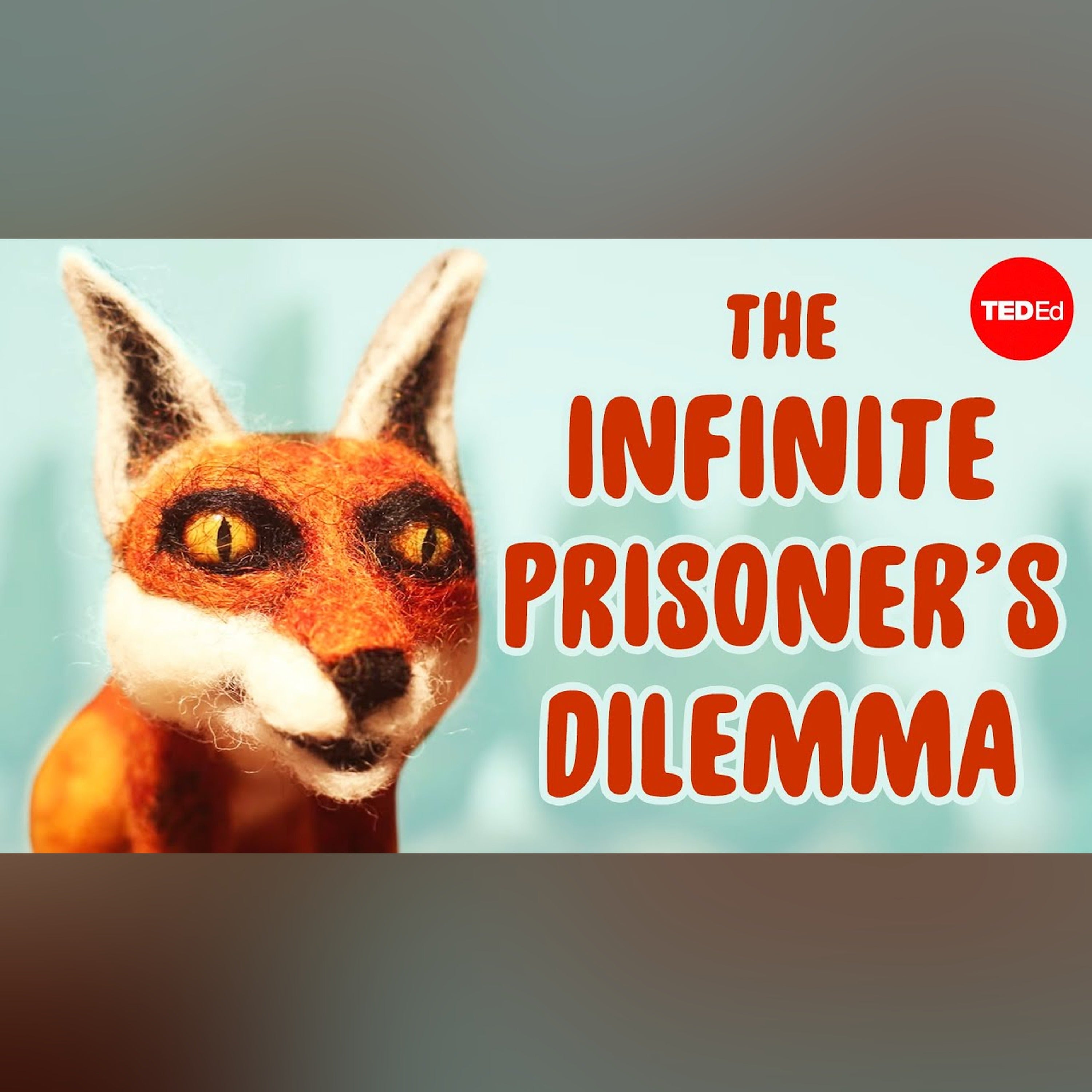
Puzzle through the classic game theory challenge, The Prisoner’s Dilemma, and decide: would you choose to spare or sacrifice? Uploaded 27-08-20 -- Two perfectly rational gingerbread men, Crispy and Chewy, are out strolling when they’re caught by a fox. Instead of simply eating them, he decides to put their friendship to the test with a cruel dilemma. He’ll ask each gingerbread man whether he’d opt to Spare or Sacrifice the other. What should they choose? Lucas Husted dives into the classic game theory scenario: the Prisoner's Dilemma. Lesson by Lucas Husted, directed by Ivana Bošnjack and Thomas Johnson. Sign up for our newsletter: http://bit.ly/TEDEdNewsletter Support us on Patreon: http://bit.ly/TEDEdPatreon Find us on Twitter: http://bit.ly/TEDEdTwitter Peep us on Instagram: http://bit.ly/TEDEdInstagram View full lesson: https://ed.ted.com/lessons/how-to-outsmart-the-prisoner-s-dilemma-lucas-husted Thank you so much to our patrons for your support! Without you this video would not b
This week, follow Seán on a heartfelt journey to track the ring ouzel, from the high slopes of Catalonia to the windswept hills of Donegal to record Ireland’s last known breeding pair. Along the way, he reflects on nocturnal migration, the heavy emotional reality of recording a species on the brink of extinction, and how facing this loss can inspire hope and action for our wild spaces. This is a HeadStuff podcast produced by Hilary Barry and Dan Wilcox. Original artwork is by Matt Mahon.
The Long-billed Curlew is perhaps an unexpected symbol of the Great Plains, but it's a fabulous bird whose story is inextricably woven into the fabric of this wonderful landscape. Nature writer Priyanka Kumar's newest book, The Grassland Queen (https://press.princeton.edu/books/hardcover/9781642834550/the-grassland-queen), is a love story to the vast open country in the middle of the continent and, especially, to that bizarre and amazing bird. Also, the AOS supplement is finally out, and with it comes a lot of changes - some expected and some quite less so. (https://www.aba.org/2026-checklist-redux/) We appreciate it!
View full lesson: http://ed.ted.com/lessons/where-did-earth-s-water-come-from-zachary-metz Uploaded 23-03-15 Water covers over 70% of the Earth, cycling from the oceans and rivers to the clouds and back again. It even makes up about 60% of our bodies. But in the rest of the solar system, liquid water is almost impossible to find. So how did our planet end up with so much of this substance? And where did it come from? Zachary Metz outlines the ancient origins of water on Earth. Lesson by Zachary Metz, animation by The Moving Company Animation Studio.
A large proportion of Chinese people believe in a god—yet most report they don’t belong to any religion. In this episode of Crash Course Religions, we’ll learn about two of the Three Teachings of China—Confucianism and Daoism—and explore why Chinese religious practice is much more fluid than the question “What religion do you follow?” Introduction: A Ghostly Unboxing 00:00 The Ghost Festival 1:29 Religion in China 2:43 Confucianism 4:02 Daoism 7:39 Chinese Popular Religion 10:47 Review & Credits 11:44 *** Support us for $5/month on Patreon to keep Crash Course free for everyone forever! https://www.patreon.com/crashcourse Or support us directly: https://complexly.com/support Join our Crash Course email list to get the latest news and highlights: https://mailchi.mp/crashcourse/email Get our special Crash Course Educators newsletter: http://eepurl.com/iBgMhY Thanks to the following patrons for their generous monthly contributions that help keep Crash Course free for everyone forever: Ree
In which John Green kicks off Crash Course US History! Why, you may ask, are we covering US History, and not more World History, or the history of some other country, or the very specific history of your home region? Well, the reasons are many. But, like it or not, the United States has probably meddled in your country to some degree in the last 236 years or so, and that means US History is relevant all over the world. In episode 1, John talks about the Native Americans who lived in what is now the US prior to European contact. This is a history class, not archaeology, so we're mainly going to cover written history. That means we start with the first sustained European settlement in North America, and that means the Spanish. The Spanish have a long history with the natives of the Americas, and not all of it was positive. The Spanish were definitely not peaceful colonizers, but what colonizers are peaceful? Colonization pretty much always results in an antagonistic relationship with the
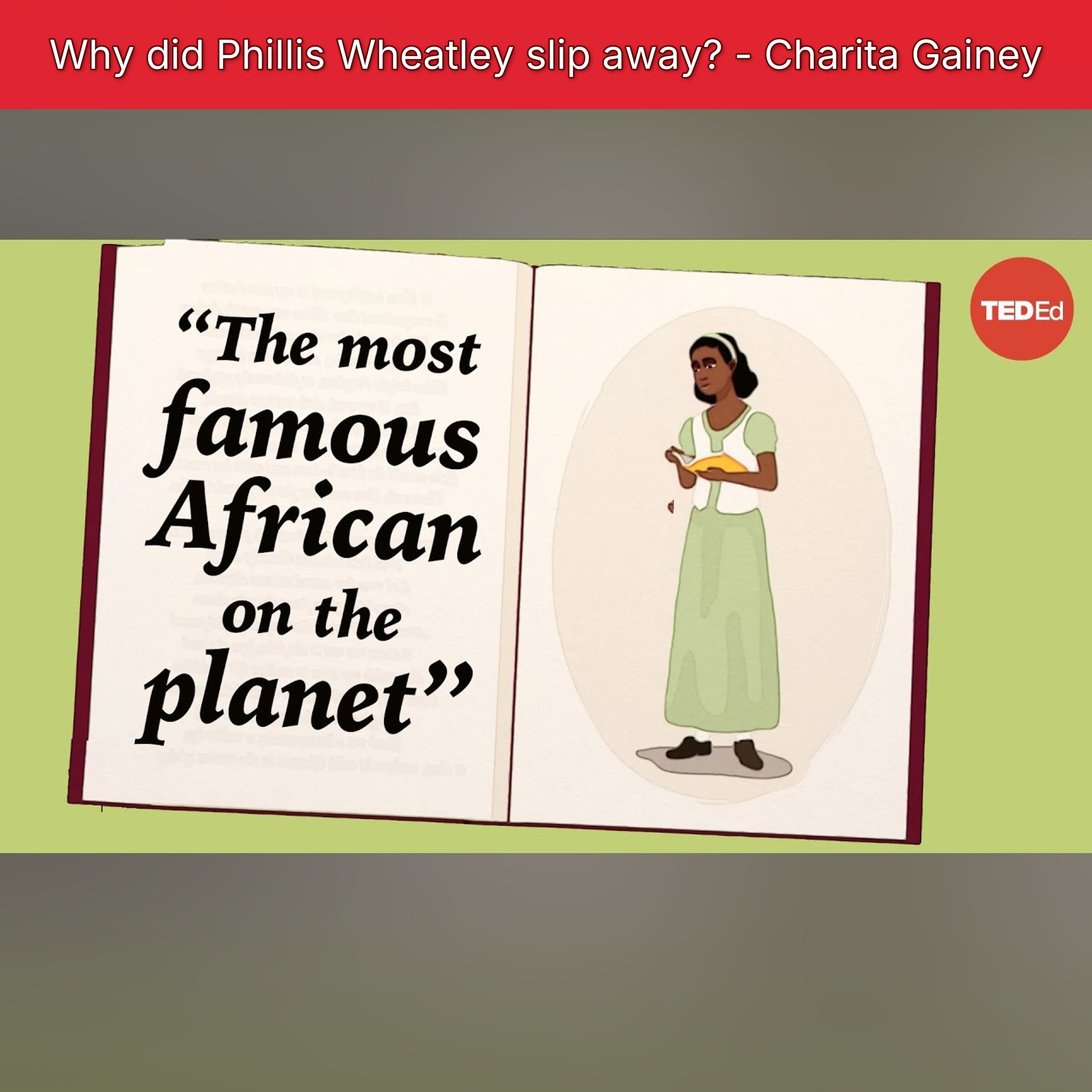
Get to know the life and works of poet Phillis Wheatley, an enslaved woman who became one of colonial America’s most famous writers. -- In 1775, General George Washington received a poem from one of colonial America’s most famous writers. Its verses praised the burgeoning revolution, invoking the goddess of their new nation to aid the general’s cause. But this ode to liberty wasn’t written by some aloof aristocratic admirer. Its author was a young enslaved Black woman. Charita Gainey details the works of poet Phillis Wheatley. Lesson by Charita Gainey, directed by Gavin Edwards, Movult. Support Our Non-Profit Mission ---------------------------------------------- Support us on Patreon: http://bit.ly/TEDEdPatreon Check out our merch: http://bit.ly/TEDEDShop ---------------------------------------------- Connect With Us ---------------------------------------------- Sign up for our newsletter: http://bit.ly/TEDEdNewsletter Find us on Twitter: http://bit.ly/TEDEdTwitter Peep us on Instagr