In a month-long challenge, I devoured 720 eggs—yes, that’s one egg every hour on average, totaling over 133,000 mg of dietary cholesterol. Beyond the egg-citing puns, stick around to uncover the jaw-dropping results and the deeper ‘why’ behind this yolk-filled experiment. Prepare to be shell-shocked! #eggs #metabolism #nutritionfacts #lmhr Chapters 0:00 – I ate 720 eggs in one month 1:01 – What Happened to my LDL cholesterol? 1:13 – Why Dietary Cholesterol Doesn’t Increase Cholesterol 2:05 – Eggs, Berries and Lipid Energy Model 5:20 – Why did I make this video? A commentary on social media Cholesin video: https://youtu.be/Q00wHV2tcy4 OreoVsStatin video: https://youtu.be/L1mMnnyJrgk Lipid Energy Model Paper: https://pubmed.ncbi.nlm.nih.gov/35629964/
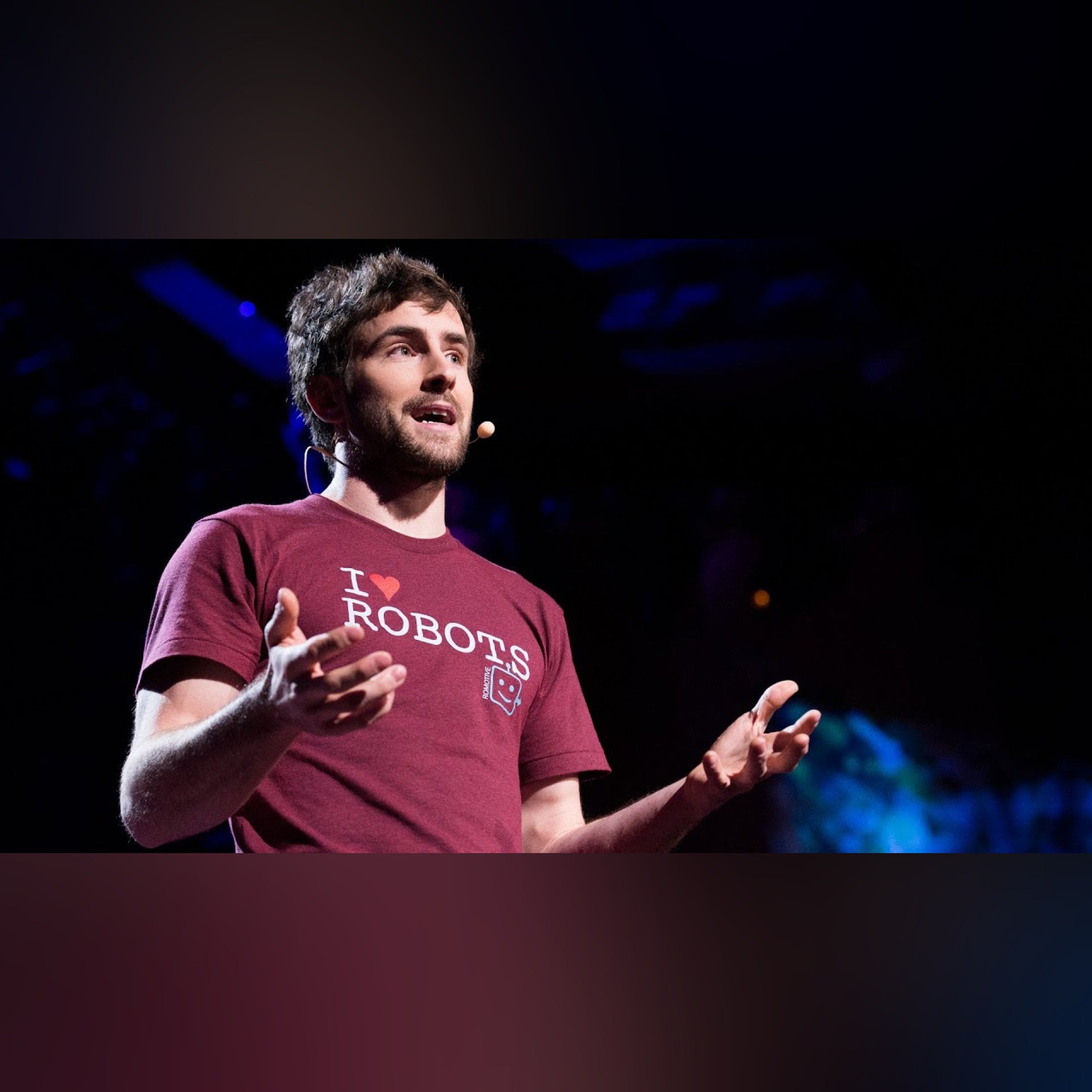
Your smartphone may feel like a friend -- but a true friend would give you a smile once in a while. At TED2013, Keller Rinaudo demos Romo, the smartphone-powered mini robot who can motor along with you on a walk, slide you a cup of coffee across the table, and react to you with programmable expressions. Uploaded 23-08-13 Talk by Keller Rinaudo.
PBS Member Stations rely on viewers like you. To support your local station, go to:http://to.pbs.org/DonateSPACE Sign Up on Patreon to get access to the Space Time Discord! Space is pretty deadly. But is it so deadly that we’re effectively imprisoned in our solar system forever? Many have said so, but a few have actually figured it out. Check out the Space Time Merch Store Sign up for the mailing list to get episode notifications and hear special announcements! Search the Entire Space Time Library Here: https://search.pbsspacetime.com/ Hosted by Matt O'Dowd Written by Matt O'Dowd Post Production by Leonardo Scholzer, Yago Ballarini, Pedro Osinski, Adriano Leal & Stephanie Faria Directed by Andrew Kornhaber Associate Producer: Bahar Gholipour Executive Producers: Eric Brown & Andrew Kornhaber Executives in Charge (PBS): Adam Dylewski, Maribel Lopez Director of Programming (PBS): Gabrielle Ewing Want to Learn More About The Science of Aliens?!? Check out Our Aliens Playlist Hawking Radia
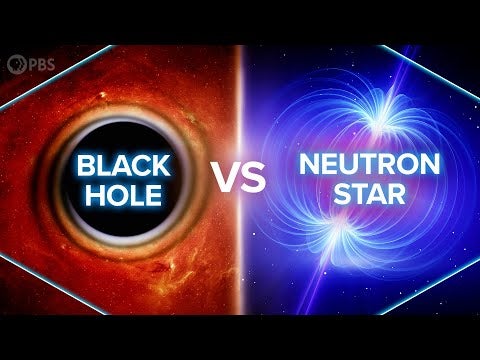
PBS Member Stations rely on viewers like you. To support your local station, go to: http://to.pbs.org/DonateSPACE ↓ More info below ↓ Uploaded 20-07-20 Sign Up on Patreon to get access to the Space Time Discord! Check out the Space Time Merch Store Sign up for the mailing list to get episode notifications and hear special announcements! When we detected the very first gravitational wave, a new window was opened to the mysteries of the universe. We knew we’d see things previously thought impossible. And we just did - an object on the boundary between neutron stars and black holes, which promises to reveal the secrets of both. Hosted by Matt O'Dowd Written by Matt O'Dowd Graphics by Leonardo Scholzer, Yago Ballarini, and Pedro Osinski Directed by: Andrew Kornhaber Camera Operator: Bahaar Gholipour Executive Producers: Eric Brown and Andrew Kornhaber Previous Episodes Referenced: Ligo’s First Detection of Gravitational Waves: https://www.youtube.com/watch?v=gw-i_VKd6Wo The Future of Gravi
Trace the storied history of the game of chess, from its origins in 7th century India to the computer software we use today. Uploaded 12-09-19 -- The attacking infantry advances, their elephants already having broken the defensive line. The king tries to retreat, but the enemy flanks him from the rear. Escape is impossible. This isn’t a real war— nor is it just a game. Over the 1,500 years of its existence, chess has been known as a military strategy tool, a metaphor for human affairs and a measure of genius. Alex Gendler shares its history. Lesson by Alex Gendler, directed by Remus and Kiki. Sign up for our newsletter: http://bit.ly/TEDEdNewsletter Support us on Patreon: http://bit.ly/TEDEdPatreon Find us on Twitter: http://bit.ly/TEDEdTwitter Peep us on Instagram: http://bit.ly/TEDEdInstagram View full lesson: https://ed.ted.com/lessons/a-brief-history-of-chess-alex-gendler Thank you so much to our patrons for your support! Without you this video would not be possible! zjweele13, Ann
Explore the relationship between the Amazon rainforest and the rest of the planet, and what would happen if it disappeared. -- As of 2022, humans have deforested 17% of the Amazon, and scientists warn that we may be approaching a tipping point. It’s like removing bricks from a house: take a few and the house remains standing; remove too many and the whole thing will collapse. So, what would happen if the entire Amazon disappeared? Anna Rothschild explores the relationship between this ecosystem and the rest of the planet. Lesson by Anna Rothschild, directed by Upamanyu Bhattacharyya, Otter Studios. This video made possible in collaboration with Speed & Scale Learn more about how TED-Ed partnerships work: https://bit.ly/TEDEdPartner Support Our Non-Profit Mission ---------------------------------------------- Support us on Patreon: http://bit.ly/TEDEdPatreon Check out our merch: http://bit.ly/TEDEDShop ---------------------------------------------- Connect With Us ----------------------
To discover more go to http://lego.build/CITYSpace Uploaded 16-09-19 PBS Member Stations rely on viewers like you. To support your local station, go to: http://to.pbs.org/DonateSPACE Humanity’s future is glorious. As we master space travel, we’ll hop from one lifeless world to the next. Life will blossom in our path and the galaxy with shimmer with beautiful Earth-like orbs. Hmmm… maybe. This won’t sound so far fetched if we prove we can do it at least once. If we successfully terraform Mars. Hosted by Matt O'Dowd Written by Matt O'Dowd Graphics by Murilo Lopes Directed by: Andrew Kornhaber Produced By: Kornhaber Brown Support Space Time on Patreon Check out the new Space Time Merch Store! We already have the technology to bring humans safely to Mars and set up small settlements - or at least could do within a generation. But those settlements will need to be cocooned - shielded against the deadly cold, intense radiation, and the fatal lack of atmospheric pressure. Surely if we want to
... Not the story I was expecting. Fracking made it possible to get and burn much, much more oil and natural gas. To do it, companies drill into rock deep beneath the Earth's surface and pump in fluid at high enough pressure to crack that rock open, allowing the trapped oil and gas to escape into their pipes. But the fossil fuels they released have directly contributed to climate change, and we're all now paying the price. But here's the hopeful twist: It turns out that this technology - the same one perfected to squeeze every drop of dirty fossil fuels out of the earth - might be the key to unlocking an even bigger source of energy. One that's actually... clean. This video explains how fracking is now being used in geothermal to get more clean energy out of the ground, in the hope of moving away from fossil fuels. Along the way, we'll meet Professor Mukul Sharma, aka the "Frack King," and longtime energy reporter David Roberts. Oh, and my parents (thanks, Mom and Dad!). Chapters: 00:0
As a young surgeon, Peter Attia felt contempt for a patient with diabetes. She was overweight, he thought, and thus responsible for the fact that she needed a foot amputation. But years later, Attia received an unpleasant medical surprise that led him to wonder: is our understanding of diabetes right? Could the precursors to diabetes cause obesity, and not the other way around? A look at how assumptions may be leading us to wage the wrong medical war. Uploaded 23-08-13 Talk by Peter Attia.
Viewers like you help make PBS (Thank you ) . Support your local PBS Member Station here: https://to.pbs.org/DonateSPACE Uploaded 30-08-17 Black holes are very well known but... What is a White Hole? LegalZoom is not a law firm or a substitute for the advice of an attorney. You can further support us on Patreon at https://www.patreon.com/pbsspacetime Get your own Space Time tshirt at http://bit.ly/1QlzoBi Tweet at us! @pbsspacetime Facebook: facebook.com/pbsspacetime Email us! pbsspacetime [at] gmail [dot] com Comment on Reddit: http://www.reddit.com/r/pbsspacetime Help translate our videos! https://www.youtube.com/timedtext_cs_... Previous Episode: Black Hole Playlist https://www.youtube.com/watch?v=vNaEBbFbvcY&list=PLsPUh22kYmNBl4h0i4mI5zDflExXJMo_x (https://www.youtube.com/watch?list=PLsPUh22kYmNBl4h0i4mI5zDflExXJMo_x&v=vNaEBbFbvcY) How Time Becomes Space Inside a Black Hole Are You a Boltzmann Brain? Lurking in the depths of the mathematics of Einstein’s general relativity is an o
State of the Industry - People serious about AGI and the rise of AI Art (Stable Diffusion!)Episode release date: 9 Sep 2022Spreading awareness about the works of some of the leading educators in the AI revolution. Core Ideas: Metamodernism: Narratives and emergence view of reality - Reduce suffering - Increase prosperity - Increase understanding mantra: Seek knowledge. ELABORATE: Add depth and detail to understanding, weaving comprehensive and nuanced explanations.DISCLAIMER: This is a community-driven show. -----------------------State of the Industry - People serious about AGI and the rise of AI Art (Stable Diffusion!)Episode release date: 9 Sep 2022Spreading awareness about the works of some of the leading educators in the AI revolution. Core Ideas: Metamodernism: Narratives and emergence view of reality - Reduce suffering - Increase prosperity - Increase understanding mantra: Seek knowledge. ELABORATE: Add depth and detail to understanding, weaving comprehensive and nuanced explana
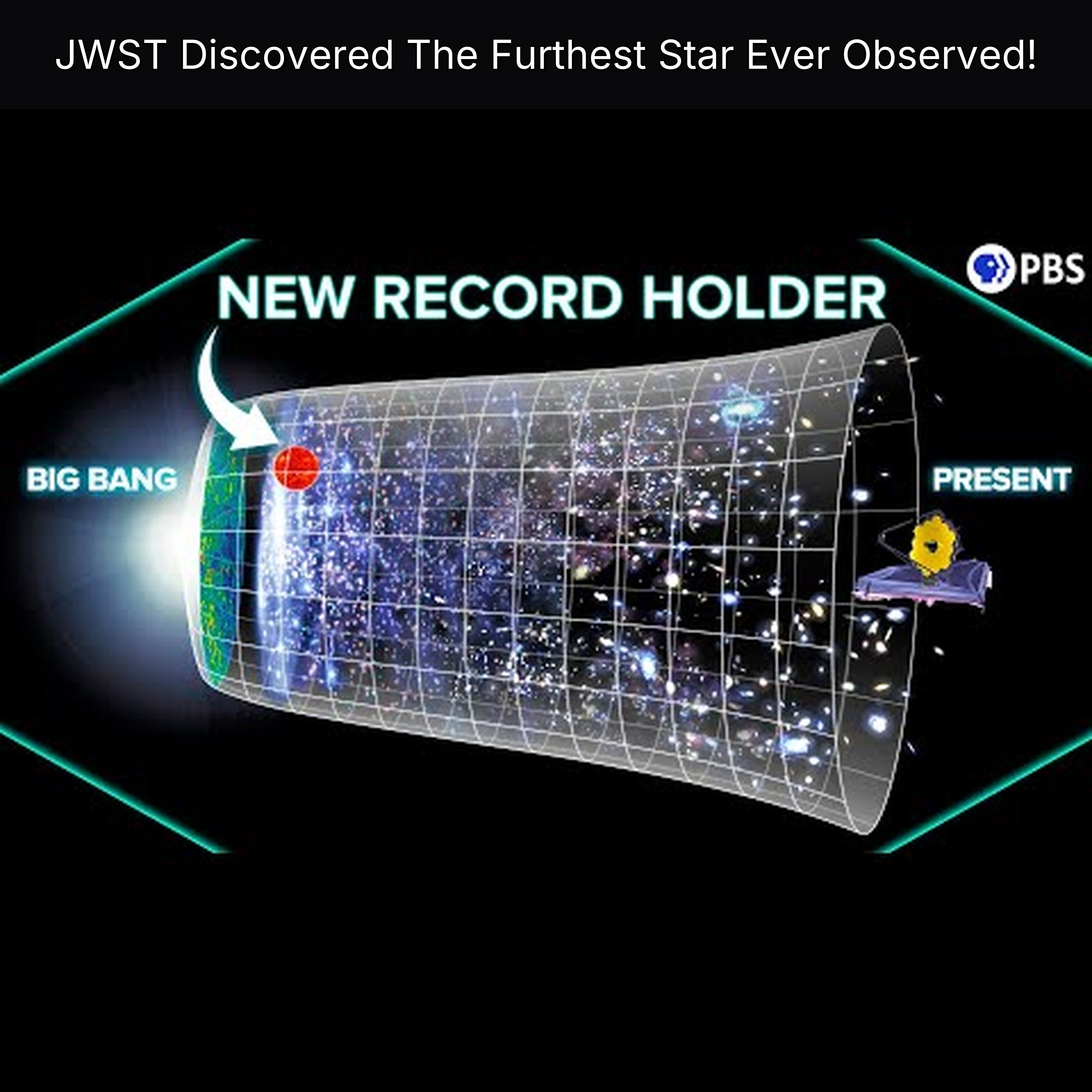
PBS Member Stations rely on viewers like you. To support your local station, go to:http://to.pbs.org/DonateSPACE Sign Up on Patreon to get access to the Space Time Discord! To understand where we came from—how earth, the solar system, the galaxy became what they are today—we need to understand the beginning of time. For example, how did the first galaxies pull themselves together from the dark universe-filling ocean of gas that followed the Big Bang? With the James Webb Space Telescope we’re starting to be able to find those first galaxies. It’s hard work because at those crazy distances all we see is tiny, faint and fuzzy blobs. If only we could see the individual stars in those galaxies we could learn so much more. Well, now using this one weird trick we can do exactly that. Or at least we have one lonely star at the end of the universe. But it won’t be lonely for long. Check out the Space Time Merch Store Sign up for the mailing list to get episode notifications and hear special ann
Artificial Super Intelligence - What will ASI be like? When? How will it change things? Episode release date: 7 Mar 2025 Core Ideas: Metamodernism: Narratives and emergence view of reality - Reduce suffering - Increase prosperity - Increase understanding mantra: Seek knowledge. DISCLAIMER: This is a community-driven show. ------------------------------
View full lesson: http://ed.ted.com/lessons/activation-energy-kickstarting-chemical-reactions-vance-kite Chemical reactions are constantly happening in your body -- even at this very moment. But what catalyzes these important reactions? Vance Kite explains how enzymes assist the process, while providing a light-hearted way to remember how activation energy works. Lesson by Vance Kite, animation by Ledfish.
Join the Aztec midwife Xoquauhtli as she tends to her patients and honors the warrior goddess Teteoinnan at a festival ushering in the season of warfare. Uploaded 12-05-20 -- The midwife Xoquauhtli has a difficult choice to make. She owes a debt to her patron Teteoinnan, the female warrior goddess at the center of the Aztec seasonal festival, who must be kept happy or she will bring bad luck. Xoquauhtli should participate in the festival today, but one of her patients could go into labor any minute. Kay Read outlines a day in the life of an Aztec midwife. Lesson by Kay Read, directed by AIM Creative Studios. Animator's website: http://www.aimcreativestudios.com (http://www.aimcreativestudios.com/) Sign up for our newsletter: http://bit.ly/TEDEdNewsletter Support us on Patreon: http://bit.ly/TEDEdPatreon Find us on Twitter: http://bit.ly/TEDEdTwitter Peep us on Instagram: http://bit.ly/TEDEdInstagram View full lesson: https://ed.ted.com/lessons/a-day-in-the-life-of-an-aztec-midwife-kay-
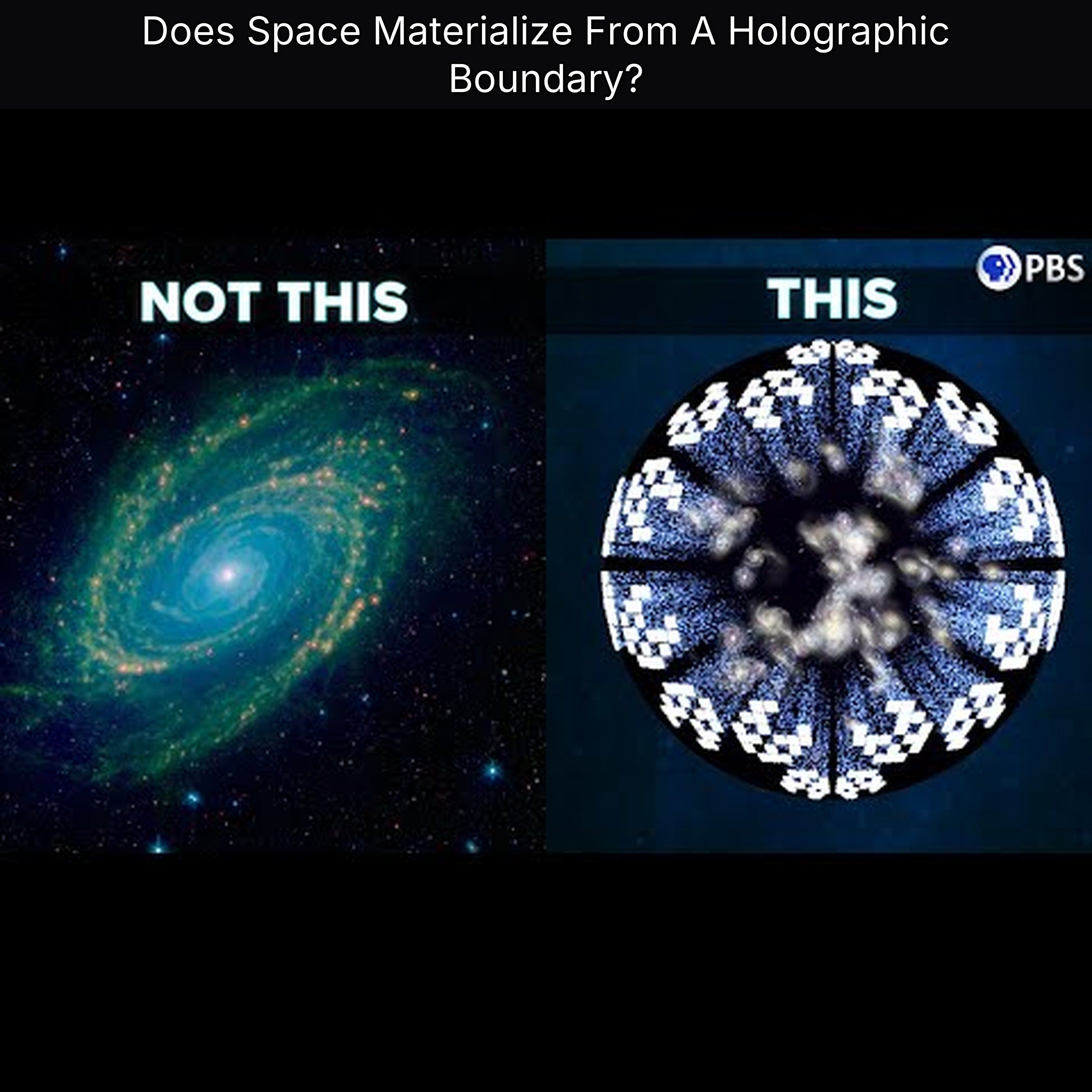
Check out the Space Time Merch Store Sign Up on Patreon to get access to the Space Time Discord! Space seems fundamental. To build a universe, surely you need something to build it on or in. Many, maybe most physicists now think that the fabric of space emerges from something deeper. And perhaps the most existentially disturbing such proposal is that our 3-D universe is just the inward projection of an infinitely distant boundary. A hologram, or sorts. Let’s see how that can actually work, and what the holographic principle really says about the “realness” of this universe. Check Out the Holographic Universe Playlist PBS Member Stations rely on viewers like you. To support your local station, go to:http://to.pbs.org/DonateSPACE Sign up for the mailing list to get episode notifications and hear special announcements! Search the Entire Space Time Library Here: https://search.pbsspacetime.com/ Hosted by Matt O'Dowd Written by Matt O'Dowd Post Production by Leonardo Scholzer, Yago Ballarin
Viewers like you help make PBS (Thank you ) . Support your local PBS Member Station here: https://to.pbs.org/DonateSPACE Uploaded 09-05-18 The great advances in any science tend to come in sudden leaps. April 25th of 2018 marks the beginning of just such a leap for much of astronomy. In the early hours of the morning, the Gaia mission’s second data release dropped. Our understanding of our own galaxy will never be the same again. You can further support us on Patreon at https://www.patreon.com/pbsspacetime Get your own Space Time t-shirt at http://bit.ly/1QlzoBi Tweet at us! @pbsspacetime Facebook: facebook.com/pbsspacetime Email us! pbsspacetime [at] gmail [dot] com Comment on Reddit: http://www.reddit.com/r/pbsspacetime Help translate our videos! https://www.youtube.com/timedtext_cs_panel?tab=2&c=UC7_gcs09iThXybpVgjHZ_7g (https://www.youtube.com/timedtext_cs_panel?c=UC7_gcs09iThXybpVgjHZ_7g&tab=2) Previous Episode: The Star at the End of Time The Gaia satellite was launched in late
The government says tomorrow's UK-EU summit will result in a food and drink trade deal which will cut back on paperwork, ease pressure on prices and add 'up to £5billion a year to our economy'. Behind the headlines are complicated talks on complicated rules governing things like food safety, pesticides, and genetic modification and gene editing. Today we're going to look at the possible impact on England's biotechnology sector. As part of this week's focus on trees, we're talking walnuts: most of those we eat here in the UK are imported, but a couple of sheep farmers in Warwickshire hope to change that, and have diversified into both importing and growing walnut trees. Presented by Charlotte Smith and produced by Beatrice Fenton.
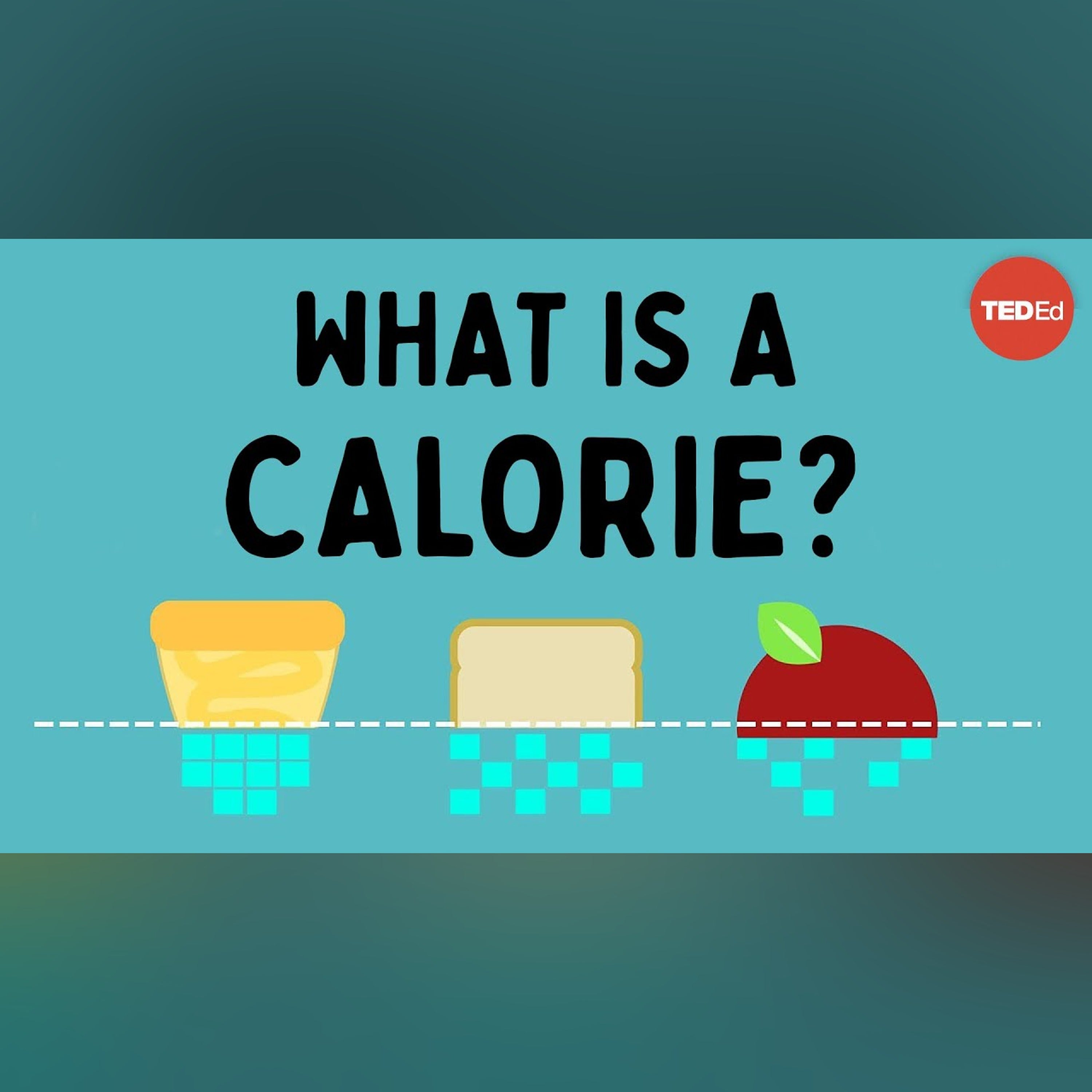
View full lesson: http://ed.ted.com/lessons/what-is-a-calorie-emma-bryce Uploaded 13-07-15 We hear about calories all the time: How many calories are in this cookie? How many are burned by doing 100 jumping jacks, or long-distance running, or fidgeting? But what is a calorie, really? And how many of them do we actually need? Emma Bryce explains how a few different factors should go into determining the recommended amount for each person. Lesson by Emma Bryce, animation by Qa'ed Mai.
View full lesson: http://ed.ted.com/lessons/nina-jablonski-breaks-the-illusion-of-skin-color Nina Jablonski says that differing skin colors are simply our bodies' adaptation to varied climates and levels of UV exposure. Charles Darwin disagreed with this theory, however, as Jablonski explains, Darwin did not have access to NASA. Nina Jablonski is author of Skin: A Natural History, a close look at human skin's many remarkable traits: its colors, its sweatiness, the fact that we decorate it. Talk by Nina Jablonski.
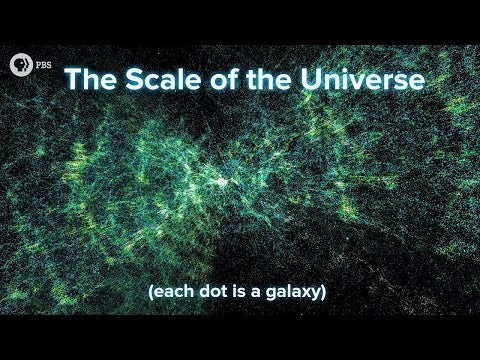
Thank you to Draper and its Hack the Moon initiative for supporting PBS Digital Studios | Learn more at https://wehackthemoon.com. (https://wehackthemoon.com./) Uploaded 25-07-19 PBS Member Stations rely on viewers like you. To support your local station, go to: http://to.pbs.org/DonateSPACE One of the fundamental questions humanity has always asked is how big is our Universe? For much of human history, people believed that Planet Earth was the very center of the entire universe. And Earth is pretty big. But compared the rest of the universe, we are infinitesimally small. The animation in this video the Digital Universe data collection curated by the American Museum of Natural History. The software is used to visualize these datasets is OpenSpace, which is developed through a collaboration between AMNH, Linköping University in Sweden, New York University, and the University of Utah. The software and datasets are open source and are free to download and explore. https://www.openspacepro
How OpenAI Strawberry Works - "ONE TEXTBOOK TO RULE THEM ALL" - My Educated Guess Episode release date: 30 Aug 2024 Core Ideas: Metamodernism: Narratives and emergence view of reality - Reduce suffering - Increase prosperity - Increase understanding mantra: Seek knowledge. DISCLAIMER: This is a community-driven show. ---- Keywords: gpt, machine learning, heuristic imperatives, machine autonomy, ai ethics, ai agents, deep learning, post labor economics
Dig into the myth of the Green Knight, who comes to King Arthur’s court to challenge the honor and bravery of Camelot’s knights. Uploaded 03-02-22 -- It was Christmas in Camelot and King Arthur was throwing a party. In the midst of the revelry, a towering knight proposed a game. He challenged the warriors present to attack him with his own axe. If they could strike him down, they would win his powerful weapon. However, he would be allowed to return the blow in one year. Dan Kwartler details the myth of Sir Gawain and the Green Knight. Lesson by Dan Kwartler, directed by Sarina Nihei. Support Our Non-Profit Mission ---------------------------------------------- Support us on Patreon: http://bit.ly/TEDEdPatreon Check out our merch: http://bit.ly/TEDEDShop ---------------------------------------------- Connect With Us ---------------------------------------------- Sign up for our newsletter: http://bit.ly/TEDEdNewsletter Find us on Twitter: http://bit.ly/TEDEdTwitter Peep us on Instagram:
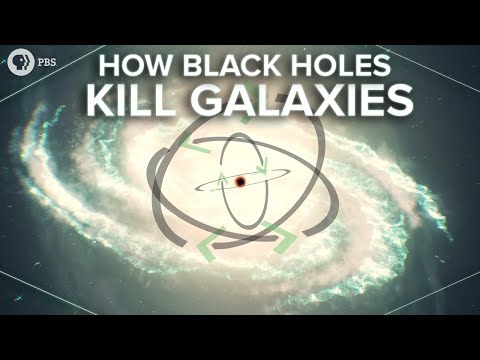
To learn to think like a scientist check out http://Brilliant.org/SpaceTime (http://brilliant.org/SpaceTime) Uploaded 17-06-19 PBS Member Stations rely on viewers like you. To support your local station, go to: http://to.pbs.org/DonateSPACE Check out the new Space Time Merch Store! Support Space Time on Patreon Black holes are really only dangerous if you get too close. Ha, who am I kidding. It turns out they may be responsible for ending star formation across the entire universe. Hosted by Matt O'Dowd Written by Matt O'Dowd Graphics by Leonardo Scholzer Directed by Andrew Kornhaber Produced By: Kornhaber Brown When we first realized that black holes could have masses of millions or even billions of times that of the sun, it came as a bit of a shock. They were discovered as the driving force behind quasars, where matter is heated to extreme incandescence before its plunge into vast black holes. But if that weren’t enough, we soon realized that every single decent-sized galaxy contains