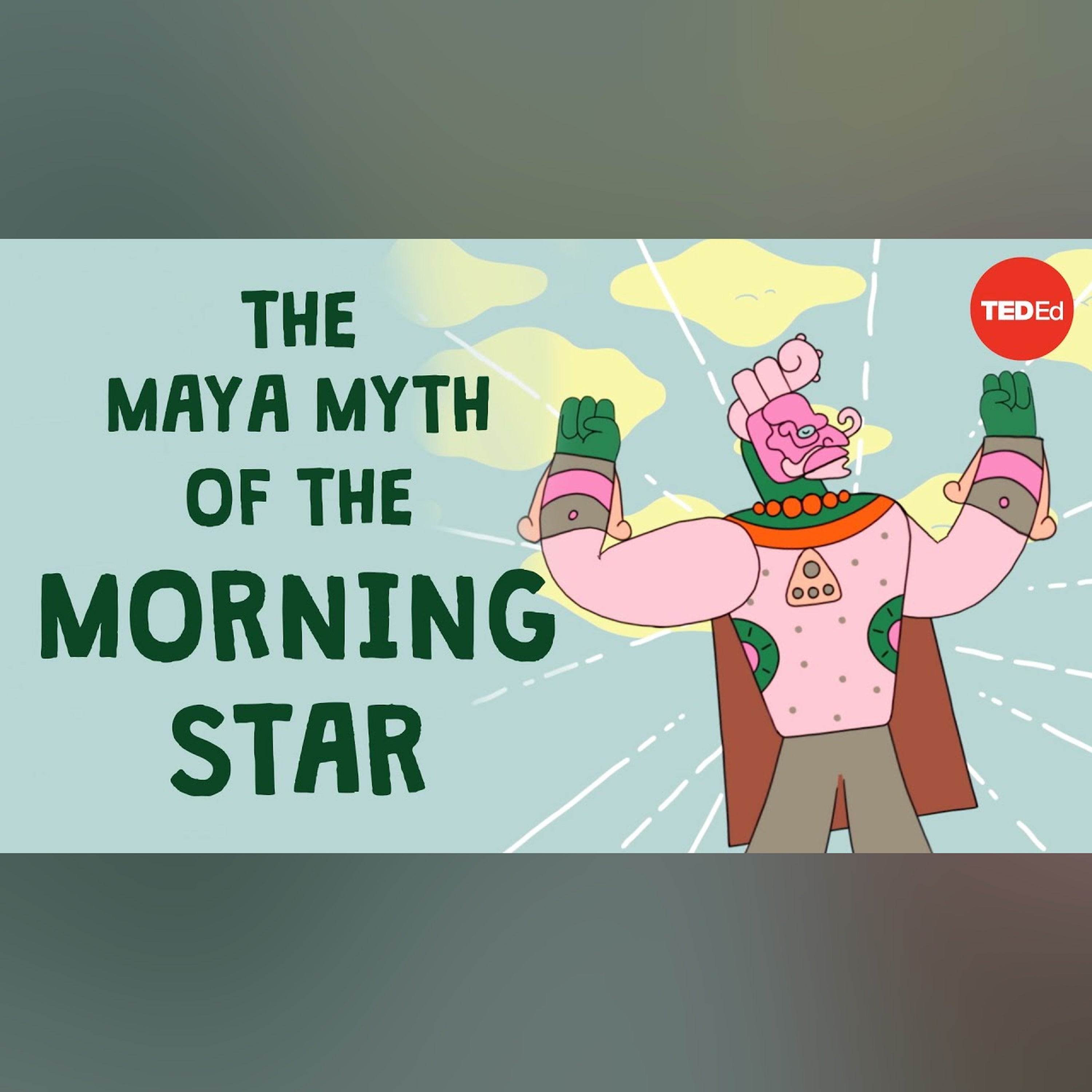
Discover the Maya myth of Venus, the morning star plotting revenge on his brother, the sun, and his allies. Uploaded 21-10-19 -- Chak Ek’, the morning star, rose from the underworld to the surface of the eastern sea and on into the heavens. His brother K’in Ahaw, the sun, followed. Though Chak Ek’ had risen first, K’in Ahaw outshone him, and the resentful Chak Ek’ descended back to the underworld to plot against his brother and his allies. Gabrielle Vail details the Maya myth of the morning star. Lesson by Gabrielle Vail, directed by Basa. Animator's website: https://www.basaestudio.com (https://www.basaestudio.com/) Sign up for our newsletter: http://bit.ly/TEDEdNewsletter Support us on Patreon: http://bit.ly/TEDEdPatreon Find us on Twitter: http://bit.ly/TEDEdTwitter Peep us on Instagram: http://bit.ly/TEDEdInstagram View full lesson: https://ed.ted.com/lessons/the-mayan-myth-of-the-morning-star Thank you so much to our patrons for your support! Without you this video would not be po
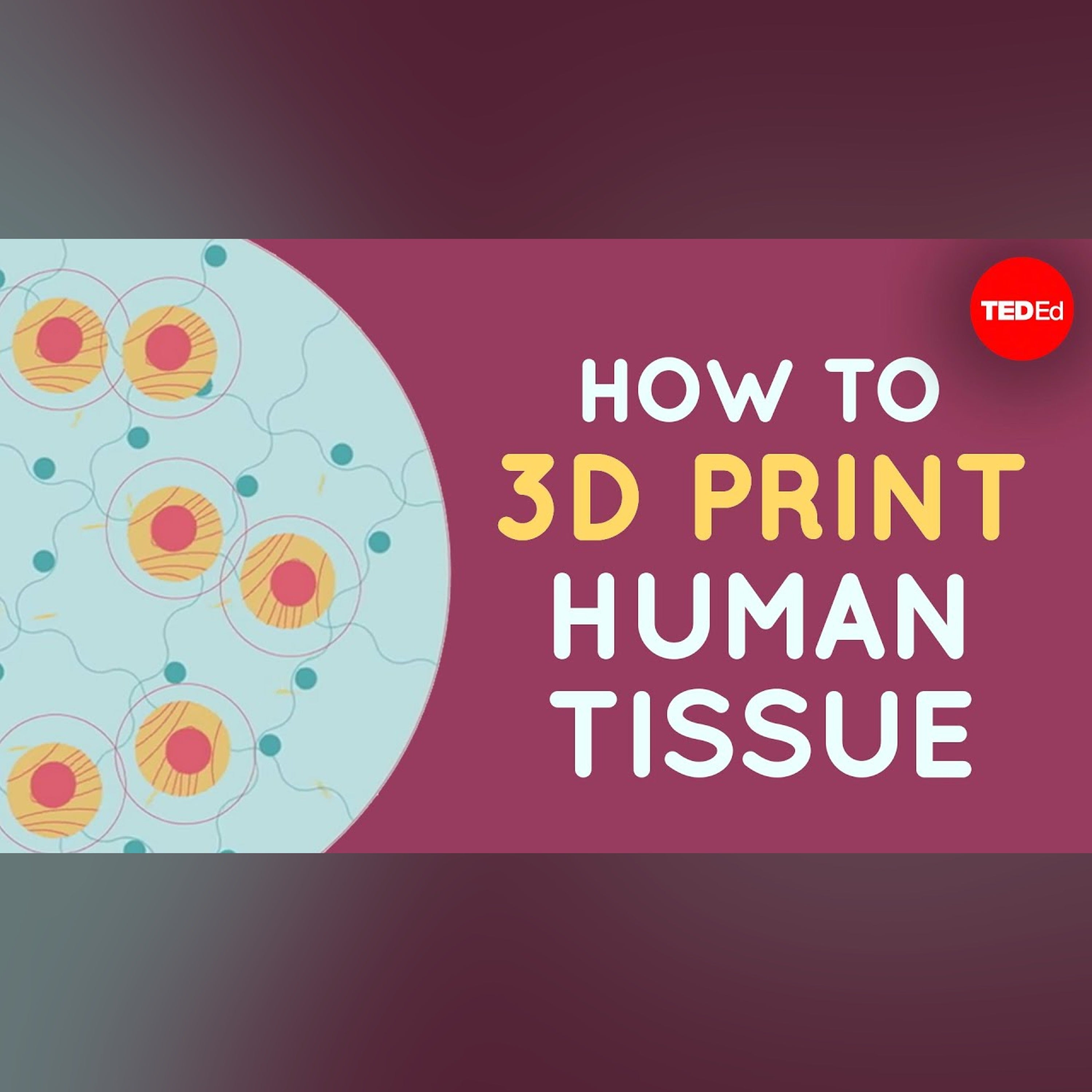
Explore the science of bioprinting, a type of 3D printing that uses bioink, a printable material that contains living cells. Uploaded 17-10-19 -- There are currently hundreds of thousands of people on transplant lists, waiting for critical organs like kidneys, hearts and livers that could save their lives. Unfortunately, there aren’t enough donor organs available to fill that demand. What if, instead of waiting, we could create new, customized organs from scratch? Taneka Jones explores bioprinting, a new branch of regenerative medicine. Lesson by Taneka Jones, directed by Hype CG. Animator's website: https://www.hype.cg (https://www.hype.cg/) Sign up for our newsletter: http://bit.ly/TEDEdNewsletter Support us on Patreon: http://bit.ly/TEDEdPatreon Find us on Twitter: http://bit.ly/TEDEdTwitter Peep us on Instagram: http://bit.ly/TEDEdInstagram View full lesson: https://ed.ted.com/lessons/how-to-3d-print-human-tissue-taneka-jones Thank you so much to our patrons for your support! Witho
Angie speaks with U.S. Congressman Maxwell Frost about what happened at Orlando’s Sloth World, where more than 50 sloths died before the attraction opened. Frost explains how gaps in oversight left the animals vulnerable and how the bipartisan SLOTHS Act, which he co-leads with Rep. Laurel Lee, would restrict sloth imports. He also shares how listeners can urge Congress to act. Timeline 00:00 Welcome and Guest Intro 01:06 Meet Congressman Frost 02:08 Favorite Animals and Florida Wildlife 05:23 Sloth World Tragedy Explained 10:27 Current Sloth Ownership Laws 12:59 What the SLOTHS Act Does 16:08 How a Bill Becomes Law 18:17 Protecting Sloths Already Here 20:31 Ethical Wildlife Encounters 22:12 How You Can Help Pass It 23:49 Advice for Future Advocates 25:31 Wrap Up and Where to Follow == Another thank you to all our Patreon supporters. You too can join for one cup of "good" coffee a month. Please considering supporting us at Patreon HERE. We also want to thank you to all our listeners. P
Using the underwater KM3NeT neutrino telescope, researchers have tested one of the fundamental principles behind Einstein's theory of relativity. By studying thousands of atmospheric neutrinos, the team searched for subtle signs that the laws of physics might behave differently at microscopic scales. The findings place new constraints on possible deviations and open the door to even more precise tests of fundamental physics. This episode includes AI-generated content.
The European Space Agency's Hera spacecraft has reached the Didymos asteroid system to investigate the aftermath of NASA's historic 2022 impact experiment. With a close-up study of the collision site ahead, the mission aims to reveal how asteroids respond to powerful impacts and whether this technique could one day help protect Earth from hazardous space rocks. This episode includes AI-generated content.
Today, I am delighted to welcome back my friend and colleague, Lisa Chism, NP. Lisa has more than three decades of nursing experience and has spent many years caring for women diagnosed with breast cancer and those at elevated risk. She holds specialty certifications in menopause, sexual health, and breast care and is a fellow of both the American Academy of Nursing and the American Association of Nurse Practitioners. After listeners asked for more conversations about breast cancer survivorship and nonhormonal treatment options, I was the first person I thought of inviting back to the podcast. In our conversation, we discuss why survivorship care should begin at diagnosis, how chemotherapy can trigger temporary or permanent menopause, and why fertility considerations deserve attention early in treatment. We explore breast density, individualized screening, and the growing role of AI in breast cancer risk assessment. Lisa explains how tamoxifen and aromatase inhibitors affect menopausal
Chelsea Feltman, Kristina Cole Geddes, and Elizabeth Urbanczyk, the hosts of Vanity Veritas, join Rachel for Weirdest Thing this week! They discuss tapeworm hoaxes, the instigation of women's' restrooms, and the guy who invented the pap smear. The Weirdest Thing I Learned This Week is a podcast by Popular Science. Share your weirdest facts and stories with us in our Facebook group or tweet at us! Click here to learn more about all of our stories! Links to Rachel's TikTok, Newsletter, Merch Store and More: https://linktr.ee/RachelFeltman Rachel now has a Patreon, too! Follow her for exclusive bonus content: https://www.patreon.com/RachelFeltman Link to Jess' Twitch: https://www.twitch.tv/jesscapricorn Link to all of Jess' content: https://www.jesscapricorn.com/ -- Follow our team on Twitter Rachel Feltman: www.twitter.com/RachelFeltman Produced by Jess Boddy: www.twitter.com/JessicaBoddy Popular Science: www.twitter.com/PopSci Theme music by Billy Cadden: https://open.spotify.com/artist
SpaceX Daily Weather at California splashdown sites delays Dragon return from the station by one day. Top News Dragon undocking from ISS delayed to November 19 Unfavorable weather at the California splashdown sites forced NASA and SpaceX to stand down from the planned Wednesday undocking of the CRS-35 Dragon. The next opportunity is set for 12:05 p.m. EST on Thursday, November 19. ... Sources: nasa.gov (https://www.nasa.gov/blogs/spacestation/2026/11/18/nasa-spacex-stand-down-from-dragons-undocking-on-wednesday/) · ukdefencejournal.org.uk (https://ukdefencejournal.org.uk/uk-has-access-to-considerable-number-of-starshield-terminals/) · mlq.ai (https://mlq.ai/news/texas-issues-the-air-permit-for-spacexs-750-megawatt-gas-plant-at-starbase-as-data-center-permits-resume/) · finance.yahoo.com (https://finance.yahoo.com/technology/articles/elon-musk-says-spacex-recovered-033005179.html) · tokenpost.com (https://www.tokenpost.com/news/technology/60078) · nasaspaceflight.com (https://www.nasasp
In an ornithology class in college, Corina Newsome was introduced to the Blue Jay. After this, Corina was determined to learn about the world of birds she had never noticed before. She went on to study avian ecology and now works in the field professionally, where she shares her passion with others. More info and transcript at BirdNote.org (https://www.birdnote.org/podcasts/birdnote-daily/spark-bird-corina-newsome-meets-blue-jay). Want more BirdNote? BirdNote is a nonprofit. Hosted by Simplecast, an AdsWizz company.
It’s Nobel Prize season here on Curiosity Weekly, and we are ready to break down the science behind this year’s winners! This episode, host Dr. Samantha Yammine digs into what research received the prize for medicine and physiology, physics, and chemistry. Joining her is neuroscientist and pain specialist Dr. Lindsay Ejoh. Together, they discuss how optogenetics has shifted how we study the brain and why it was so deserving of this year’s award. Link to Show Notes HERE (https://docs.google.com/document/d/1Xw1EvHb9D-OYMi1A8HM8c7U01G9MD-eVv1aJFFd0ge8/edit?usp=sharing) Still curious? Terms apply. Hosted on Acast.
Why is the US budget deficit $2 trillion when there’s no recession? Justin Wolfers explains why the US budget deficit reached $2 trillion in fiscal 2026: Washington collected $5.4 trillion and spent $7.4 trillion. At 6.2% of GDP, he argues, that’s the largest federal deficit outside a war or recession, even after adjusting for the economy’s size. You’ll learn the difference between this year’s borrowing and the debt built up over decades, then follow how aging, tax cuts, tariffs and reduced immigration shape the gap. Customs duties brought in $173 billion—a bucket next to a $2 trillion swimming pool. Justin also compares America’s borrowing with other countries to put those numbers in perspective. Why should you care? With about $32 trillion owed, a one-percentage-point rise in interest rates would eventually add roughly $320 billion a year to the government’s interest bill—about $1,000 per American. That’s not a bill mailed to your house, but it is an extra cost your government has to
If you’ve ever met someone with an interesting job and wished you could ask them a hundred questions about what they really do all day, this is a show to check out. What It’s Like to Be... is a podcast hosted by bestselling author Dan Heath that explores the world of work one profession at a time. We hope you enjoy it as much as we do.
Enantiomers have almost all the same chemical and physical properties, so it can be tough to separate them. But it’s still super important that we know how to tell them apart! In this episode of Crash Course Organic Chemistry, we’ll recap all the types of isomers we’ve learned about so far, and also learn about polarimetry as a way to separate enantiomers and how to predict the number of stereoisomers a molecule will have. Episode Sources: “THINK BIG! Must the molecules of life always be Left-Handed or Right-Handed?” Smithsonian Magazine. Spinoff 2004 - “A NATURAL WAY TO STAY SWEET”, NASA. Series Sources: Brown, W. H., Iverson, B. L., Ansyln, E. V., Foote, C., Organic Chemistry; 8th ed.; Cengage Learning, Boston, 2018. Bruice, P. Y., Organic Chemistry, 7th ed.; Pearson Education, Inc., United States, 2014. Clayden, J., Greeves, N., Warren., S., Organic Chemistry, 2nd ed.; Oxford University Press, New York, 2012. Jones Jr., M.; Fleming, S. A., Organic Chemistry, 5th ed.; W. W. Norton &
Hank begins a series of videos on organ systems with a look at the nervous system and all of the things that it is responsible for in the body. References: http://brainconnection.positscience.com/topics/?main=fa/zebras (http://brainconnection.positscience.com/topics/?main=fa%2Fzebras) Crash Course is on Patreon! Want to find Crash Course elsewhere on the internet? Facebook - http://www.facebook.com/YouTubeCrashCourse Twitter - http://www.twitter.com/TheCrashCourse Instagram - https://www.instagram.com/thecrashcourse/ CC Kids: http://www.youtube.com/crashcoursekids
Prompt engineering with ChatGPT. Writing expert prompts for non-English speakers. Sommelier and OSHAEpisode release date: 1 Mar 2023Spreading awareness about the works of some of the leading educators in the AI revolution. Core Ideas: Metamodernism: Narratives and emergence view of reality - Reduce suffering - Increase prosperity - Increase understanding mantra: Seek knowledge. ELABORATE: Add depth and detail to understanding, weaving comprehensive and nuanced explanations.DISCLAIMER: This is a community-driven show. --- Keywords: ai consciousness, ai philosophy, singularity, agi, prompt engineering, ai research
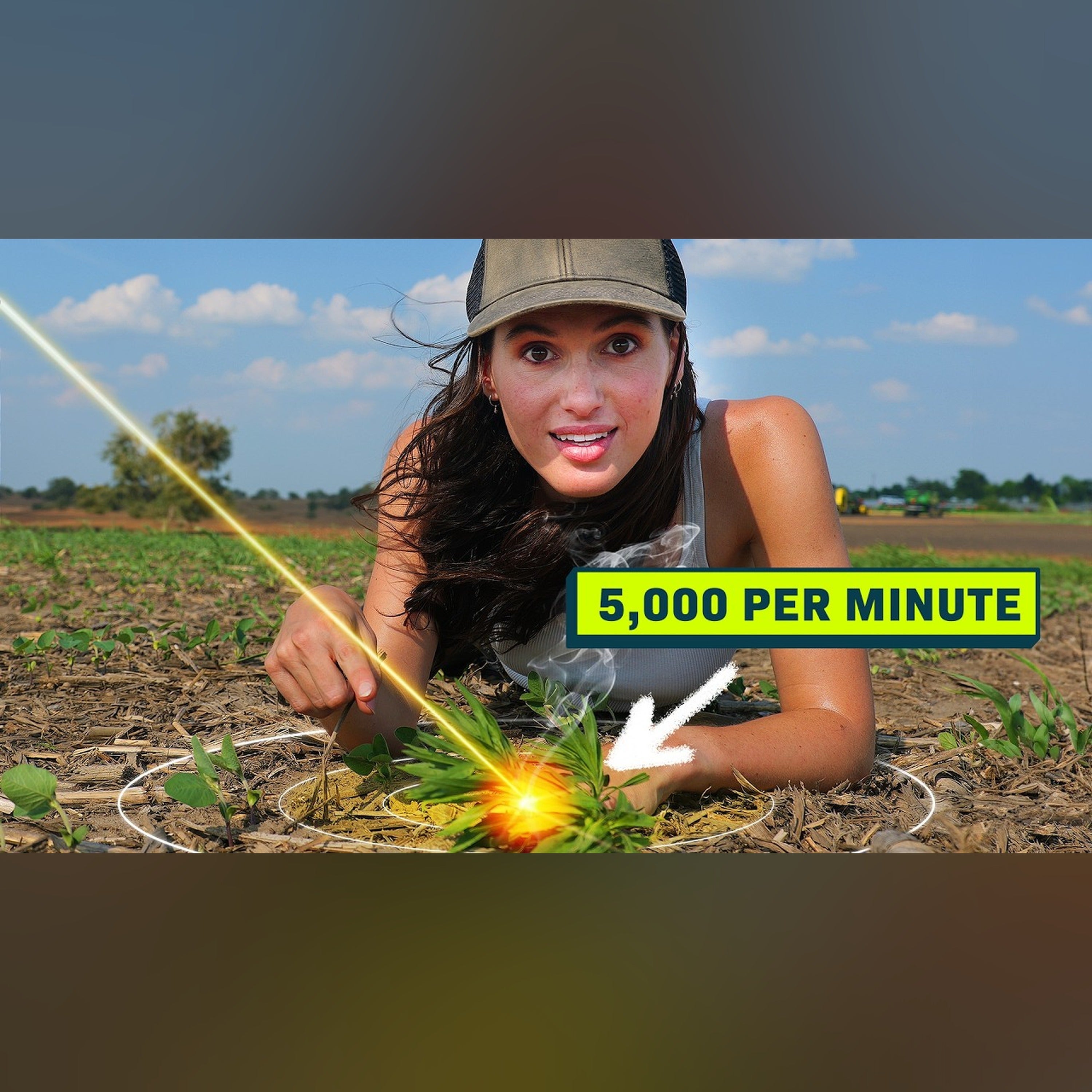
Growing food doesn’t look like I thought… Learn more about Dropbox for teams: https://www.dropbox.com/cleo Thanks Dropbox for sponsoring this video! Right now, we’re living through one of the most pivotal moments in food history… and most people have no idea it’s happening. Experts are calling the “Fourth Agricultural Revolution” and it’s here because we’re facing a big problem: The world’s population is rising, so experts say we’ll need to increase food output to catch up with our current population and feed those new people. But we’ve got to do it in ways that actually protect the Earth long term. Right now, farmers are in a fight to feed the world. So let me show you some of the coolest machines they’re using to do it… Chapters: 0:00 What’s the fourth agricultural revolution? 01:15 Why do we need more food? 1:54 Where does farming tech get tested? 3:00 What were the first 3 agricultural revolutions? 3:58 How do we feed billions more people… better? 4:31 How do farmers grow more food
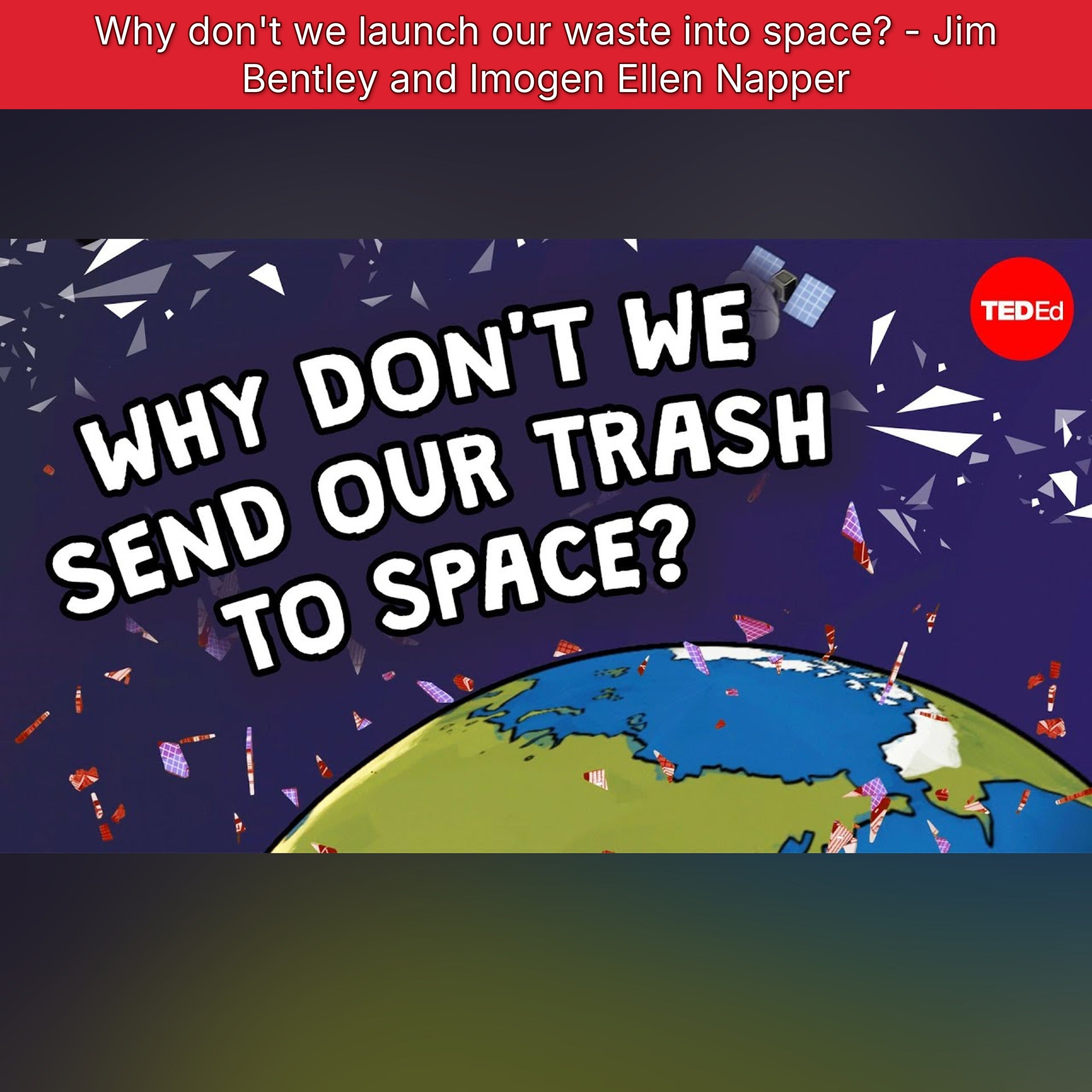
Dig into why there is so much trash orbiting Earth, and find out what could happen if the debris continues to accumulate. -- There are over 131 million pieces of debris currently whipping around the planet. They range in size from a grain of sand to the size of an entire bus. These orbital debris pose a serious threat to the thousands of satellites that underpin Earth’s vital technologies. So, how can we save our satellites and ourselves from all this trash? Jim Bentley and Imogen Ellen Napper investigate. Lesson by Jim Bentley and Imogen Ellen Napper, directed by Franz Palomares. Support Our Non-Profit Mission ---------------------------------------------- Support us on Patreon: http://bit.ly/TEDEdPatreon Check out our merch: http://bit.ly/TEDEDShop ---------------------------------------------- Connect With Us ---------------------------------------------- Sign up for our newsletter: http://bit.ly/TEDEdNewsletter Find us on Twitter: http://bit.ly/TEDEdTwitter Peep us on Instagram: ht
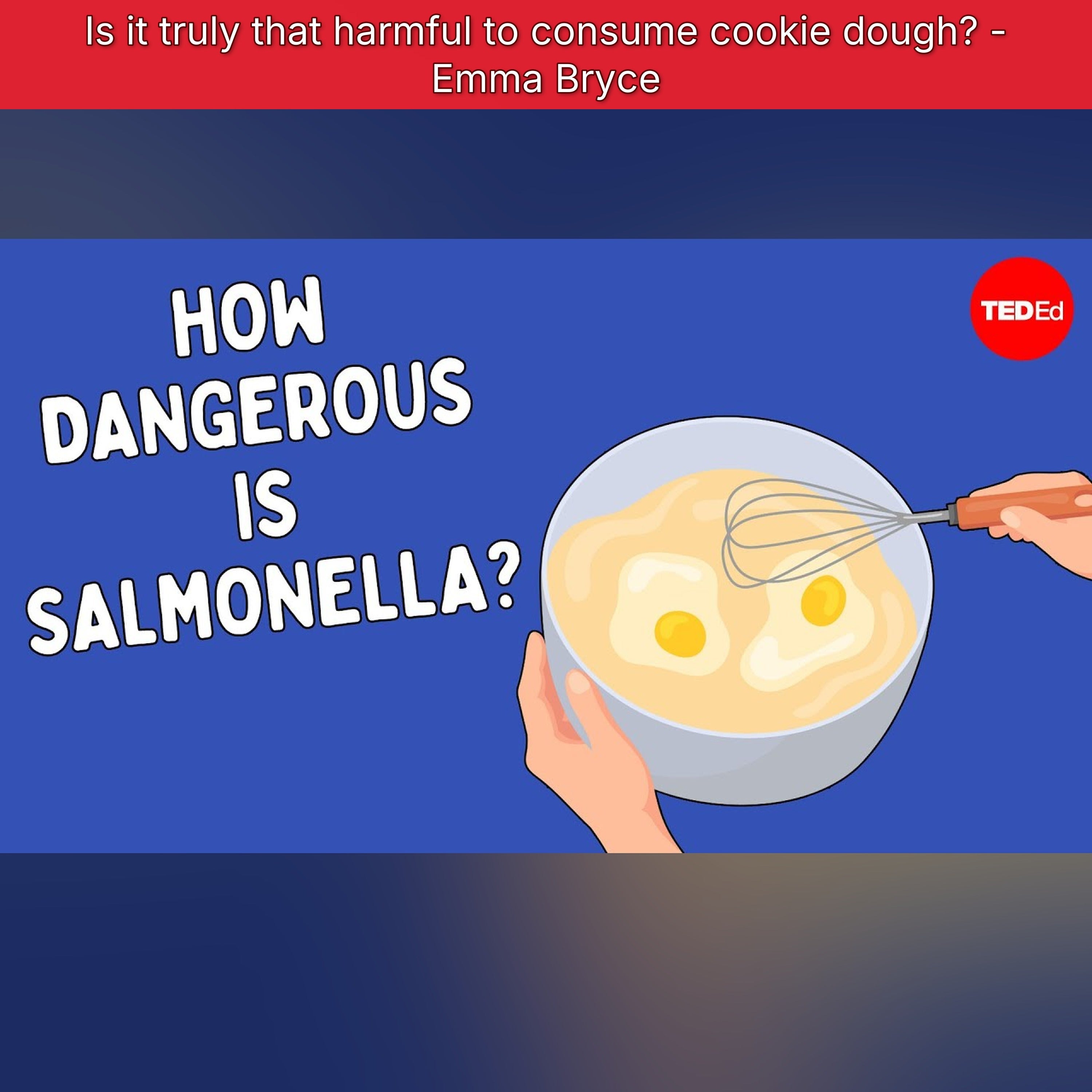
Explore how Salmonella spreads from chickens to humans, and learn how this crafty microscopic pathogen makes us sick. -- Salmonella infects millions worldwide each year, causing fever, stomach cramps, and diarrhea. And these effects can be extreme: Salmonella is the leading cause of hospitalizations and deaths from food poisoning. So, how does it spread from chickens to humans? And how does it make us sick? Emma Bryce follows the journey of this crafty pathogen from farm to plate. Lesson by Emma Bryce, directed by Denys Spolitak. Support Our Non-Profit Mission ---------------------------------------------- Support us on Patreon: http://bit.ly/TEDEdPatreon Check out our merch: http://bit.ly/TEDEDShop ---------------------------------------------- Connect With Us ---------------------------------------------- Sign up for our newsletter: http://bit.ly/TEDEdNewsletter Find us on Twitter: http://bit.ly/TEDEdTwitter Peep us on Instagram: http://bit.ly/TEDEdInstagram -------------------------
We've been talking about the unavoidables recently. Last time, we covered Death. This time, it's taxes. So, what are taxes? Why do we pay taxes? What is all that tax money used for? This week, Adriene is going to cover all that and more. We'll talk about types of taxes, progressive and regressive taxes, tax brackets, and we'll even get into a few historical scenarios where bad tax policy led to revolutions. Crash Course is on Patreon! Thanks to the following Patrons for their generous monthly contributions that help keep Crash Course free for everyone forever: Mark, Eric Kitchen, Jessica Wode, Jeffrey Thompson, Steve Marshall, Moritz Schmidt, Robert Kunz, Tim Curwick, Jason A Saslow, SR Foxley, Elliot Beter, Jacob Ash, Christian, Jan Schmid, Jirat, Christy Huddleston, Daniel Baulig, Chris Peters, Anna-Ester Volozh, Ian Dundore, Caleb Weeks -- Want to find Crash Course elsewhere on the internet? Facebook - http://www.facebook.com/YouTubeCrashCourse Twitter - http://www.twitter.com/TheCr
In the decades following World War II, life changed in many ways, and a fair number of those changes were for the better. Many of those improvements were driven by advances in science and technology, in fields like biology, communication, energy production, space exploration, and especially medicine. Sources -Harvey, Brian. Russian Planetary Exploration: History, Development, Legacy, Prospects. Berlin: Springer, 2007. -Hunt, Lynn et al. Making of the West: Peoples and Cultures, 6th ed. Boston: Bedford St. Martin’s, 2019. -McLaren, Angus. Reproduction by Design: Sex, Robots, Trees, and Test-Tube Babies in Interwar Britain. Chicago: University of Chicago Press, 2012. -Smith, Bonnie G. Europe in the Contemporary World, 1900 to the Present. 2nd ed. London: Bloomsbury, 2020. Watch our videos and review your learning with the Crash Course App! Download here for Apple Devices: https://apple.co/3d4eyZo Download here for Android Devices: https://bit.ly/2SrDulJ Crash Course is on Patreon! Thanks
Over the millennia, every region on Earth has developed its own successful agricultural ecosystem from flat fields of grain and mountainside rice terraces to coastal fish farms and goat herding. Today, we’re going to break down agricultural systems into three scales: subsistence, small-scale, and industrial agriculture. And we’ll take a look at how a place's history plays a huge role in the system we see today as we follow the story of agriculture in the Philippines. SOURCES Philippines Davila, F. (2018). Human Ecology and Food Systems: Insights from the Philippines. Human Ecology Review, 24(1), 23–50. https://www.jstor.org/stable/26506660 Theresa Ventura. (2016). From Small Farms to Progressive Plantations: The Trajectory of Land Reform in the American Colonial Philippines, 1900–1916. Agricultural History, 90(4), 459–483. https://www.jstor.org/stable/10.3098/ah.2016.090.4.459 The development and agriculture paradigms transformed: Reflections from the small-scale organic rice fields of
Tonight, my special guest is author and researcher Mike Celland who has written an interesting book about the connection between ufo sightings and owls. Get his book here. Without question, this is a classic by one of the most exciting new authors in the UFO field today. After reading it, your view of reality will never be the same. The owl has held a place of reverence and mystique throughout history. And as strange as this might seem, owls are also showing up in conjunction with the UFO experience. Mike Clelland has collected a wealth of first-hand accounts in which owls manifest in the highly charged moments that surround alien contact. There is a strangeness to these accounts that defy simple explanations. This book explores implications that go far beyond what more conservative researchers would dare consider. But the owl connection encompasses more than the UFO experience. It also includes profound synchronicities, ancient archetypes, dreams, shamanistic experiences, personal tra