The Pharma Closeout's ESMO 2026 Debrief brings you the readouts from the European Society for Medical Oncology congress in Madrid that matter, what they change, and what to watch next, with one thread running through them: how much checkpoint therapy is enough. MOIO, a French trial that spaced checkpoint-inhibitor doses to every 12 weeks in patients already responding, was stopped early on its monitoring committee's recommendation. Around bladder surgery, Merck's KEYNOTE-866 and Bristol Myers Squibb's ENERGIZE both missed event-free survival in cisplatin-eligible patients, while VOLGA won in patients ineligible for or declining cisplatin, and final PEARLS survival for adjuvant Keytruda in lung cancer missed significance. Then mismatch repair-deficient tumors, with a correction on GSK's AZUR-1 numbers; Akeso and Summit's ivonescimab beating AstraZeneca's Imfinzi on survival in biliary tract cancer at an interim analysis; Tagrisso plus Orpathys in two lines of lung cancer; Amgen's Imdell
View full lesson: http://ed.ted.com/lessons/actually-the-world-isn-t-flat-pankaj-ghemawat It may seem that we're living in a borderless world where ideas, goods and people flow freely from nation to nation. We're not even close, says Pankaj Ghemawat. With great data (and an eye-opening survey), he argues that there's a delta between perception and reality in a world that's maybe not so hyperconnected after all. Talk by Pankaj Ghemawat.
View full lesson: http://ed.ted.com/lessons/rhythm-in-a-box-the-story-of-the-cajon-drum-paul-jennings Uploaded 03-03-15 Many modern musical instruments are complicated pieces of machinery with many moving parts. But the cajon is simply a drum and a stand and a seat all in one box. Paul Jennings explains the history behind the cajon and how it has become one of the most versatile and popular percussion instruments in the world today. Lesson by Paul Jennings, animation by Avi Ofer.
What does it take to build robots that can actually work in factories and warehouses? Tutor Intelligence CEO Josh Gruenstein argues robotics is a systems problem spanning AI, hardware, manufacturing, and the work itself. Josh joins a16z General Partners Martin Casado and Raghu Raghuram to explain Tutor’s approach: deploy robots into real businesses, use human “tutors” when needed, and turn that work into training data that makes the robots more capable. They discuss Tutor’s 100-robot data factory, robots starting at roughly $16 an hour, advances in spatial reasoning, and what flexible robotic labor could mean for American manufacturing and the physical economy. Resources: Follow Josh Gruenstein on X: https://x.com/joshgruenstein Follow Martin Casado on X:https://x.com/martin_casado Follow Raghu Raghuram on X:https://x.com/RaghuRaghuram Learn more about Tutor Intelligence:https://tutorintelligence.com/ Stay Updated: Find a16z on YouTube: YouTube (https://www.youtube.com/@a16z) Find a16z
Many of the same questions that provoke our imagination about our universe today were asked by the ancients. How did the universe begin? What is it made of? etc. What is particularly interesting is how the ancients addressed the question of how to get something from nothingness, and ultimately how the notion of the aether evolved. In this lecture I discuss the ancient greek philosophers’ ideas of the stuff of matter and the origin of the universe, and contrast that with our modern understanding. While our modern picture of the universe is vastly different than that of the ancients and we dispensed with the idea of an aether in the early 20th century, we have now replaced it with something even stranger, in which the dominant energy of the universe is contained in empty space. In some ways, the more things change, the more they stay the same. And the most beautiful thing of all is that the mysteries continue... As always, an ad-free video version of this podcast is also available to pai
Simon's X handle: @simonmontefiore His latest book, The Cauldron: https://www.amazon.com/Cauldron-Making-Modern-Middle-East/dp/0593805054 _______________________________________ To order Suicidal Empathy: https://lnk.to/SuicidalEmpathy _______________________________________ If you appreciate my work and would like to support it: _______________________________________ This clip was posted on November 2, 2026 on my YouTube channel as THE SAAD TRUTH_2114: https://youtu.be/daYUPayyypY _______________________________________ I count on my fans to support my efforts. You can donate via Patreon, PayPal, and/or SubscribeStar. _______________________________________ Dr. In addition to his scientific work, Dr. _______________________________________
Daniel Litt is an Assistant Professor of Mathematics at the University of Toronto. Visit his webpage here - https://www.daniellitt.com/ And check out his blogposts here - https://www.daniellitt.com/blog/ Numberphile videos and event podcasts about AI - https://www.youtube.com/playlist?list=PLVsSL1XVSphg Numberphile is supported by Jane Street - https://www.numberphile.com/jane-street With thanks to the Ben Delo Foundation - https://delo.org/ You can support Numberphile on Patreon - https://www.patreon.com/numberphile Here are our Patrons - https://www.numberphile.com/patrons Numberphile is created by Brady Haran
- Don’t sleep on [@ultrapouches]. This episode is about where consciousness begins. Mark Solms, neuropsychologist and psychoanalyst at the University of Cape Town, joins to explain why he thinks it begins not in the cortex but in raw feeling from the upper brainstem. We discuss patients who lost REM sleep but kept dreaming, what that means for Freud’s wish theory, and children born without a cortex who still giggle and startle. He argues the hard problem was tackled from the wrong end, starting with visual perception instead of feeling. The conversation also covers dual-aspect monism, Markov blankets and the free energy principle, his attempt to engineer an artificial agent that feels, and why he thinks that at death the second law wins. FOLLOW: - Spotify: https://open.spotify.com/show/4gL14b92xAErofYQA7bU4e - Substack: https://curtjaimungal.com - Twitter: https://x.com/TOEwithCurt - Discord: https://discord.gg/kBcnfNVwqs - Crypto: https://nowpayments.io/donation/TOE TIMESTAMPS: - 00:0
Most of us have ideas about what we’re looking for in a romantic partner. But psychologist Paul Eastwick (https://psychology.ucdavis.edu/people/paul-eastwick) says these preferences are surprisingly poor guides for finding love. He explains why attraction is so difficult to predict, and what the research suggests is the best way to meet someone with whom you'll connect. Then, in a new installment of “Your Questions Answered,” psychologist Ed Lemay (https://psyc.umd.edu/facultyprofile/lemay/edward) responds to your questions about how we project our own thoughts and feelings onto other people, and how these projections shape our relationships. In our companion conversation for Hidden Brain+ subscribers, we talk with Paul Eastwick about online dating apps. He says apps can powerfully shape our experience of meeting potential romantic partners — often not for the better. If you're a subscriber, that episode is called “The Online Dating Trap.” If you're not yet a subscriber, you can listen
Featuring an interview with Dr Matthew Lunning, including the following topics: A woman in her late 70s with non-GCB diffuse large B-cell lymphoma receives pola-R-CHP — Ann LaCasce, MD, MMSc (0:00) CNS prophylaxis in non-Hodgkin lymphoma (7:58) CME information and select publications (https://researchtopractice.com/ASCO2026/NHL/Micro/1/Video)
In this episode, Dr Cathy Harbury from Shine Dietetics shares insights on bariatric - metabolic surgery, including patient considerations, nutritional impacts, and long-term management strategies. Tailored for anyone considering or undergoing weight loss surgery, this conversation highlights the importance of personalized care and ongoing nutrition support. Key topics Patient decision-making process for surgery Types of bariatric and metabolic surgeries Nutrition risks and management post-surgery Impact of medications like GLP-1 on treatment options The role of dietitians in patient care and education The importance of long-term follow-up and support No Money No Time Resources Want a more Personalised Food, Nutrient Assessment Report? Cathy's High Protein Dahl https://nomoneynotime.com.au/healthy-easy-recipes/cathys-high-protein-dahl Shine Dietetics https://shinedietetics.com.au/ Keywords: #bariatricsurgery, #metabolicsurgery, #nutrition, #weightloss #dietetics, #health, #patientsuppor
Bloating is one of the most common complaints I hear from women, especially during perimenopause and menopause. And what's frustrating is that so many women are eating healthy, doing everything they think they should be doing, and still struggling with digestive issues. In this episode of Live Like a Girl, I'm joined by integrative medicine physician and gut health expert Dr. Rajsree Nambudripad to talk about what's going on in your gut and some of the everyday habits that might be contributing to bloating. We talk about why giving your gut a break between meals is so important, how your gut bacteria influence hunger hormones like GLP-1, and why stress and even the way you eat your meals affect digestion. We also get into the changes that happen during menopause, the difference between bloating and belly fat, and why some of the foods we consider healthy aren't always easy on our digestive systems. _ IN THIS EPISODE: Why constant snacking might be contributing to bloating How spacing o
The only Finals Revision Course will take place on 15th November in London (Mile End). The Finals Revision Course is a one-day, face-to-face course presented by Dr Thomas Watchman. It covers the highest-yield content you need to know for your medical school finals, particularly the AKT exam. By the end of the day, you will have covered content across the full curriculum, have a clear idea of your strengths and weaknesses, and know exactly where to focus your revision so that your exams. The course includes a copy of the Finals Revision Book and Finals Revision Flashcards. Find out more here: https://zerotofinals.com/courses/medicalschoolfinals/ New regular episodes of the podcast are coming soon.
This week, Wu Tsai Neuro launched the Stanford Digital Brain Project, an ambitious effort to build predictive models of the human brain. So today on the show, we’re bringing you two conversations to get you up to speed on what this new initiative is and why it matters. First we’re going to revisit a conversation from last year with Wu Tsai Neuro Faculty Scholar Dan Yamins about the vision for building digital models of the brain. We talked about how such models would let neuroscientists test hypotheses about brain function or develop personalized interventions for brain diseases in a virtual environment far faster than can be done in the lab. Then, in the second half of the episode, we'll bring you a conversation with cognitive neuroscientist Russ Poldrack, one of the leaders of the new initiative, about what it's actually going to take to build this thing. We talk about the experiments now getting underway to capture the brain data that'll be needed to train these models, and why coll
The D-Lightful Vitamin D: Importance for Health from Inception until Death Michael Holick, M.D., Ph.D., explores the importance of vitamin D across every stage of life, from conception through aging. Learn how vitamin D supports bones, immunity, metabolism, and overall health, and why maintaining healthy levels may be vital for long-term wellbeing. #VitaminD #ImmuneHealth #HealthyAging
Theories on how our solar system formed have been turned on their head.In this Astrum compilation, we’re delving into the world of comets. What they’re made of, where they come from and just how difficult they are to land on. From the probe that crashed into one on purpose, to another that landed on a comet that looks more like a rubber duck than a rock… and that’s before we even get started on 3I/ATLAS.▀▀▀▀▀▀ The Astrum book is still available in the US!
This is a Grave Talks CLASSIC EPISODE! PART TWO Tucked away in Northeast Tennessee, Historic Rugby Village was founded in 1880 as a bold experiment in ideal living. Created by author Thomas Hughes, the village was meant to be a utopia—orderly, enlightened, and harmonious. The dream didn’t last. Disease, hardship, and disappointment took hold, with typhoid fever claiming many of Rugby’s earliest residents. Though the village survived, something of its original hope seemed to fracture—and never fully leave. Today, Rugby remains remarkably preserved, its Victorian buildings standing quietly among the hills. With a population of just 75, some say the town is far more crowded than it appears. Visitors and investigators report activity in nearly every structure, from footsteps and voices to the unmistakable feeling of being watched. We explore the lingering spirits and unfinished stories of Rugby with Miranda Young, uncovering why this tiny town may be one of the most haunted places in Ameri
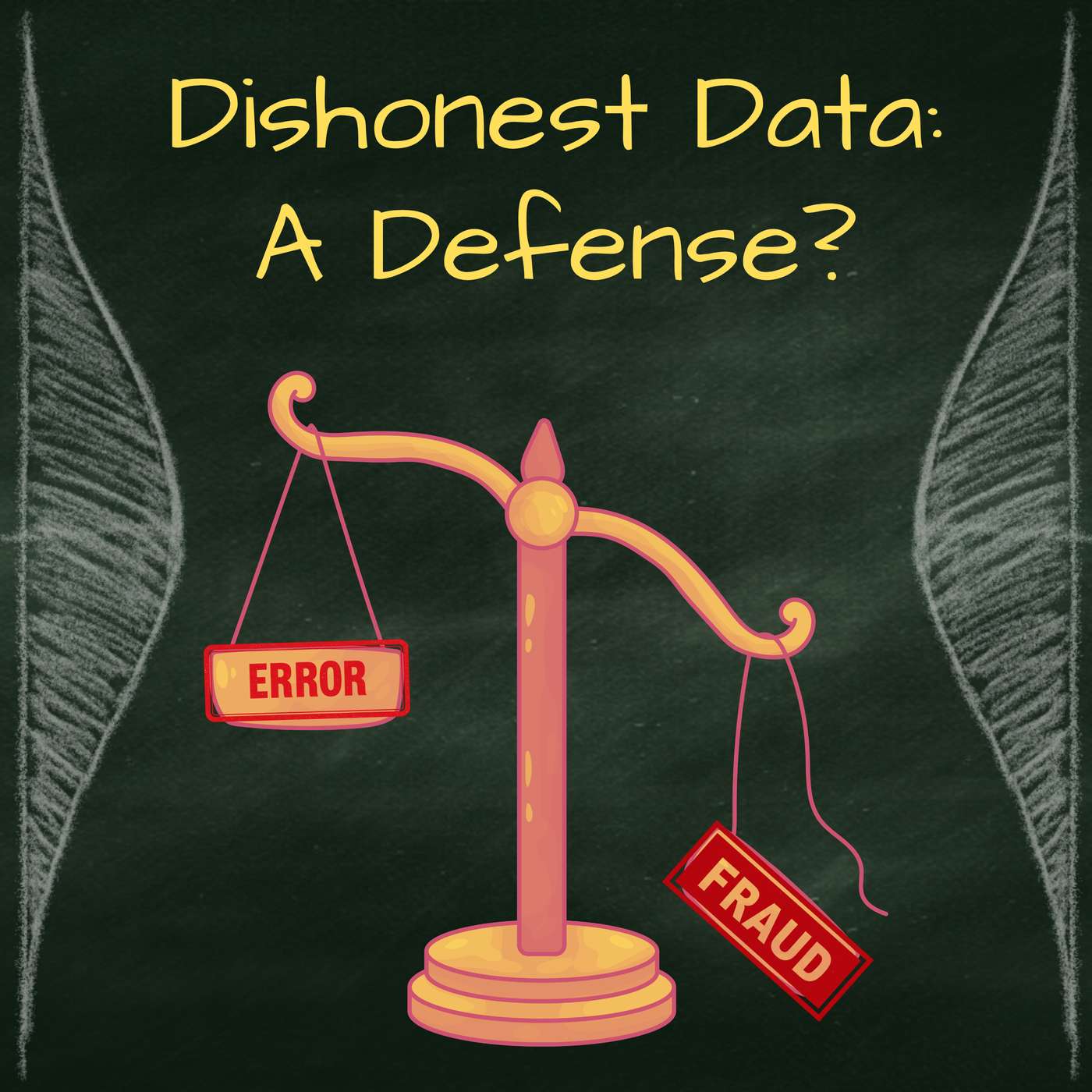
Does cheating make you more creative? A provocative study from Harvard Business School suggested that it does. But data detectives uncovered suspicious patterns in the results, and a Harvard investigation found even more troubling changes in the data. In Part 2 of our investigation into the Francesca Gino research misconduct case, we dig into the now-retracted “Evil Genius” study and the suspicious changes that made its results look better, then turn to Harvard law professor Lawrence Lessig's defense of Gino: Could innocent mistakes by “an army of research assistants” explain what happened? Along the way, we explore the trap of circular reasoning in statistics, why good data management matters, and how much responsibility researchers bear for their data even when it's out of their hands. Statistical topics Statistical sleuthing Data forensics Data integrity Data cleaning Data management Reproducibility Statistical significance Spreadsheets Predictor variables Outcome variables Circular
Narcissists don't like losing, and they don't like being told that people don't like them. What often results is a "narcissistic injury" - an existential threat to their self-worth, and a resulting fit of rage or need to exert power or control, fueled by ego. When the person expressing that rage is one of the most powerful people in the world, it can have lasting and out weighted impacts. JD Vance cancels Minnesota visit to discuss fraud, officials say | FOX 9 Minneapolis-St. Paul (https://www.fox9.com/news/jd-vance-cancels-minnesota-visit-discuss-fraud) Trump Moves Natalie Harp Into Ultra-Private White House Hideaway (https://www.thedailybeast.com/trump-moves-natalie-harp-into-ultra-private-white-house-hideaway) Pentagon orders bases to plan for 90 days without the grid as Britain urges to stockpile supplies | Fortune (https://fortune.com/2026/10/26/pentagon-fortress-bases-90-days-off-grid-uk-be-ready-stockpile/) US warns allies to prepare for potential Iran strikes after election | A
Economics often starts with an assumption that people are rational maximizers of their own self-interest; but it doesn't stop there. Economists do understand that sometimes people are irrational, altruistic, or just random. So how can we understand how people actually do behave in economic circumstances? Colin Camerer is a pioneer of "neuroeconomics" -- not only understanding how people make economic choices, but relating it to processes in the brain. Blog post with transcript: https://preposterousuniverse.com/podcast/2026/11/02/373-colin-camerer-on-the-neuroscience-of-economic-thinking/ Look your best and support men's health at https://amazon.com/movember. #ad Colin Camerer received a Ph.D. in behavioral decision theory from the University of Chicago. He is currently the Robert Kirby Professor of Behavioral Economics, T&C Chen Center for Social and Decision Neuroscience Leadership Chair, and Director, T&C Chen Center for Social and Decision Neuroscience at Caltech. He has been awarde
What if the results of one of the most influential economics papers of the past 25 years are unreliable? The "China shock" narrative--that a surge of Chinese imports destroyed American manufacturing jobs and the communities that depended on them--became conventional wisdom in Washington and beyond. But economic historian Joseph Francis argues that the claim is much weaker than it looks. Listen as he tells EconTalk's Russ Roberts how a 2022 correction to the paper’s research design cut its estimate of lost jobs in half and erased its findings on wages and living standards. He and Russ then look at what this affair reveals about economics as a field, including the incentives that reward dramatic results, and the problems with peer review.
The Battle for Skunk River In 1884, a farmer near Oskaloosa, Iowa, began losing livestock under mysterious circumstances. Night after night, enormous hogs vanished without a trace. But when the farmer finally witnessed what was taking them, his discovery would spark one of the strangest monster hunts in American folklore. According to the story, an enormous reptilian creature emerged from the South Skunk River, prompting hundreds of armed townspeople to confront the beast with rifles, revolvers, and eventually a Civil War-era cannon loaded with railroad spikes. This week, Holosky explores the bizarre Battle for Skunk River, the alleged destruction of an 81-foot monster, and the mysterious disappearance of its supposed remains. Was this an incredible cryptid encounter, an elaborate newspaper hoax, or something else entirely? Stay Safe • Stay Weird. Facebook and Twitter @holoskypodcast Instagram @ theholoskypodcast The number is going to be 1 (618) 556-0837 If you want to send us weird s
Hosted by: Fraser Cain (@frasercain (https://www.youtube.com/@frasercain)) and Dr. Pamela L. Gay (@CosmoQuest (https://www.youtube.com/@CosmoQuest)) Streamed live on Oct 27, 2026. The majority of rockets use a chemical propulsion system, but there are other ideas, fancy ideas that sound like they came from science fiction. But they're real and they work! Today we'll talk about ion engines, used by tie fighters everywhere! Every bit helps! Thank you! ------------------------------------ Thank you! (Haven't donated? It's not too late! Just click (http://cosmoquest.org/Donate)!) ------------------------------------
In this week’s news roundup, we take a look at what’s happening with the Ebola outbreak in parts of Africa. Later SciAm editorial fellow Peter Hall joins host Rachel Feltman to discuss recent claims by OpenAI and Anthropic that their models have solved some of the world’s toughest math and physics problems. Plus, we dive into new research that suggests making daylight saving time permanent could put schoolchildren at risk. Recommended Reading: Dueling proofs from OpenAI and Anthropic astound scientists (https://www.scientificamerican.com/article/dueling-proofs-from-openai-and-anthropic-astound-scientists/) OpenAI just scooped mathematicians’ work on another million-dollar problem (https://www.scientificamerican.com/article/openai-just-scooped-human-researchers-on-a-million-dollar-quantum-math-problem/) Our theme music was composed by Dominic Smith.