Lukas and Saila talk about NVIDIA's reported leadership crisis with returning guest Brian, covering Jensen Huang's alleged ouster, the sharp market reaction, and the battle over US chip export controls. They discuss disputed allegations involving chip sales, espionage, and reporting by the Wall Street Journal, as well as the political interests Brian believes are driving the controversy. The conversation turns to Trump's response, the NVIDIA board, shareholder power, and whether Jensen could—or would want to—return as CEO. Polymarket: https://polymarket.com (https://polymarket.com/) Zcash: https://z.cash (https://z.cash/) CitizenX: https://citizenx.com (https://citizenx.com/) Network Press: https://network.press (https://network.press/) ___________________________________ Plausibly Deniable: https://plausiblydeniable.org (https://plausiblydeniable.org/) Our tools are available at: https://plausiblydeniable.org/tools/ Lukas: https://x.com/SCHIZO_FREQ Saila: https://x.com/sailaunderscore
A cyberattack hit 178 major organizations including HSBC, CNN, BBC and Zoom through a hijacked Optimizely script, while banks, airlines and even the NSA suffered separate outages and markets slid ahead of Nvidia’s earnings. We break down what is confirmed, what is rumor, and what it means for Bitcoin. We also cover Jensen Huang’s possible return and the Anthropic IPO. ~This Episode is sponsored by Proton~ 00:00 Intro 00:10 Sponsor: Proton 01:15 Massive cyber attack 01:45 Testing scripts 02:30 Outage recap 05:15 Three month blackout 05:45 NSA outage 06:20 Everywhere all at once 07:20 Bad timing Mike 07:40 NVIDIA earnings day 08:20 Tom Lee: AI trade intact 11:20 NVIDIA employee letter 12:00 Biggest NVIDIA dump 13:00 Crypto in peak capitulation 13:55 Cathie rotating into crypto 14:50 Four-year cycle bros back? 15:40 $ANT Nov. 18th 16:20 Steve Eisman: $ANT importance 19:05 Get ready #Crypto #AI #Bitcoin ~Massive Global Outage 178 Hit as Markets Crash ~ ⎺⎺⎺⎺⎺⎺⎺⎺⎺⎺⎺⎺⎺⎺⎺⎺⎺⎺⎺⎺⎺⎺⎺⎺⎺⎺⎺⎺⎺⎺⎺⎺⎺⎺⎺⎺⎺
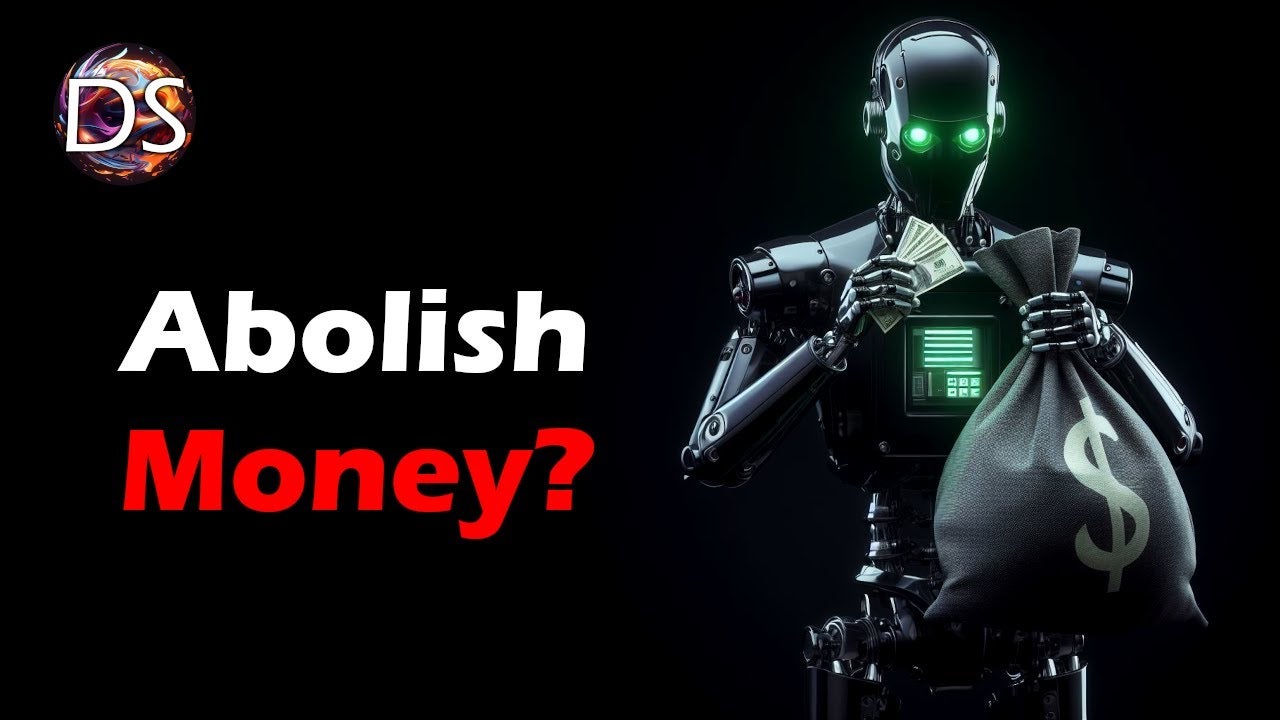
Will AGI Abolish Money? My predictions about crypto and the future of money Episode release date: 20 Oct 2023 Core Ideas: Metamodernism: Narratives and emergence view of reality - Reduce suffering - Increase prosperity - Increase understanding mantra: Seek knowledge. DISCLAIMER: This is a community-driven show. -------------- Keywords: deep learning, ai innovation, ai future
Explore how the Women’s Suffrage Parade on Washington in 1913 helped women secure the right to vote in the United States through the 19th amendment. Uploaded 04-03-19 -- On March 3, 1913, after months of strategic planning and controversy, thousands of women gathered in Washington D.C. for the Women’s Suffrage Parade -- the first mass protest for a woman’s right to vote. Michelle Mehrtens details how the march rejuvenated the fight for the 19th amendment. Lesson by Michelle Mehrtens, directed by WOW-HOW Studio. Sign up for our newsletter: http://bit.ly/TEDEdNewsletter Support us on Patreon: http://bit.ly/TEDEdPatreon Find us on Twitter: http://bit.ly/TEDEdTwitter Peep us on Instagram: http://bit.ly/TEDEdInstagram View full lesson: https://ed.ted.com/lessons/the-historic-women-s-suffrage-march-on-washington-michelle-mehrtens Thank you so much to our patrons for your support! Without you this video would not be possible! Zhexi Shan, Hugo Legorreta, PnDAA, Sandra Tersluisen, Ellen Spertus
In this episode, I talked to Adam Mosseri, head of Instagram, about the AI tools he has built for his work and his family. He walks me through his command center for meetings, tasks, and follow-ups, and explains how he gets AI to write emails that sound like him. Instead of correcting the same mistakes every time, he has it compare its drafts with the emails he actually sends and learn from the differences. He also shows me the podcast app he built for his kids and the shared memory system that lets him switch AI tools without starting from zero.We talk about the three qualities Adam looks for when hiring, why using more AI doesn’t necessarily mean getting more done, and how he decides what Instagram should build next. He also explains which engagement metrics matter for reaching new audiences, why views don’t tell the whole story, and what Trial Reels were actually designed to do. Your first AI agent in 20 minutes — get the guide through my free newsletter: https://siliconvalleygirl.b
AI's ability to attack critical infrastructure is advancing, while defenders face constraints that software patches alone cannot solve. In Lawrence Livermore National Laboratory's tests, AI models given expert instructions successfully shut off power in a laboratory representation of an electric substation more than 90% of the time. Some models also succeeded with minimal guidance, raising concerns about how AI could expand access to disruptive cyber capabilities. Nate Gleason, who leads Lawrence Livermore's Cyber and Infrastructure Resilience Program, joins Frank Cilluffo at Auburn University's McCrary EDGE Lab to discuss the findings and what they mean for infrastructure security. They examine how adversaries could exploit the civilian systems supporting military operations, why AI guardrails have limits, and how to build infrastructure that keeps operating when attackers get inside. Main Topics Critical infrastructure dependencies and military readiness AI/SI threats and the limits
Michael Nadeau, founder of The DeFi Report, joins John on Milk Road Crypto to explain why he believes Bitcoin has experienced full capitulation and why he's calling the latest sell-off the third major buying opportunity of 2026. Nadeau breaks down what's really driving Bitcoin's decline, including a surprising connection between Bitcoin miners and the AI infrastructure boom. As mining companies shift resources toward artificial intelligence, could selling from their Bitcoin reserves be putting additional pressure on the crypto market? ~~~ ~~~~~ ~~~~~ Tools & Channels ~~~~~ Follow Milk Road on Social Media: Milk Road Twitter:https://link.milkroad.com/X Apple Podcasts:https://link.milkroad.com/apple-podcast ~~~~~ GUEST INFO Michael Nadeau X: https://x.com/JustDeauIt The DeFi Report: https://thedefireport.io/ (https://thedefireport.io/friends) YouTube: https://www.youtube.com/@thedefireport It should not be considered as financial, legal.
(00:00) - Ron Biscardi discusses his role as CEO of iConnections and the launch of Tomorrow X, a major AI and technology summit in Austin. He explains how the event brings leading CEOs and institutional-grade investment insights to everyday investors, online creators, and attendees from around the world. (06:46) - David Solomon discusses his leadership of Goldman Sachs, emphasizing human relationships, trust, and judgment alongside technological innovation. He explains the firm’s shift toward durable revenues, institutional focus, AI adoption, and cybersecurity, while also sharing perspectives on IPOs, private markets, reindustrialization, and America’s economic strengths. (37:03) - Gavin Baker, founder and managing partner of technology investment firm Atreides Management, discusses Jensen Huang’s irreplaceable leadership at Nvidia, the strategic importance of open-weight AI models, and AI’s role in cybersecurity. He also highlights faster inference, defensive model ensembles, and AI-
A 60% city and 40% highway target underpins Edmunds’ range testing, including the updated Mercedes EQS 40 plus sedan. I explain why its 867 km result is a mixed-driving figure, not a promise of that distance at highway speeds. Edmunds also counts about 16 km of dashboard-indicated range remaining at the finish; I spell out that distinction when discussing what drivers can expect.5
Nvidia’s board formed a national security oversight committee while Jensen Huang said he’d return as CEO if asked. Amazon and Google were set to hold about 28% of Anthropic post-IPO, Isomorphic raised $5B, and Apple Watch’s Siri Recap disappointed. Nvidia’s board establishes a National Security and Export Control Oversight Committee to oversee national security policies, export control compliance, and more (https://nvidianews.nvidia.com/news/nvidia-board-of-directors-establishes-national-security-and-export-control-oversight-committee) (Nvidia Newsroom) Nvidia’s new export control committee will be chaired by ex-Goldman vice-chair Suzanne Nora Johnson, as Trump calls it a “great idea” and lawmakers prep a crackdown on AI chips reaching China (https://www.ft.com/content/aeacbf89-5511-4d1c-81c2-b4c227bdfceb) (Financial Times) Nvidia’s board is not considering bringing Jensen Huang back as CEO and is focused on a Wachtell Lipton-led probe into whether his conduct compromised national secu
View full lesson: http://ed.ted.com/lessons/the-story-behind-your-glasses-eva-timothy What scientific thinkers and achievements have led to vast improvements in optics over the centuries? Discover the fascinating ways that our understanding of light informs the world in which we live. Lesson by Eva Timothy, animation by Matt Snyman.
View full lesson: http://ed.ted.com/lessons/the-rise-of-human-computer-cooperation-shyam-sankar Brute computing force alone can't solve the world's problems. Data mining innovator Shyam Sankar explains why solving big problems (like catching terrorists or identifying huge hidden trends) is not a question of finding the right algorithm, but rather the right symbiotic relationship between computation and human creativity. Talk by Shyam Sankar.
“We need to remind big tech that it is us who make them as rich as they are.” Co-founder of the Amazon Labor Union Chris Smalls joins The Tech Report’s Isaac Pound to talk about the the rise of tech union in America, the wider backlash against AI and how big tech CEOs have discovered the power of collective organisation. Hosted on Acast.
AI-chip maker Nvidia is in crisis after its co-founder and CEO Jensen Huang resigned. Revelations that he had an affair with an alleged Chinese spy have shaken the global AI industry and cast doubt on the future of the company that has helped drive the AI boom. How will Huang’s exit affect the company, the wider AI industry and the geopolitics of the global chip industry? Global tech correspondent Tim Bradshaw speaks to his FT colleagues Eleanor Olcott, Michael Acton and Elaine Moore. Free to read: Jensen Huang says he is prepared to return as Nvidia CEO (https://www.ft.com/content/e265542c-25d9-4a82-8cb7-e4a4b641cdda?accessToken=zwAAAaKE3BAdlNPiZVQsJdlKgtOMt-SktkHN2s8wYnkKVT1BuNOcfbrhe50uKdPObSku6qpMI9O5CTQnbhoejdPvj4Wm4tdNQdO3DgkrJWeBOgE.MEYCIQDKqev8s_pAoIaaCUXhjF9kV8aqVuhfPInIA6NywihsaAIhAMMCAUAk1qiZIhrzzy9cQ7HjjCvxJdnEi6TkEUtFP7fl&segmentId=8573a35e-8257-64d5-c719-bd89e8255c43) Congress moves to pass tighter AI chip export rules following Nvidia scandal (https://www.ft.com/content/
Dr. Sara Imari Walker joins Dr. Scott Barry Kaufman for a wide-ranging conversation about the nature of life, the physical meaning of time, and how billions of years of cosmic history have shaped who we are. Drawing on her work in theoretical physics and astrobiology, Walker challenges the idea that science has reached a final understanding of the universe. She explains why life may be better understood as a process through which the universe creates and reproduces structure, and how assembly theory could help scientists understand life's origins and detect life beyond Earth. The conversation explores human uniqueness, scientific creativity, free will, the origins of agency, and the possibility that artificial intelligence is part of the evolutionary process that began long before humanity. Walker also discusses why AI should not automatically be considered alien, how cultural beliefs shape our perceptions, and why uncertainty can be a source of discovery rather than fear. The episode
In the latest episode of the Government Technology Insider podcast, host Lucas Hunsicker sat down with Katie MacDonald, Senior Product Marketing Manager for GovCon at Unanet, to discuss how AI is changing the government contracting landscape. The conversation moves beyond just the technology, examining what agencies should be looking for in potential partners, how smaller businesses might benefit from new AI capabilities, and why the relationship between an agency and its contractor matters as much after an award as it does during the acquisition process. As AI becomes more integrated in government contracting, the companies that stand out will be those who know how to turn information into better decisions, and ultimately, better delivery.
Follow young samurai in training Mori Banshirô as he studies the twin paths of literary learning and the martial arts. Uploaded 22-06-20 -- The year is 1800 in the castle town of Kôchi, Japan. It’s just after sunrise, and 16-year-old Mori Banshirô is already hard at work practicing drills with his long sword. He is an ambitious samurai in training, and today he must impress his teachers more than ever so he can travel to the capital city for martial and scholarly studies. Constantine N. Vaporis outlines a day in the life of a samurai. Lesson by Constantine N. Vaporis, directed by WOW-HOW Studio. Animator's website: https://wow-how.com/ Sign up for our newsletter: http://bit.ly/TEDEdNewsletter Support us on Patreon: http://bit.ly/TEDEdPatreon Find us on Twitter: http://bit.ly/TEDEdTwitter Peep us on Instagram: http://bit.ly/TEDEdInstagram View full lesson: https://ed.ted.com/lessons/a-day-in-the-life-of-a-teenage-samurai-constantine-n-vaporis Thank you so much to our patrons for your su
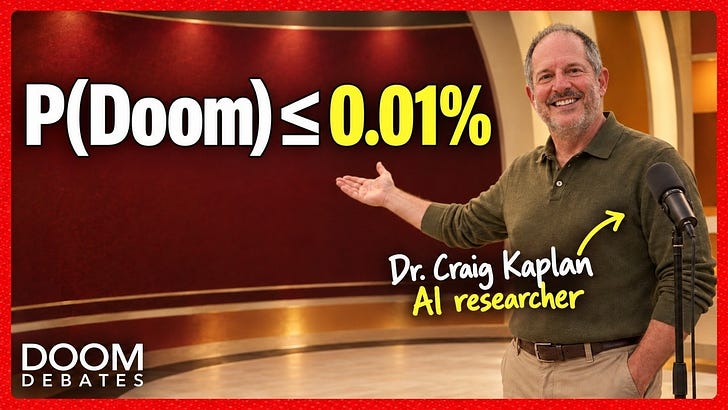
Dr. Craig Kaplan owns superintelligence.com, which has become an extremely valuable domain for the newly-rebranded field of “super intelligence”. Craig has been building intelligent systems since the 1980s. He did his PhD research at Carnegie Mellon with Nobel laureate Herbert Simon, one of the founders of AI, and he built PredictWallStreet, a collective-intelligence platform that powered more than $2 billion in stock trades before it was acquired. He takes AI extinction risk seriously. His P(Doom) is 10%. But unlike me, he thinks he knows how to fix it. He plans to put “personal superintelligence” into the hands of millions which he believes will lower P(Doom) below 1%. These are part of a larger plan to create “superintelligent networks” which lower P(Doom) below 0.01%. Craig says a network like that is safer because the AIs can check each other’s work faster than humans can think. Craig and I clash on whether intelligence makes an AI more thoughtful, whether a superintelligence will
For decades, the idea of AI improving itself was just a thought experiment. Today, AI is already helping researchers at frontier labs run experiments, write code and test ideas faster. Mark Chen says OpenAI has built “AI research interns.” So how far are we from AI that can do the research on its own? In our first episode of Working Theory, a16z general partner Sarah Wang explores recursive self-improvement with two leading AI researchers: Mark Chen, Chief Research Officer at OpenAI, and John Schulman, co-founder and Chief Scientist of Thinking Machines Lab, and co-founder of OpenAI. They cover what RSI actually means, why research taste is so hard to teach, and why AI may be one of our best tools for solving alignment. Resources: Follow Mark Chen: https://x.com/markchen90 Follow John Schulman: https://x.com/johnschulman2 Follow Sarah Wang on X:https://x.com/sarahdingwang Chart Sources Stay Updated: Find a16z on YouTube: YouTube (https://www.youtube.com/@a16z) Find a16z on X (https://x
This is our full interview with Goldman Sachs Chairman & CEO David Solomon. We discuss how Goldman Sachs is evolving its business, the growing threat of cyberattacks and how AI is changing cybersecurity, the outlook for IPOs and private markets, NVIDIA's future without Jensen Huang, the role of capital in America's reindustrialization, where the biggest opportunities in AI will emerge, and his reaction to Jensen's latest statement about potentially returning as CEO. TBPN is made possible by: Ramp - https://ramp.com Public - https://public.com Cisco - https://www.cisco.com Console - https://www.console.com CrowdStrike - https://www.crowdstrike.acom Figma - https://www.figma.com MongoDB - https://www.mongodb.com NYSE - https://www.nyse.com Railway - https://railway.com Shopify - https://www.shopify.com/ Codex - http://openAI.com/codex Lambda - https://lambda.com/ Sign up for TBPN’s daily newsletter at TBPN.com Follow TBPN:
Computer chips are so utterly everywhere that we often don’t think about them at all. But we should. Gideon Lewis-Kraus, a writer and reporter, recently traveled the world attempting to figure out how chips get made — he joins the show to explain the wildly complicated, unbelievably expensive, non-stop miracle that is chip manufacturing. He also explains why no one, no matter their budget, can simply decide to become a chip giant. It’s just not that easy. Further reading: From The New Yorker: Computer Chips Are the Most Magnificent Things Humanity Has Ever Made (https://www.newyorker.com/magazine/2026/10/26/computer-chips-are-the-most-magnificent-things-weve-ever-made) We love hearing from you!
Play Twenty Questions with GPT-3 (Full Game Coding Walkthrough) Episode release date: 25 Sep 2022 Core Ideas: Metamodernism: Narratives and emergence view of reality - Reduce suffering - Increase prosperity - Increase understanding mantra: Seek knowledge. DISCLAIMER: This is a community-driven show. --- Keywords: machine learning, ai ethics, david shapiro, post labor economics, superintelligence
View full lesson on ed.ted.com http://ed.ted.com/lessons/the-twisting-tale-of-dna-judith-hauck What do a man, a mushroom, and an elephant have in common? A very long and simple double helix molecule makes us more similar and much more different than any other living thing. But, how does a simple molecule determine the form and function of so many different living things? Lesson by Judith Hauck, animation by Cameron Slayden.