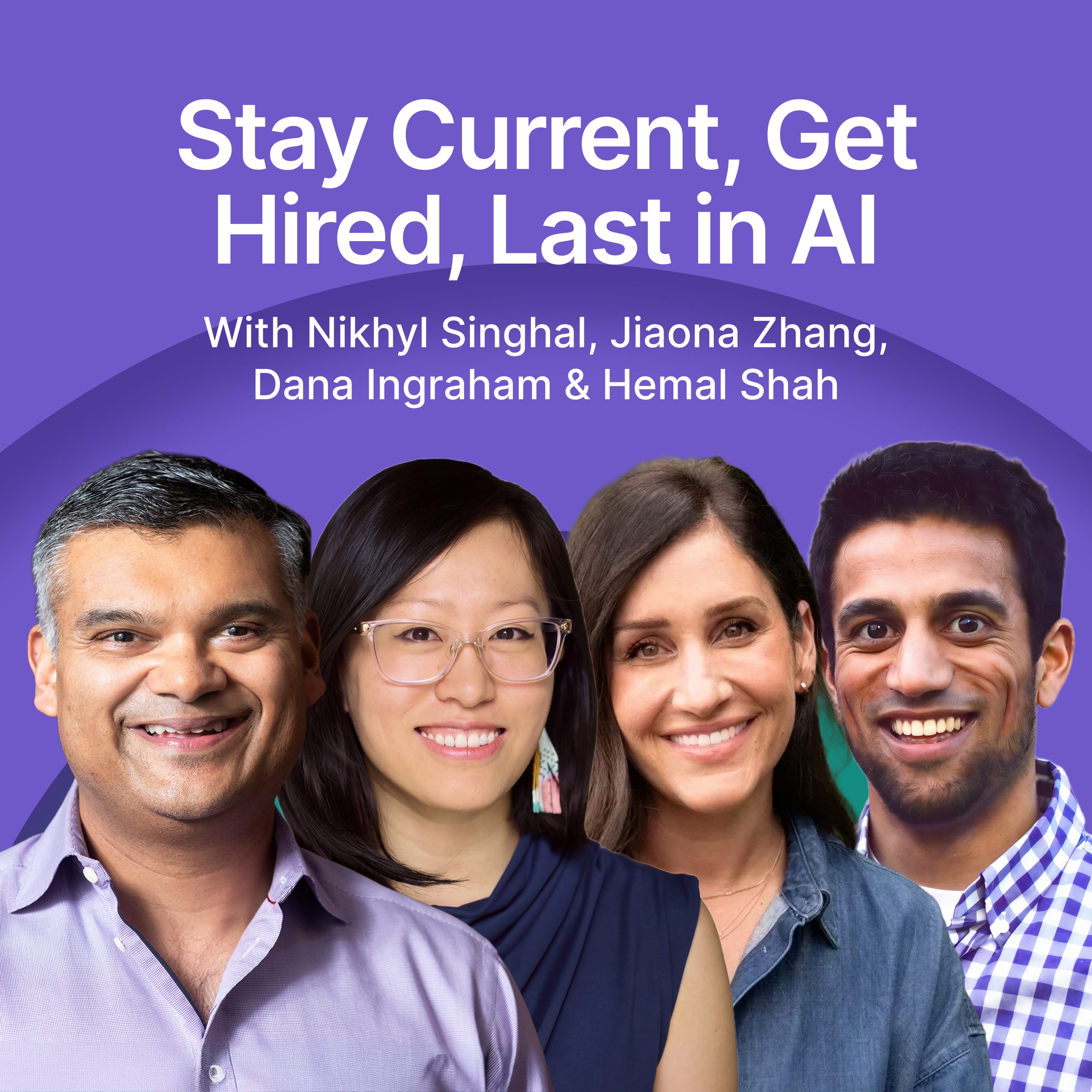
In this episode, I sit down in person with three of my closest friends in The Skip Community, each of whom took on an AI role recently: Dana Ingraham, who runs core product at Harvey after seven years at Airbnb, Hemal Shah, who moved from OpenAI to Google Cloud, and Jiaona "JZ" Zhang, CPO of Laurel and formerly of Webflow. We get into the common product career advice they push back on, from needing to be “AI-pilled” to land an AI job, to following everything to stay current, to judging a company by its valuation, and what they do instead. We also talk about how they manage all-consuming jobs with young families at home, and why JZ says AI "literally makes us able to do all the things." – Key topics: • Why Dana disagrees that you need to be "AI-pilled" to get an AI job, and what she hires for instead • Hemal's three skills of a great PM today: historian, technologist, and anthropologist • Why curiosity and adapting to change as the traits that matter even more now • Staying current thro
The team discusses the sticky situation in which Nvidia CEO Jensen Huang has found himself, little realising how soon their conversation will be overtaken by events. We also examine the impact of data-centre politics on the US mid-term elections, ask whether Anthropic’s reported IPO valuation is a bad sign and bid good riddance to Apple’s user-to-user support forum. Our Hot Hardware candidate is the SMLIGHT SLZB-MR5U, a wireless gateway that lets you locally manage your Zigbee and Thread smart home devices.
View full lesson: http://ed.ted.com/lessons/five-fingers-of-evolution How can a "thumbs up" sign help us remember five processes that impact evolution? The story of the Five Fingers of Evolution gives us a clever way of understanding change in gene pools over time. Lesson by Paul Andersen, animation by Alan Foreman.
The “second opinion” option in Duck.ai acts almost like a shuffle button, automatically choosing a different AI model to take a second shot at your query. This lets you compare answers side by side, learn the strengths and weaknesses of different models, and avoid overconfidence in a given chatbot’s answers. In this episode, Tatum and Beah (product) discuss how the feature came about and how it addresses multiple challenges with AI search. If you have feedback on Duck Tales, or episode ideas, email us at [email protected]: (1) The audio, video (above), and transcript (below) are only lightly edited and may contain minor inaccuracies or transcription errors. (2) This website is operated by Substack. This is their privacy policy. (https://nam02.safelinks.protection.outlook.com/?data=05%7C02%7Clroberts%40duckduckgo.com%7C9bf97bb22b8e4672114908ddecafdd9e%7C728892a04da94114b51152f75ee3bc3d%7C1%7C0%7C638926962285187494%7CUnknown%7CTWFpbGZsb3d8eyJFbXB0eU1hcGkiOnRydWUsIlYiOiIw
Nobody has shown why there should be a limit to how much we can benefit from intelligence. If that holds, AI could be the first market in semiconductor history without a bust. Walter Goodwin, founder and CEO of Fractile, and Sir Robin Saxby, founding CEO of ARM, joined me on Forecast 2050 to discuss the future of semiconductors in the age of AI on the heels of Fractile’s $720M Series C. We’re delighted to be an investor with Fractile at Nebular. Extended Show Notes: https://substack.com/home/post/p-224512051 Chapters: 00:00 Intro 01:24 Starting Fractile 06:01 Inference Is the Profit Center 09:39 Chips Over My Dead Body: The Founding of ARM 18:45 The Art of the Opinionated Chip 25:09 Breaking the Memory Wall 32:15 How ARM Picked Winners 38:23 Robin Calls a Correction 42:51 The Stickiness of the Transformer 46:49 Is There a Limit to AI Demand? 56:11 How TSMC Became the Standard 57:44 AI-Designed Chips 1:03:52 Brutal Honesty Walter Goodwin is the founder and CEO of Fractile, a London-base
Fevzi Turkalp, the Gadget Detective, joins BBC Radio Scotland's Lunchtime Live to discuss a revival in the popularity of analogue media such as vinyl, cassette, even CD. You can follow and contact the Gadget Detective on X @gadgetdetective and BlueSky @GadgetDetective.com #Fevzi #Turkalp #Gadget #Detective #Tech #Technology #News #Reviews #Help #Advice #BBC #Radio #Scotland #Lunchtime #Live #Analog #Analogue #Revival #CD #Cassette #Tape #Vinyl #Records #Victrola #Turntable #We #Are #Rewind #Player
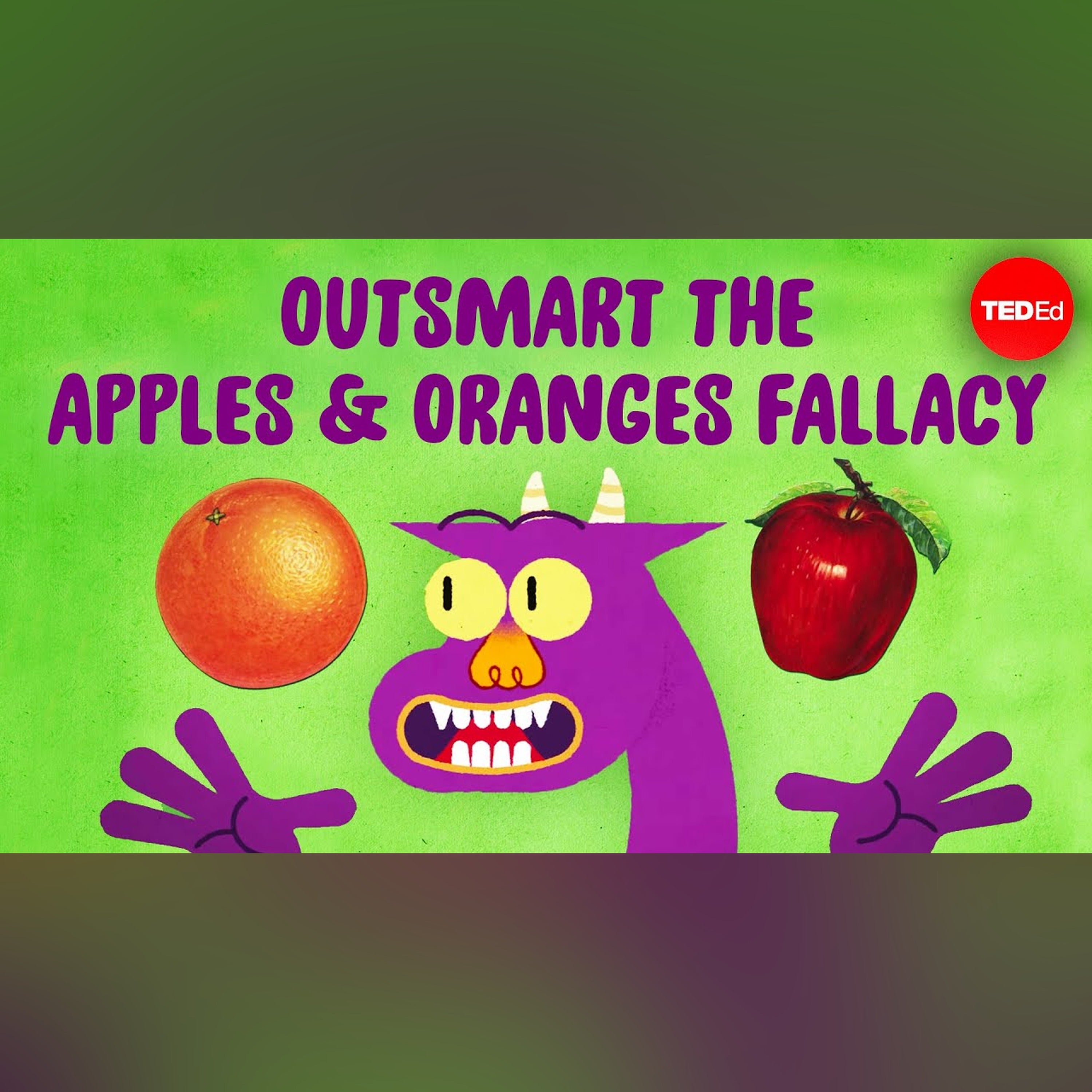
Dig into the false analogy fallacy, which assumes that because two things share a characteristic, they must be alike in other respects. Uploaded 05-04-21 -- It’s 1997. The United States Senate has called a hearing about global warming. Some expert witnesses point out that past periods in Earth’s history were warmer than the 20th century. Because such variations existed long before humans, they claim the current trend is also the result of natural variation. Can you spot the problem with this argument? Elizabeth Cox explores the false analogy fallacy. Lesson by Elizabeth Cox, directed by TOGETHER. Support Our Non-Profit Mission ---------------------------------------------- Support us on Patreon: http://bit.ly/TEDEdPatreon Check out our merch: http://bit.ly/TEDEDShop ---------------------------------------------- Connect With Us ---------------------------------------------- Sign up for our newsletter: http://bit.ly/TEDEdNewsletter Find us on Twitter: http://bit.ly/TEDEdTwitter Peep us
What can Apple's new smart home do that the competition can't? This week, Jason and Suzi are joined by Katie McDonald from Apple's Product Marketing team for an exclusive look at HomeView, the new Apple TV 4K, HomePod mini and the future of Siri AI. Plus, tech superstar SuperSaf joins us to reveal his biggest hits, misses and surprises of 2026, from Apple's foldable iPhone and the best smartphones of the year to rising tech prices, AI and the gadgets he's most excited about for 2027. Enter our new Gadget Show competition! £1,000 to spend at CEX is up for grabs every month via https://www.patreon.com/thegadgetshow (https://www.youtube.com/redirect?event=comments&q=https%3A%2F%2Fwww.patreon.com%2Fthegadgetshow&redir_token=QUFFLUhqbTFuZURqUTRlS0d4N2ZtQTJFX25LdXBKVS1YZ3xBQ3Jtc0treUJxOG5HVDRMaWVaU0xMTUEzTERSRVJJVmZNeWpEVFpXYVdrbGk4cWtheFBGOVdFR04zc2JOWGlOcWpGXzFITkpoNnk0YVpvMnQ5a3NBTTRncVF1NVVndTVQVExWdW1pNGk5VFdFT1Q4ZUJ0M1daWQ) To get three issues of T3 magazine for just £1, head to https:
Runway co-founder and CEO Anastasis Germanidis explains why the video generation lab open-sourced Praxis-1, its new world action model topping NVIDIA’s RoboLab 120 benchmark. He breaks down the race with China on physical AI, why predicting pixels trains real-world robot control, and his forecast for robot deployments moving into production by next year. -- Follow MTS: Spotify |https://open.spotify.com/show/4HUNNmV1pjV7CW6Lphm1rM Apple |https://podcasts.apple.com/us/podcast/mts/id1891088763 Interested in sponsoring the show? [email protected] – Brought to you by: Mongo DB - Anyone can prototype an agent. Lovable - Turn ideas into software people love with Lovable. Start today at https://lovable.dev/ Visithttps://factory.com/ Neon (by Databricks) - Scale your startup on Neon. The Postgres backend for apps and agents. Head over to http://getvcx.com (http://getvcx.com/) to learn more Kong - The AI connectivity platform. Larridin - Finally prove what your AI investment is worth. Ship 5x fas
Nvidia is sinking as the crisis around its CEO deepens and the sell-off spreads across A.I. stocks, with Bitcoin dropping below $72K. We break down how much value has been wiped out and what it means for crypto. We also look at whether sentiment or liquidity is driving the market. ~This episode is sponsored by iTrust Capital~ iTrustCapital | Get $100 Funding Reward + No Monthly Fees when you sign up using our custom link! 00:00 Intro 00:10 Sponsor: iTrust Capital 00:40 Jensen Huang resigns 01:10 Replacement 02:10 AMD CEO 02:35 AMD vs NVDA 03:35 Kobeissi message to NVIDIA 04:30 Bernstein: NVIDIA is fine… for now 05:40 Tim Cook… wtf 06:25 Elon got your back 07:15 Bloomberg: US-China relationship shaky 09:00 Resignation doesn’t absolve him 09:20 Peak uncertainty 10:00 MSTR out 10:30 Time to load up? 11:30 Arthur Hayes: Too big to fail #Crypto #Nvidia #JensenHuang ~NVIDIA Nukes A.I. Market Crypto Crashes?~ ⎺⎺⎺⎺⎺⎺⎺⎺⎺⎺⎺⎺⎺⎺⎺⎺⎺⎺⎺⎺⎺⎺⎺⎺⎺⎺⎺⎺⎺⎺⎺⎺⎺⎺⎺⎺⎺⎺⎺⎺⎺⎺⎺⎺⎺⎺⎺⎺⎺⎺⎺⎺⎺⎺⎺⎺⎺⎺⎺⎺⎺⎺⎺⎺⎺⎺⎺⎺⎺⎺⎺⎺ Join our co
The cordless cleaner I tested offers up to seven hours of runtime, but that is not its full-pool cleaning runtime. Including the walls and waterline brings it to about three and three quarter hours—still enough for my relatively small pool more than twice over. For operation, I select the cleaning mode on the touchscreen on top of the robot; the app disconnects underwater, but cleaning continues autonomously.
Jun Kwak, co-founder and CTO of Overjoy, joins Jim O'Shaughnessy on Infinite Loops to talk about why he believes every B2B SaaS company will have to become a service business, how Overjoy went from selling software to delivering sales outcomes for consumer brands, why tangled data is the strongest moat against the frontier labs, how AI agents could weaken wholesale marketplaces, why brands need websites AI agents can read, why small brands chasing big box stores often abandon their most profitable channel, whether agents will turn premium products into commodities, and what three national debate championships taught him about running a company. Show Notes Jun Kwak & Jim O'Shaughnessy Jun Kwak: Co-founder and CTO of Overjoy. Connect on LinkedIn (https://www.linkedin.com/in/junkwak/) Overjoy: The AI-powered wholesale growth platform Jun co-founded with Alex Han. Overjoy (https://www.overjoy.ai/) Overjoy on X: Follow Overjoy on X (https://x.com/overjoyhq) Jim O'Shaughnessy: Host of Infini
View full lesson: http://ed.ted.com/lessons/your-body-language-shapes-who-you-are-amy-cuddy Body language affects how others see us, but it may also change how we see ourselves. Social psychologist Amy Cuddy shows how "power posing" -- standing in a posture of confidence, even when we don't feel confident -- can affect testosterone and cortisol levels in the brain, and might even have an impact on our chances for success. Talk by Amy Cuddy.
Let them eat pancakes! Jack and Ev give updates on the Anthropic IPO: the initial price range, the amended S-1 showing $81B run rate at the end of October, and what it means for how the stock actually trades. They get into the Jensen Huang spy allegations, what it costs the open source ecosystem if Nvidia’s most important advocate goes quiet, and why American open source just became a lot more strategically critical. They run through the AI trade unwind, the CapEx math behind it, and why the revenues from the AI ecosystem aren’t yet big enough to justify the buildout being contemplated. From the midterms: a Gallup poll showing the US at 36% AI optimism against China’s 93%, the Amazon HQ2 role reversal, and what the Metis, Louisiana data center deal shows about how that relationship can actually work. They close on the $60B VC fundraising wave hitting in the next 1–4 months from firms that raised just 12 months ago, reflexivity in private markets and why seed valuations may never fully
Naureen Hassan, CEO of DriveWealth, joined me at Ripple Swell to discuss the company’s plans to integrate Ripple’s blockchain infrastructure, including leveraging RLUSD on the XRP Ledger (XRPL) for settlement in Europe. We also explored DriveWealth’s approach to asset tokenization, the growing convergence of traditional finance and blockchain technology, and how these innovations could transform global financial markets and the future of investing. ️ Learn Crypto with Expert Commentary - http://MyCryptoCourse.com iTrustCapital Representative: [email protected] ⭐️ Trade crypto perps with a free $25 bonus on Kalshi. ♂️Merlin - http://tinyurl.com/MerlinTCYouTube Follow on social media: ️ X(Twitter) - https://x.com/thinkingcrypto ️ Facebook - https://www.facebook.com/thinkingcrypto/ ️ LinkedIn - http://linkedin.com/company/thinking-crypto ️ Instagram - https://www.instagram.com/thinkingcrypto/ ️ TikTok - https://www.tiktok.com/@thinkingcrypto5 ️ Threads - https://www.threads.net/@
The first solar satellites ran on silicon in 1958. I explain the material choice: gallium arsenide is tough and efficient but expensive, while rooftop silicon offers a much cheaper starting point. For satellite manufacturers, JA's test addresses the catch—whether its P-type heterojunction silicon cells can withstand orbital radiation and temperature swings.
Learn more by reading Douglas J. Emlen's "Animal Weapons": Uploaded 26-03-18 View full lesson: https://ed.ted.com/lessons/why-isn-t-the-world-covered-in-poop-eleanor-slade-and-paul-manning Check out our book rec page: http://bit.ly/2I3INQC Each day, the animal kingdom produces roughly enough poop to match the volume of water pouring over Victoria Falls. So why isn’t the planet covered in the stuff? You can thank the humble dung beetle for eating up the excess. Eleanor Slade and Paul Manning explain how these valiant insects make quick work of an endless stream of feces. Lesson by Eleanor Slade and Paul Manning, animation by Anton Bogaty. Thank you so much to our patrons for your support! Without you this video would not be possible! Emma Moyse, Fahad Nasser Chowdhury, Marin Kovachev, Mohamad Aiman Fitri Bin Annuar, Daniel Huerga, Maria Lerchbaumer, Kevin Le, Edgar Campos Barrachina, Dianne Palomar, Chris Buccellati, Curtis Light, Liana Switzer, Maija Chapman, Pamela Harrison, Dylan Dro
1. Jonathan Brill's early life and the experiences that shaped his curiosity and creative thinking. 2. How different social and economic environments influence human potential and opportunity. 3. Jonathan's journey from product designer to futurist and strategic advisor. 4. Why networks and ecosystems create opportunities for individuals and businesses. 5. How innovation and strategic foresight help organizations prepare for the future. 6. Understanding the concept of Rogue Waves and how radical change can create opportunities. 7. Why systemic risks can also become systemic opportunities. 8. The importance of strategic resilience in a rapidly changing business environment. 9. Why organizations should prepare for external disruption instead of focusing only on internal innovation. 10. How AI could reshape traditional organizational structures and management hierarchies. 11. Understanding the concept of the Octopus Organization. 12. Why AI can give employees access to information and int
Some kids learn by listening; others learn by doing. Geoff Mulgan gives a short introduction to the Studio School, a new kind of school in the UK where small teams of kids learn by working on projects that are, as Mulgan puts it, "for real." Uploaded 16-08-13 Talk by Geoff Mulgan.
Nvidia's board is reportedly preparing to oust Jensen Huang after The New York Times reported a second affair, this time with an Nvidia executive who reported to him, on top of his alleged relationship with a suspected Chinese spy. Ejaaz walks through the evidence, from the halted Commerce probe to the $7.5 billion in chips that reached China through a network of fronts, asks who could replace him, and why the real story is what an Nvidia without Jensen means for the entire AI economy. We also cover Anthropic's IPO roadshow and what may become the largest raise ever, CoreWeave's earnings and the case for older GPUs, what AI data centers are paying their local communities, Google's Gemini Carbon and two new TPUs, and Meta's cheapest model yet. == FOLLOW EJAAZ ON TWITTER: == Timestamps 00:00 Jensen Huang's Worst Week 00:43 The Damning Evidence 02:12 From Denny's to the Top 03:06 The Second Affair 04:23 Who Replaces Jensen? 05:35 $7.5 Billion in Chips 06:21 Did He Know? 07:33 The Dwarkesh
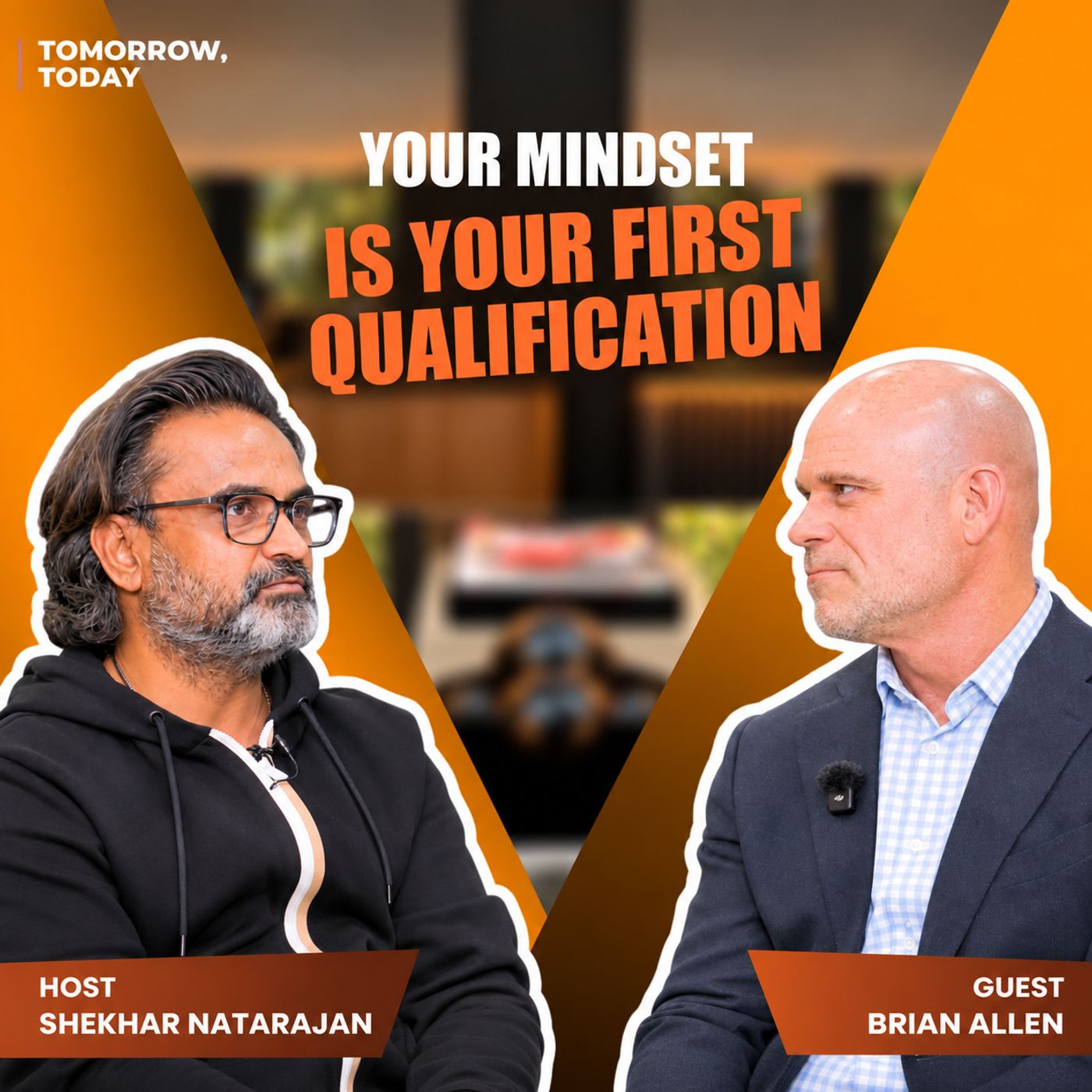
In this episode of Tomorrow Today, Shekhar Natarajan and Brian Allen explore risk management and accountability while discussing why responsible innovation and human oversight are essential for the future of AI. 1. Brian Allen's professional journey from law enforcement to corporate security and AI oversight. 2. How curiosity and critical thinking shaped Brian's approach to risk management. 3. Why security teams should focus on risk information rather than simply protection. 4. The five core pillars of risk management and their role in organizational decision making. 5. Balancing business innovation with risk and accountability. 6. The importance of AI explainability and understanding the reliability of AI outputs. 7. How AI agents can imitate human behaviour and create new privacy and trust vulnerabilities. 8. Why responsible AI requires measurable accountability beyond ethical intentions. 9. Understanding cognitive sovereignty and maintaining human control over decisions. 10. How AI
Mentor Sessions EP 111: John Perkins & Simon Dixon on the Nvidia Regime Change, the Economic Hitman Playbook, El Salvador & Who Really Runs the World Hours before Nvidia's board met to decide Jensen Huang's fate, Simon Dixon called Nvidia "the easiest company to regime change." He holds 2 to 3% of the shares and no super voting rights, and Simon is deeply suspicious that the spy story we're being told is the real story. Sitting next to him is John Perkins, author of Confessions of an Economic Hitman, who was trained in exactly the kind of leverage now making headlines. Perkins explains how his job was to bury resource-rich countries in debt until they voted the way Washington wanted, and why China's economic hitmen are now beating America at its own game. Simon picks up where John left off: loading companies with debt, installing boards, and the super-majority voting structures that decide which CEOs can be removed. For the first time publicly, he tells the story of economic hitmen joi
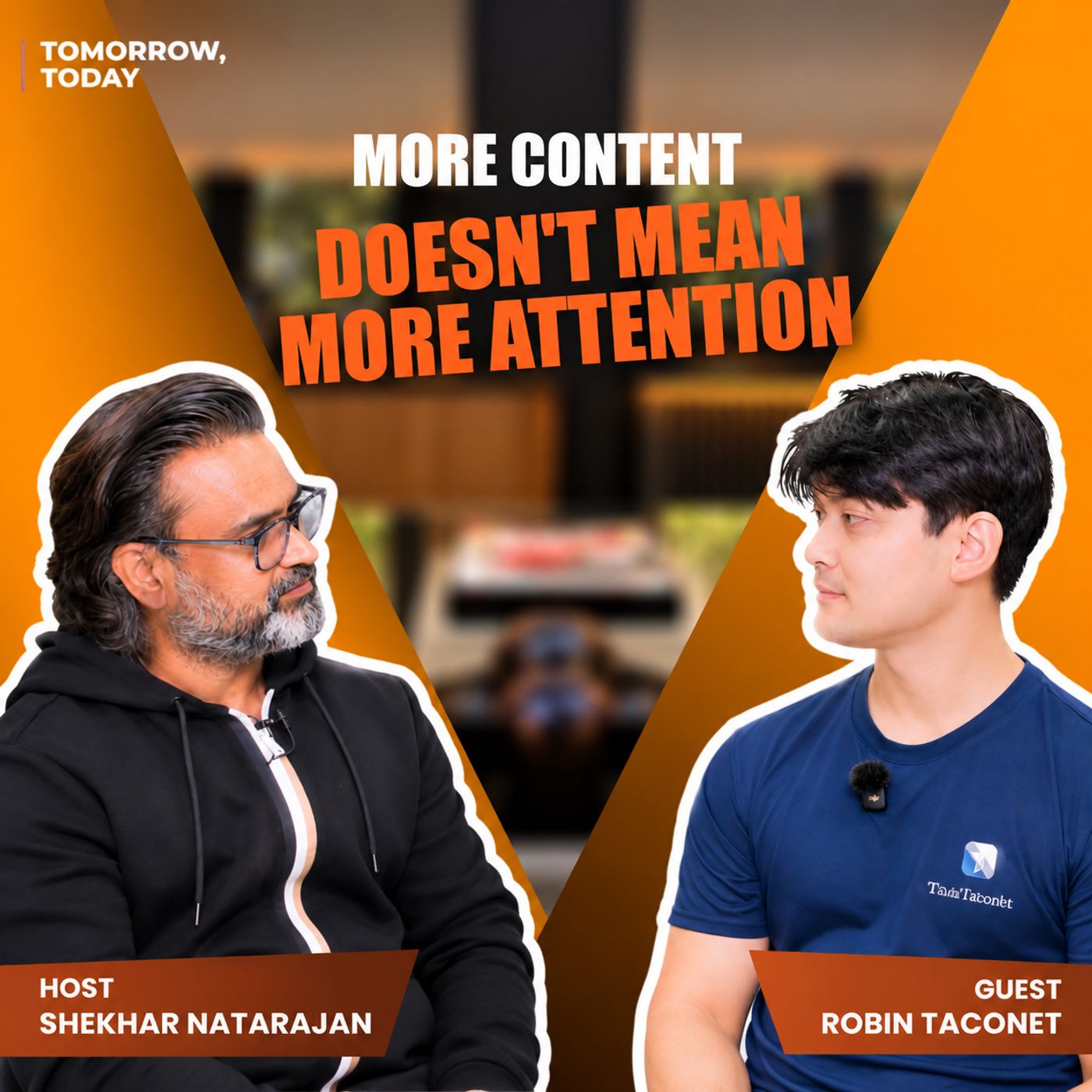
• Robin Taconet's journey from engineering to entrepreneurship and his experiences at Salesforce, MongoDB and Meta. • The founding of Tactimetry and its mission to transform advertising through AI. • Understanding creative fatigue and why repetitive advertisements lose effectiveness. • Why brands need to produce 60 to 70 creative variations every week to stay competitive. • How AI helps businesses create and optimize advertising assets at scale. • The role of personalization and A/B testing in improving advertising performance. • Understanding advertising metrics including click through rate and return on investment. • How AI can preserve brand identity while enabling creative experimentation. • The growing challenge of AI generated content and maintaining authenticity in digital advertising. • Deepfakes and synthetic media. Understanding the risks of misinformation and digital fraud. • AI transparency and the importance of identifying AI generated images and videos. • Why human oversi
An increasing number of school districts are restricting phones in the classroom (https://www.usnews.com/news/national-news/articles/2026-08-25/more-states-crack-down-on-student-cellphone-use-in-schools), and a series of major lawsuits against social media companies have led some platforms to make significant changes to how they operate. But, bans or not, the reality is that kids are going to encounter this stuff at some point. Pamela Wisniewski, at the International Computer Science Institute, says kids need guidance to learn how to use technology responsibly. More on this Google faces mounting backlash for controversial AI school policy (https://www.cbsnews.com/news/ed-markey-google-ai-search-schools/) — from CBS ChatGPT for Teens' safeguards don't work, risk assessment finds (https://www.marketplace.org/episode/2026/11/05/chatgpt-for-teens-safeguards-dont-work-risk-assessment-finds) — from Marketplace Silicon Valley Executives Are Tech Fans. Just Not for Their Own Kids (https://www.